Portable film scanners make it easier to preserve 35mm negatives, slides, and select specialty formats without sending every roll to a lab. The best models combine straightforward controls, useful format support, and a screen that helps you preview scans quickly.
We compared 10 popular options across resolution, supported film types, display size, connectivity, and portability to help you choose the right scanner for family archives, hobby projects, or occasional digitizing.
Best 10 Portable Film Scanners Picks for 2026
Best All-Around Choice
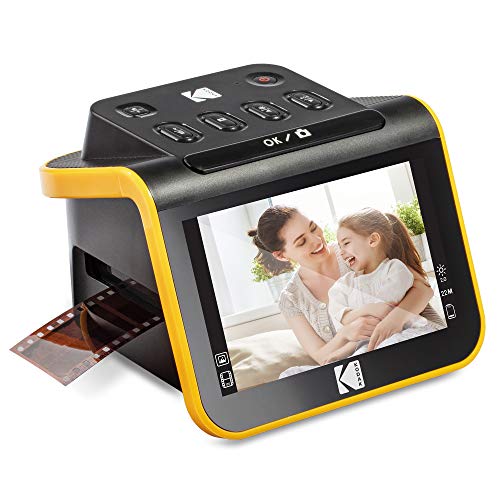
- Handles 135, 110, and 126 film formats
- 5-inch LCD with gallery mode
- Saves directly to SD or SDHC cards
Best For: Easy home digitization with on-device viewing
Best Touchscreen Workflow
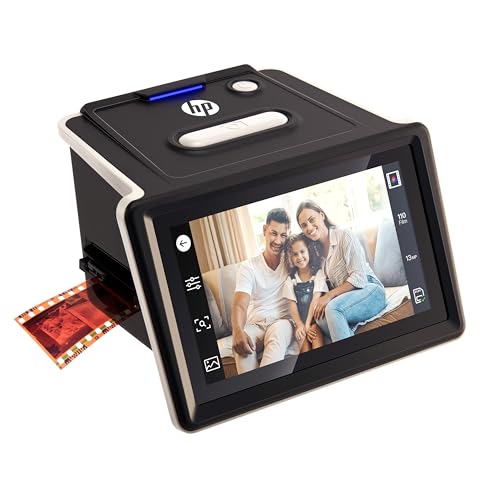
- Standalone operation without a computer
- 5-inch all-angle touchscreen
- Supports 135, 126, and 110 formats
Best For: Touchscreen-controlled scanning of mixed film collections
Best High-Resolution Option

- Supports negatives from 35mm through Super 8
- 24MP JPEG output
- Scans in less than five seconds each
Best For: Fast scanning of varied film formats
Best Large-Screen Model

- Large 7-inch tiltable LCD
- Quick-feeding tray for continuous scanning
- Direct SD/SDHC saving up to 32GB
Best For: Large-screen previewing and simple home archiving
Large-Screen All-in-One
5-Inch Photo, Slide & Negative Scanner

- Scans film, slides, photos, and business cards
- Large 5-inch HD viewing screen
- Includes 8GB SD card and 3-year warranty
Best For: Family archives and users wanting simple offline scanning
Format-Flexible Classic
KODAK SCANZA Film & Slide Scanner
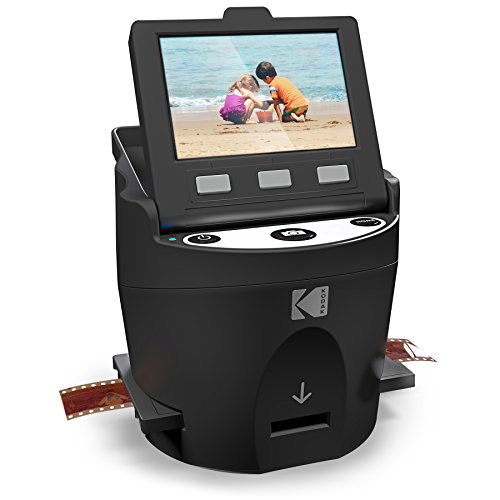
- Handles five listed film formats
- Tilting 3.5-inch LCD display
- Includes adapters, cables, and cleaning brush
Best For: Mixed-format film collections and flexible scanning setups
Family-Friendly Digital Frame
5-Inch Slide & Negative Scanner

- Scans listed 135, 110, 126, and Super 8 formats
- 5-inch LCD with gallery mode
- Includes five adapters and 36-month warranty
Best For: Quick family scanning and TV photo viewing
Best All-in-One Option
22MP Film & Slide Scanner with 5" LCD

- Supports multiple film and slide formats
- Large 5-inch LCD for previewing scans
- One-touch controls plus HDMI and USB output
Best For: Families and hobbyists scanning varied film formats
Best Budget Travel Pick

- Lightweight, collapsible tabletop design
- Uses a smartphone for capture and sharing
- Supports 35mm negatives and color slides
Best For: Casual experimentation and family scanning projects
Best Compact Standalone Pick

- 16MP sensor with a 2.31-inch LCD
- Lightweight body for easy portability
- Built-in editing and direct SD-card saving
Best For: Portable standalone scanning of 126 and 135 film
Best All-Around Choice – KODAK Slide N Scan
The KODAK Slide N Scan is a practical option among portable film scanners for digitizing 135, 110, and 126 negatives plus 50mm slides. Its large screen, direct SD-card saving, and simple controls make it convenient for home archiving without a complicated workflow.
Best For: Families and hobbyists who want an easy standalone scanner with a large preview display.
Pros:
- Supports 135, 110, and 126 negatives and slides.
- 5-inch LCD includes gallery mode for previewing scans.
- Directly saves files to SD or SDHC cards up to 32GB.
- Includes film adapters, a cleaning brush, USB cable, and HDMI cable.
Cons:
- SD card is not included.
- Maximum supported card capacity is 32GB.
This is a well-rounded pick when ease of use and on-device viewing matter more than advanced computer-based scanning controls.
Best Touchscreen Workflow – HP FilmScan HPFS500
The HP FilmScan HPFS500 offers a straightforward standalone workflow for portable film scanners, letting you digitize slides and negatives without a computer. Its 5-inch touchscreen supports direct previewing and editing, while the quick-load tray helps keep larger scanning projects moving.
Best For: Users who prefer touchscreen controls and need to process mixed 135, 126, and 110 film collections.
Pros:
- Works as a standalone scanner without a computer.
- Supports 135, 126, and 110 negatives and positive slides.
- 5-inch all-angle LCD touchscreen enables preview and editing.
- Quick-load tray supports faster transitions between scans.
Cons:
- Its listed sensor resolution is 13MP, with 22MP interpolation.
- Requires Windows 10 or later or macOS 10.15 or later for computer use.
Choose this HP when hands-on touchscreen operation and a simple standalone setup are priorities for organizing a varied film archive.
Best High-Resolution Option – Magnasonic FS71
The Magnasonic FS71 is a versatile choice among portable film scanners, supporting 35mm, 110, 126, and Super 8 negatives along with several slide formats. It scans to JPEG files, includes a 5-inch display, and offers on-device brightness and RGB adjustments without requiring editing software.
Best For: Users with varied film formats who want quick scans and built-in image adjustments.
Pros:
- Supports 35mm, 110, 126, and Super 8 negatives.
- Produces 24MP digital JPEG files.
- Scans photos in less than five seconds each, according to the supplied specifications.
- SD card slot supports up to 128GB of expandable storage.
Cons:
- SD card is not included.
- HDMI cable is not included.
The FS71 stands out for format flexibility, fast operation, and generous storage support, making it especially useful for mixed collections.
Best Large-Screen Model – KODAK Slide N Scan Max
The KODAK Slide N Scan Max emphasizes easy viewing and continuous loading, making it a useful option among portable film scanners for home archiving. Its tiltable 7-inch LCD, direct SD-card saving, and one-touch editing simplify the process of reviewing and converting family negatives and slides.
Best For: Users who want the largest built-in display for previewing, editing, and sharing scans.
Pros:
- 7-inch tiltable LCD doubles as a digital picture frame.
- Quick-feeding tray supports continuous scanning.
- Handles 135, 110, and 126 film formats.
- Saves scans directly to SD or SDHC cards up to 32GB.
Cons:
- SD card is not included.
- Supports up to 32GB cards.
This model is a strong fit when a generous viewing area and streamlined one-touch controls are more important than compact dimensions.
Large-Screen All-in-One – 5-Inch Photo, Slide & Negative Scanner
For shoppers comparing portable film scanners, this DigitPro model stands out for its extra-large 5-inch HD screen and broad media support. It can digitize 35mm, 135 and 110 negatives, slides, printed photos, and business cards without requiring a computer or additional software.
Best For: Families digitizing mixed photo, slide, and negative collections, especially users who want a large preview screen and simple offline operation.
Pros:
- Supports film, slides, printed photos, and business cards.
- Large 5-inch screen supports previewing and basic editing.
- Standalone operation saves JPEGs directly to the included 8GB SD card.
- Includes holders, trays, cables, cleaning brush, and a 3-year warranty.
Cons:
- At 1.5 kg, it is heavier than some compact film scanners.
- The included SD card has limited capacity compared with larger cards.
This is a practical choice when versatility and easy viewing matter more than having the smallest possible scanner. Its complete bundle and no-computer workflow make it particularly approachable for family archiving.
Format-Flexible Classic – KODAK SCANZA Film & Slide Scanner
The KODAK SCANZA is a versatile option among portable film scanners, supporting 35mm, 126, 110, Super 8, and 8mm negatives and slides. Its adjustable 3.5-inch LCD, multiple adapters, and one-touch controls are designed for straightforward scanning and JPEG conversion.
Best For: Users with several legacy film formats who want a compact scanner with a built-in display and flexible adapter set.
Pros:
- Supports 35mm, 126, 110, Super 8, and 8mm film.
- Includes multiple inserts and adapters for flexible operation.
- Adjustable, tilting 3.5-inch LCD helps with image viewing.
- Includes USB, HDMI, AC, and video cables plus a cleaning brush.
Cons:
- An SD card is not included.
- Its listed minimum system requirement is Windows 7, which may matter for some computer setups.
Choose the SCANZA if format compatibility is your priority. It offers useful controls and accessories, though buyers should budget for an SD card and confirm compatibility with their intended workflow.
Family-Friendly Digital Frame – 5-Inch Slide & Negative Scanner
This DigitConvert model combines portable film scanner functions with a 5-inch LCD and gallery mode. It converts supported negatives and slides to JPEG files, saves them to an SD card, and can connect to a computer or TV for exporting and larger-screen viewing.
Best For: Users who want to scan supported film formats quickly and display digitized memories on the scanner or a television.
Pros:
- Converts 135 and 110 negatives plus 135, 110, 126, and Super 8 slides.
- 5-inch LCD supports preview, editing, and gallery-mode display.
- One-touch controls allow color, brightness, and date/time adjustments.
- Includes five adapters, HDMI and USB cables, cleaning brush, and a 36-month warranty.
Cons:
- SD card is not included.
- Supported SD cards are limited to FAT32 or exFAT up to 64GB.
- The scanner must remain plugged into power during use.
Its combination of simple controls, broad slide support, and TV connectivity makes this a strong fit for family scanning sessions. The gallery mode is a useful extra if you want the device to display saved photos between scanning tasks.
Best All-in-One Option – 22MP Film & Slide Scanner with 5" LCD
For shoppers comparing portable film scanners, the DigitPro C190 stands out as a self-contained option with a large display, one-touch controls, and support for several film formats. It can save scans to built-in memory or an SD card and includes outputs for transferring or viewing images.
Best For: Families and hobbyists who want a large-screen scanner with broad format support.
Pros:
- Supports 35mm/135, 110, 126, 50mm slides, and Super 8 film.
- Bright 5-inch LCD enables immediate preview, playback, and sharing.
- One-touch scanning with brightness and color adjustments.
- Includes film holders, HDMI and USB cables, and a 12-month warranty.
Cons:
- SD card is not included.
- At 0.6 kg, it is less compact than the smallest portable models.
This is a flexible pick when convenience and format compatibility matter more than an ultra-small travel footprint. Its built-in screen and HDMI output also make it useful for family viewing.
Best Budget Travel Pick – KODAK Mobile Film Scanner
The KODAK Mobile Film Scanner is one of the most compact portable film scanners for casual viewing and smartphone-based captures. Its foldable platform, tray, and battery-powered LED backlight make it easy to store or take along for a hands-on scanning activity.
Best For: Casual users, families, and kids who want an inexpensive way to experiment with 35mm film.
Pros:
- Compact collapsible design weighs 249 g.
- Works with 35mm color negatives, black-and-white negatives, and color slides.
- Includes an LED backlight, film tray, smartphone platform, and free Android app.
- App supports scanning, editing, and sharing.
Cons:
- Requires a smartphone camera and app-based capture.
- Image quality varies with the slide and smartphone camera.
- The product is positioned primarily for casual experimentation rather than professional conversion.
Choose this model for portability and simplicity rather than a dedicated standalone workflow. It is a fun, low-cost introduction to digitizing 35mm memories, but results depend heavily on smartphone focus and camera quality.
Best Compact Standalone Pick – BEONEGLOBAL ClearScan MINI
The BEONEGLOBAL ClearScan MINI is a compact choice among portable film scanners, combining a 16MP CMOS sensor with a small built-in LCD. It scans 126 and 135 film, saves directly to an SD card, and includes basic editing controls for quick adjustments before saving.
Best For: Users who want a lightweight standalone scanner for 126 and 135 film.
Pros:
- 16MP CMOS sensor is designed for clear, detailed scans.
- Compact 10.08-ounce body is easy to carry.
- Built-in controls adjust brightness, color, rotation, and flipping.
- Front-facing buttons and a 2.31-inch LCD support straightforward operation.
Cons:
- SD card is not included.
- Supports fewer formats than the DigitPro model, focusing on 126 and 135 film.
- Its display is smaller than a full-size 5-inch scanner screen.
This model balances portability with standalone operation, so it is more convenient than a smartphone-based viewer while remaining easy to pack. It is a practical fit for users whose collections are mainly 126 and 135 film.
How We Picked the Best Portable Film Scanners
We focused on the features that matter most when digitizing film at home: supported formats, stated scan resolution, preview-screen size, transfer options, ease of use, and overall portability. Models that support 35mm film were prioritized because it is the most common format, while scanners with 110, 126, Super 8, or 8mm support can offer extra value for broader collections.
Resolution claims were considered alongside workflow features. A higher megapixel number can provide more cropping flexibility, but consistent film positioning, clean handling, and simple file transfer are also important to final results.
Quick Comparison
| Best For | Look For |
|---|---|
| Most home users | 35mm support, a built-in LCD, and simple JPEG export |
| Multiple film formats | Compatibility with 110, 126, Super 8, or 8mm film |
| Large previews | A 5-inch display for easier framing and review |
| Computer-based workflows | USB connectivity and broadly compatible file storage |
| Maximum portability | A compact design or app-based scanning setup |
Key Buying Factors for Portable Film Scanners
Film-Format Compatibility
Check the scanner’s supported formats before buying. Most collections include 35mm negatives or slides, but older family archives may also contain 110 or 126 film. Super 8 and 8mm support is useful for specialized collections and should not be assumed just because a product scans still-film formats.
Resolution and Image Quality
Advertised resolutions are often interpolated, so they are best used as a comparison point rather than a guarantee. For casual sharing, standard JPEG output may be enough. If you plan to print, crop, or retouch images, prioritize a scanner with a higher stated resolution and stable film holders.
Screen and Controls
A built-in LCD lets you check orientation, framing, and exposure without opening every file on a computer. Larger 5-inch screens are easier to review, while smaller displays can keep the scanner more compact. Simple buttons and guided holders also reduce setup time.
File Transfer and Power
Look for the connection or storage method that fits your workflow. USB-C can be convenient with newer computers, while memory-card support allows scans without staying connected to a computer. For occasional use, confirm what cables, adapters, and storage media are included.
Who Should Buy Which Portable Film Scanners?
Choose a basic 35mm scanner if you mainly want to preserve a modest collection quickly and share images online. A model with a large display is a better fit for users who want to inspect scans at the device before transferring them. If your archive includes several legacy formats, select a multi-format scanner rather than relying on adapters that may not be included.
For frequent scanning, prioritize comfortable controls, reliable holders, and straightforward export over headline resolution alone. An app-based mobile scanner can suit travelers or users with limited desk space, but dedicated scanners are generally more practical for larger batches. Before purchasing, verify format compatibility and included accessories against your actual film collection.