Extension tubes offer a practical way to turn compatible mirrorless lenses into closer-focusing macro tools without adding a dedicated macro lens. By placing hollow spacers between the camera body and lens, they reduce the minimum focusing distance and increase magnification.
This roundup compares 10 autofocus and electronic extension-tube options across popular Sony, Canon, Nikon, Fujifilm, and Micro Four Thirds mounts. Check mount compatibility, tube lengths, and electronic contact support before choosing a set.
Best 10 Camera Extension Tubes for Mirrorless Cameras Picks for 2026
Sony E/FE Auto-Focus Pick
Meike S-AF3A Macro Extension Tubes

- Sony E/FE APS-C and full-frame compatibility
- 10mm, 16mm, or combined 26mm extension
- Supports autofocus and all shooting modes
Best For: Portable Sony close-up photography with flexible extension lengths
Canon Weather-Resistant Choice
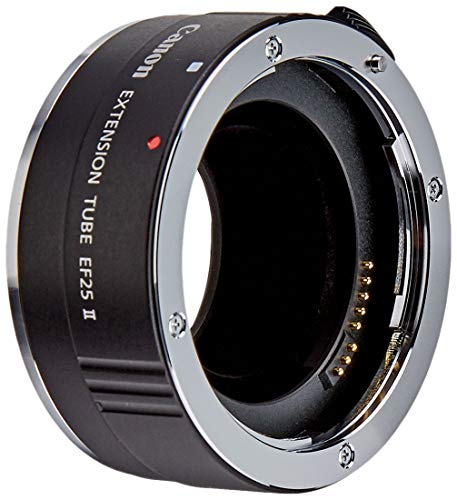
- 25mm extension for closer focusing
- Retains metering and AF with most EF lenses
- O-ring seals and water/dust resistance
Best For: Canon EOS users seeking a sealed single-extension tube
Fuji X-Mount Value Pick

- Designed for Fujifilm X-mount systems
- 10mm, 16mm, or combined 26mm extension
- Compact setup supporting all shooting modes
Best For: Portable Fujifilm macro experimentation with flexible extension
Canon Manual-Macro Option
Fotodiox EF-MCR Extension Tube Set

- Canon EF and EF-S mount compatibility
- All-metal construction
- Supports multiple macro combinations
Best For: Manual-focus extreme macro work with Canon lens systems
Best Nikon Z Value
JJC Z Mount AF Macro Extension Tubes

- 11mm and 16mm tubes work separately or together
- Supports autofocus and automatic exposure
- Compatible with Nikon Z cameras and lenses
Best For: Nikon Z users seeking flexible, lower-cost macro capability
Best Compact MFT Option
Meike AF Macro Extension Tubes

- 10mm and 16mm tubes offer three configurations
- Electronic contacts support autofocus
- Compact set for Olympus and Panasonic MFT cameras
Best For: Portable close-up photography with Micro Four Thirds cameras
Best Nikon Z Range
VILTROX DG-Z AF Extension Tubes

- Includes 12mm and 24mm tubes
- Use tubes individually or stack them
- Electronic contacts support diaphragm and TTL/AE functions
Best For: Nikon Z macro users wanting longer, stackable extensions
Micro Four Thirds Macro Flexibility

- 10mm and 16mm tubes can be used separately or together
- Supports autofocus and automatic exposure
- Designed for Olympus and Panasonic M4/3 systems
Best For: Micro Four Thirds users seeking adjustable close-focus capability
Canon RF Close-Up Upgrade
JJC RF AF Macro Extension Tubes

- Includes 11mm and 16mm extension tubes
- Supports autofocus and automatic exposure
- Compatible with Canon RF cameras and lenses
Best For: Canon RF owners building a flexible macro setup
Sony E Macro Starter Set
JJC E Mount AF Extension Tubes

- Includes 10mm and 16mm tubes
- Supports autofocus and automatic exposure
- Fits Sony E-mount cameras and lenses
Best For: Sony E users seeking adjustable close-focus capability
Sony E/FE Auto-Focus Pick – Meike S-AF3A Macro Extension Tubes
If you need camera extension tubes for mirrorless cameras using the Sony E mount, the Meike S-AF3A offers a flexible two-piece setup for close-up work. Use the 10mm or 16mm tube separately, or combine them for 26mm of extension when photographing insects, flowers, and other small subjects.
Best For: Sony E-mount APS-C and full-frame users who want autofocus-compatible extension options in a compact kit.
Pros:
- Compatible with Sony E/FE-mount APS-C and full-frame cameras.
- Supports autofocus and all shooting modes.
- 10mm, 16mm, and combined 26mm configurations provide flexible magnification.
- Metal bayonet mounts and a lightweight, portable design.
Cons:
- Exposure compensation may be required.
- Manual mode is recommended for direct shutter-speed control.
- No image stabilization or weather resistance is specified.
The Meike S-AF3A is a practical choice when you want the convenience of electronic camera functions without committing to a single extension length. Its interchangeable sections also make it easy to pack for field close-ups.
Canon Weather-Resistant Choice – Canon EF 25 II Extension Tube
For Canon EOS users, the Canon EF 25 II is a straightforward option among camera extension tubes for mirrorless cameras when paired with compatible EF or EF-S lens systems. Its 25mm extension shortens the focusing distance for high-magnification photography while retaining metering and autofocus with most Canon EF lenses.
Best For: Canon EOS photographers using EF, EF-S, or TS-E lenses who value electronic lens functions and sealed construction.
Pros:
- Retains metering and autofocus with most Canon EF lenses.
- Compatible with EF, EF-S, and TS-E lenses.
- O-ring seals help protect the mount and release lever.
- Designed with a high level of water and dust resistance.
Cons:
- Exposure compensation may be needed with cameras other than the EOS-1 Series.
- The tube provides one fixed extension length rather than multiple combinations.
- Listed as manual exposure control.
The EF 25 II suits photographers who prefer a Canon-branded, single-tube solution with useful protection against dust and rain. Confirm your camera and lens use the supported Canon EF-family mount before buying.
Fuji X-Mount Value Pick – Meike MK F AF3 Macro Tubes
The Meike MK F AF3 gives Fujifilm X users a compact way to explore macro photography with camera extension tubes for mirrorless cameras. Its 10mm and 16mm sections can be used alone or together for 26mm of extension, bringing the lens closer to small subjects without adding optical elements.
Best For: Fujifilm X-mount photographers who want portable, autofocus-compatible extension choices for closer focusing.
Pros:
- Designed for Fujifilm X-mount lenses and mirrorless cameras.
- 10mm, 16mm, and 26mm combined configurations are available.
- Supports all camera shooting modes.
- Compact and lightweight for carrying in a camera bag.
Cons:
- Exposure compensation is required.
- Manual mode is recommended for controlling exposure directly.
- The lens focal length should be greater than the extension length used.
With its two-piece design and small carrying footprint, the MK F AF3 is well suited to occasional close-up work on Fujifilm cameras. It is especially useful when you want to vary working distance rather than use one fixed tube.
Canon Manual-Macro Option – Fotodiox EF-MCR Extension Tube Set
The Fotodiox EF-MCR is a simple, all-metal option for Canon EF and EF-S cameras. As camera extension tubes for mirrorless cameras, it is most relevant to users adapting or pairing compatible Canon lens systems who want closer focusing without changing the lens’s optical quality.
Best For: Canon EF/EF-S users who prefer a durable manual-focus tube for experimenting with extreme macro photography.
Pros:
- Compatible with Canon EF and EF-S lens mounts.
- All-metal construction.
- Does not alter optical quality.
- Multiple combinations are available for different macro effects.
Cons:
- Manual focus design.
- Manual exposure control is listed.
- Not specified as water resistant.
The Fotodiox EF-MCR emphasizes mechanical simplicity and construction over electronic convenience. It is a sensible pick for photographers comfortable focusing and exposing manually while testing different macro configurations.
Best Nikon Z Value – JJC Z Mount AF Macro Extension Tubes
For photographers looking for camera extension tubes for mirrorless cameras, this JJC set offers a practical way to turn compatible Nikon Z lenses into closer-focusing macro tools. Its 11mm and 16mm tubes can be used separately or together, while electronic support preserves autofocus and automatic exposure.
Best For: Nikon Z mirrorless users who want flexible macro magnification without buying a dedicated macro lens.
Pros:
- Includes 11mm and 16mm tubes for three length combinations.
- Supports full autofocus and automatic exposure.
- Can convert almost any compatible Nikon Z lens for macro photography.
- Uses an aluminum camera mount and brass lens mount.
Cons:
- Compatible only with Nikon Z-mount mirrorless cameras and lenses.
- It has no image stabilization.
- It is not water resistant.
This is a versatile choice for Nikon Z owners who value electronic functionality and adjustable extension. The ABS tube construction keeps the design practical, though users should take care around moisture.
Best Compact MFT Option – Meike AF Macro Extension Tubes
The Meike MK-P-AF3A is a compact option for photographers comparing camera extension tubes for mirrorless cameras with Micro Four Thirds mounts. Its 10mm and 16mm tubes provide three configurations, and electronic contacts support automatic focusing and exposure with compatible Olympus and Panasonic interchangeable-lens cameras.
Best For: Olympus and Panasonic Micro Four Thirds users who want a small, lightweight set for close-up photography.
Pros:
- Offers 10mm, 16mm, and combined 26mm configurations.
- Electronic contacts support autofocus.
- Small and light, weighing approximately 21g and 27g per tube.
- Features a metal bayonet mount.
Cons:
- Designed only for Micro Four Thirds interchangeable-lens cameras.
- Does not support DSLR cameras.
- It is not water resistant.
With its portable design and useful combination options, this set suits travel, tabletop, and casual close-up work. Confirm your camera uses the Micro Four Thirds mount before purchasing.
Best Nikon Z Range – VILTROX DG-Z AF Extension Tubes
The VILTROX DG-Z gives Nikon Z photographers a straightforward way to explore macro work with camera extension tubes for mirrorless cameras. Its 12mm and 24mm tubes can be used individually or stacked, and electronic contacts support automatic diaphragm control and TTL/AE compatibility with suitable cameras.
Best For: Nikon Z users who want two longer extension options and electronic camera-lens communication for macro photography.
Pros:
- Includes 12mm and 24mm extension tubes.
- Tubes can be used alone or stacked for greater extension.
- Electronic contacts support automatic diaphragm operation.
- Contains no optics, so the extension itself does not alter image quality.
Cons:
- Compatibility is limited to Nikon Z-mount cameras and lenses.
- The supplied notes qualify TTL/AE coupling when used with an electronic flash AE unit.
- It has no stated image stabilization or weather resistance.
The two longer tube lengths make this set appealing when you want more flexibility than a single extension provides. Its electronic contacts add convenience, while stacking lets you adjust working distance and magnification for different subjects.
Micro Four Thirds Macro Flexibility – JJC M4/3 AF Extension Tubes
For photographers comparing camera extension tubes for mirrorless cameras, this JJC set is designed for Olympus and Panasonic Micro Four Thirds systems. Its 10mm and 16mm tubes can be used separately or together to reduce a lens’s minimum focusing distance for macro work, without adding optics to the setup.
Best For: Olympus and Panasonic Micro Four Thirds users who want adjustable macro magnification and electronic autofocus and exposure support.
Pros:
- Includes 10mm and 16mm tubes for individual or combined use.
- Supports autofocus and automatic exposure with compatible M4/3 equipment.
- Can turn many existing lenses into closer-focusing macro tools without buying a dedicated macro lens.
- Uses an aluminum camera mount, brass lens mount, and ABS tube construction.
Cons:
- Autofocus may be less practical after mounting; the manufacturer recommends manual focus or a tripod with a focusing rail.
- Compatibility is limited to Micro Four Thirds cameras and lenses.
- It is not water resistant.
This is a versatile, cost-conscious option for M4/3 owners who want two magnification choices. For the most controlled close-up results, plan to use manual focusing and stable support.
Canon RF Close-Up Upgrade – JJC RF AF Macro Extension Tubes
This JJC set gives Canon RF users a straightforward way to explore macro photography with existing lenses. The 11mm and 16mm tubes shorten minimum focusing distance and can be mounted individually or together, while retaining autofocus and automatic exposure compatibility.
Best For: Canon RF mirrorless owners who want flexible extension lengths for close-up work without purchasing a dedicated macro lens.
Pros:
- Offers 11mm and 16mm extension options for adjustable magnification.
- Supports autofocus and automatic exposure with compatible Canon RF cameras and lenses.
- Can be used separately or combined for greater magnification.
- Uses an aluminum camera mount, brass lens mount, and ABS plastic tube.
Cons:
- Does not fit Canon RF teleconverters or extenders, including the RF 1.4x and RF 2x extenders.
- The manufacturer recommends manual focus or a tripod with a focusing rail after installation.
- Compatibility is limited to Canon RF mount equipment.
With two lengths and electronic function support, this set is a practical entry point for Canon RF close-ups. Verify your setup is a standard RF camera-and-lens combination rather than an RF teleconverter or extender.
Sony E Macro Starter Set – JJC E Mount AF Extension Tubes
For Sony users shopping for camera extension tubes for mirrorless cameras, this JJC E-mount set provides two ways to shorten a lens’s minimum focusing distance. The 10mm and 16mm tubes work individually or together, helping compatible Sony E and FE lenses focus closer for macro-style photography.
Best For: Sony E-mount photographers who want an affordable, adjustable route to closer focusing with their existing lenses.
Pros:
- Includes 10mm and 16mm tubes for individual or combined use.
- Supports autofocus and automatic exposure with compatible Sony E-mount equipment.
- Can convert many existing lenses for macro photography without buying a dedicated macro lens.
- Designed for Sony E-mount mirrorless cameras and lenses.
Cons:
- Manual focus or a tripod with a focusing rail may be preferable after mounting.
- Compatibility is restricted to Sony E-mount systems.
- The tubes are not water resistant.
This set suits Sony photographers who want to experiment with close-up work using lenses they already own. The two extension lengths add useful flexibility, while stable support can make focusing more manageable at high magnification.
How We Picked the Best Camera Extension Tubes for Mirrorless Cameras
We focused on mount-specific extension tubes that are designed for mirrorless camera systems or provide clear compatibility with the listed lens mount. The selection includes single tubes and multi-piece sets, with emphasis on autofocus and electronic aperture-control support where advertised. We also considered tube-length flexibility, compatibility clarity, practical macro use, and the needs of photographers shopping across Sony E, Canon RF, Nikon Z, Fujifilm X, and Micro Four Thirds systems.
Extension tubes do not contain glass, so image quality depends mainly on the attached lens. However, construction, mount fit, electrical contacts, and mechanical tolerances can affect usability and reliability.
Quick Comparison
| Mount | Options in This Roundup | Best For |
|---|---|---|
| Sony E/FE | Meike, JJC | Flexible autofocus macro experiments |
| Canon RF | JJC | Native RF mirrorless systems |
| Nikon Z | JJC, Viltrox | Close-up work with Z cameras |
| Fujifilm X | Meike | Compact X-series setups |
| Micro Four Thirds | Meike, JJC | Lightweight macro kits |
| Canon EF/EF-S | Canon, Fotodiox | EF lenses used on compatible bodies or adapters |
Key Buying Factors
Mount and Lens Compatibility
Choose the tube for the lens mount, not just the camera brand. Sony E and FE lenses, Canon RF lenses, Nikon Z lenses, Fujifilm X lenses, and Micro Four Thirds lenses use different bayonet designs. EF and EF-S tubes may suit Canon DSLR lenses, but mirrorless users should confirm whether an adapter is required and whether the complete camera-lens combination is supported.
Autofocus and Electronic Contacts
Autofocus extension tubes with electronic contacts can preserve lens-to-body communication, including autofocus, aperture control, and sometimes exposure information. Performance may be less consistent at very close distances, so manual focus remains useful. Basic tubes without contacts are cheaper but require manual aperture control on many modern lenses.
Tube Length and Magnification
Longer extension generally produces greater magnification but reduces the available focusing distance and can lower light reaching the sensor. Sets with two tubes let you adjust the working distance and magnification for flowers, products, insects, and detail shots.
Build and Handling
Look for secure bayonet fit, smooth mounting, durable materials, and clearly marked tube lengths. Avoid forcing a tight connection, and support heavier lenses when a long extension is installed.
Who Should Buy Which Camera Extension Tubes for Mirrorless Cameras?
Choose a dedicated set for your exact mount if you want the simplest setup. Sony E/FE and Nikon Z users have multiple autofocus options here, while Canon RF, Fujifilm X, and Micro Four Thirds buyers should prioritize a clearly matching set. A multi-piece kit is the better choice for experimenting with different magnification levels; a single tube is preferable when you want a lighter, simpler field setup.