The best audio compressors for podcasting help keep voices intelligible and consistent, reducing distracting volume swings without making speech sound flat or unnatural.
This roundup compares 10 options across rackmount processors, channel strips, pedals, and podcast-focused bundles so you can match the right compressor to your microphone, mixer, and recording setup.
Best 10 Audio Compressors for Podcasting Picks for 2026
Rackmount Control

- Dual-channel compression with auto attack/release
- Noise gate and LED gain-reduction monitoring
- XLR/TRS I/O with sidechain insert
Best For: Rack-based podcast, studio, streaming, and live setups
Studio Dynamics Classic
Behringer Composer Pro-XL MDX2600

- Two-channel compressor, limiter, and gate
- Suitable for production, mixing, and mastering
- Portable design with a two-year warranty
Best For: Podcasters using external studio or mixing hardware
All-in-One Creator Kit
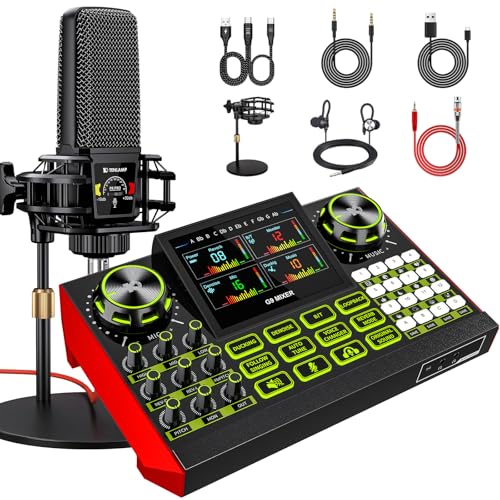
- Includes microphone, sound card, stand, and shock mount
- Plug-and-play USB, AUX, and microphone connections
- Noise reduction, reverb, effects, and voice changers
Best For: Beginners building a podcast or streaming setup
Compact Analog Option

- Space-saving analog compressor pedal
- Constant headroom technology for clean performance
- Ten gain-reduction LEDs and true bypass
Best For: Compact analog audio chains with 1/4-inch connections
Tube Channel Control
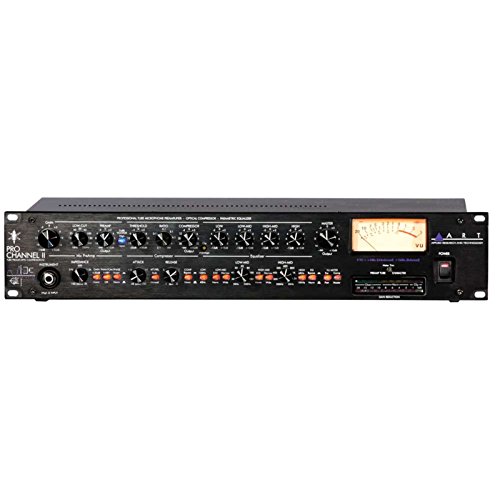
- Tube preamp, compressor, and EQ in one unit
- Switchable optical/tube compression
- Selectable VU metering for multiple signal points
Best For: Integrated voice-channel processing
Warm Optical Dynamics

- Single-channel tube optical compressor
- Warm, balanced, versatile sound profile
- Direct knob-based analog control
Best For: Warm processing for a single vocal channel
Dual-Channel Flexibility

- Two-channel analog dynamics processing
- Compression, limiting, gating, and enhancement
- High-pass filter helps manage low-frequency control signals
Best For: Multi-channel podcast dynamics control
Best with Extra Features

- Dual-channel compression and peak limiting
- Built-in noise gate and vocal processing
- XLR/TRS connectivity for rack systems
Best For: Studio, streaming, and live vocal processing
Optical Character

- LA-2A optical tube compressor emulation
- Mix control for parallel compression
- Compact analog pedal with attack switch
Best For: Vintage-style compression in pedal-based setups
Vocal Dynamics Hub
Dual-Channel Rackmount Compressor

- VCA compression with adjustable attack and release
- Noise gate plus LED gain-reduction metering
- Sidechain insert and XLR/TRS connectivity
Best For: Podcast studios needing detailed vocal control
Rackmount Control – Dual-Channel Audio Compressor
For creators comparing audio compressors for podcasting, this dual-channel rackmount processor offers hands-on dynamics control for vocals and other sources. Its VCA circuitry, LED monitoring, noise gate, and sidechain insert make it suited to more involved studio, streaming, and live setups.
Best For: Podcasters and streamers building a rack-based setup who want dual-channel compression, vocal-focused control, and flexible routing.
Pros:
- Dual-channel design with Overeasy compression and auto attack/release settings.
- Built-in noise gate and independent LED indicators for monitoring compression and gate thresholds.
- XLR/TRS connectivity plus a sidechain insert for targeted frequency control.
Cons:
- The 1U rackmount format may be more equipment than a simple desktop podcast setup needs.
- Its corded 110-volt design is intended for a fixed powered setup.
This is a flexible choice when podcast production involves multiple sources or more advanced signal routing. For basic single-microphone recording, its rackmount features may be unnecessary.
Studio Dynamics Classic – Behringer Composer Pro-XL MDX2600
The Behringer Composer Pro-XL MDX2600 is a two-channel compressor, limiter, and gate for buyers evaluating audio compressors for podcasting alongside broader production duties. Its format is practical for audio production, mixing, and mastering workflows where centralized dynamics processing is useful.
Best For: Podcasters and home-studio users who need two-channel compression with limiting and gating for production or mixing.
Pros:
- Combines a compressor, limiter, and gate in one two-channel unit.
- Designed for audio production, mixing, and mastering applications.
- Portable form factor and a stated two-year warranty.
Cons:
- The supplied notes do not specify detailed control features or connectivity.
- A dedicated rack-style processor may be less convenient than an all-in-one USB podcast interface.
The MDX2600 makes the most sense for a podcast workflow that already uses external audio hardware. It provides broader dynamics processing than compression alone, though buyers needing a plug-and-play computer interface should look elsewhere.
All-in-One Creator Kit – G9 Podcast Equipment Bundle
This G9 bundle takes a broader approach than a standalone processor, combining a condenser microphone, sound card, stand, shock mount, and cable. For shoppers seeking audio compressors for podcasting but starting from scratch, its plug-and-play design and built-in noise reduction provide an accessible entry point.
Best For: New podcasters, streamers, and mobile creators who want a complete microphone-and-mixer setup with simple voice effects.
Pros:
- Includes a condenser microphone, G9 sound card, shock mount, desktop stand, and power cable.
- USB connectivity supports computers, while 3.5mm and 6.35mm inputs support additional devices.
- Offers noise reduction, adjustable tone controls, reverb, 12 effects, and four voice changers.
Cons:
- The supplied notes describe voice effects and noise reduction rather than a dedicated compressor.
- Battery-powered operation and a 12-month guarantee may not suit every fixed studio workflow.
- Its five-channel mixer format may be more than needed for a basic one-person podcast.
This kit is best viewed as a convenient podcasting starter system rather than a traditional rack compressor. It prioritizes included equipment, quick setup, and creative live-streaming effects over dedicated dynamics-processing controls.
Compact Analog Option – MXR Studio Compressor
The MXR Studio Compressor is a compact analog pedal-style unit for buyers considering audio compressors for podcasting in a small signal chain. Its constant headroom technology, true bypass, and ten gain-reduction LEDs offer straightforward visual feedback in a space-saving format.
Best For: Compact analog rigs and creators who want a small compressor with clear monitoring and simple 1/4-inch connectivity.
Pros:
- Compact phase 90-sized pedal design that saves space.
- Constant headroom technology is designed for clear, clean performance.
- Ten gain-reduction LEDs and true bypass provide useful status monitoring and signal-path control.
Cons:
- Uses 1/4-inch audio connections rather than the XLR inputs common in microphone-based podcast systems.
- Its 9-volt, 9-milliamp pedal format may require additional interfacing for a typical podcast setup.
- The supplied notes do not list dedicated vocal or speech-specific controls.
This compressor can work in a compact analog chain, but it is not a complete podcast interface. Check compatibility with the rest of the microphone and mixer setup before choosing it for spoken-word recording.
Tube Channel Control – ART Pro Channel II
ART Pro Channel II Microphone Preamp/Compressor/EQ Professional Tube Based Selectable VU Metering
Check Price On AmazonFor creators seeking audio compressors for podcasting with additional tone-shaping options, the ART Pro Channel II combines a tube microphone preamp, switchable optical/tube compressor, and tube EQ in one recording channel. Selectable VU metering helps you monitor different stages of the signal path.
Best For: Podcasters and voice-recording setups that want preamp, compression, and EQ in a single rack-style unit.
Pros:
- Combines a tube mic pre, compressor, and EQ.
- Offers switchable optical/tube compression.
- Selectable VU metering can display mic pre out, compressor out, or main out.
- Provides XLR and 1/4-inch connectivity options.
Cons:
- It is a single-channel unit.
- At 13.4 pounds, it is relatively substantial for a compact podcast setup.
- Its feature-rich design may be more than needed if you only want compression.
The Pro Channel II is a versatile choice when you want compression integrated with front-end processing. Its tube-based design and selectable metering make it especially suitable for users who value hands-on control over voice tone and signal levels.
Warm Optical Dynamics – Warm Audio WA-1B
The Warm Audio WA-1B is a one-channel tube optical compressor for podcasters who want an analog dynamics processor with a warm, balanced sound profile. Its knob-based controls keep operation direct and hands-on.
Best For: Single-voice podcast chains that prioritize tube optical compression and straightforward analog control.
Pros:
- Uses a tube optical compression design.
- Provides a warm, balanced, versatile sound profile.
- Features simple knob-based controls.
- Includes a rackmount chassis.
Cons:
- It provides only one compression channel.
- It is relatively heavy at 12.1 pounds.
- Its specialized compressor design may be unnecessary for users wanting multiple processing functions.
The WA-1B focuses on dedicated optical compression rather than combining several studio processors. It is a strong fit for a podcast setup built around a single vocal path and a preference for warm analog processing.
Dual-Channel Flexibility – Behringer MDX1400 Autocom Pro
For podcast producers comparing audio compressors for podcasting, the Behringer MDX1400 adds two-channel processing with compression, limiting, expansion, gating, and enhancement. Its high-pass filter in the control path can help prevent low-frequency content from dominating compression behavior.
Best For: Podcasters who need flexible two-channel dynamics processing for voices or multiple analog sources.
Pros:
- Provides two channels in a compact analog unit.
- Combines expander, gate, compressor, and enhancer functions.
- Uses Interactive Knee Adaptation for hard- and soft-knee characteristics.
- Includes a switchable high-pass filter in the control signal path.
Cons:
- Its broader feature set may require more setup than a dedicated compressor.
- It uses 1/4-inch audio and XLR/jack connections, so compatibility should be checked against the rest of the chain.
The MDX1400 is the most flexible option here for users managing more than one channel or wanting noise-control functions alongside compression. Its dual-channel layout and additional dynamics tools make it practical for expanding a more involved podcast rack.
Best with Extra Features – Dual-Channel Audio Processor
For buyers comparing audio compressors for podcasting, this dual-channel rackmount processor offers practical vocal control alongside noise reduction and peak management. Its XLR/TRS connectivity suits a studio, streaming, or live-sound signal chain.
Best For: Podcasters and streamers who need dual-channel vocal processing, noise gating, and flexible rack integration.
Pros:
- Dual-channel compression and limiting help maintain consistent output.
- Built-in noise gate can reduce unwanted background noise.
- XLR and 1/4-inch TRS inputs and outputs support professional routing.
- Includes crossover, feedback suppression, DSP reverb, and anti-howling processing.
Cons:
- The 1U rackmount format may be excessive for a simple desktop podcast setup.
- Its feature set is oriented toward broader studio, stage, and live-sound use.
This is a versatile choice when podcasting is part of a larger audio system. Buyers wanting rackmount connectivity and several built-in processing tools may find it more useful than a basic compressor.
Optical Character – LA-2A Studio Compressor Pedal
Among audio compressors for podcasting, the Universal Audio LA2A Studio Compressor Pedal is a compact analog-style option built around an emulation of the Teletronix LA-2A optical tube compressor/limiter. Its small pedal format is best suited to compatible signal chains rather than conventional rack or interface workflows.
Best For: Users seeking vintage optical compression character, parallel compression, and a compact pedal design.
Pros:
- Emulates the LA-2A optical tube compressor/limiter, including its transformers, tubes, and T4 optical cell.
- Mix control supports parallel compression effects.
- Offers true/buffered bypass and a stock/fast attack switch.
- Compact 1/4-inch audio connections and 9V DC operation suit pedalboard-style setups.
Cons:
- Pedal format may be less convenient for standard podcast rack or desktop routing.
- The supplied notes do not list XLR connections or a built-in noise gate.
This pedal prioritizes a specific optical compressor sound and hands-on control over podcast-focused convenience features. It makes the most sense for creators already using compatible analog or pedal-based equipment.
Vocal Dynamics Hub – Dual-Channel Rackmount Compressor
This dual-channel rackmount unit is a strong candidate for audio compressors for podcasting because it combines vocal compression, a noise gate, LED metering, and flexible XLR/TRS connectivity. Adjustable attack and release controls provide more control over voice dynamics in studio, broadcast, streaming, and live applications.
Best For: Podcast studios and vocal-focused setups that need metering, noise gating, and detailed dynamic control.
Pros:
- Dual-channel VCA compression supports vocals, voiceovers, and other sources.
- Overeasy compression provides a smoother transition into gain reduction.
- Noise gate and LED indicators assist with cleaner setup and monitoring.
- Sidechain insert enables frequency-based ducking and additional shaping.
Cons:
- The 19-inch rackmount chassis requires dedicated rack or suitable placement space.
- Its sidechain and live-sound features may be unnecessary for a basic one-microphone setup.
For podcasting, the combination of vocal-oriented VCA processing, metering, and gating makes this the most directly focused option of the three. It is especially appealing when the audio chain may expand beyond a simple interface and microphone.
How We Picked the Best Audio Compressors for Podcasting
We focused on processors that can manage spoken-word dynamics reliably in home studios, streaming spaces, and professional podcast rooms. Our comparison considers compression control, input and output connectivity, metering, noise-management features, ease of setup, and suitability for voice recording. We also included different formats and price levels, since a solo creator using a USB-oriented setup has different needs from a producer running balanced rack equipment.
Features such as a noise gate, de-esser, limiter, sidechain insert, and peak protection can be useful, but they should support clean gain staging rather than compensate for poor microphone placement or room noise.
Quick Comparison
| Best For | Look For | Recommended Format |
|---|---|---|
| Solo podcasters | Simple controls and clear metering | Single-channel processor or channel strip |
| Two-host shows | Independent channels and balanced I/O | Dual-channel rack compressor |
| Noisy recording spaces | Adjustable gate plus compression | Processor with gate and limiter |
| Warm vocal character | Optical or tube-based compression | Optical compressor or channel strip |
| Portable or hybrid setups | Compatible connections and compact controls | Pedal, mixer, or compact processor |
Key Buying Factors for Audio Compressors for Podcasting
Compression Controls
Look for adjustable threshold, ratio, attack, release, and makeup gain. For spoken word, moderate compression is usually easier to manage than an aggressive setting. A compressor with an automatic mode can simplify setup, while fully variable controls offer more precision.
Inputs, Outputs, and Signal Flow
Confirm whether the unit accepts microphone-level, line-level, XLR, or TRS connections. A microphone preamp may be necessary if the compressor does not provide enough clean gain. Sidechain inserts are useful when you want external equalization or processing to influence the compression response.
Metering and Protection
Clear gain-reduction and output meters make it easier to set consistent levels. A limiter or peak-limiting stage adds protection against sudden laughs, loud guests, and accidental gain changes, but it should not be used as a substitute for sensible recording levels.
Noise Gate and De-Essing
A gate can reduce room tone between phrases, though overly fast or aggressive settings may cut off word endings. De-essing can help with strong sibilance, but consider whether you already have this feature in your mixer, software, or channel strip before paying extra for duplicate processing.
Who Should Buy Which Audio Compressors for Podcasting?
Choose a dual-channel rack compressor if you record two microphones and want matching hardware control for both voices. A model with a gate and limiter is especially practical for live podcasting and streaming, where predictable levels matter.
Choose a channel strip if you need microphone gain, compression, and equalization in one device. Tube-based or optical designs suit buyers who value smoother, more colored vocal character, while a straightforward digital or solid-state processor is often better for transparent, repeatable speech control.
If you are new to podcast production, prioritize simple metering, accessible controls, and compatibility with your existing mixer or interface. A podcast bundle may be convenient for an all-in-one starter system, but verify its connection type and upgrade path before buying. Experienced producers can justify premium compressors when they need specific tonal character, more flexible routing, or dependable hardware workflow.