The right monopod can give a DSLR camera more stability without the bulk of a full tripod. These 10 picks cover lightweight travel designs, tall aluminum models, and versatile options with detachable feet.
We selected them for portability, load capacity, height range, locking systems, and practical handling so you can choose confidently for sports, wildlife, events, travel, or video.
Best 10 Camera Monopods for Dslr Cameras Picks for 2026
Best Budget Pick
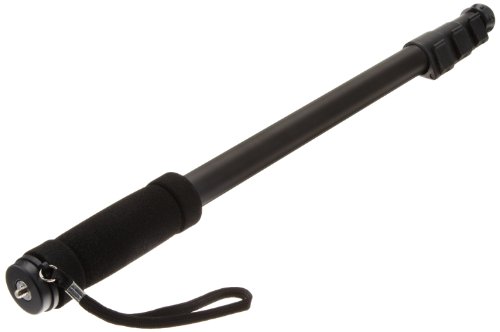
- 67-inch maximum height
- 6.6-pound weight capacity
- Rubber foot and carrying bag included
Best For: Affordable everyday DSLR and camera support
Best Compact Option

- Weighs 0.59 pounds
- Folds to 16.75 inches
- Supports up to 5 pounds
Best For: Travel, hiking, and lightweight DSLR kits
Best Heavy-Duty Travel Pick

- 15.4-pound load capacity
- Folds to 15.7 inches
- Reversible 1/4-inch and 3/8-inch mount
Best For: Outdoor photographers with heavier camera setups
Best Stabilized Setup
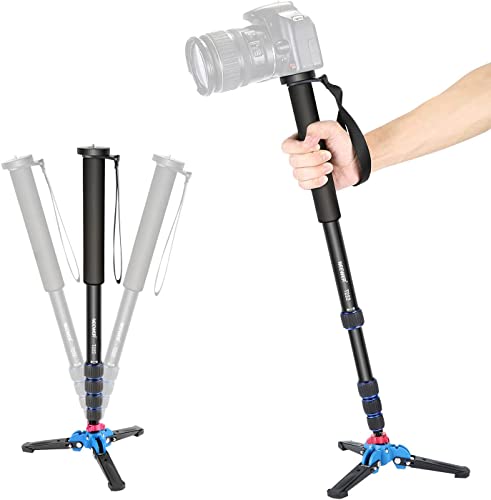
- 66-inch maximum height
- 11-pound load capacity
- Detachable three-leg support base
Best For: Panoramic shooting and more stable controlled setups
Best Lightweight Travel Pick
ULANZI TB12 61-Inch Camera Monopod

- Weighs about 0.83 pounds and folds to 16.9 inches
- Five height options up to 61 inches
- Supports up to 11.02 pounds
Best For: Travel, hiking, and lightweight DSLR photography
Best Outdoor Versatility
NEEWER TP41 61-Inch Camera Monopod

- Supports up to 17.6 pounds
- Interchangeable rubber and steel spike feet
- Includes 1/4-inch and 3/8-inch screw adapter
Best For: Outdoor shooting, DSLR rigs, and varied surfaces
Best for Comfort

- 15 kg stated payload for heavier zoom lenses
- 159 cm maximum height and 43 cm folded length
- Five sections with ergonomic twist locks
Best For: Traveling DSLR photographers using heavier lenses
Versatile Starter Pick
CAMBOFOTO 73-inch Tripod Monopod

- Converts from tripod to monopod
- 73.3-inch tripod height; 11-pound capacity
- Useful for travel, events, and video
Best For: Entry-level DSLR users wanting one versatile support system
Best Heavy-Duty Pick
Manbily A-222 Monopod With Feet

- Folds to 21 inches and weighs 0.67 kg
- 67-inch height with 15.5-pound capacity
- Includes rubber and spike feet
Best For: Traveling photographers who prioritize portability
Video-Focused Upgrade

- Q6 fluid head with 360-degree rotation
- 22-pound capacity and 73.2-inch height
- Converts to low-angle or desktop tripod
Best For: Video shooters and heavier DSLR setups
Best Budget Pick – Amazon Basics 67-Inch Monopod
If you want straightforward camera monopods for DSLR cameras, the Amazon Basics WT1003 offers useful height range, a lightweight aluminum build, and support for equipment up to 6.6 pounds. Its rubber foot and retractable spikes make it practical for varied shooting surfaces.
Best For: Budget-conscious photographers who want a tall, lightweight monopod for cameras, video cameras, or scopes.
Pros:
- Extends to 67 inches with four adjustable sections
- Supports equipment up to 6.6 pounds
- Includes a non-skid rubber foot, retractable spikes, wrist strap, and carrying bag
Cons:
- Not water resistant
- Collapsed length is 21.4 inches, so it is less compact than some travel models
With its simple controls and broad compatibility through the 1/4-inch universal mount, this is a practical entry-level choice. The included bag and sub-one-pound aluminum construction also make it easy to carry between locations.
Best Compact Option – Altura Photo 62-Inch Monopod
For photographers comparing camera monopods for DSLR cameras, the Altura Photo model emphasizes portability without giving up useful reach. It weighs 0.59 pounds, collapses to 16.75 inches, and uses a universal 1/4-inch mount with a 3/8-inch adapter.
Best For: Hikers, travelers, and photographers who prioritize a compact carry size and low weight.
Pros:
- Lightweight aluminum design weighs just 0.59 pounds
- Collapses to 16.75 inches for backpacks and carry-ons
- Includes foam grip, wrist strap, carry pouch, rubber foot, and retractable spike
Cons:
- Maximum load is 5 pounds, lower than some alternatives
- Maximum height is 62 inches
The Altura Photo is especially appealing when storage space matters. Its four-section design, comfortable grip, and adaptable foot make it suitable for both indoor shooting and outdoor terrain.
Best Heavy-Duty Travel Pick – Manbily A-555L Monopod
The Manbily A-555L stands out among camera monopods for DSLR cameras when load capacity and travel flexibility are priorities. Its aluminum construction supports up to 15.4 pounds, while six twist-lock sections fold to 15.7 inches.
Best For: Wildlife, sports, and travel photographers carrying heavier camera or camcorder setups.
Pros:
- Supports up to 15.4 pounds with a 28 mm maximum leg diameter
- Six sections provide a compact 15.7-inch folded size
- Reversible 1/4-inch and 3/8-inch mounting screw accommodates cameras and ball heads
Cons:
- Weighs 1.1 pounds, more than ultralight alternatives
- Twist-lock sections require manual quarter-turn adjustments
Its removable wrist strap, textured rubber grip, and convertible rubber-and-metal feet add practical control in changing conditions. The included handle also lets it function as a trekking pole, increasing its usefulness on outdoor trips.
Best Stabilized Setup – NEEWER T222 Monopod with Base
If you need camera monopods for DSLR cameras with added support, the NEEWER T222 combines a 66-inch monopod with a detachable, foldable three-leg base. The base provides a 15-degree tilt and supports 360-degree panoramic rotation, while the monopod holds up to 11 pounds.
Best For: Photographers and videographers who want a monopod that can stand with an included support base during controlled shooting.
Pros:
- Extends from 20.5 to 66 inches with five-section adjustment
- Supports up to 11 pounds
- Includes a three-leg base with 15-degree tilt and 360-degree rotation
Cons:
- The camera must be held securely when mounted on the monopod, or it may fall
- Folded length is 20.5 inches
- Weighs 1.3 pounds
The T222 offers more positioning flexibility than a conventional single-foot monopod, particularly for panoramic work and stable setups. Its foam handle and aluminum-alloy construction add comfort and durability, but users should follow the supplied handling caution.
Best Lightweight Travel Pick – ULANZI TB12 61-Inch Camera Monopod
For photographers seeking camera monopods for DSLR cameras that are easy to carry, the ULANZI TB12 combines a 61-inch maximum height with a compact 16.9-inch folded size. Its aluminum construction weighs about 0.83 pounds and supports up to 11.02 pounds, making it practical for travel, hiking, wildlife photography, and everyday shooting.
Best For: Travelers and hobbyist photographers who want a lightweight monopod with multiple height settings and outdoor-friendly versatility.
Pros:
- Lightweight 0.83-pound design folds to 16.9 inches for travel.
- Five-section construction offers five height options from 16.9 to 61 inches.
- Supports cameras and accessories up to 11.02 pounds.
- Can also function as a selfie stick, walking stick, or trekking pole.
Cons:
- Not water resistant.
- Its 11.02-pound capacity is lower than some heavier-duty alternatives.
The ULANZI TB12 is a strong choice when portability matters most. It offers useful height flexibility and several carry-friendly modes without the bulk of a full tripod.
Best Outdoor Versatility – NEEWER TP41 61-Inch Camera Monopod
The NEEWER TP41 is one of the more versatile camera monopods for DSLR cameras, supporting up to 17.6 pounds while weighing only 0.88 pounds. Its interchangeable rubber and steel spike feet, dual screw adapter, and compact 17.3-inch folded size make it suitable for both indoor and outdoor shooting.
Best For: DSLR users, content creators, and outdoor photographers who need adaptable mounting and foot options across different surfaces.
Pros:
- Supports DSLR cameras and equipment up to 17.6 pounds.
- Interchangeable rubber feet and steel spike feet suit hard and soft surfaces.
- Includes a dual 1/4-inch to 3/8-inch screw adapter for varied equipment.
- Extends to 61 inches and folds to 17.3 inches.
Cons:
- Not water resistant.
- Its minimum listed height is 26.6 inches, so it is less suited to very low-angle shooting than some options.
Choose the TP41 if surface adaptability and payload capacity are priorities. The interchangeable feet and broad mounting compatibility give it an edge for changing shooting locations.
Best for Comfort – Manfrotto Element MII Monopod
The Manfrotto Element MII is a compelling option among camera monopods for DSLR cameras when you need a compact aluminum support for heavier lenses. It reaches 159 cm, folds to 43 cm, weighs about 0.5 kg, and has a stated 15 kg payload, while twist locks allow quick height adjustments.
Best For: Hobbyist photographers using DSLRs, mirrorless cameras, or compact cameras with heavier zoom lenses.
Pros:
- High stated 15 kg payload suits heavier zoom lenses.
- Extends to 159 cm while folding to 43 cm for storage and transport.
- Five-section aluminum design uses ergonomic twist locks for setup.
- Convertible 1/4-inch and 3/8-inch attachment supports different mounting needs.
Cons:
- Twist locks may be less immediately convenient than flip locks for some users.
- Not water resistant.
The Element MII balances a high payload with a travel-friendly folded length. It is particularly appealing for DSLR photographers who want compact support for heavier equipment.
Versatile Starter Pick – CAMBOFOTO 73-inch Tripod Monopod
If you want camera monopods for DSLR cameras but also need a conventional tripod, this CAMBOFOTO model provides both options. Its removable center column converts into a 41- to 58-inch monopod, while the full tripod reaches 73.3 inches and supports up to 11 pounds.
Best For: Entry-level DSLR photographers who want one support system for travel, events, videos, and changing shooting positions.
Pros:
- Converts from a full tripod into a monopod with a removable center column.
- Offers a 73.3-inch maximum tripod height and 41- to 58-inch monopod range.
- Includes a bubble level, quick-release plate, and 360-degree horizontal rotation.
- Supports cameras and compatible devices weighing up to 11 pounds.
Cons:
- It is not recommended for telephoto lenses.
- The 3.3-pound build is less compact than a dedicated monopod.
- The monopod has a lower maximum height than the complete tripod.
This is a practical all-in-one choice when flexibility matters more than the lightest possible carry weight. Its tripod conversion and straightforward controls make it especially useful for photographers who alternate between stable setups and mobile shooting.
Best Heavy-Duty Pick – Manbily A-222 Monopod With Feet
The Manbily A-222 is a compact option among camera monopods for DSLR cameras, with five sections extending from 21 to 67 inches. Its detachable three-foot base adds stability, while the aluminum construction supports up to 15.5 pounds for a relatively light 0.67-kilogram carry.
Best For: Traveling photographers who want a portable monopod with interchangeable feet and quick height adjustments.
Pros:
- Folds to 21 inches and weighs approximately 0.67 kilograms.
- Supports up to 15.5 pounds and extends to 67 inches.
- Includes a detachable foldable three-foot base and wrist strap.
- Comes with rubber and metal spike feet for paved or softer ground.
Cons:
- The base is intended to improve stability, not to function as a standalone tripod.
- It does not include a ball head.
- The manufacturer recommends avoiding the smallest-diameter tube section for better stability.
Its low weight, 1/4-turn locks, and compact folded length make the A-222 well suited to mobile shooting. Keep the wrist strap secured during use, particularly because the feet are designed as a stabilizing aid rather than a self-supporting tripod.
Video-Focused Upgrade – COMAN KX3232Q6 Fluid Monopod
For photographers and videographers comparing camera monopods for DSLR cameras, the COMAN KX3232Q6 stands out with a Q6 fluid head and 22-pound load rating. It reaches 73.2 inches, supports 360-degree panoramic movement, and can be configured as a supported monopod, low-angle tripod, or desktop tripod.
Best For: DSLR and camcorder users who need fluid video movement, fast camera changes, and multiple support configurations.
Pros:
- Q6 fluid head supports 360-degree rotation and +90/-60-degree tilt.
- Handles up to 22 pounds while extending to 73.2 inches.
- Offers three configurations, including a low-angle or desktop tripod setup.
- Quick-release plate supports top or side locking and includes built-in hex keys.
Cons:
- At 3.9 pounds, it is heavier than a basic travel monopod.
- Its 26-inch folded length is less compact than the Manbily model.
- It is not listed as water resistant.
The KX3232Q6 is the strongest fit here for video-oriented work or heavier camera setups. Its fluid head, high load capacity, and adjustable base provide more control and configuration options, although those capabilities add carrying weight.
How We Picked the Best Camera Monopods for Dslr Cameras
We focused on the features that matter most when supporting a DSLR and lens in real shooting conditions: maximum load, working height, folded length, section count, materials, locking design, grip comfort, and foot stability. We also considered whether each monopod includes useful extras such as a wrist strap, carrying bag, rubber foot, or detachable tripod-style base.
Because a monopod is designed to improve mobility rather than provide completely hands-free support, we favored products that balance rigidity with manageable weight. Stated capacity should be treated as a guideline, especially with long telephoto lenses; heavier equipment benefits from additional safety margin.
Quick Comparison
| Best For | What to Look For |
|---|---|
| Travel and everyday use | Lightweight aluminum construction, compact folded length, and a carrying bag |
| Sports and wildlife | High load capacity, firm locks, tall height, and a secure rubber or spiked foot |
| Video and long lenses | Rigid sections, comfortable grip, smooth height adjustment, and a stable base |
| Maximum versatility | A removable or foldable stand base that adds support when conditions permit |
Key Buying Factors for Camera Monopods for Dslr Cameras
Load Capacity and Rigidity
Choose a monopod rated well above the combined weight of your DSLR, lens, battery grip, and accessories. Wider aluminum tubes generally resist flex better, while very light models are easier to carry but may feel less stable with telephoto glass.
Height and Portability
A monopod should reach a comfortable shooting height without forcing you to hunch. More sections usually reduce folded size but add joints and adjustment time. A four-section design often provides a practical balance; five-section models are convenient for travel.
Feet, Grip, and Locks
Rubber feet work well on hard indoor surfaces, while a detachable or foldable base can improve stability for video and slower-paced shooting. Check whether the leg locks are twist or flip style, and choose the system you can adjust quickly while wearing gloves. A padded grip and wrist strap are small features that make long sessions easier.
Mount Compatibility
Confirm that the top screw and included head or adapter fit your camera setup. Most DSLR bodies use a standard tripod socket, but a quick-release plate may be more convenient if you switch frequently between a monopod and tripod.
Who Should Buy Which Camera Monopods for Dslr Cameras?
Travel photographers: Choose a compact, lightweight five-section or similar design with a bag and comfortable grip.
Sports and wildlife shooters: Prioritize rigidity, generous capacity, quick locks, and enough height to support a long lens comfortably.
Event and wedding photographers: A medium-weight monopod with a reliable rubber foot offers useful support while remaining easy to reposition in crowded spaces.
Videographers: Consider a model with a detachable or foldable stand base, but remember that a monopod base is not a substitute for a full tripod when you need unattended stability.
Budget-conscious DSLR owners: A straightforward aluminum monopod can deliver substantial stability gains without adding the cost or weight of a professional support system. Match its capacity and height to your actual camera-and-lens combination rather than choosing by maximum height alone.