The best camera monopods for travel give you extra stability without the bulk of a full tripod. They are useful for wildlife, landscapes, street photography, and video when packing space and setup time matter.
This roundup compares 10 compact monopods across aluminum and carbon-fiber designs, including lightweight models, walking-stick-style options, and units with detachable feet or tripod bases.
Best 10 Camera Monopods for Travel Picks for 2026
Best Value Travel Support
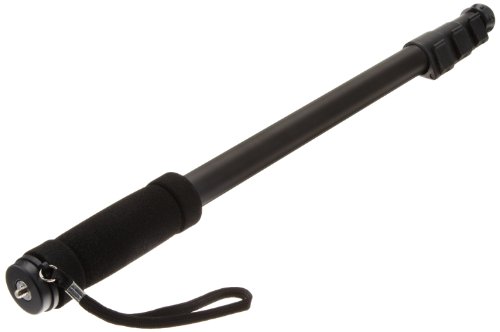
- 67-inch reach with 6.6-pound capacity
- Lightweight aluminum body under 1 pound
- Rubber foot, spikes, grip, strap, and bag
Best For: Budget-conscious travelers needing versatile basic support
Most Versatile Trekking Design
Manbily C-555L Carbon Fiber Monopod
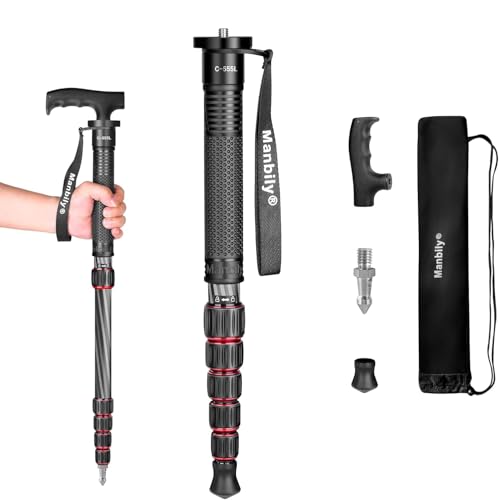
- Carbon fiber support rated to 15.4 pounds
- Folds to 15.7 inches and weighs 0.93 pound
- Converts into a walking stick with changeable feet
Best For: Hikers and photographers wanting dual-purpose support
Lightest Packing Pick

- Weighs only 0.59 pound
- Folds to 16.75 inches for easy packing
- Includes 3/8-inch adapter, pouch, grip, and strap
Best For: Ultralight travelers carrying smaller camera setups
Best Heavy-Duty Compact Option

- Supports up to 15 kilograms
- Folds to 43 centimeters with five sections
- Twist locks and convertible 1/4-inch/3/8-inch screw
Best For: Travelers carrying heavier cameras or zoom lenses
Lightweight Outdoor Pick

- 0.88-pound aluminum design
- 61-inch maximum height
- Rubber and spike feet
Best For: Outdoor travelers and vloggers
Compact Carbon Fiber Choice
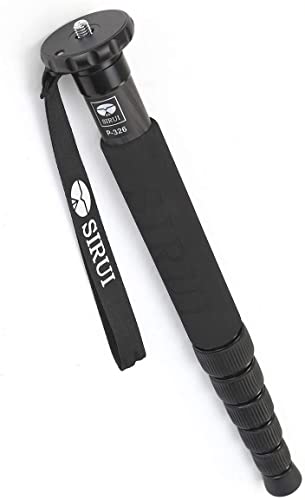
- 400-gram carbon-fiber build
- Folds to about 15 inches
- 22-pound stated load capacity
Best For: Light-packing photographers
Most Versatile Setup

- Converts from tripod to monopod
- 71-inch maximum height
- 360-degree ball head
Best For: Traveling content creators needing flexible support
Stable Base Pick
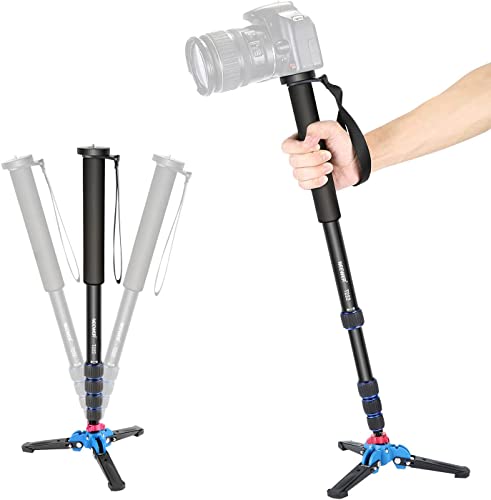
- 66-inch maximum height with a 20.5-inch folded size
- Three-leg base supports tilt and panoramic rotation
- 11-pound load rating with aluminum construction
Best For: Travelers wanting extra support and flexible shooting angles
Lightweight Walking Stick Pick

- 1.1-pound body folds to 15.7 inches
- Quarter-turn locks extend it to 61 inches
- Converts to a walking stick and supports 15.4 pounds
Best For: Hikers and travelers seeking a compact, multipurpose monopod
Heavy-Duty Base Pick

- 67-inch height with a 21-inch folded length
- 15.5-pound load rating and aluminum construction
- Detachable base with 20-degree tilt and interchangeable feet
Best For: Travel photographers needing height, capacity, and adaptable footing
Best Value Travel Support – Amazon Basics 67-Inch Monopod
For travelers seeking practical camera monopods for travel, the Amazon Basics model combines a tall 67-inch maximum height with a lightweight aluminum build. Its four sections, rubber foot, retractable spikes, and included carrying bag make it adaptable for varied shooting locations.
Best For: Budget-conscious travelers who want versatile height adjustment and basic all-surface support.
Pros:
- Extends to 67 inches while supporting up to 6.6 pounds.
- Lightweight aluminum construction weighs less than 1 pound.
- Rubber foot and retractable spikes help with different surfaces.
- Includes a cushion grip, wrist strap, and carrying bag.
Cons:
- Its 21.4-inch folded length is less compact than some travel models.
- It is not water resistant.
This is a straightforward choice for casual photography and scopes, especially when you want generous reach without adding much weight. Its longer collapsed size may matter when packing smaller bags.
Most Versatile Trekking Design – Manbily C-555L Carbon Fiber Monopod
The Manbily C-555L stands out among camera monopods for travel by combining a compact carbon fiber body with a walking-stick handle and convertible feet. It folds to 15.7 inches, weighs 0.93 pound, and uses six sections for quick height adjustment.
Best For: Hikers, wildlife photographers, and travelers who want camera support that can also function as a trekking pole.
Pros:
- Carbon fiber construction supports up to 15.4 pounds.
- Folds to 15.7 inches for easier packing.
- Six-section design adjusts from 15.7 to 61 inches.
- Includes a walking-stick handle, rubber feet, and metal spike.
Cons:
- Twist-lock sections require manual locking and unlocking.
- The included walking-stick handle adds a component to pack or manage.
With a strong load rating and multifunctional design, this is a particularly capable travel companion. It makes the most sense when trekking utility is as important as camera stabilization.
Lightest Packing Pick – Altura Photo 62-Inch Monopod
If minimizing luggage weight is your priority, the Altura Photo is one of the most packable camera monopods for travel. It weighs just 0.59 pound, collapses to 16.75 inches, and includes a carry pouch for stowing in a backpack or tote.
Best For: Travelers and hikers who prioritize an exceptionally light, compact support for cameras or scopes up to 5 pounds.
Pros:
- Very light at 0.59 pound.
- Collapses to a compact 16.75 inches.
- Includes 1/4-inch mounting thread and a 3/8-inch screw adapter.
- Foam grip, wrist strap, rubber foot, and retractable spike improve handling.
Cons:
- Its 5-pound capacity is lower than the Manbily and Manfrotto options.
- Maximum height is limited to 62 inches.
This model is appealing when every ounce counts and your camera setup stays within its stated capacity. The included adapter also gives it flexibility for cameras, ball heads, video cameras, and scopes.
Best Heavy-Duty Compact Option – Manfrotto Element MII Monopod
The Manfrotto Element MII is designed for photographers who need substantial support without giving up travel convenience. This five-section aluminum monopod reaches 159 centimeters, folds to about 43 centimeters, and uses twist locks for quick setup.
Best For: Travelers carrying compact cameras, mirrorless bodies, DSLRs, or heavier zoom lenses.
Pros:
- 15-kilogram payload is suited to heavier camera and lens combinations.
- Folds to 43 centimeters and weighs 0.5 kilogram.
- Five twist-lock sections enable quick height adjustment.
- Convertible 1/4-inch and 3/8-inch screw accommodates different mounting setups.
Cons:
- Aluminum construction is heavier than the Manbily carbon fiber model.
- It does not include a dedicated carrying bag in the supplied components.
- The supplied listing information contains inconsistent weight and head details.
This is a strong choice when load capacity and compact folding matter more than minimum weight. Its convertible mounting screw makes it especially flexible for direct camera mounting or use with a monopod head.
Lightweight Outdoor Pick – NEEWER TP41 Camera Monopod
For travelers seeking camera monopods for travel, the NEEWER TP41 combines a compact folded size with a lightweight aluminum build. It supports up to 17.6 pounds, extends to 61 inches, and includes interchangeable feet for varied outdoor surfaces.
Best For: Outdoor photographers, vloggers, and travelers who prioritize low weight and flexible footing.
Pros:
- Weighs about 0.88 pounds and folds to 17.3 inches for easy packing.
- Supports DSLR cameras and other gear up to 17.6 pounds.
- Includes both 1/4-inch and 3/8-inch mounting options.
- Interchangeable rubber and spike feet suit hard or soft surfaces.
Cons:
- It is not water resistant.
- Its maximum height is lower than some taller monopods.
The TP41 is a versatile travel companion when portability matters most. Its dual-purpose feet and broad mounting compatibility make it especially useful for changing locations and shooting conditions.
Compact Carbon Fiber Choice – SIRUI P-326 Travel Monopod
SIRUI Camera Monopod P-326 6 Section Carbon Fiber Compact Lightweight Travel Monopod
Check Price On AmazonThe SIRUI P-326 is a compact carbon-fiber option for shoppers comparing camera monopods for travel. Its six-section design folds to 15 inches, weighs about 400 grams, and uses a reversible screw for different camera mounts.
Best For: Travelers who want a lightweight, compact monopod with a high stated load capacity.
Pros:
- Lightweight 8X carbon-fiber construction weighs about 400 grams.
- Six sections fold down to approximately 15 inches.
- Reversible 1/4-inch-20 and 3/8-inch-16 mounting screw supports varied equipment.
- Wrist strap, hand grip, and silicon twist lock improve handling and durability.
Cons:
- The supplied notes do not mention interchangeable feet or a built-in ball head.
- Its listed maximum length is about 60.6 inches, so it is not the tallest option here.
With its short folded length and carbon-fiber construction, the P-326 is well suited to luggage and daypacks. It is a focused monopod choice for photographers who value packability over extra features.
Most Versatile Setup – SmallRig CT-10 Tripod Monopod
The SmallRig CT-10 stands out among camera monopods for travel because it converts from a tripod into a monopod. Its adjustable ball head, 71-inch maximum height, and broad camera and phone compatibility make it useful for travelers who want one adaptable support system.
Best For: Content creators and travelers who need both monopod mobility and tripod stability.
Pros:
- 2-in-1 design switches between tripod and monopod use.
- 360-degree ball head supports horizontal and vertical positioning.
- Adjusts from 16 to 71 inches and folds to about 16.9 inches.
- Supports cameras, phones, and projectors with 1/4-inch-20 or 3/8-inch-16 threads.
Cons:
- At 3.4 pounds, it is substantially heavier than the dedicated monopods listed here.
- Telephoto lenses may require an additional tripod or lens mount for better balance.
- It is not water resistant.
The CT-10 offers the broadest functionality of these options, but its extra hardware adds weight. Choose it when stable tripod shooting and adjustable framing are worth carrying a heavier support system.
Stable Base Pick – NEEWER T222 Travel Monopod
For travelers who want more support than a handheld monopod, the NEEWER T222 combines a tall 66-inch reach with a detachable three-leg base. Its aluminum construction, compact 20.5-inch folded length, and panoramic adjustment make it a versatile option among camera monopods for travel.
Best For: Travelers who want a monopod with a supportive, foldable base for varied shooting angles and heights.
Pros:
- Extends to 66 inches and folds to 20.5 inches for transport.
- Aluminum-alloy construction supports up to 11 pounds.
- Three-leg base offers a 15-degree tilt and 360-degree panoramic rotation.
- Includes a comfortable foam handle and interchangeable mounting options.
Cons:
- The monopod must still be held when a camera is mounted; the base is not a substitute for hands-on support.
- At 1.3 pounds, it is heavier than some compact travel monopods.
- It is not water resistant.
The T222 is a practical choice when stability and flexible positioning matter more than minimum carry weight. Its detachable base adds usefulness, but photographers should follow the supplied handling guidance to protect their camera.
Lightweight Walking Stick Pick – Manbily A-555L
The Manbily A-555L is designed for travelers who prioritize low carry weight and quick setup. It weighs 1.1 pounds, folds to 15.7 inches, and uses quarter-turn locks to reach 61 inches, making it a compact choice among camera monopods for travel.
Best For: Lightweight travelers, hikers, and photographers who want a monopod that can also function as a walking stick.
Pros:
- Weighs 1.1 pounds and folds to a compact 15.7 inches.
- Aerospace-grade aluminum construction supports up to 15.4 pounds.
- Quarter-turn locks allow fast height adjustment from 15.7 to 61 inches.
- Includes a walking-stick handle, phone holder, carry case, wrist strap, and interchangeable foot options.
Cons:
- Its 61-inch maximum height is shorter than some full-size travel monopods.
- It is not water resistant.
- The walking-stick conversion may add accessories to manage during travel.
With its short folded length and strong stated load rating, the A-555L is well suited to active travel. The walking-stick handle and dual-foot design add versatility for trails, uneven ground, and everyday carrying.
Heavy-Duty Base Pick – Manbily A-222 Travel Monopod
The Manbily A-222 pairs a 67-inch maximum height with a detachable three-foot base and a 15.5-pound load rating. Its 21-inch folded size, quick-lock sections, and interchangeable rubber and metal feet make it a capable option for photographers comparing camera monopods for travel.
Best For: Travelers who need a taller monopod with a detachable stability base and foot options for different surfaces.
Pros:
- Extends from 21 to 67 inches using quick quarter-turn locks.
- Supports up to 15.5 pounds with an aluminum, abrasion-resistant construction.
- Detachable three-foot base tilts 20 degrees and supports 360-degree rotation.
- Includes rubber and metal feet for paved surfaces and softer ground.
Cons:
- The base is intended to increase stability, not to serve as a standalone tripod.
- Its 21-inch folded length is less compact than the A-555L’s.
- No ball head is included.
The A-222 is a strong fit when height, capacity, and surface adaptability take priority. Its base can improve stability, but the manufacturer recommends keeping the wrist strap around your hand and not treating the unit as a tripod.
How We Picked the Best Camera Monopods for Travel
We focused on the features that matter most when carrying camera support between airports, trails, city streets, and shooting locations. The selected models were compared by portability, folded size, section count, maximum height, materials, stated load capacity, locking design, grip comfort, and included accessories.
Carbon fiber generally offers lower weight and better vibration control, while aluminum models often provide strong value and durable everyday performance. We also considered whether each monopod includes a wrist strap, carrying bag, rubber foot, walking-stick handle, detachable base, or other travel-friendly feature.
Quick Comparison
| Feature | What to look for | Why it matters |
|---|---|---|
| Material | Carbon fiber or aluminum | Balances weight, durability, and price |
| Sections | Four to six sections | Controls folded size and setup speed |
| Height | About 60 to 71 inches | Helps you shoot comfortably at eye level |
| Base design | Rubber foot, feet, or detachable base | Improves stability on different surfaces |
| Capacity | Enough for your camera and largest lens | Provides a safer operating margin |
Key Buying Factors for Camera Monopods for Travel
Weight and Folded Length
Choose the lightest model that can safely support your complete setup. A compact monopod is easier to fit in a carry-on or daypack, but additional sections and bases can add complexity and weight.
Load Capacity and Camera Connection
Check the manufacturer’s capacity against the combined weight of your camera, lens, battery grip, microphone, and other accessories. A standard 1/4-inch or 3/8-inch mounting thread should match your camera plate or head. A ball head can improve framing, but it also adds height and weight.
Locks, Feet, and Handling
Twist locks keep the profile slim, while flip locks can be quicker to operate with gloves. A rubber foot works well on hard surfaces. A detachable stand base or folding feet can add hands-free support, but they do not make a monopod as stable as a true tripod.
Still Photography Versus Video
Photographers may prioritize low weight and compactness. Video shooters should look for smooth height adjustment, a comfortable grip, and a base that supports controlled movement. Always verify whether a listed stand base is included with the exact configuration you plan to buy.
Who Should Buy Which Camera Monopods for Travel?
Choose the Amazon Basics or Altura Photo model if you want an affordable, straightforward monopod for general camera use. The Manfrotto Element MII is a strong fit for travelers who value a familiar brand, compact aluminum construction, and simple handling.
For hikers and frequent flyers prioritizing low weight, consider the carbon-fiber Manbily or SIRUI P-326. If you want extra support for video or hands-free positioning, the NEEWER models with a stand base and the SmallRig CT-10 are worth closer consideration.
Before buying, confirm the folded length, maximum load, included base, and mounting hardware on the current product listing. Those details can vary by version and determine whether a monopod fits your camera kit and travel routine.