Great wildlife photos depend on getting close without being seen, and the right hide can make that easier. From pop-up blinds to camo netting and wearable concealment, these picks cover different shooting styles and field conditions.
This roundup focuses on camouflage hides for wildlife photographers that balance realism, portability, and fast setup, so you can spend less time adjusting gear and more time waiting for the shot.
Best 10 Camouflage Hides for Wildlife Photographers Picks for 2026
Ghillie Parka
Lightweight Camouflage for Stealthy Field Use

- Lightweight ghillie material
- Breathable loose-fit design
- Green and tan color options
Best For: Wildlife photographers and hunters wanting portable concealment
LensHide Blind
Tall Water-Repellent Lens Cover

- Water-repellent tall design
- Mesh window and ventilation zippers
- Storage pouch with belt loops
Best For: Photographers needing a compact lens-side blind
Camouflage Net
Portable Mesh Cover for Field Observation

- Lightweight, backpack-friendly net
- See-through grid mesh design
- Blends into natural environments
Best For: Packable concealment for wildlife observation
Monal Blind

- Customizable windows on all sides
- Fits two people or multiple cameras
- Removable floor for overnights
Best For: Longer wildlife sessions with room for more gear
Stealth Poncho Cover
3D Leaf Camouflage Ghillie Cloak
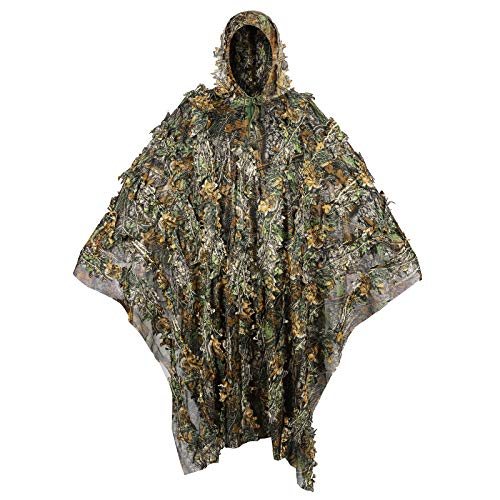
- Breathable mesh and soft netting lining
- Lightweight, quick-drying build
- Adjustable hood for added concealment
Best For: Mobile wildlife photographers needing a wearable camo layer
Field Blind Wrap

- Die-cut leaves for realistic concealment
- Lightweight roll-up material for transport
- Sized for stands, boats, and ground blinds
Best For: Photographers setting up a broader, stationary hide
Portable Leaf Poncho

- Breathable, noiseless mesh material
- Roomy fit covers gear and backpack
- Compact and easy to pack
Best For: Photographers wanting portable concealment with gear coverage
3D Leafy Hide Net
Lightweight concealment net for wildlife hides

- 3D leafy look for better blending in the field
- Lightweight, breathable mesh polyester build
- Nylon loops help with hanging and attachment
Best For: Photographers needing a compact, realistic hide layer
Custom-Cut Blind Fabric
Large mesh burlap for custom wildlife hides

- Large 4.9 x 32 ft roll for custom builds
- Quiet and see-through for discreet viewing
- 300D mesh designed for harsh outdoor use
Best For: Building a larger custom ground blind or photography hide
Waterproof Camo Roll
Cut-to-fit camouflage roll for photography hides

- Lightweight Oxford polyester 300D construction
- Waterproof material can be cut and joined to size
- Provides concealment while keeping terrain visible
Best For: Simple cut-to-fit hide setups and outdoor photography
Ghillie Parka – Lightweight Camouflage for Stealthy Field Use
Tragopan Ghillie, One Size, Tan - Camouflage Outdoor for Wildlife Photographers, Hunters, Military
Check Price On AmazonIf you need camouflage hides for wildlife photographers that are simple to pack and comfortable to wear, this ghillie parka is built around mobility and concealment. Its lightweight, breathable construction and loose fit make it a practical layer for photographing from cover, especially when you want to blend into natural surroundings without feeling overloaded.
Best For: Wildlife photographers and hunters who want a lightweight, breathable ghillie layer for stealth in the field.
Pros:
- Durable, lightweight ghillie material is easy to carry and wear.
- Loose fit works for various body types.
- Breathable design suits longer outdoor sessions.
- Comes in green and tan for environment-specific blending.
Cons:
- One-size design may not suit everyone perfectly.
- Focuses on concealment rather than weatherproof protection.
Overall, this is a straightforward concealment layer for photographers who prioritize stealth, portability, and a low-profile silhouette. The included carrying bag adds convenience for moving between shooting locations.
LensHide Blind – Tall Water-Repellent Lens Cover
LensCoat Photo Blind LensHide Water-Repellent Tall, Realtree Max4, Compact (LCLHWTM4)
Check Price On AmazonFor camouflage hides for wildlife photographers that work more like a lens-side blind than full-body cover, this LensHide model is aimed at staying hidden while keeping your setup usable. The tall water-repellent design, mesh window, and lens-securing cinch cord make it a compact option when you want your camera position to stay discreet.
Best For: Photographers who want a compact, lens-oriented blind with ventilation and viewing access.
Pros:
- Water-repellent construction adds protection in damp conditions.
- Expanded mesh window supports observation.
- Elastic cinch cord helps secure around the lens.
- Includes storage pouch, belt loops, D-rings, and an internal accessory pocket.
Cons:
- Designed for cameras/lenses, not full-body concealment.
- Compact format may feel specialized for some users.
This is a focused choice if your priority is hiding the camera position while retaining access to view and ventilate the setup. The camouflage pattern and practical accessory storage make it a useful field tool for mobile wildlife work.
Camouflage Net – Portable Mesh Cover for Field Observation
If you want camouflage hides for wildlife photographers in a lightweight net format, this portable camouflage net is designed for easy transport and low-visibility observation. Its light-transmitting mesh lets you look through the cover while helping the setup blend into natural surroundings, which makes it versatile for field shooting and simple concealment.
Best For: Photographers who want a packable camouflage net for observation and shooting concealment.
Pros:
- Lightweight and easy to roll up for backpack storage.
- Grid mesh design supports visibility through the cover.
- Natural-looking camouflage color helps it blend outdoors.
- Can also be used for privacy or themed spaces.
Cons:
- Net-style design is less structured than a blind or parka.
- Size details in the listing are inconsistent.
This makes sense for users who want a flexible concealment layer rather than a dedicated shelter. It is especially appealing if portability and easy setup matter more than rigid coverage.
Monal Blind – Multi-Window Photography Hide
For camouflage hides for wildlife photographers who need a more dedicated shooting shelter, this Monal Photography Blind is built around configurable visibility and shared shooting space. With customizable windows on all sides and room for two people or multiple cameras, it suits longer sits where you want to stay hidden and keep angles open.
Best For: Photographers who need a roomy blind with multiple viewing options and overnight capability.
Pros:
- Customizable windows on all sides for flexible shooting angles.
- Two-person or multi-camera design adds versatility.
- Removable floor supports overnight use.
- Made with premium materials and hardware.
Cons:
- Bulkier than a parka or net-style concealment option.
- Heavier package weight suggests less portability.
This is the most shelter-like option in the group, making it a strong pick when you want a structured hide rather than wearable camouflage. The feature set is especially useful for photographers planning longer sessions or more complex setups.
Stealth Poncho Cover – 3D Leaf Camouflage Ghillie Cloak
If you want camouflage hides for wildlife photographers that are easy to wear and quick to pack, this 3D leaf poncho is a simple way to break up your outline in the field. The breathable mesh and polyester build is lightweight, while the adjustable hood helps keep your head concealed during bird watching, stalking, or photography sessions.
Best For: Wildlife photographers who want a lightweight, full-body camo layer for field use.
Pros:
- Breathable mesh and soft netting lining for comfortable wear
- Lightweight and easy to dry for outdoor use
- Adjustable hood helps disguise the head
- Works for wildlife photography, bird watching, and hunting-style concealment
Cons:
- Not waterproof
- One-size design may be loose on smaller users
This is a practical option when you need a simple concealment layer rather than a full blind. It is best suited to mobile photographers who value coverage, portability, and quick setup.
Field Blind Wrap – MAX 5 Leaf Blind Roll
For wildlife photographers building camouflage hides for wildlife photographers around a stand, boat, or ground setup, this leaf blind gives you a wide coverage option with a realistic die-cut leaf look. The lightweight spun-bonded polyester/polypropylene material is designed to roll up for transport while still helping you blend into wooded environments.
Best For: Fixed or semi-fixed hide setups where wide-area concealment matters.
Pros:
- Die-cut leaves create a realistic concealment look
- Lightweight and easy to roll up and carry
- Useful for treestands, ground blinds, boats, and ATVs
- Designed to maintain shape and color in hot or rainy weather
Cons:
- Requires installation rather than quick wear-on use
- May be more material than a solo photographer needs for short sessions
This is a good choice when you want a more stationary concealment accessory instead of a wearable poncho. It works best as a hide-building tool for photographers who need broader coverage in the field.
Portable Leaf Poncho – Lightweight Ghillie Hood
This lightweight poncho is aimed at users who need camouflage hides for wildlife photographers without carrying bulky gear. Its soft mesh construction, breathable feel, and 3D leafy pattern are meant to blend into natural terrain, while the roomy cut can cover camera gear, binoculars, and a backpack during a shoot.
Best For: Photographers who need portable, full-coverage concealment for field shooting.
Pros:
- Lightweight, breathable, and noiseless polyester mesh
- 3D leaves move naturally in the wind for a more realistic look
- Roomy enough to cover camera gear, binoculars, and backpacks
- Folds compactly for easy transport in a bag
Cons:
- Not water resistant
- Loose poncho fit may be less precise than tailored camouflage
Overall, this is a strong pick if portability and coverage are your priorities. It suits photographers who want a packable concealment layer that can travel easily between locations.
3D Leafy Hide Net – Lightweight concealment net for wildlife hides
If you need camouflage hides for wildlife photographers, this 3D leafy netting is a practical way to break up your outline without adding much weight. The mesh polyester build is lightweight, breathable, and designed to be quiet, making it useful when you want a simple blind around a hide, tree stand, or gear setup.
Best For: Wildlife photographers who want a lightweight, realistic-looking hide material for field use.
Pros:
- 3D leafy design adds depth and realism for concealment.
- Lightweight mesh polyester is breathable, durable, and silent.
- Nylon loops make it easier to attach to poles and trees.
- Can be cut and adapted for hides, gear cover, or DIY setups.
Cons:
- 5 ft x 12 ft size may be small for larger blind builds.
- Best suited to light concealment rather than full enclosure.
Overall, this is a flexible option if you want a realistic camo layer that is easy to hang, roll up, and repurpose. It suits photographers who value quiet, breathable material and a more natural look in the field.
Custom-Cut Blind Fabric – Large mesh burlap for custom wildlife hides
For camouflage hides for wildlife photographers, this burlap-style mesh fabric offers a larger sheet that can be trimmed to fit your setup. The 300D mesh material is designed to be quiet, see-through, and weather-ready, which makes it useful when you want a straightforward blind material for observation or shooting.
Best For: Photographers building a larger custom hide or ground blind from cut-to-size material.
Pros:
- Large 4.9 x 32 ft roll supports custom hide sizes.
- Quiet, see-through mesh helps with observation without exposing you.
- 300D material is made for harsh hunting weather.
- Can be cut into many shapes for blinds, scarves, or curtains.
Cons:
- One continuous roll may be more material than smaller setups need.
- Burlap-style mesh is more utilitarian than decorative.
This is a strong pick if you want a longer run of material to build or extend a hide. It is especially appealing for photographers who want a quiet, adaptable fabric that can be trimmed to match a specific field layout.
Waterproof Camo Roll – Cut-to-fit camouflage roll for photography hides
When you are comparing camouflage hides for wildlife photographers, this bulk camo roll stands out for easy sizing and practical field use. The Oxford polyester 300D build is lightweight and waterproof, and the camo coloring is meant to give you good viewing of your surroundings while still providing concealment.
Best For: Photographers who need a lightweight, cut-to-fit roll for simple hide or background setups.
Pros:
- Lightweight, waterproof Oxford polyester 300D material.
- Can be cut and joined with cable ties for custom sizing.
- Provides concealment while allowing excellent viewing of the terrain.
- Useful for photography, bird watching, camping, and sunshade use.
Cons:
- Not recommended for areas with strong winds.
- Bulk roll format may require extra setup work.
This is a good option if you want a versatile camouflage roll that can be adapted to different hide shapes. It makes the most sense for users who want simple concealment with the ability to tailor the material to the site.
How We Picked These Camouflage Hides for Wildlife Photographers
We looked for hides that help photographers stay concealed while still being practical in the field. Priority factors included portability, visual realism, coverage, weight, weather resistance, and how quietly each option can be used around skittish subjects.
We also considered whether the hide works better for ground-level shooting, static setups, or mobile use, since different sessions demand different concealment strategies.
Quick Comparison: Which Type Fits Your Shoot?
Portable blinds are best when you need a stable shooting position and repeatable framing. Camo netting and burlap are more flexible for building custom hides or adding concealment to existing setups. Wearable ponchos and ghillie-style options work best for photographers who move often or shoot in changing terrain.
If you want the simplest answer: choose a blind for long waits, choose netting for custom coverage, and choose wearable concealment for mobility.
Key Buying Factors for Camouflage Hides for Wildlife Photographers
Concealment and Pattern
Look for patterns that match your environment, whether that is woodland, reeds, grassland, or dry brush. A realistic pattern matters more than a generic “camo” look, especially in bright light or open spaces.
Noise and Movement
Quiet materials matter because even small rustling sounds can alert birds and mammals. If you plan to shoot in still conditions, favor soft fabrics and low-crinkle designs.
Setup Time and Portability
For travel and scouting, lighter hides are easier to carry and deploy quickly. Larger blinds and netting offer more coverage but may take longer to position and secure.
Comfort and Shooting Access
Make sure the hide allows enough room for your camera, lens, tripod, and any panning or tracking you need. A cramped hide can cost you shots just as quickly as being spotted.
Weather and Durability
Water resistance, UV exposure, and tear resistance all matter if you shoot regularly outdoors. For Camouflage Hides for Wildlife Photographers, durability often pays off more than the cheapest upfront price.
Who Should Buy Which Camouflage Hides for Wildlife Photographers?
If you mostly shoot birds from one location, a compact blind or heavier coverage option is usually the best fit. If you hike into remote areas, choose a lighter wearable or net-based solution. If you build custom setups around feeders, trails, or ground hides, netting and burlap give you the most flexibility.
In short, match the hide to your shooting style, not just the camouflage pattern. The right choice should help you stay hidden, stay comfortable, and stay ready when wildlife finally appears.