The right computer monitor for multitasking can make research, spreadsheets, communication, and creative work easier to manage. Instead of constantly switching windows, you can keep more information visible and organize your workspace around the way you work.
Our selection includes ultrawide monitors, conventional 24- and 27-inch displays, dual-monitor bundles, large-format screens, and a portable laptop extender. The best choice depends on your desk space, computer outputs, preferred resolution, and how many applications you need open at once.
Best 10 Computer Monitor for Multitasking Picks for 2026
Best UltraWide Workstation

- 34-inch 3440 x 1440 UltraWide display
- Picture-by-Picture for two input sources
- USB-C with up to 65W power delivery
Best For: Professionals managing multiple windows or devices
Best Budget Productivity Pick

- 27-inch Full HD IPS display
- 120Hz refresh rate with Adaptive-Sync
- Three-year parts-and-labor warranty
Best For: Everyday office work and general desktop use
Best Eye-Care UltraWide

- 34-inch 3440 x 1440 Ultra-WQHD screen
- PiP and PbP for monitoring multiple sources
- Ambient light sensor and eye-care modes
Best For: Long work sessions with multiple applications or devices
Best Dual-Monitor Value

- Includes two 27-inch curved monitors
- 1500R design with 98% sRGB coverage
- Built-in speakers and eye-comfort features
Best For: Users who prefer separate screens for side-by-side work
Large-Screen Office Pick
ViewSonic VX3276-MHD 32-Inch IPS Monitor

- Spacious 32-inch Full HD IPS screen
- Flicker-Free and Blue Light Filter features
- HDMI, DisplayPort, and VGA connectivity
Best For: Home offices and large-screen multitasking
Portable Multiscreen Pick
Vixtan 14-Inch Triple Laptop Screen Extender

- Adds a triple-screen laptop workstation
- Portable 14-inch Full HD IPS displays
- Supports USB-C and HDMI plug-and-play use
Best For: Traveling professionals and laptop-based multitasking
Budget Desk Pick
Sceptre E248W-19203R 24-Inch Monitor

- Compact 24-inch Full HD workspace
- 99% sRGB and dual HDMI inputs
- Built-in speakers and blue-light reduction
Best For: Budget home offices and smaller desks
Best UltraWide Workspace
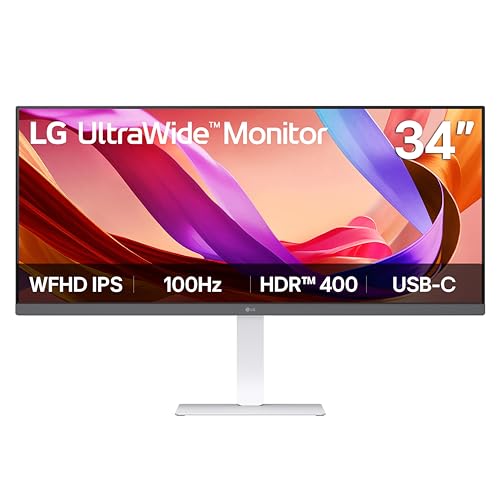
- 34-inch 21:9 screen for side-by-side windows
- USB Type-C, DisplayPort, and HDMI connectivity
- Adjustable stand, HDR400, and built-in speakers
Best For: Heavy multitasking and wide desktop workflows
Best Adjustable All-Rounder

- 27-inch Full HD screen for everyday work
- Height, pivot, swivel, and tilt adjustments
- 144Hz refresh rate with integrated 3W speakers
Best For: Mixed work, entertainment, and casual gaming
Best Compact Value
LG 24-inch Full HD IPS Monitor
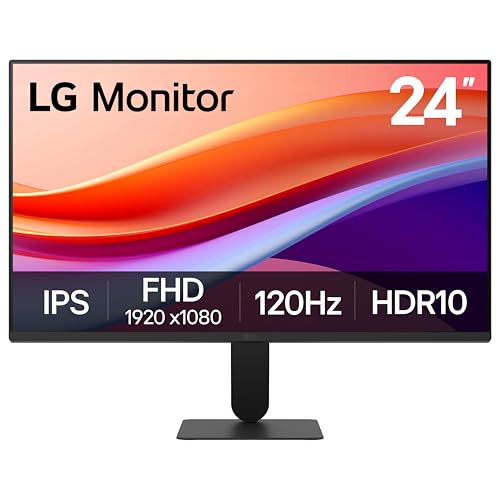
- Compact 23.8-inch IPS display for smaller desks
- Slim bezels suit dual-monitor arrangements
- 120Hz refresh rate with Reader Mode and HDR10
Best For: Space-conscious productivity and dual-monitor setups
Best UltraWide Workstation – LG 34WR55QK-B
If you want a computer monitor for multitasking, the LG 34WR55QK-B combines a spacious 34-inch curved 21:9 display with 3440 x 1440 resolution. Its PbP support, USB-C connectivity, and adjustable stand make it practical for keeping multiple windows or input sources visible at once.
Best For: Professionals who want one wide screen for office work, multiple windows, and laptop connectivity.
Pros:
- UltraWide WQHD resolution provides ample room for multiple open windows.
- Picture-by-Picture supports viewing two input sources simultaneously.
- USB-C offers up to 65W power delivery, alongside HDMI and DisplayPort.
- Height and tilt adjustments support a more flexible desk setup.
Cons:
- Its large curved design requires more desk space than a standard monitor.
- The 100Hz refresh rate and 5ms response time are practical for general use but not aimed at high-end competitive gaming.
For work-heavy setups, this LG is a particularly versatile choice. The combination of a wide canvas, PbP, USB-C charging, and OnScreen Control makes it easy to organize several tasks without adding a second display.
Best Budget Productivity Pick – Acer KB272 G0bi
The Acer KB272 G0bi is a straightforward computer monitor for multitasking when you need a larger 27-inch workspace without moving to an UltraWide format. Its Full HD IPS panel, 120Hz refresh rate, and tilt adjustment suit everyday office work, browsing, and video playback.
Best For: Home offices and general desktop users who want an affordable, responsive 27-inch display.
Pros:
- 27-inch Full HD screen offers more workspace than a compact monitor.
- IPS technology supports wide 178-degree viewing angles.
- 120Hz refresh rate and Adaptive-Sync support help keep motion smooth.
- Three-year parts-and-labor warranty provides useful coverage.
Cons:
- Its 16:9 Full HD layout provides less horizontal room than an UltraWide monitor.
- Connectivity is limited to one HDMI port and VGA.
This Acer is best when simplicity and value matter more than maximum screen real estate. It can handle everyday multitasking, but users who routinely compare several wide documents may prefer a higher-resolution or UltraWide model.
Best Eye-Care UltraWide – Samsung ViewFinity S50GC
The Samsung ViewFinity S50GC is a strong computer monitor for multitasking, with a 34-inch 21:9 Ultra-WQHD panel designed to keep more content visible on one screen. Picture-in-Picture and Picture-by-Picture modes add flexibility, while its ambient light sensor and eye-care features support longer work sessions.
Best For: Multitaskers who want a wide workspace with source-switching and built-in eye-care features.
Pros:
- 3440 x 1440 resolution provides broad horizontal workspace.
- PbP displays two sources at native resolution, while PiP keeps a second source visible.
- Ambient light adjustment, Eye Saver Mode, and Flicker Free features support comfortable viewing.
- 100Hz refresh rate and FreeSync provide smoother motion.
Cons:
- The monitor has no USB-C connectivity listed in the supplied specifications.
- Its 34-inch footprint may be larger than some desks can accommodate.
The S50GC is particularly appealing for users who split time between documents, applications, and multiple devices. It offers much of the practical multitasking functionality of a dual-monitor setup while keeping the display virtually borderless.
Best Dual-Monitor Value – Kado 2-Pack 27-inch Curved
This Kado 2-pack takes a different approach to choosing a computer monitor for multitasking: instead of one wide panel, it provides two 27-inch curved Full HD monitors. The dual setup can keep separate applications visible, while built-in speakers, blue-light filtering, and flicker-free features add convenience for work and entertainment.
Best For: Budget-conscious users who prefer two separate screens for side-by-side tasks.
Pros:
- Two 27-inch monitors create a practical dual-screen workspace.
- 1500R curvature is designed to reduce peripheral distortion and viewing fatigue.
- 98% sRGB coverage supports vibrant visuals for multimedia and creative tasks.
- Built-in speakers, adaptive sync, blue-light filtering, and flicker-free operation add versatility.
Cons:
- Each display is limited to 1920 x 1080 resolution.
- Each monitor lists one HDMI port, which may limit connection flexibility.
- A two-monitor setup requires more desk width and cable management than a single display.
This bundle is a sensible choice if your workflow benefits from physically separate screens—for example, keeping communication open beside a primary document. It offers more simultaneous workspace than one monitor, though its Full HD resolution is less expansive than the UltraWide options here.
Large-Screen Office Pick – ViewSonic VX3276-MHD 32-Inch IPS Monitor
If you want a computer monitor for multitasking that gives windows plenty of room, the ViewSonic VX3276-MHD is a practical choice. Its 32-inch Full HD IPS panel provides a spacious desktop for office work, browsing, and entertainment, while the 75Hz refresh rate and thin bezels keep everyday use smooth and immersive.
Best For: Home offices, general productivity, and users who prefer a large screen for managing multiple applications.
Pros:
- Large 32-inch IPS display with 1920×1080 resolution and 178-degree viewing angles.
- Flicker-Free technology and a Blue Light Filter support more comfortable long sessions.
- HDMI, DisplayPort, and VGA inputs provide broad compatibility with laptops and PCs.
- ViewMode presets help optimize the display for text, movies, web use, and gaming.
Cons:
- Full HD resolution is less detailed than higher-resolution monitors of a similar size.
- The listed 8ms response time is aimed more at everyday use than competitive gaming.
The VX3276-MHD stands out when physical screen size matters more than pixel density. Its eye-care features, flexible inputs, and straightforward presets make it a useful single-monitor workstation for home productivity.
Portable Multiscreen Pick – Vixtan 14-Inch Triple Laptop Screen Extender
For mobile workers who need a computer monitor for multitasking without carrying a full desktop display, the Vixtan triple laptop screen extender adds substantial workspace. Its 14-inch Full HD IPS screens support extended, mirrored, and portrait modes, making it easier to keep documents, dashboards, and communication tools visible at once.
Best For: Remote workers, students, travelers, traders, developers, and other laptop users who need extra screens on the go.
Pros:
- Creates a triple-screen workstation with extended, mirrored, and portrait display modes.
- Lightweight, 0.3-inch-thin design is suited to travel and mobile work.
- 14-inch 1920×1080 IPS panels offer 300-nit brightness, 100% sRGB coverage, and 178-degree viewing angles.
- Includes USB-C and HDMI cables and supports plug-and-play use without drivers.
Cons:
- MacBook M1, M2, and M3 models support only a single screen without a DisplayLink adapter.
- May require a 5V/3A-or-higher power adapter if flickering or low brightness occurs.
- Its compatibility and mounting setup are designed around laptops from 13 to 17.3 inches.
The Vixtan is a flexible productivity upgrade for laptop-based workflows, especially when portability matters. Check your laptop’s ports and operating-system requirements before buying, with particular attention to the stated limitation for M-series MacBooks.
Budget Desk Pick – Sceptre E248W-19203R 24-Inch Monitor
If you need an affordable computer monitor for multitasking in a compact workspace, the Sceptre E248W-19203R offers a straightforward setup. Its 24-inch 1080p display provides useful room for side-by-side windows, while dual HDMI ports, built-in speakers, and eye-comfort features add convenience for work and entertainment.
Best For: Budget-conscious home offices, basic multitasking, multimedia, and smaller desks.
Pros:
- 24-inch Full HD screen with 99% sRGB for richer color coverage.
- Two HDMI ports and one VGA port support multiple compatible devices.
- Built-in speakers save desk space and provide convenient audio for work and media.
- Blue Light Shift, eye-care features, and flicker-free operation support extended use.
Cons:
- The supplied details list a 60Hz refresh rate despite promotional mention of up to 100Hz.
- At 24 inches, it offers less workspace than larger monitors for extensive multitasking.
- Its one-year manufacturer warranty is shorter than the three-year warranty listed for the ViewSonic.
The Sceptre is a sensible value option when you want a compact second screen or an uncomplicated primary monitor. Its port selection and built-in speakers make it especially practical for mixed office and entertainment use.
Best UltraWide Workspace – LG 34-inch UltraWide Monitor
If you want a computer monitor for multitasking, the LG 34U530A-W provides substantially more horizontal workspace than a standard 16:9 display. Its 21:9 aspect ratio, 2560 × 1080 IPS panel, and support for screen layouts through the Switch app make it practical for keeping multiple windows visible at once.
Best For: Multitasking-heavy office work, document comparison, content creation, and users who want a single wide display instead of multiple monitors.
Pros:
- 34-inch 21:9 UltraWide format offers expansive horizontal workspace.
- IPS panel provides 178-degree viewing angles and up to 99% sRGB coverage.
- USB Type-C, DisplayPort, and HDMI support flexible connectivity.
- Height, tilt, and swivel adjustments plus built-in speakers improve desk usability.
Cons:
- 2560 × 1080 resolution is less vertically detailed than many higher-resolution displays.
- The large 34-inch footprint may require considerable desk space.
The LG is the strongest multitasking-focused option here because its wide layout is designed for side-by-side windows. The 100Hz refresh rate, HDR support, Reader Mode, and adjustable stand add comfort and versatility for everyday work and entertainment.
Best Adjustable All-Rounder – Dell 27 Plus Monitor
For shoppers seeking a computer monitor for multitasking that can also handle entertainment and gaming, the Dell S2725HSM offers a balanced 27-inch Full HD setup. Its adjustable stand helps position the screen comfortably, while the 144Hz refresh rate keeps motion smooth when switching between work and play.
Best For: General desktop use, office multitasking, casual gaming, and users who value a fully adjustable monitor with integrated audio.
Pros:
- 27-inch Full HD display provides a practical size for everyday desktop work.
- Height, tilt, pivot, and swivel adjustments support flexible positioning.
- 144Hz refresh rate and 1ms MPRT deliver smooth motion.
- Integrated dual 3W speakers and two HDMI ports add convenience.
Cons:
- 16:9 formatting provides less horizontal workspace than an UltraWide monitor.
- Full HD resolution offers less desktop detail than higher-resolution alternatives.
The Dell is a versatile choice when multitasking is only part of the job. It does not offer the same panoramic workspace as the LG UltraWide, but its ergonomic adjustability, strong refresh rate, eye-comfort features, and built-in speakers make it a well-rounded everyday monitor.
Best Compact Value – LG 24-inch Full HD IPS Monitor
The LG 24U411A-B is a compact computer monitor for multitasking in smaller workspaces or dual-monitor arrangements. Its 23.8-inch Full HD IPS display, slim bezels, and Switch app support make it easy to organize everyday windows while keeping the setup relatively tidy.
Best For: Small desks, dual-monitor setups, everyday productivity, web browsing, and users who want smooth motion at an accessible screen size.
Pros:
- 23.8-inch Full HD IPS display fits smaller desks and multi-monitor setups.
- Three-side virtually borderless design supports a clean, seamless arrangement.
- 120Hz refresh rate provides smoother scrolling and motion.
- HDR10, Reader Mode, and Flicker Safe features support varied daily use.
Cons:
- Smaller screen offers less workspace than the 27-inch and 34-inch options.
- Stand adjustment is limited to tilt, without height, swivel, or pivot adjustment listed.
- Connectivity is limited to HDMI according to the supplied specifications.
The LG 24U411A-B is a sensible space-saving pick for multitasking when a large display is not practical. Its screen-splitting support and slim bezels are particularly useful in a dual-monitor setup, while the 120Hz refresh rate adds fluidity beyond basic office use.
How We Picked the Best Computer Monitor for Multitasking
We focused on the features that have the greatest effect on day-to-day productivity: usable screen area, resolution, panel quality, refresh rate, connectivity, ergonomics, and overall value. The list includes single-screen solutions for cleaner desks as well as multi-screen options for users who need several fixed work areas.
We also considered practical differences between ultrawide and traditional displays. An ultrawide monitor can simplify a workspace by replacing two screens, while a dual-monitor setup may offer more flexible positioning. Portable models are included for laptop users who need additional displays away from a permanent desk.
Quick Comparison
- Best overall workspace: A 34-inch ultrawide with a 3440 × 1440 resolution gives documents and browser windows more horizontal and vertical room.
- Best for a clean single-screen setup: A 34-inch ultrawide with USB-C can reduce cable clutter when paired with a compatible laptop.
- Best for multiple fixed views: A two-monitor bundle lets you place email, chat, reference material, and primary work on separate screens.
- Best budget approach: A 24- or 27-inch 1080p monitor keeps costs and desk requirements low.
- Best for laptop mobility: A portable triple-screen extender adds displays without requiring a permanent monitor stand.
Key Buying Factors for a Computer Monitor for Multitasking
Screen Size and Layout
Choose an ultrawide if you want a continuous workspace without a center bezel. A 27-inch or 32-inch display may be easier to fit on a smaller desk, while two 27-inch screens provide more independent positioning. Check your available width, depth, and stand clearance before buying.
Resolution and Text Clarity
For multitasking, resolution matters because it determines how much content fits comfortably on screen. 3440 × 1440 is especially useful on a 34-inch ultrawide. Full HD works well on smaller displays and for basic office tasks, but text and side-by-side windows may feel less spacious on larger panels.
Connectivity and Compatibility
Review the available HDMI, DisplayPort, and USB-C connections on both the monitor and your computer. USB-C may support video and power delivery on some models, but the laptop must support compatible USB-C display output. For multiple monitors, verify that your computer or dock can drive the required number of displays.
Ergonomics and Eye Comfort
Height adjustment, tilt, swivel, pivot support, VESA compatibility, reader modes, and flicker-reduction features can make long work sessions more comfortable. If the included stand is limited, confirm that the monitor accepts a suitable arm or mount.
Who Should Buy Which Computer Monitor for Multitasking?
Choose a high-resolution ultrawide if you regularly compare documents, manage timelines, edit media, or keep several windows visible. Choose a conventional 24- or 27-inch display for email, office software, schoolwork, and general browsing on a smaller budget.
Choose a dual-monitor setup if you prefer separate screens for communication and focused work or need flexible viewing angles. Choose a 32-inch display when you want a large central canvas without moving to an ultrawide format. Choose a portable extender if you work from different locations and your laptop supports the required connections.