Choosing the right encoder can make live streams more stable, more professional, and easier to run. The best hardware encoders for live streaming handle real-time video with low latency, reliable network output, and fewer computer-side bottlenecks.
Below, we’ve grouped 10 strong options for creators, teams, and pro AV workflows so you can quickly match the right encoder to your camera, platform, and budget.
Best 10 Hardware Encoders for Live Streaming Picks for 2026
Compact HDMI Network Encoder

- 1080p60 H.265/H.264 encoding
- Up to 4 protocol-based outputs
- Text, logo, and audio controls
Best For: HDMI creators needing simple multi-platform streaming
Broadcast-Grade SDI Encoder

- H.264/H.265 at 1080p60
- 12G-SDI input with loop out
- 2-year manufacturer guarantee
Best For: Broadcast users streaming from SDI sources
4K HDMI IP Encoder
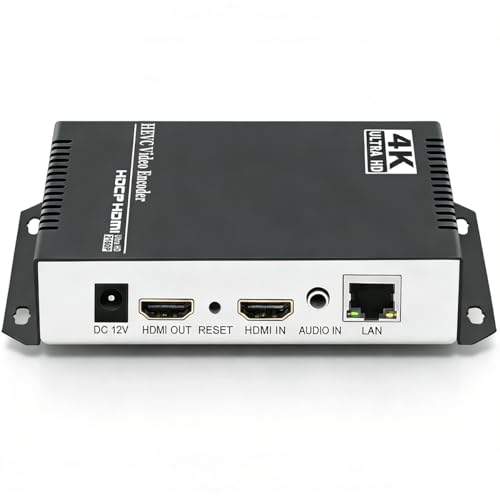
- 4K UHD HDMI input with H.265/H.264
- Supports WebRTC and other major protocols
- Up to 4 simultaneous output streams
Best For: 4K HDMI streams needing broad protocol support
Professional 4K SDI Streamer
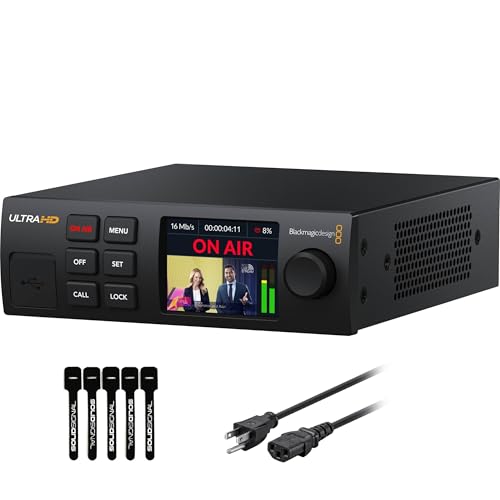
- Streams up to 2160p60 in H.264/H.265
- Ethernet and mobile auto-failover
- Captions, tally, and talkback support
Best For: Broadcast productions needing 4K redundancy and control
Pro AV Over IP Choice
ToVi X2 4K Network Video Streamer
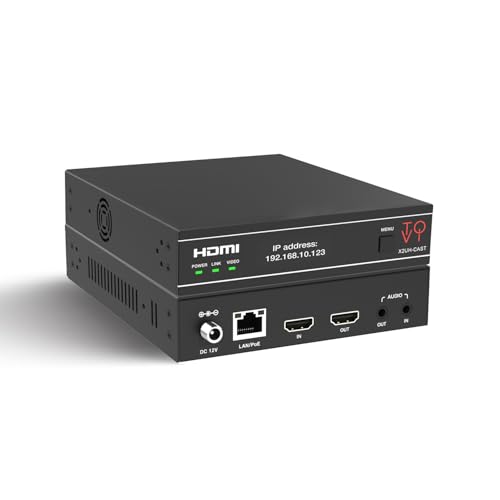
- 4K@60Hz H.265/H.264 encoding
- Triple stream output for multiple platforms
- PoE, rack-mount, and 24/7 operation
Best For: AV-over-IP installations and enterprise livestreaming
Compact NDI Option
ZowieBox 4K HDMI Encoder/Decoder

- Certified NDI HX3 with HDMI-to-IP encoding
- 4K capture and zero-lag passthrough
- Web UI for stream, audio, and PTZ control
Best For: Compact NDI workflows with 4K passthrough and web control
Versatile 1080P Encoder
UNISHEEN 1080P60 Hardware Video Encoder

- 1080P60 H.265/H.264 hardware encoding
- Wide protocol support including SRT and RTMP(S)
- Browser setup in a compact 24/7-ready design
Best For: Compact 1080p streaming and IP distribution
SDI Broadcast Choice
3G SDI to IP H.265 Live Encoder

- SDI input for broadcast workflows
- Outputs up to 4 streams at once
- Wide protocol and overlay support
Best For: SDI live production and multi-platform delivery
4K Multi-Platform Pick
HDMI to IP Encoder with WebRTC
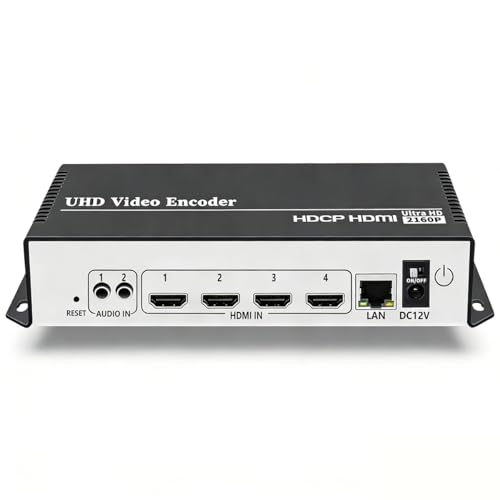
- 4K HDMI input with H.265/H.264
- Up to 4 simultaneous output streams
- Includes WebRTC and SRT support
Best For: 4K HDMI streaming and multi-platform live delivery
Flexible HDMI Encoder

- 4K HDMI input with H.265/H.264
- Outputs 4 streams with different protocols
- Overlay and video adjustment tools
Best For: HDMI streaming with broad protocol flexibility
Compact HDMI Network Encoder – 1080p Multi-Protocol Streamer
If you need a practical hardware encoder for live streaming from an HDMI source, this URayCoder unit is built around simple network delivery and broad protocol support. It handles 1080p input, offers dual H.265/H.264 encoding, and can push multiple streams to services and servers with low-latency output.
Best For: Streamers who want a compact HDMI-to-IP encoder with flexible protocol support and easy setup.
Pros:
- Supports 1080p at 60fps with H.265/H.264 encoding
- Works with RTSP, RTMP(S), SRT, HLS, UDP, and more
- Can output up to 4 streams with different protocols
- Includes text, logo, timestamp, cropping, and audio options
Cons:
- Limited to 1080p input and output
- Best suited to HDMI sources, not SDI workflows
- Advanced customization may be more than casual users need
This is a strong pick if you want a straightforward encoder that balances streaming flexibility with basic content branding tools. It fits well for live events, IPTV, and multi-platform broadcasts where reliability matters more than complexity.
Broadcast-Grade SDI Encoder – Blackmagic HD Streaming Unit
For buyers comparing hardware encoders for live streaming, this Blackmagic Design model is a focused SDI option for 1080p workflows. It supports H.264 and H.265 streaming at up to 60fps and is designed for direct encoder use without adding a separate PC-based encode stage.
Best For: SDI-based streaming setups that want a compact, broadcast-oriented encoder.
Pros:
- Supports H.264 and H.265 streaming
- Handles 1080p at 60fps
- Includes 12G-SDI input with loop out
- Backed by a 2-year manufacturer guarantee
Cons:
- Limited to 1080p resolution
- SDI input means it is not ideal for HDMI-only sources
- Less feature-heavy than some multi-protocol streaming encoders
This model makes sense if your workflow is built around SDI and you want a dependable hardware encoder with a simpler spec sheet. It is a practical choice for users who value Blackmagic’s broadcast ecosystem and want streamlined 1080p streaming.
4K HDMI IP Encoder – URayCoder UHD Live Streamer
If your live production needs a 4K-capable hardware encoder for live streaming, this URayCoder model is built to accept HDMI and push network streams in a wide range of formats. It supports 4K input, can output multiple streams, and includes tools for adjusting video and audio presentation without a separate computer encoder.
Best For: 4K HDMI workflows that need flexible streaming protocols and custom branding options.
Pros:
- Supports 4K UHD input with H.265/H.264 encoding
- Compatible with RTSP, RTMP(S), SRT, HLS, WebRTC, and more
- Can output 4 streams with different protocols
- Offers text, logo, timestamp, crop, rotate, and audio controls
Cons:
- 4K mode is capped at 30fps
- Designed for HDMI sources rather than SDI
- Feature-rich setup may be more than basic users need
This encoder is a good fit if your priority is protocol flexibility and 4K support from an HDMI source. It is especially appealing for users streaming to multiple platforms while wanting practical onboard customization features.
Professional 4K SDI Streamer – Blackmagic Encoder 4K
Among hardware encoders for live streaming, this Blackmagic Design 4K unit stands out for broadcast-style features and reliable redundancy. It supports up to 2160p60 over SDI, includes Ethernet and mobile failover, and is designed to stream directly to major platforms without relying on an encoding PC.
Best For: Professional SDI productions that need 4K streaming, failover internet, and broadcast controls.
Pros:
- Streams in H.264 or H.265 up to 2160p60
- Includes 12G-SDI input with standards conversion
- Offers Ethernet plus 5G/4G mobile auto-failover
- Supports captions, timecode, REST API, tally, and talkback
Cons:
- Built around SDI, not HDMI
- More complex than entry-level streaming encoders
- Higher-end feature set may be unnecessary for simple setups
This is the most capable option in the group for production teams that need dependable 4K streaming and built-in connectivity backup. Its broadcast controls, caption support, and webcam output make it well suited to serious live event and studio workflows.
Pro AV Over IP Choice – ToVi X2 4K Network Video Streamer
If you need hardware encoders for live streaming in a professional AV or control-room setup, the ToVi X2 Series is built for efficient 4K distribution over IP. It combines H.265/H.264 encoding, triple stream output, and flexible network protocol support so one box can feed multiple destinations without sacrificing integration options.
Best For: AV-over-IP installations, enterprise livestreaming, and broadcast workflows that need 24/7 reliability.
Pros:
- 4K@60Hz encoding with H.265/H.264 support for high-quality output.
- Triple stream output for simultaneous delivery to multiple platforms.
- Supports RTSP, RTP, TS, RTMP/RTMPS, plus unicast and multicast streaming.
- Analog audio embedding/extraction, PoE or 12V power, and rack-mountable design.
Cons:
- More advanced than a basic plug-and-play streaming box.
- Designed for professional deployments, so it may be more than casual creators need.
- Requires network planning to take full advantage of multicast and control features.
Overall, this is a strong fit when the priority is reliable, multi-destination streaming with professional AV integration. The feature set is broad, but it is clearly aimed at users who want an encoder that can live inside a larger installed system.
Compact NDI Option – ZowieBox 4K HDMI Encoder/Decoder
For buyers comparing hardware encoders for live streaming, the ZowieBox stands out for its compact size and native NDI HX3 certification. It is designed for low-latency streaming and 4K HDMI workflows, with passthrough capture, decode mode, and web-based controls that make it useful for gaming, PTZ, and live production setups.
Best For: Streamers and production teams that want a compact NDI HX3 device with web control and 4K passthrough.
Pros:
- Certified NDI HX3 support with HDMI-to-IP encoding.
- 4K capture with zero-lag passthrough for live gameplay and production.
- Can also decode IP streams back to 4K HDMI output.
- Web UI provides control over stream, audio, OSD, network, and connected PTZ cameras.
Cons:
- Cannot encode and decode at the same time; mode switching is required.
- Does not support full NDI signals.
- USB capture card function is not currently supported.
This is a flexible choice if you need a small, self-contained encoder for NDI-centric workflows. Its strengths are low-delay operation, monitoring features, and broad control options rather than maximum format compatibility.
Versatile 1080P Encoder – UNISHEEN 1080P60 Hardware Video Encoder
If you want a straightforward hardware encoder for live streaming with broad protocol support, this UNISHEEN 1080P60 model is built around reliable H.265/H.264 encoding and browser-based setup. It is geared toward IP video distribution, so it fits well in live broadcast, signage, monitoring, or streaming workflows where compatibility matters.
Best For: Budget-conscious users who need a compact 1080p60 encoder with wide protocol support.
Pros:
- Dedicated hardware H.265/H.264 encoding at 1080P60.
- Broad output support including SRT, RTMP(S), RTSP, HLS, WebRTC, and more.
- Browser-based configuration with no software or drivers required.
- Compact palm-sized design with low power consumption for 24/7 use.
Cons:
- Limited to 1080P60 rather than 4K encoding.
- Single HDMI input and a simpler hardware layout than higher-end AV units.
- Best suited to one primary stream workflow rather than advanced multi-stream setups.
This encoder is a practical pick when you need dependable output formats and easy setup more than premium AV features. It covers a lot of common streaming and distribution protocols in a compact, purpose-built box.
SDI Broadcast Choice – 3G SDI to IP H.265 Live Encoder
If you need hardware encoders for live streaming from an SDI source, this URayCoder unit is built for broadcast-style workflows. It supports SDI input and can send up to 4 simultaneous streams using different protocols, making it a flexible fit for multi-destination delivery.
Best For: SDI-based live production, broadcast setups, and users who need multiple output protocols from one encoder.
Pros:
- Supports HTTP, RTSP, RTMP(S), SRT, HLS, UDP, RTP, MP4, Multicast, Unitcast, FLV, and ONVIF.
- Can output 4 video streams at the same time, with each stream using a different protocol.
- Lets you add static text, scrolling text, logos, and time overlays.
- Includes adjustment options for resolution, frame rate, bitrate, cropping, rotation, flipping, and mirroring.
Cons:
- Designed around SDI input, so it is not the right pick for HDMI-only sources.
- Feature set may be more than casual streamers need.
- Setup is geared toward users comfortable with network streaming workflows.
This encoder stands out for its broad protocol support and broadcast-oriented customization. If your workflow starts with SDI and you want dependable multi-stream output, it offers a lot of flexibility in one compact device.
4K Multi-Platform Pick – HDMI to IP Encoder with WebRTC
Among hardware encoders for live streaming, this model is aimed at creators who want 4K HDMI capture plus broad network streaming support. It accepts HDMI sources, supports up to 4 simultaneous streams, and works with common platforms and servers for one-device distribution.
Best For: 4K HDMI streaming, multi-platform live distribution, and users who want WebRTC and low-latency protocol options.
Pros:
- Supports 4K UHD input up to 30fps, with higher frame rates at lower resolutions.
- Compatible with HTTP, RTSP, RTMP(S), SRT, HLS, Multicast, ONVIF, FLV, WebRTC, TRTC, ICECAST, and more.
- Can output 4 video streams simultaneously using different protocols.
- Includes text, scrolling captions, logo, timestamp, cropping, rotation, flipping, and mirroring options.
Cons:
- Built specifically for HDMI sources, so it is not intended for SDI workflows.
- Advanced feature set may be more than basic streaming needs require.
- Best value is tied to users who need multi-protocol or multi-platform streaming.
This encoder is a strong fit if you want 4K HDMI input and the flexibility to push content to several destinations at once. Its protocol list and customization tools make it especially practical for more demanding live streaming setups.
Flexible HDMI Encoder – 4K IPTV Streaming Encoder
This URayCoder unit fits well in a roundup of hardware encoders for live streaming if you need a flexible HDMI-to-network bridge. It supports 4K HDMI input, multiple output protocols, and stream customization features that help tailor the feed to your channel or client.
Best For: HDMI live streaming, IPTV-style delivery, and users who want broad protocol support with easy customization.
Pros:
- Supports 4K UHD HDMI input with H.265/H.264 dual encoding.
- Works with HTTP, RTSP, RTMP(S), SRT, HLS, Multicast, FLV, WebRTC, TRTC, ICECAST, and more.
- Can output 4 streams at the same time using different protocols.
- Supports text, scrolling captions, logos, timestamps, and video adjustments like crop, rotate, flip, and mirror.
Cons:
- Requires HDMI input, so it is not suitable for SDI-only sources.
- Feature-heavy design may be more than some simple live streams need.
- Most useful for users who plan to take advantage of multiple protocols or custom overlays.
Overall, this encoder is a practical choice for HDMI users who want strong format support and the ability to shape the output feed. It offers the kind of flexibility that matters when streaming to multiple platforms or servers.
How We Picked Hardware Encoders for Live Streaming
We focused on stream reliability, supported protocols, input type, resolution support, and workflow flexibility. The strongest Hardware Encoders for Live Streaming in this roundup support common delivery methods such as RTMP, SRT, RTSP, HLS, and WebRTC, while also offering the connections most buyers actually need, including HDMI, SDI, Ethernet, and in some cases HDMI loop-through or multi-channel support.
We also favored models that fit different use cases, from simple single-camera streaming to AV-over-IP distribution and more advanced production environments.
Quick Comparison
If you want the simplest path to streaming, look for an HDMI encoder with broad protocol support and straightforward setup. For broadcast-style rigs and longer cable runs, SDI-based models are often the better fit. If your goal is low-latency contribution or remote production, prioritize SRT and stable Ethernet networking. And if you need compatibility with modern workflows, native NDI HX or multi-protocol support can save time.
Key Buying Factors for Hardware Encoders for Live Streaming
Input Type and Signal Quality
Match the encoder to your source: HDMI for cameras, switchers, and consumer gear; SDI for professional video chains; and combo or pass-through options if you need monitoring or flexible routing.
Resolution and Frame Rate
Not every setup needs 4K. Many live productions are still best served by 1080p60 for smoother motion and easier bandwidth management, while 4K is useful for premium events, archiving, or downscaled delivery.
Protocol Support
Protocol compatibility matters as much as image quality. RTMP remains common for social platforms, SRT is excellent for resilient transport, RTSP works well for IP workflows, and HLS or WebRTC can help with browser-based delivery and low-latency viewing.
Network and Latency Needs
Stable Ethernet, multicast support, and low-latency encoding can be critical in live events, houses of worship, education, and corporate streaming. If the encoder will be on a busy network, choose a model known for dependable throughput and solid configuration controls.
Who Should Buy Which Hardware Encoders for Live Streaming?
Solo creators and small teams should usually start with an HDMI encoder that supports the major streaming protocols and is easy to configure. Professional AV and broadcast users may want SDI or 4K models for better integration and higher production value. Businesses building IP video systems should consider multi-channel or AV-over-IP encoders, especially if they need distribution to multiple screens or endpoints. If you need modern device compatibility and flexible workflows, look closely at NDI-capable options and units with broad codec support.
In short, the best choice depends on your source signal, your target platform, and how much reliability you need from your live production chain.