The best heavy-duty microphone boom arms keep your microphone stable, positioned correctly, and easy to move without sagging or crowding your desk. The right choice depends on microphone weight, desk space, clamp design, and cable management.
We compared 10 options ranging from low-profile arms to professional broadcast-style models, with attention to load capacity, articulation, mounting compatibility, and everyday usability.
Best 10 Heavy Duty Microphone Boom Arms Picks for 2026
Best Overall
RØDE PSA1+ Professional Boom Arm
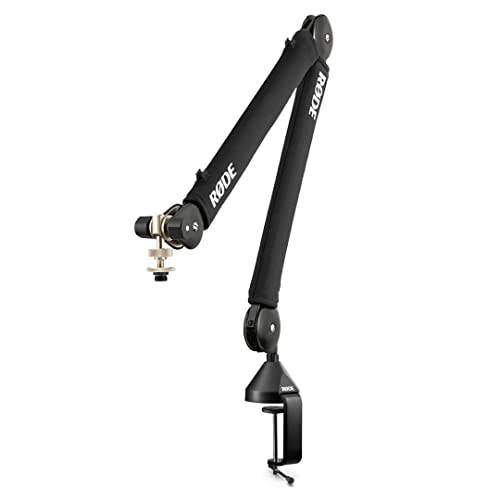
- Quiet internal spring damping
- 360° rotation with cable management
- Supports microphones up to 1.2kg
Best For: Podcasters and streamers seeking a refined, quiet desk arm
Best Low-Profile Design

- Low-profile, stable construction
- Supports up to 2kg
- 360° horizontal and 180° vertical adjustment
Best For: Compact gaming, streaming, and recording desks
Best for Broadcast Workflows
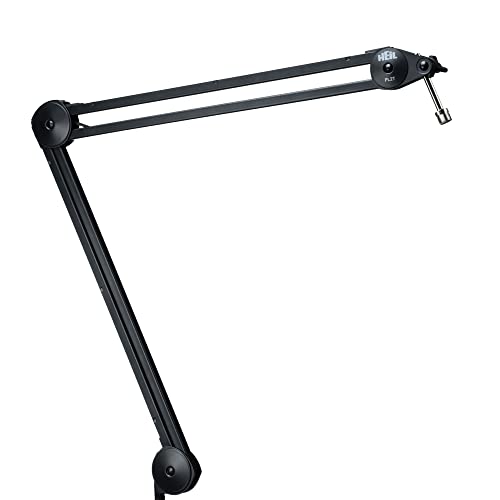
- Quiet preset spring tension
- Fully articulating 40-inch reach
- Includes a professional C-clamp
Best For: Broadcasting, voiceover, and studio podcast setups
Best Heavy-Duty Pick

- 4.4-pound load capacity
- Built-in cable management channels
- Includes 1/4-inch, 3/8-inch, and 5/8-inch adapters
Best For: Heavy microphones and tidy, frequently adjusted setups
Best Long-Reach Option
Gator Frameworks Deluxe Boom Arm

- 38.6-inch maximum reach
- Spring-loaded support up to 2.4 pounds
- 360-degree rotation
Best For: Broadcast and streaming setups needing extended reach
Best Value Heavy-Duty Arm
InnoGear Cable-Managed Mic Arm

- 3.5-pound load capacity
- Includes a 6.3-inch extension riser
- Cable channels and broad adjustability
Best For: Desk-based podcasting, streaming, and recording
Best Low-Profile Pick

- Supports up to 3.3 pounds
- Magnetic hidden cable channel
- 360-degree rotation and broad adjustment
Best For: Compact desks and minimalist streaming setups
Best Heavy-Duty Kit
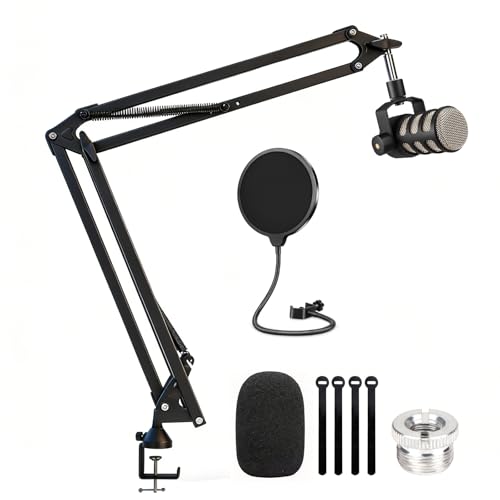
- 3.5-pound maximum load
- Reinforced springs and steel construction
- Includes pop filter, foam cover, and cable ties
Best For: Heavier dynamic microphones and podcast setups
Best Everyday Yeti Option

- Supports up to 1.4 kilograms
- Hidden cable management
- Three joints and a 360-degree rotating base
Best For: Blue Yeti, QuadCast, and home recording setups
Best Overall – RØDE PSA1+ Professional Boom Arm
The RØDE PSA1+ is a polished choice among heavy duty microphone boom arms for podcasting, streaming, and recording desks. Its internal spring damping supports quiet repositioning, while the 360-degree rotation, broad microphone weight range, and hidden cable routing make it easy to build a clean, flexible setup.
Best For: Podcasters and streamers who want quiet operation, professional fit and finish, and straightforward desk mounting.
Pros:
- Supports microphones and shock mounts from 0.25kg to 1.2kg.
- Internal spring damping helps reduce creaks and handling noise.
- Offers 360-degree rotation and integrated cable management.
- Fits desks up to 70mm thick and includes 3/8-inch and 5/8-inch thread adaptors.
Cons:
- Its 1.2kg maximum load is lower than some extra-heavy-duty arms.
- It is designed for desk-clamp installation rather than a freestanding base.
The PSA1+ is a strong all-around pick when quiet movement and a clean studio appearance matter more than maximum load capacity. Its two-year warranty adds useful peace of mind.
Best Low-Profile Design – Aokeo AK-58i Mic Boom Arm
The Aokeo AK-58i stands out among heavy duty microphone boom arms for its low-profile shape and 2kg load rating. Its lower center of gravity is designed to improve stability, while dual-arm adjustment and under-arm cable routing help keep the microphone position and desk view organized.
Best For: Gamers, streamers, and creators who want a compact arm that stays below the screen area.
Pros:
- Supports up to 2kg, covering many microphones and shock mounts.
- Low-profile construction helps reduce visual obstruction and improve stability.
- Arms rotate 360 degrees, with 180-degree vertical movement on the microphone arm.
- Includes 3/8-inch to 1/4-inch and 3/8-inch to 5/8-inch adapters.
Cons:
- Maximum height is listed as 30cm, limiting elevated placement.
- The microphone is not included.
- Its one-year warranty is shorter than some competing options.
This is a practical choice for compact workstations where keeping the arm out of the main line of sight is a priority. The 2kg capacity also gives it useful compatibility with larger desktop microphones.
Best for Broadcast Workflows – Heil PL 2T Boom Arm
The Heil PL 2T is a professional-quality option among heavy duty microphone boom arms, built around preset internal spring tension for quiet movement. Its fully articulating design and included C-clamp are suited to podcasting, voiceover, video production, and broadcast-style setups.
Best For: Broadcasters, voiceover users, and podcasters who value quiet adjustments and a professional studio appearance.
Pros:
- Preset internal spring tension supports silent movement during recordings.
- Fully articulating design helps maintain consistent microphone placement.
- Includes Heil’s C-clamp and reaches up to 40 inches in height.
- Designed without visible Velcro straps for a cleaner appearance.
Cons:
- Maximum recommended load is 2.5 pounds, lower than the heaviest arms here.
- Uses a 5/8-inch microphone stand thread, so adapters may be needed for other mounts.
- The supplied notes do not specify integrated cable management.
The PL 2T makes the most sense for users building a broadcast-oriented desk or studio. Its quiet spring system and consistent positioning are particularly useful when microphone movement could affect a recording.
Best Heavy-Duty Capacity – Never-Sag 950mm Mic Boom Arm
The Never-Sag 950mm is the strongest load-bearing choice among these heavy duty microphone boom arms, supporting up to 6.6 pounds (3kg). Its gear-lock mechanism is designed to resist sagging, while the 950mm reach, 360-degree rotation, and built-in cable clips suit larger studio desks and heavier microphones.
Best For: Users with heavy microphones such as the Shure SM7B, MV7, Blue Yeti, or other studio models requiring rigid positioning.
Pros:
- Supports up to 6.6 pounds (3kg), exceeding typical microphone arm capacities.
- Gear-lock suspension is designed to maintain position without spring-related sagging.
- Provides 950mm/37.4 inches of extension and 360-degree rotation.
- Uses cable channels and six snap-in clips for cleaner cable organization.
Cons:
- Adjustments are made in 15-degree steps rather than continuously.
- The gear knob must be fully tightened for best stability.
- Its rigid locking design may be less quick to reposition than a conventional spring arm.
Choose this arm when load capacity and long-term positioning are the main priorities. The gear-lock design and substantial reach make it especially appropriate for heavier microphones and larger professional workspaces.
Best Heavy-Duty Pick – FIFINE BM66 Metal Boom Arm
For shoppers comparing heavy duty microphone boom arms, the FIFINE BM66 stands out with an all-metal build and a rated load capacity of up to 4.4 pounds. Its smooth, quiet movement, concealed cable channels, and broad adjustment range make it practical for podcasting, streaming, and vocal recording.
Best For: Heavy microphones and users who want a stable, highly adjustable arm with tidy cable routing.
Pros:
- All-metal construction supports up to 4.4 pounds, including heavier microphones such as the Shure SM7B.
- Built-in cable channels and rubber covers help reduce tangles, pulls, and friction noise.
- Reaches up to 34.25 inches, with 180-degree arm extension and a 360-degree base hinge.
- Includes adapters for 1/4-inch, 3/8-inch, and 5/8-inch microphone threads.
Cons:
- The supplied version does not include an extension tube.
- Its heavy-duty metal design weighs about 1,000 grams.
The BM66 is a strong choice when stability and microphone compatibility matter more than minimizing weight. Its cable management and tool-free positioning also suit frequently adjusted recording setups.
Best Long-Reach Option – Gator Frameworks Deluxe Boom Arm
The Gator Frameworks Deluxe is one of the more reach-focused heavy duty microphone boom arms in this group. Its spring-loaded articulating design supports up to 2.4 pounds and extends to 38.6 inches, while the desk mount accommodates surfaces up to 2.17 inches thick.
Best For: Broadcast, podcast, and streaming setups that need extended reach and smooth positioning.
Pros:
- Provides up to 38.6 inches of reach for flexible microphone placement.
- Spring-loaded arm supports microphones weighing up to 2.4 pounds.
- Full 360-degree rotation enables smooth, noise-free positioning.
- Clamps or mounts to desks and tables up to 2.17 inches thick.
Cons:
- Its 2.4-pound capacity is lower than some other heavy-duty options.
- The supplied details list a 5/8-inch microphone thread, so additional compatibility may require an adapter.
- At 4.5 pounds, the arm itself is relatively heavy.
Choose this Gator arm when reach and a substantial mounting system are priorities. It is particularly well suited to setups where the microphone must extend well over a desk or table.
Best Value Heavy-Duty Arm – InnoGear Cable-Managed Mic Arm
The InnoGear mic arm is a practical choice among heavy duty microphone boom arms for home studios and streaming desks. Its thickened steel construction supports up to 3.5 pounds, while the included extension riser, internal springs, and cable channels help it handle common microphones without cluttering the workspace.
Best For: Blue Yeti, SM7B, and similar microphones used for podcasting, streaming, and recording.
Pros:
- Supports up to 3.5 pounds with thickened steel and internal springs.
- Reaches up to 32.3 inches horizontally and 37.4 inches vertically with the extension riser.
- Built-in cable channels conceal cables and help prevent tangling.
- Offers 135-degree back-and-forth and 180-degree up-and-down adjustment, plus a 360-degree rotating base.
Cons:
- The desk clamp fits desks up to 2 inches thick.
- It uses a 5/8-inch connector and does not include a shock mount.
- The included extension riser may add setup complexity for users who prefer a simpler arm.
InnoGear balances useful capacity, reach, and cable organization without requiring a separate riser purchase. It is a sensible fit for standard desk-mounted recording and streaming setups.
Best Low-Profile Pick – InnoGear Low Profile Mic Arm
If you want heavy duty microphone boom arms without adding visual bulk, this InnoGear low-profile model is designed for compact desks and minimalist setups. Its alloy-steel construction supports up to 3.3 pounds, while the discreet arm and magnetic cable channel help keep the workspace clean.
Best For: Small workstations, minimalist streaming desks, and users who prioritize low-profile positioning and tidy cable management.
Pros:
- Low-profile arm sits just 3.35 inches above the desk.
- Supports microphones and accessories weighing up to 3.3 pounds.
- Offers broad positioning with 360-degree base rotation, 180-degree swivel, and 170-degree tilt.
- Includes magnetic cable management and 3/8-to-5/8-inch and 3/8-to-1/4-inch adapters.
Cons:
- The clamp fits flat-edged desks up to 2.36 inches thick.
- A shock mount is not included.
This is a practical choice when desk clearance and appearance matter as much as load capacity. Confirm your desk thickness and microphone thread before buying, but the included adapters make it broadly compatible with common microphones and some webcams.
Best Heavy-Duty Kit – Rode PodMic Boom Arm Set
Among heavy duty microphone boom arms, this steel model stands out for its 3.5-pound load rating and accessory bundle. Reinforced springs are intended to support heavier microphones such as the Shure SM7B and Rode PodMic, while the included pop filter, foam cover, adapter, and cable ties add useful setup value.
Best For: Podcast studios, streaming setups, and users with heavier dynamic microphones who want accessories included in one package.
Pros:
- Highest stated capacity in this roundup at 3.5 pounds.
- Provides 360-degree base rotation, 180-degree vertical movement, and a 270-degree adapter pivot.
- Includes a custom Rode PodMic foam cover, pop filter, 3/8-to-5/8-inch adapter, and cable ties.
- Its clamp fits desks up to 2.75 inches thick and includes silicone protection.
Cons:
- The included foam cover is specifically designed for the Rode PodMic.
- The product listing does not include a warranty.
- The supplied details describe the base type as a tripod, so verify the mounting configuration before purchase.
This is the most complete option for buyers building a podcast or broadcast setup around a heavier microphone. Its higher capacity and included accessories are useful advantages, provided the clamp and included PodMic-focused accessories match your equipment.
Best Everyday Yeti Option – Upgraded Blue Yeti Boom Arm
This upgraded Blue Yeti arm is a straightforward choice among heavy duty microphone boom arms for common USB and broadcast microphones. Its all-tube metal construction supports up to 1.4 kilograms, and the hidden cable management helps keep the microphone cable organized along the arm.
Best For: Blue Yeti owners, home recording desks, and users who want a stable clamp with simple, flexible positioning.
Pros:
- Supports up to 1.4 kilograms and uses an all-tube metal structure.
- Three pivoting joints and a 360-degree rotating base help with positioning.
- Hidden cable management keeps the USB cable tucked away.
- Metal clamp fits desks up to 2.6 inches thick and includes protective padding.
Cons:
- The stated capacity is lower than the 3.3- and 3.5-pound options in this roundup.
- The package includes only the arm, clamp, and 3/8-to-5/8-inch adapter.
- The listed warranty is 90 days.
This arm makes sense for typical Yeti and QuadCast setups where clean cable routing and easy adjustment are more important than maximum capacity. Check your microphone weight and desk thickness, especially if pairing it with a heavier broadcast microphone such as the Shure SM7B.
How We Picked the Best Heavy Duty Microphone Boom Arms
We focused on the features that matter most in real recording, streaming, and broadcasting setups: structural strength, stated load capacity, clamp stability, arm reach, articulation, and compatibility with common microphone mounts. We also considered cable-management features and whether an arm suits compact desks, full-size studio microphones, or heavier models such as the Shure SM7B and RØDE PodMic.
Because specifications and included adapters can vary, verify the manufacturer’s current load rating, thread size, and clamp clearance before buying. A strong arm is only reliable when it is correctly installed and matched to the microphone and shock mount.
Quick Comparison
| Best For | Look For |
|---|---|
| Heavy broadcast microphones | High load capacity, reinforced joints, and a secure desk clamp |
| Streaming and gaming | Quiet movement, cable routing, and easy repositioning |
| Small desks | Low-profile reach and a compact mounting footprint |
| Podcast studios | Full articulation, durable springs, and broad compatibility |
| Budget setups | Included adapters, stable hardware, and clearly stated capacity |
Key Buying Factors for Heavy-Duty Microphone Boom Arms
Load Capacity and Sag Resistance
Check the arm’s maximum supported weight against the microphone, shock mount, pop filter, and any additional accessories. Leave headroom rather than buying exactly to the limit. Spring damping, friction joints, or counterbalanced construction can help prevent gradual sag.
Clamp and Desk Compatibility
Measure desk thickness and check for rear clearance before ordering. A broad, rigid clamp distributes pressure more effectively than a small contact point, while a grommet mount can provide a cleaner and more permanent installation when your desk supports it.
Reach, Articulation, and Profile
Longer arms offer more positioning freedom but may require stronger joints. Low-profile arms are useful when the microphone must sit below a monitor or stay out of the camera frame. Confirm that the arm can reach your preferred speaking position without blocking screens.
Threading and Cable Management
Most microphone arms use common 3/8-inch or 5/8-inch connections, but adapters are not universal. Look for included thread converters when using microphones with different mounts. Integrated channels, clips, or hidden routing reduce cable clutter and protect the cable from snagging during adjustment.
Movement Noise and Build Quality
For live content, smooth and quiet repositioning matters. Metal construction and covered springs generally provide better durability than lightweight plastic components, though a heavier arm also needs a desk clamp capable of supporting it securely.
Who Should Buy Which Heavy Duty Microphone Boom Arms?
Choose a professional-style arm if you use a heavy broadcast microphone, record frequently, or need reliable positioning throughout long sessions. Choose a low-profile model for compact desks, monitor-heavy workstations, or camera-friendly streaming layouts. Choose a cable-managed arm when a clean setup is a priority and you frequently move the microphone. Choose a budget arm for a lighter microphone, occasional recording, or a first streaming setup—but confirm its load rating before pairing it with a large shock mount.
For any of these heavy-duty microphone boom arms, tighten the clamp fully, keep the microphone close to the arm’s supported range, and periodically check joints and mounting hardware for loosening.