Human anatomy models for kids can turn a tough science topic into something visual, tactile, and memorable. The best options help children learn body systems, organs, and bones through play instead of memorization.
Below, we focus on models that balance accuracy, durability, and age fit so you can choose a set that works for home learning, classrooms, or curious young scientists.
Best 10 Human Anatomy Models for Kids Picks for 2026
Squishy Anatomy Set
SMARTLAB Squishy Human Body with 21 Removable Parts

- 21 removable body parts for hands-on learning
- Includes forceps, tweezers, and a 24-page anatomy book
- Sized for ages 8+ and homeschool-friendly
Best For: Kids age 8+ who like tactile, rebuildable anatomy play
Build-It STEM Model
Smartivity Interactive Human Body Model

- Builds three working body-system demos
- Includes labels plus a learning booklet
- No batteries and made from durable wood
Best For: Kids 8–14 who want a hands-on build with moving anatomy
Portable Torso Display
EVOTECH Scientific 11 Inch Human Body Model

- 15 detachable torso pieces with major organs
- Non-toxic PVC and hand-painted detail
- Compact 11-inch size with brochure and base
Best For: Older kids and students who need a portable anatomy display
Floor Puzzle Anatomy
Dr Livingston Jr 100-Piece Human Body Jigsaw

- 4-foot floor puzzle with 100 pieces
- Medically accurate full-body cross-section
- Finished puzzle works as a display piece
Best For: Kids 6–10 who like big visual puzzles and body science
Compact Organs Learning Set
breesky 10.5-inch Medical Torso Model

- 15 removable organs and torso parts
- Shows major body systems and organ placement
- Stable, portable model for classroom use
Best For: Kids learning basic anatomy through hands-on torso assembly
Magnetic Layer Builder

- Large magnetic skeleton base with 7 body layers
- Includes info sheets, labels, and QR code facts
- Four interchangeable top body options
Best For: Hands-on learners ages 5+ who enjoy layered anatomy puzzles
Poseable STEM Body
Be Amazing! Toys Interactive Human Body
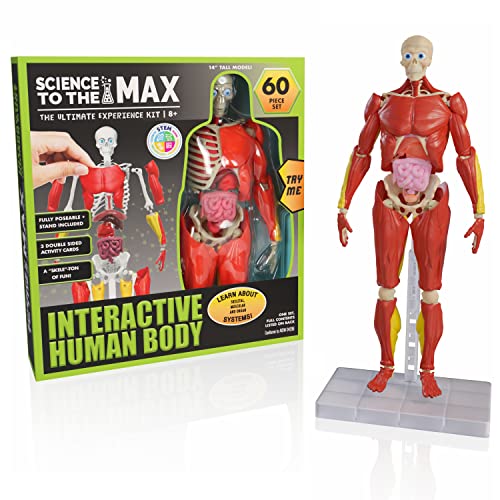
- Fully articulated 14-inch figure with stand
- 60 pieces include bones, muscles, and organs
- Illustrated cards teach body functions
Best For: Older kids 8+ who want a detailed poseable anatomy figure
Interactive Talking Science Pick
Science Can Human Body Model for Kids

- Two learning modes: explanation and quiz
- 15+ removable organs, muscles, and bones
- Includes booklet and knowledge cards
Best For: Kids ages 6+ who like guided, interactive anatomy learning
Glow-in-the-Dark STEM Pick
GobiDex Human Body Skeleton Model Kits

- Glow-in-the-dark bones for extra fun
- 40-piece anatomy kit with bones, muscles, organs
- Includes illustrated manual and reusable parts
Best For: Kids ages 8+ who like building science kits and visual learning
Squishy Hands-On Learning Pick
Dan&Darci Human Anatomy Squishy Body Model

- Squishy, flexible body parts for tactile learning
- 30 removable parts with numbered matching system
- Guide includes facts, illustrations, and challenges
Best For: Younger kids ages 4-8 who like hands-on, sensory science toys
Squishy Anatomy Set – SMARTLAB Squishy Human Body with 21 Removable Parts
SMARTLAB Toys Squishy Human Body with 21 Removable Body Parts with Anatomy Book
Check Price On AmazonFor families shopping human anatomy models for kids, this SmartLab set turns body systems into a hands-on build-and-rebuild activity. Kids remove 21 realistic organs, bones, and muscles with the included forceps and tweezers, then use the anatomy book to connect what they see with how the body works.
Best For: Kids age 8+ who learn best by handling removable parts and reading along in an included anatomy book.
Pros:
- Includes 29 pieces, plus forceps, tweezers, and an organ-izer mat
- Comes with a 24-page illustrated anatomy and biology book
- Realistic squishy organs and plastic bones make the model interactive
- Designed for hands-on STEM learning and homeschool use
Cons:
- Made for ages 8 and up, so it is not ideal for younger children
- Smaller parts may be better suited to guided play
This is a strong pick if you want a tactile anatomy toy that teaches by disassembly and reassembly rather than passive viewing. It offers solid value for kids who like detailed models and structured science activities.
Build-It STEM Model – Smartivity Interactive Human Body Model
Among human anatomy models for kids, this Smartivity kit stands out because it is built to demonstrate movement and body systems in action. Children assemble an inflatable lung, a mechanical arm, and a hydraulic food pipe, then use the learning booklet and removable labels to connect the build with real anatomy.
Best For: Kids ages 8 to 14 who enjoy building STEM projects with moving parts and clear science concepts.
Pros:
- Three working mechanisms: inflatable lung, mechanical arm, and hydraulic food pipe
- No batteries required
- Includes a learning booklet and removable organ labels
- Made from precision laser-cut engineered wood for a durable build
Cons:
- More of a build-it-yourself project than a simple display model
- Best suited to kids who can follow step-by-step instructions
This is a smart choice if you want anatomy learning paired with mechanical STEM concepts. It should appeal to curious kids who want to construct, test, and understand how body systems work.
Portable Torso Display – EVOTECH Scientific 11 Inch Human Body Model
If you want human anatomy models for kids that also work well for classroom display, this EVOTECH torso model is a practical option. It includes 15 detachable parts, a colorful educational brochure, and a compact size that makes it easy to carry to class or keep on a shelf.
Best For: Students and anatomy beginners who need a compact, detachable torso model for school or display.
Pros:
- 15 detachable pieces include brain, heart, lungs, stomach, liver, and intestines
- Made from non-toxic PVC with hand-painted detail
- Portable 11-inch size fits easily in a bag
- Includes a colorful educational brochure and oak-wooden base
Cons:
- Some organ pieces are small
- Product notes recommend keeping it away from children who still put objects in their mouths
This model makes sense for older kids, students, or anyone who wants a more traditional torso display with removable organs. Its compact footprint and secure fit make it especially useful for teaching and presentation.
Floor Puzzle Anatomy – Dr Livingston Jr 100-Piece Human Body Jigsaw
For a different take on human anatomy models for kids, this 4-foot floor puzzle turns body learning into a large-scale jigsaw activity. The medically accurate cross-section gives children a chance to piece together major organs and body parts while building a full-body display they can later hang in a bedroom, classroom, or playroom.
Best For: Kids ages 6 to 10 who enjoy puzzles and want a big visual anatomy activity.
Pros:
- 100-piece floor puzzle creates a 4-foot human body image
- Scientifically and medically accurate cross-section design
- Unique piece shapes help make the puzzle a fun challenge
- Finished puzzle can double as wall or classroom display
Cons:
- Less tactile than a removable-part anatomy model
- Best for kids who enjoy puzzle-building rather than hands-on dissection-style play
This is a strong option if your child learns well through visual assembly and wants a big finished result. It blends anatomy education with a classic jigsaw format that works nicely for home or classroom use.
Compact Organs Learning Set – breesky 10.5-inch Medical Torso Model
If you want human anatomy models for kids that make organ placement easy to see, this compact torso is a strong pick. It includes 15 removable parts, so children can practice taking the model apart and rebuilding it while learning the relative position of the major organs and systems.
Best For: Kids who want a hands-on torso model with removable organs for basic anatomy study.
Pros:
- 15 removable parts, including brain, heart, lungs, stomach, liver, spleen, pancreas, and intestines
- Designed to show the head, neck, and internal organ relationships, with emphasis on respiratory, digestive, urinary, and nervous systems
- Sturdy base helps the model stay upright during display and study
- Portable size is easy to carry to class or keep on a shelf
Cons:
- Small pieces require supervision for younger children who still put items in their mouths
- Assembly can be challenging for kids, even though that is part of the learning process
- Best suited to guided learning rather than open-ended play
This is a practical anatomy starter for learners who benefit from a visual, build-it-yourself format. It is especially useful when you want a compact teaching aid that still covers several major organs and systems.
Magnetic Layer Builder – MyBODY Large Human Body Model
For human anatomy models for kids that feel more like a guided puzzle, this large magnetic set stands out. Children build the body bottom-to-top on a skeleton base, then add seven anatomy layers and can swap between four top-body options, making the structure of the body easier to follow step by step.
Best For: Kids ages 5+ who learn best with a large magnetic body-building activity.
Pros:
- Large magnetic skeleton base makes the build easy to handle and visually clear
- Seven layers cover skeleton, muscular, digestive, nervous, circulatory, and respiratory systems
- Includes 7 info sheets, reusable sticky labels, and QR codes with extra facts
- Four interchangeable top body options add variety and replay value
Cons:
- Higher-piece learning format may be more involved than a simple single-piece body model
- Best suited to table-top or flat-surface play because of the large magnetic layout
- Designed for ages 5+, so older children may outgrow the simpler visual style
This is a strong pick if you want an anatomy toy that mixes matching, labeling, and layered learning. The large format and support materials make it especially useful for home learning or classroom review.
Poseable STEM Body – Be Amazing! Toys Interactive Human Body
If you want human anatomy models for kids that show movement as well as structure, this fully articulated figure is a compelling option. The 14-inch model includes 60 pieces with removable muscles, bones, and organs, plus a stand so children can pose it and explore how the body works.
Best For: Kids 8+ who want a detailed, poseable anatomy figure with many removable parts.
Pros:
- Fully articulated and posable, helping kids connect anatomy with movement
- 60-piece build includes bones, muscles, removable squishy organs, and stand
- Illustrated instruction cards explain the body and its functions
- Realistic 14-inch size offers a more advanced anatomy experience
Cons:
- Recommended for ages 8+, so it is not the best fit for younger kids
- More complex than a basic anatomy toy and may take more time to assemble
- Small removable pieces mean it works best with supervised play or study
This model is a good fit when you want a more detailed STEM toy that goes beyond simple organ placement. It offers a stronger mix of poseability, realism, and educational content for older children.
Interactive Talking Science Pick – Science Can Human Body Model for Kids
If you want human anatomy models for kids that feel more like a hands-on lesson than a static toy, this Science Can set is built for interactive learning. It combines a 3D torso with removable parts, a booklet, and quiz-based play so children can identify body parts and learn what they do.
Best For: Kids ages 6+ who learn well through guided play, quizzes, and organized anatomy study.
Pros:
- Two learning modes: explanation mode and quiz mode
- Includes 15+ removable realistic organs, muscles, and bones
- Comes with a 26-page illustrated booklet plus 4 double-sided knowledge cards
- Designed as an all-in-one STEM learning kit for anatomy and biology
Cons:
- Requires 3 AA batteries, which are not included
- Smaller 11-inch size may feel limited for kids who want a larger display model
This is a strong choice if you want an anatomy model that actively teaches instead of just displaying parts. The mix of talking guidance, removable pieces, and printed study materials makes it especially useful for home learning and school projects.
Glow-in-the-Dark STEM Pick – GobiDex Human Body Skeleton Model Kits
For shoppers comparing human anatomy models for kids, this GobiDex kit stands out for its glow-in-the-dark skeleton and hands-on assembly. It gives children a 12.6-inch model with 40 pieces to explore bones, muscles, and organs in a way that feels playful but still educational.
Best For: Kids ages 8+ who enjoy building models and want a more visual take on anatomy.
Pros:
- Glow-in-the-dark bones add extra visual appeal
- 40-piece kit covers bones, muscles, and organs
- Easy to assemble, disassemble, and reuse
- Includes an illustrated science manual for guided learning
Cons:
- Best suited to older kids rather than beginners
- Plastic model format may be less tactile than squishy anatomy toys
This kit is a good fit if you want anatomy learning with a science-toy feel and a standout visual feature. The glow effect and rebuildable design make it appealing for home use, classrooms, or gift giving.
Squishy Hands-On Learning Pick – Dan&Darci Human Anatomy Squishy Body Model
If you’re looking for human anatomy models for kids that are extra tactile, this Dan&Darci squishy body model is designed for hands-on exploration. It features 30 removable body parts, including organs and bones, with a soft, stretchy feel that makes anatomy easier to explore and remember.
Best For: Younger kids ages 4-8 who learn best by touching, matching, and rebuilding.
Pros:
- Squishy, gooey, and flexible parts make the body model highly interactive
- Includes 30 removable body parts, including major organs and bones
- Numbered organizer helps kids match parts and reinforce memory
- Guide includes facts, illustrations, and interactive challenges
Cons:
- Geared more toward younger children than advanced anatomy study
- Focuses on play-based learning rather than a classroom-style display model
This model is a smart pick for families who want anatomy to feel fun and approachable. The soft texture, matching system, and activity-heavy guide make it especially useful for early STEM learning.
How We Picked These Human Anatomy Models for Kids
We looked for models that make anatomy approachable without overwhelming younger learners. The strongest picks offer age-appropriate detail, sturdy parts, clear learning support, and a format that encourages active engagement, whether that means assembly, squishy parts, puzzle play, or quiz-based learning.
We also favored sets that can grow with a child. Some Human Anatomy Models for Kids are best for early elementary learners who need simple identification, while others suit older children ready to explore organs, systems, and more advanced structure.
Quick Comparison: What Matters Most
If you want the easiest choice, start with the child’s age and attention span. Younger kids usually do best with softer, simpler models or large-format puzzles. Ages 8 and up can handle more parts, greater realism, and learning tools that go beyond basic labeling.
- Best for younger kids: squishy, simple, or highly guided models
- Best for older kids: detailed torso kits, magnetic builds, and poseable figures
- Best for classrooms: durable sets with clear part separation and repeatable use
- Best for hands-on learners: models with removable organs, quizzes, or assembly steps
Key Buying Factors for Human Anatomy Models for Kids
Age Range and Complexity
The right complexity matters more than the number of pieces alone. A 15-piece torso may be ideal for a child who is ready to learn organ names, while a 60-piece figure may be better for older kids who enjoy detailed building and exploration.
Material and Durability
Look for safe, sturdy materials that can survive repeated handling. Soft-body models, thick plastic parts, and well-fitted connectors tend to hold up better than fragile display-only kits.
Learning Style
Choose a format that matches how your child learns. Visual learners may prefer puzzles and labeled parts, while tactile learners often benefit from magnetic builds, removable organs, and interactive quiz modes.
Educational Depth
Some Human Anatomy Models for Kids focus on the basics, while others include bones, organs, or system-level learning. Pick the amount of detail that feels challenging but still fun.
Who Should Buy Which Human Anatomy Models for Kids?
For ages 4 to 7: Choose simpler, hands-on options with soft or large parts that introduce body awareness without too much detail.
For ages 8 to 10: Look for torso models, interactive kits, or anatomy sets with removable pieces and learning guides.
For ages 11 and up: More detailed models with higher piece counts, skeletal structure, or advanced assembly can be a better fit.
For teachers and homeschool families: Prioritize durability, repeat use, and clarity. The best Human Anatomy Models for Kids in these settings are easy to reset, easy to explain, and engaging enough to keep attention.
In the end, the best choice is the one that matches your child’s age, curiosity level, and preferred way of learning. A well-chosen anatomy model can make science feel less abstract and much more memorable.