Interactive globes can turn geography into a hands-on experience, helping children learn continents, countries, animals, landmarks, and more through play.
Below, you’ll find the best interactive globes for children in 2026, chosen for educational value, age fit, features, and everyday usability.
Best 10 Interactive Globes for Children Picks for 2026
Editor’s Pick
LeapFrog Magic Adventures Globe with Videos
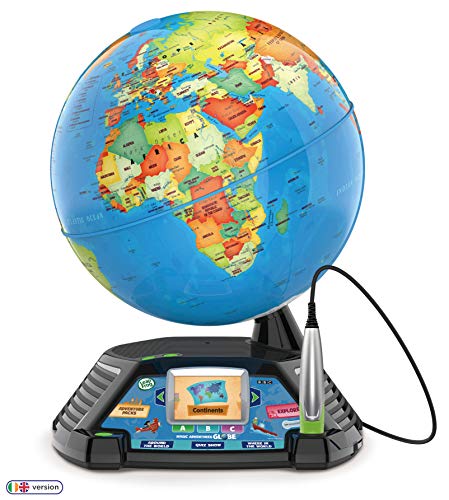
- Stylus taps unlock thousands of facts
- Includes 5+ hours of BBC videos
- Three built-in learning games
Best For: Kids ages 5+ who enjoy video-led geography games
AR Adventure Pick
PlayShifu Orboot Earth AR Globe

- Works with a free AR app
- Includes 1000+ facts and games
- Comes with passport, stamps, and stickers
Best For: Kids 4–10 who want app-powered globe exploration
Video Screen Globe
LeapFrog Magic Adventures Globe with Screen
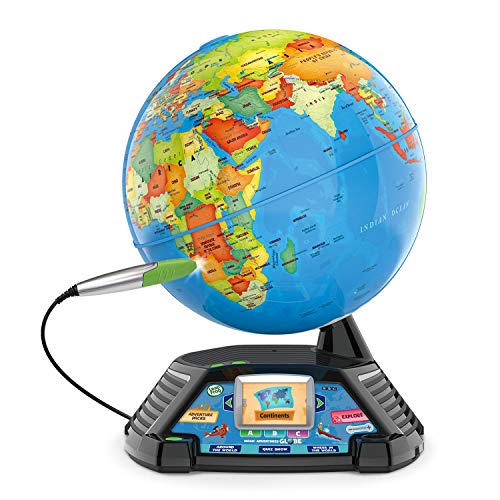
- 2.8-inch screen shows videos and animations
- Over five hours of BBC content
- Three interactive quiz games
Best For: Kids 5+ who prefer video-guided geography learning
Talking Map Pick
Little Experimenter Smart Pen Globe

- Smart pen plays real-time voice facts
- Covers capitals, languages, currencies, and more
- Includes 300 trivia questions
Best For: Kids 8–12 who want a detailed talking geography globe
Light-Up Exploration Globe

- 48 touch points for hands-on exploration
- Three modes: Exploration, Music, and Find-It
- Teaches animals, landmarks, greetings, and foods
Best For: Ages 3+ kids who like playful, touch-based learning
Openable Science Globe
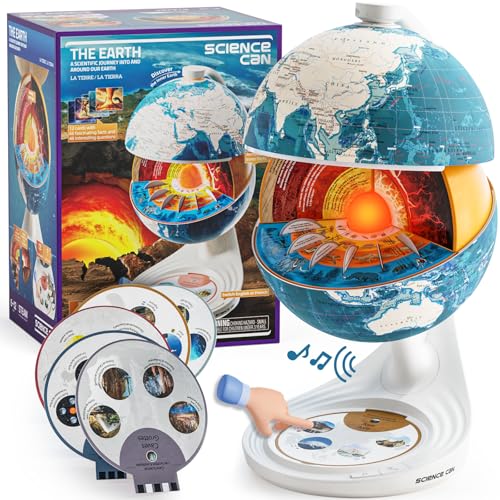
- Openable globe shows crust, mantle, and inner core
- Knowledge mode shares 48 geography facts
- Bilingual English/French with quiz mode
Best For: Kids ages 5-8 interested in geology and geography
Illuminated STEM Globe

- 3-in-1 globe, constellation map, and card game
- LED light-up mode doubles as night light decor
- Includes 88 constellations plus geography details
Best For: Classrooms, homeschoolers, and kids who like astronomy
Writable Study Globe

- 13-inch globe with 200+ countries and regions
- Waterproof surface can be written on and wiped clean
- Stable 360° base built for frequent rotation
Best For: Hands-on geography learning at home or in class
AR Learning Globe

- Works with a free companion app for interactive play
- Includes constellation mode, stylus features, and games
- Offers 400+ wonders and 1000+ facts
Best For: App-connected learners ages 4+ who like games and STEM play
Smart Quiz Globe
Interactive Globe for Children Ages 6-12
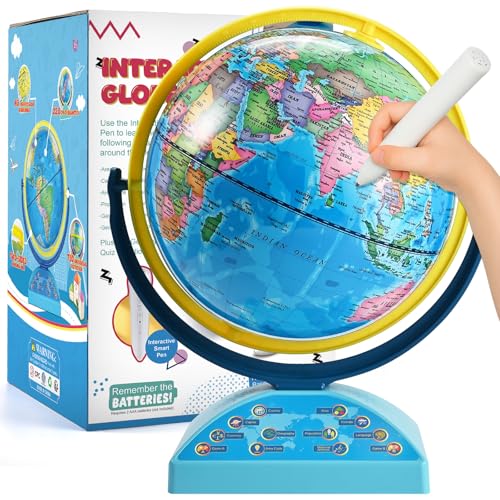
- Stylus reveals facts about countries and capitals
- 300+ quiz games with 30 difficulty levels
- Bilingual narration supports audio learning
Best For: Ages 6-12 who like quiz-based, spoken geography lessons
Editor’s Pick – LeapFrog Magic Adventures Globe with Videos
If you want interactive globes for children that go well beyond naming countries, this LeapFrog globe adds a strong multimedia layer. Kids can tap with the stylus to hear facts, explore cultures and habitats, and watch more than five hours of BBC videos, making it a solid pick for visual learners.
Best For: Ages 5 to 7+ who learn best through guided facts, videos, and game-based play.
Pros:
- More than five hours of BBC video content on cultures, animals, and habitats
- Stylus interaction unlocks thousands of facts and activities
- Includes three learning games for added replay value
- Built-in LCD screen displays videos and animations with character guides
Cons:
- Requires 4 AA batteries
- Best suited to children who like screen-assisted learning
Overall, this is one of the most feature-rich interactive globe choices in the group, especially if you want a kid-friendly mix of geography, visual content, and structured games. It works well as a home learning toy or homeschool gift.
AR Adventure Pick – PlayShifu Orboot Earth AR Globe
For families comparing interactive globes for children, PlayShifu Orboot Earth stands out for its augmented reality approach. The physical globe works with a free app to bring animals, places, monuments, and global facts to life, which can make discovery feel more like an adventure than a lesson.
Best For: Ages 4 to 10 who enjoy app-based AR learning and hands-on exploration.
Pros:
- Over 1000 facts and interactive games
- AR app adds a tech-powered layer to globe learning
- Includes passport, stamps, and flag stickers for themed play
- Supports homeschool and classroom use
Cons:
- Device not included
- Not compatible with Amazon Fire devices
- Requires a compatible iPad, iPhone, or Android device
This is a strong choice if you want a globe that leans heavily into STEM-style engagement and app interaction. The included extras help keep kids interested, though you’ll need the right device to use it.
Video Screen Globe – LeapFrog Magic Adventures Globe with Screen
This version of interactive globes for children uses a 2.8-inch video screen to blend geography with animated learning. Kids can hear facts, trigger videos, and play three interactive games while exploring cultures, animals, and habitats, making it a practical pick for structured educational play.
Best For: Ages 5+ who like guided learning with videos, quizzes, and hands-on globe play.
Pros:
- 2.8-inch screen shows videos and animations
- Includes over five hours of BBC video content
- Three interactive games add quiz-based variety
- Stylus and stand are included for easier play
Cons:
- Requires 4 AA batteries
- Batteries included for demo only, so replacements are needed for regular use
If you want a globe that keeps the learning format simple but engaging, this LeapFrog model does that well. It is especially appealing for children who respond to video prompts and game-based questions.
Talking Map Pick – Little Experimenter Smart Pen Globe
Among interactive globes for children, this Little Experimenter model takes a straightforward smart-pen approach. Kids can tap countries and locations to hear real-time voice recordings, while the globe also covers a wide range of facts like capitals, populations, currencies, climate, and more.
Best For: Ages 8 to 12 who want a talking globe with lots of geography details and trivia.
Pros:
- Smart pen delivers voice-recorded information on touch
- Covers countries, capitals, languages, currencies, climate, and more
- Includes 300 trivia questions for extra practice
- Suitable for home learning and classroom use
Cons:
- Smaller 9-inch size than some other interactive globes
- Speaker is built in, so audio is limited to the device itself
This globe is a good fit if you want lots of factual coverage in a compact format. The trivia questions and smart pen make it especially useful for older kids who want more than just basic map labels.
Light-Up Exploration Globe – LeapFrog LeapGlobe for Kids
If you want interactive globes for children that keep preschoolers engaged, the LeapFrog LeapGlobe focuses on simple touch-and-learn play. With 48 touch points, three play modes, and light-up globe effects, it gives young kids an easy way to explore landmarks, animals, greetings, foods, and world music.
Best For: Ages 3+ who enjoy hands-on discovery, music, and quick quiz-style learning.
Pros:
- 48 touch points create lots of places to explore.
- Three modes add variety: Exploration, Music, and Find-It.
- Covers animals, landmarks, greetings in French/Mandarin/Spanish, and foods.
- Light-up spinning globe effect adds visual appeal.
Cons:
- Requires 2 AA batteries for regular use.
- Content is broad, but not as science-focused as geology globes.
- Best suited to younger children rather than older map-study learners.
This is a strong pick if you want a kid-friendly globe that mixes geography with sound, color, and simple interactive prompts. It is especially useful for introducing world concepts in a playful format.
Openable Science Globe – Science Can Interactive Globe
Among interactive globes for children, this Science Can model stands out for mixing geography with geology. The 8-inch globe opens to show Earth’s crust, mantle, and inner core, while knowledge and quiz modes add bilingual English/French learning and factual globe play.
Best For: Kids ages 5-8 who are curious about Earth science, geology, and bilingual learning.
Pros:
- Openable design reveals Earth’s layered core structure.
- Knowledge mode shares 48 facts about geography and landmarks.
- Bilingual EN/FR support adds learning flexibility.
- Quiz mode makes it more engaging for practice and review.
Cons:
- 8-inch size is compact, so it is less tabletop-dominant than larger globes.
- Focus leans toward science and facts rather than music or broader play modes.
- Opening feature may need attention to align the markers correctly.
This is a good choice if you want a globe that goes beyond countries and continents. The geological core display makes it especially appealing for kids who like hands-on STEM learning.
Illuminated STEM Globe – SMART WALLABY Desktop Globe
If you’re comparing interactive globes for children that also work as room decor, this SMART WALLABY model offers a useful 3-in-1 format. It combines an educational world map globe, a constellation light mode with 88 constellations, and a STEM card game for hands-on geography practice.
Best For: Kids, homeschoolers, and classrooms that want a globe with both geography and constellation learning.
Pros:
- 3-in-1 design includes a political globe, constellation map, and card game.
- LED illumination turns it into a night-light style display.
- 88 constellations add a celestial learning option.
- Sturdy base and easy-to-read map details suit classroom or desk use.
Cons:
- Focus is broader than a simple kids geography globe.
- Some features are better suited to display and guided learning than solo play.
- At 9 inches, it is more of a desktop piece than a portable toy.
This is the most versatile option in the group if you want one globe that can teach geography, constellations, and basic STEM skills. It is a practical pick for learning spaces that also need a decorative illuminated globe.
Writable Study Globe – 13" Globe for Kids & Adults
If you want interactive globes for children that also work well for older students or family learning, this 13-inch model is built for hands-on geography practice. It covers 200+ countries and regions, adds a waterproof writable surface, and uses a sturdy rotating stand that can handle frequent use.
Best For: Families, classrooms, and kids who want a durable globe they can write on and use repeatedly for geography study.
Pros:
- 13-inch size gives a clear view of countries, islands, and ocean currents.
- Waterproof surface can be marked with a pen and wiped clean with a damp cloth.
- 360° rotating stand is designed for stability during regular use.
- Fade-proof, unbreakable construction is made to handle drops and scratches.
Cons:
- Does not include smart audio, app, or quiz features.
- Writing requires a marker pen and cleanup after use.
This is a practical pick if you want a simple, durable globe that encourages repeated map practice instead of screen-based interaction. It is especially appealing for hands-on learners who benefit from labeling and tracing routes.
AR Learning Globe – Orboot Earth Explorer
Among interactive globes for children, this AR-enabled globe stands out if you want a screen-based experience with lots of guided activities. It uses a companion app to bring the globe to life, and it adds constellation mode, a magic stylus, and games to keep learning playful.
Best For: Kids ages 4+ who enjoy app-connected learning, games, and a more immersive STEM-style globe experience.
Pros:
- App interaction adds AR-style exploration beyond a traditional globe.
- Includes 400+ wonders and 1000+ facts for broad educational content.
- Constellation mode lights up 60+ constellations on the globe.
- Games, quizzes, and quests make learning feel interactive and playful.
Cons:
- Device is not included, so you need a compatible phone or tablet.
- Some activities depend on the companion app and screen use.
This is a strong choice if your child responds well to tech-driven, game-based learning. It combines classic globe play with digital features that can make geography and astronomy feel more engaging.
Smart Quiz Globe – Interactive Globe for Children Ages 6-12
If you are comparing interactive globes for children who like to be quizzed and hear facts aloud, this smart-pen globe is built around guided learning. It offers touch-based facts, bilingual narration, and a large set of quiz games that can support geography study at home or in the classroom.
Best For: Ages 6-12 who want an audio-based globe with quiz games and bilingual learning support.
Pros:
- Stylus interaction triggers facts about each country, including capital, population, and currency.
- 300+ quiz games with 30 difficulty levels add replay value.
- Bilingual narration and music support listening-based learning.
- Shock-resistant ABS+PVC build is suited to daily classroom or homeschool use.
Cons:
- Requires 2 AAA batteries, which are not included.
- Needs the stylus for the main interactive features.
This model is a good fit if you want a more structured learning tool than a basic globe. The combination of spoken facts, quizzes, and progressive difficulty makes it especially useful for kids who learn best by listening and responding.
How We Picked the Best Interactive Globes for Children
To compare Interactive Globes for Children, we focused on learning depth, age suitability, ease of use, build quality, and how engaging each globe is for independent play or family learning. We also favored options that balance screen-free exploration with smart features like audio, quizzes, app support, lighting, or pen-based interaction.
Because every child learns differently, the best choice is not always the most feature-packed model. Some families will want a simple talking globe, while others may prefer an AR-powered option or a larger desk globe for more detailed study.
Quick Comparison
Broadly speaking, these globes fall into a few categories: classic talking globes for foundational geography, AR-enabled models for immersive learning, illuminated globes for visual engagement, and larger desk globes for older kids who want more detail. If you want the most interactive experience, app-connected and smart-pen designs usually offer the most activities. If you want simpler day-to-day use, light-up or audio globes may be the better fit.
Key Buying Factors for Interactive Globes for Children
Age Range and Reading Level
Make sure the globe matches your child’s age and attention span. Younger children usually do better with touch, lights, and simple prompts, while older kids may enjoy quizzes, deeper facts, and more advanced geography content.
Interaction Style
Some models use a smart pen, others use touchpoints, and some rely on AR apps or buttons. Choose the format your child is most likely to use regularly. For many families, the best Interactive Globes for Children are the ones that feel intuitive within the first few minutes.
Content Quality
Look for accurate, age-appropriate facts about countries, capitals, landmarks, animals, and natural features. Bonus points if the globe supports quizzes or multiple learning modes, since that helps reinforce memory.
Durability and Size
Smaller globes are easier to fit on a desk or shelf, but larger models can be easier to read and use. Consider whether the child will move it often, share it with siblings, or keep it in one learning space.
Power, App, and Language Features
Check whether batteries are included, whether an app is required, and whether the globe supports one or more languages. These details can make a big difference in everyday convenience.
Who Should Buy Which Interactive Globes for Children?
If you want a beginner-friendly learning toy for younger children, choose a globe with simple audio, lights, or touch-based discovery. If your child loves tablets, cameras, or immersive play, an AR globe may be the strongest fit. For homeschool families or kids who enjoy detail, a larger educational globe with quizzes and expanded facts is often the most useful choice.
For gifts, the safest option is usually a globe with broad educational appeal and easy setup. For long-term learning, prioritize content depth, durability, and a feature set your child will actually use. The right pick should make geography feel fun, not forced.