The best laptops for home offices make everyday work simpler, whether you are answering email, joining video calls, managing documents, or working with several browser tabs at once.
This roundup compares 10 practical 2026 options across screen sizes, processors, memory, storage, bundled software, and business-focused features so you can choose a setup that fits your workload and budget.
Best 10 Laptops for Home Offices Picks for 2026
Best Large-Screen Pick

- 17.3-inch anti-glare display for multitasking
- 16GB RAM and 512GB SSD
- Full-size keyboard with numeric keypad
Best For: Home offices needing a spacious screen and desktop-style typing
Best Portable Value

- Lightweight 3.42-pound design
- 15.6-inch 1920x1200 anti-glare display
- Wi-Fi 6, USB-C, HDMI, and SD card reader
Best For: Portable everyday work, school, and video meetings
Best Ergonomic Workhorse

- Full HD matte display with listed 120Hz refresh rate
- Numeric keypad and lifted ergonomic hinge
- 512GB SSD with Wi-Fi 6 and Bluetooth 5.3
Best For: Spreadsheet work, typing, and everyday home-office productivity
Portable Everyday Pick

- Intel N150 supports everyday productivity
- Includes Windows 11 and one-year Microsoft 365
- Lightweight design with Wi-Fi 6 and video-call features
Best For: Home users and remote workers needing a compact basic laptop
Large-Screen Bundle Pick
Lenovo 15.6-inch Office Laptop
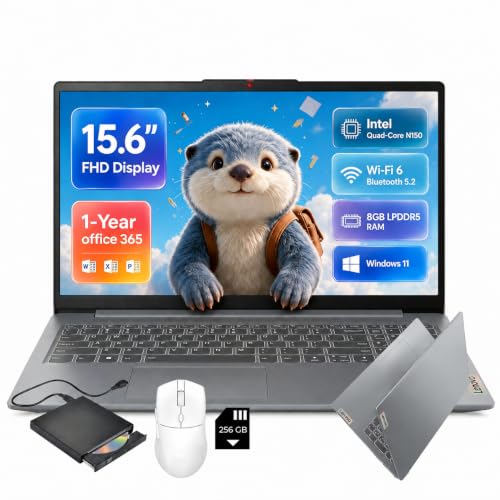
- Full HD display provides generous workspace
- 8GB RAM supports everyday multitasking
- Includes Office 365, mouse, SD card, and optical drive
Best For: Home offices wanting a larger display and bundled accessories
Compact Value Pick

- Portable design with a 14-inch anti-glare display
- Long stated battery life for everyday use
- Includes Microsoft 365 and versatile modern connectivity
Best For: Basic home-office tasks, online learning, and video calls
Budget Home Office Starter

- Quad-core Intel N150 processor
- Compact 14-inch design with HDMI and three USB ports
- Windows 11 Home with lifetime Office for the web
Best For: Basic home-office productivity and web use
Full HD Everyday Pick
Lenovo 15.6-inch Business Laptop

- 15.6-inch Full HD anti-glare display
- 8GB LPDDR5 memory with Intel N150 processor
- Wi-Fi 6, USB-C, HDMI, and privacy-shutter camera
Best For: Everyday work, video calls, and larger-screen productivity
Expanded Home Office Bundle
HP 14 Pro Ultrabook with 16GB RAM

- 16GB RAM for heavier multitasking
- Windows 11 Pro with lifetime Office 2024
- Includes 500GB external drive and office accessories
Best For: Multitasking users wanting a bundled home-office setup
Best Large-Screen Pick – HP 17.3-Inch Ryzen 5 Laptop
For shoppers comparing laptops for home offices, this HP stands out with a spacious 17.3-inch Full HD display, a full-size keyboard, and a numeric keypad. Its Ryzen 5 processor, 16GB of RAM, and 512GB SSD are well suited to everyday productivity, multitasking, video calls, and entertainment.
Best For: Home-office users who want a large screen and comfortable desktop-style typing experience.
Pros:
- Large 17.3-inch anti-glare Full HD display supports multitasking.
- 16GB RAM and a 512GB SSD provide capable everyday performance and storage.
- Full-size keyboard includes a numeric keypad, while the 720p camera and digital microphones support video chats.
- Advertised battery life is up to 12 hours, with HP Fast Charge support.
Cons:
- The larger 17.3-inch chassis is less convenient for frequent travel than a compact laptop.
- The supplied specifications list the native resolution as 1600×900, despite describing the display as Full HD.
This is a practical choice when screen space, number entry, and multitasking matter more than maximum portability. Windows 11 and Office 365 for the Web add familiar tools for documents, spreadsheets, and presentations.
Best Portable Value – Lenovo IdeaPad Slim 3 15
The Lenovo IdeaPad Slim 3 is a lightweight option among laptops for home offices, with a 15.6-inch anti-glare display, Wi-Fi 6, and a useful range of ports. Its Intel N150 processor and 8GB of LPDDR5 memory are designed for browsing, documents, email, streaming, meetings, and other essential tasks.
Best For: Students, remote workers, and home users who prioritize portability and basic productivity.
Pros:
- Lightweight 3.42-pound design measures just 0.70 inches thin.
- 15.6-inch 1920×1200 anti-glare display provides a tall workspace for documents.
- USB-C with Power Delivery and DisplayPort, HDMI, USB-A, and an SD card reader support varied accessories.
- Physical camera privacy shutter, Wi-Fi 6, and Dolby Audio support home working and video meetings.
Cons:
- 8GB of memory is not upgradeable according to the supplied specifications.
- 128GB of UFS storage offers less capacity than many larger SSD-equipped laptops.
This Lenovo makes sense for straightforward office work and study rather than demanding creative workloads. Its portable build, privacy shutter, and connectivity give it a practical edge for moving between rooms, school, and office spaces.
Best Compact Basics – HP 14-Inch N150 Laptop
This compact HP covers the essentials for laptops for home offices, combining an Intel N150 processor with Windows 11, Microsoft 365 Personal, and a 14-inch anti-glare screen. A 128GB UFS drive plus a 500GB external HDD provides a mix of quick access and additional file storage for documents and media.
Best For: Home users, students, and remote workers handling browsing, email, documents, and video calls.
Pros:
- Lightweight 3.24-pound design and 0.71-inch profile are convenient for moving around.
- Includes a one-year Microsoft 365 Personal subscription with Word, Excel, PowerPoint, and OneDrive.
- 720p camera, dual-array microphone, and AI noise reduction support clearer calls.
- Wi-Fi 6, Bluetooth 5.4, USB-C, HDMI, USB-A, and an SD card reader provide flexible connectivity.
Cons:
- Only 4GB of RAM may limit heavier multitasking.
- The 14-inch display is listed at 1366×768, providing less workspace than a Full HD panel.
- The supplied details list a 4.3-pound weight, which conflicts with the advertised 3.24-pound figure.
This HP is best viewed as an affordable, compact productivity machine for routine workloads. Its bundled Microsoft 365 subscription, expandable storage options, and call-focused features are useful for a simple home-office setup.
Best Ergonomic Workhorse – Dell 15.6-Inch Core 3 Laptop
For home-office shoppers who spend substantial time typing, this Dell combines a 15.6-inch Full HD display with a separate numeric keypad and lifted hinges. The Intel Core 3 processor, 8GB of RAM, and 512GB SSD support everyday business, school, entertainment, and general productivity tasks.
Best For: Home-office users who value comfortable typing, numeric entry, and a higher-refresh-rate display.
Pros:
- Full HD 15.6-inch matte display has a listed 120Hz refresh rate.
- Separate numeric keypad and calculator hotkey help with spreadsheets and number-heavy work.
- Lifted hinges provide an ergonomic typing angle, while ComfortView software helps reduce blue-light emissions.
- 512GB SSD, Wi-Fi 6, Bluetooth 5.3, and a one-year onsite service offering add practical value.
Cons:
- At about 4.2 pounds, it is less portable than ultralight alternatives.
- No fingerprint reader is listed.
This Dell is a sensible all-purpose home-office laptop when typing comfort and local storage matter. Its numeric keypad and ergonomic hinge design are especially useful for spreadsheets, accounting, and long document sessions.
Portable Everyday Pick – HP 14-inch Copilot Laptop
For shoppers comparing laptops for home offices, this compact HP model covers core needs such as email, documents, web browsing, streaming, and video calls. Its Intel N150 processor, Windows 11 Home, Copilot integration, and included Microsoft 365 Personal subscription make it ready for everyday productivity.
Best For: Home users, students, remote workers, and travelers who prioritize portability and basic office tasks.
Pros:
- Lightweight 3.24-pound design with a 14-inch anti-glare display.
- Includes a one-year Microsoft 365 Personal subscription and Windows 11 Home.
- Wi-Fi 6, USB-C, two USB-A ports, HDMI, and an SD card reader provide useful connectivity.
- 720p webcam, dual microphones, and AI noise reduction support video meetings.
Cons:
- 4GB of RAM and 128GB of UFS storage are best suited to light workloads.
- The display is HD rather than Full HD.
This HP is a practical choice when a slim, affordable laptop is more important than high-end performance. It should handle routine home-office work well, but demanding creative applications and heavy multitasking are outside its intended use.
Large-Screen Bundle Pick – Lenovo 15.6-inch Office Laptop
This Lenovo stands out among laptops for home offices with its spacious 15.6-inch Full HD display and ready-to-use accessory bundle. The Intel N150 processor and 8GB of RAM are suited to documents, spreadsheets, browser tabs, online meetings, and other everyday work.
Best For: Home-office users, students, and families who want a larger screen and useful accessories included.
Pros:
- 15.6-inch 1920 x 1080 anti-glare display gives documents and spreadsheets more working room.
- 8GB LPDDR5 RAM is a stronger fit for everyday multitasking than a 4GB configuration.
- Includes one-year Office 365, a 256GB SD card, wireless mouse, and external CD/DVD drive.
- Wi-Fi 6, USB-C, HDMI, two USB-A ports, and a webcam privacy shutter support home-office use.
Cons:
- 128GB internal UFS storage is limited without relying on the included SD card.
- The Intel N150 is not intended for heavy gaming, professional video editing, or workstation workloads.
The Lenovo offers the most complete productivity package in this group. Its Full HD screen, 8GB of memory, and bundled peripherals make it especially convenient for a home office, provided your workload remains focused on everyday applications.
Compact Value Pick – HP 14-inch Essential Laptop
For straightforward laptops for home offices, this HP Essential model focuses on portability and dependable daily basics. Its Intel N150 processor, Windows 11 Home, 128GB UFS storage, and Microsoft 365 Personal subscription support email, document editing, web browsing, streaming, and light productivity.
Best For: Students, remote learners, and home users seeking a lightweight laptop for routine tasks and video calls.
Pros:
- Compact 3.24-pound chassis and 14-inch anti-glare display are easy to carry.
- Up to 11 hours of video playback and up to 7.5 hours of mixed use are specified.
- Wi-Fi 6, Bluetooth 5.4, USB-C, two USB-A ports, HDMI, and an SD card reader offer flexible connectivity.
- Includes Windows 11 Home, Microsoft 365 Personal, a 720p camera, and AI noise reduction.
Cons:
- 4GB RAM and 128GB storage limit headroom for extensive multitasking.
- The 1366 x 768 display has less workspace than a Full HD panel.
This HP is best viewed as a simple, portable productivity machine rather than a performance laptop. It makes sense for routine home-office work, online classes, and communication when battery life and a compact design matter most.
Budget Home Office Starter – HP 14 Ultrabook
If you need a straightforward option among laptops for home offices, this HP 14-inch Ultrabook covers everyday essentials such as web browsing, document work, and video calls. Its quad-core Intel N150 processor and Windows 11 Home provide a familiar setup, while the compact design fits smaller workspaces.
Best For: Basic home-office tasks, web browsing, document editing, and users who want a compact laptop.
Pros:
- Quad-core Intel N150 processor reaches up to 3.6 GHz.
- Compact 14-inch clamshell design with three USB ports and HDMI.
- Includes Windows 11 Home and lifetime Microsoft Office for the web.
Cons:
- Only 4GB of RAM may limit heavier multitasking.
- 128GB of storage provides limited room for large files.
- 1366 x 768 display resolution is less detailed than Full HD.
This HP is best viewed as an affordable, essentials-focused home-office computer. It can handle routine productivity, but users running many applications or storing substantial media may want more memory and storage.
Full HD Everyday Pick – Lenovo 15.6-inch Business Laptop
This Lenovo is a practical choice among laptops for home offices, pairing a spacious 15.6-inch Full HD anti-glare screen with 8GB of LPDDR5 memory. The Intel N150 platform is suited to documents, browsing, streaming, video calls, and light multitasking.
Best For: Everyday home-office work, online classes, video calls, streaming, and users who prefer a larger Full HD display.
Pros:
- 15.6-inch 1920 x 1080 anti-glare display with low-blue-light certification.
- 8GB LPDDR5 memory supports routine multitasking.
- Wi-Fi 6, USB-C with DisplayPort, HDMI, SD card reader, and privacy-shutter camera.
- Includes Windows 11 Home and a one-year Microsoft 365 Personal subscription.
Cons:
- 128GB UFS storage may fill quickly with large files.
- Intel integrated graphics are intended for everyday use rather than demanding graphics work.
- The display uses TN technology.
With its Full HD panel, modern wireless connectivity, and 8GB of memory, this Lenovo offers a well-rounded setup for routine remote work. Its storage capacity is the main limitation, especially for users who keep many local files.
Expanded Home Office Bundle – HP 14 Pro Ultrabook with 16GB RAM
For shoppers comparing laptops for home offices, this HP package emphasizes memory, storage accessories, and business-oriented software. It combines 16GB of RAM, Windows 11 Pro, a 500GB external drive, and included peripherals with a compact 14-inch anti-glare display.
Best For: Home-office users who need more multitasking headroom, Windows 11 Pro features, and included accessories.
Pros:
- 16GB of RAM is well suited to running multiple programs and browser tabs.
- Includes 128GB UFS storage plus a 500GB external drive.
- Windows 11 Pro and lifetime Microsoft Office 2024 are included.
- Bundle adds a wireless mouse, earbuds, HDMI cable, USB extension cord, and mouse pad.
Cons:
- The built-in display is limited to 1366 x 768 resolution.
- The 128GB internal storage remains modest without using the external drive.
- Integrated Intel graphics are not designed for demanding graphics workloads.
This model stands out for its bundled value rather than premium display quality. The 16GB memory, Windows 11 Pro, and accessory package make it a flexible home-office setup, provided you are comfortable using the external drive for additional storage.
How We Picked These Laptops for Home Offices
We selected models that cover the most common home-office needs: web-based work, email, Microsoft Office tasks, video conferencing, remote learning, bookkeeping, and general productivity. We looked at processor class, RAM, storage capacity, display size and resolution, operating system, included software, connectivity, and practical features such as numeric keypads and USB-C ports.
The list includes entry-level laptops for basic tasks as well as higher-capacity systems with 16GB of memory or larger storage. Product specifications can vary by configuration, so confirm the exact listing details, warranty, and software license before ordering.
Quick Comparison
| Best For | What to Prioritize | Recommended Configuration |
|---|---|---|
| Basic email and web use | Affordable price and reliable battery life | Entry-level Intel processor, 8GB RAM, SSD storage |
| Office documents and multitasking | More memory and a responsive SSD | 16GB RAM with at least 256GB storage |
| Large spreadsheets | Screen space and numeric input | 15.6- or 17.3-inch display with a numeric keypad |
| Remote work and calls | Webcam, microphone, Wi-Fi, and comfortable keyboard | Full HD display, Wi-Fi 6, and a suitable camera |
| Long-term file storage | Higher capacity and easy backup options | 512GB SSD or more, plus cloud or external backup |
Key Buying Factors for Laptops for Home Offices
Performance and Memory
For email, browser apps, word processing, and video calls, a modern entry-level processor can be sufficient. Choose 16GB of RAM if you regularly keep many tabs and applications open; 8GB is workable for lighter workloads but leaves less room for multitasking.
Storage Type and Capacity
An SSD generally makes startup, application loading, and file access feel faster than a traditional hard drive. A 128GB drive may work for cloud-first users, but 256GB is more comfortable, while 512GB provides useful room for documents, photos, and installed applications. Check whether a listing includes SSD, HDD, or a combination.
Display, Keyboard, and Comfort
A 15.6-inch screen offers a useful balance of workspace and portability. A 17.3-inch model is easier to view for spreadsheets and split-screen work but takes up more desk space. Full HD resolution is preferable for sharper text, and a numeric keypad is valuable for accounting or data entry.
Connectivity and Software
Review the available USB ports, USB-C support, Wi-Fi standard, HDMI connectivity, and headphone jack before buying. Bundled Microsoft 365 or Office offers can be helpful, but verify whether the license is a subscription, a limited web version, or a perpetual license. Also confirm that Windows 11 edition meets your work requirements.
Who Should Buy Which Laptops for Home Offices?
Choose an Entry-Level Model If
You mainly use webmail, documents, online forms, streaming, and occasional video calls. These models can keep costs down, especially when most files are stored in the cloud.
Choose a 16GB Model If
You work with large spreadsheets, numerous browser tabs, multiple office applications, or frequent video meetings. Extra memory can provide a smoother experience and better longevity.
Choose a Larger 15.6- or 17.3-Inch Laptop If
Your laptop will remain on a desk and you value a larger workspace over portability. These sizes are especially useful for spreadsheets, side-by-side documents, and detailed dashboards.
Choose a Compact 14-Inch Model If
You move between rooms, commute occasionally, or use a separate monitor at your desk. A smaller laptop is easier to carry while still handling everyday home-office tasks.