A laser projector can deliver a far larger image than most televisions while offering fast startup, long-lasting light output, and flexible placement. The right choice depends on more than resolution: room brightness, throw distance, screen size, sound, and gaming performance all matter.
We’ve gathered 10 laser projectors for home theater spanning premium ultra-short-throw systems, portable smart models, bright full-HD options, and high-performance 4K projectors. Use the guide below to narrow the list based on how and where you plan to watch.
Best 10 Laser Projectors for Home Theater Picks for 2026
Best Premium UST Pick
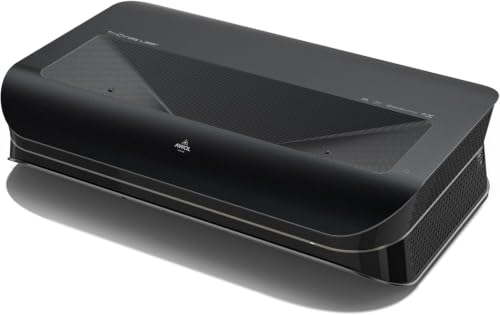
- Triple-laser 4K with Dolby Vision, HDR10+, and 3D
- Built-in center-channel speaker
- Up to 150-inch image with 25,000-hour laser life
Best For: Premium dedicated home theaters and large-screen entertainment
Best Smart Family Option

- Official Google TV with streaming app access
- Automatic focus, keystone, and screen fitting
- Native 1080p with 4K input decoding
Best For: Family streaming and flexible indoor or outdoor viewing
Best Brightness Pick
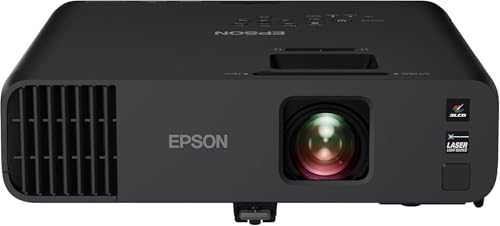
- 4,600 lumens for well-lit rooms
- Full HD images up to about 300 inches
- 20,000-hour laser source and broad connectivity
Best For: Bright living rooms and multipurpose home entertainment spaces
Best Feature-Rich Outdoor Pick

- VIDAA smart platform with streaming and live channels
- Native 1080p with 4K decoding and HDR10
- Dual 20W Dolby Audio speakers
Best For: Backyard movies, sports, and convenient all-in-one entertainment
Bright-Screen Pick

- 5,500 ANSI lumens with Full HD resolution
- 30–300-inch image range with optical zoom
- Flexible installation and golf simulation support
Best For: Bright rooms and multipurpose home theaters
Smart 4K Lifestyle Pick
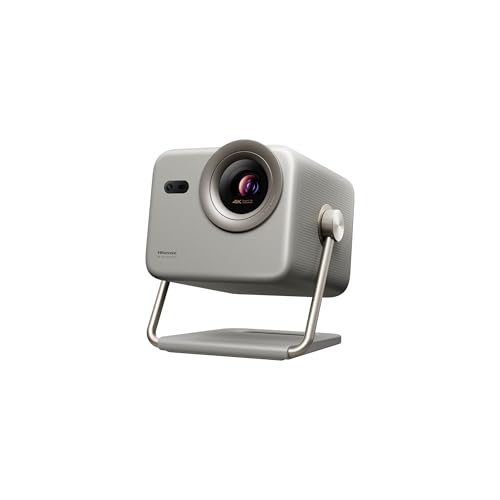
- Triple-laser 4K UHD picture with Dolby Vision
- VIDAA OS with major streaming apps
- Optical zoom and automatic screen adjustments
Best For: Low-light streaming, gaming, and flexible movie setups
HDR Theater Choice
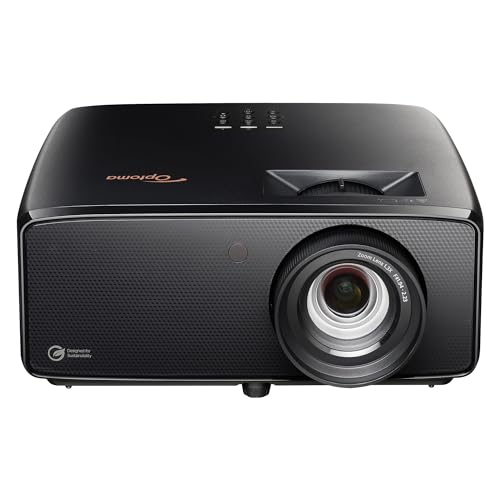
- 4K UHD resolution with HDR support
- 3,500 ANSI lumens and up to a 300-inch image
- Filmmaker Mode and 30,000-hour laser life
Best For: Dedicated 4K home theaters and HDR gaming
Best All-Around Pick

- 4K triple-laser picture with 110% Rec. 2020 color
- 0.9–1.5x optical zoom and automated room setup
- 4ms/240Hz gaming plus built-in Google TV
Best For: Flexible home theaters that also support gaming and streaming
Best for Gaming Value

- 4ms input lag and 240Hz refresh rate
- 4K with Dolby Vision, HDR10, and IMAX Enhanced
- Google TV and automatic setup features
Best For: Gamers wanting a streamlined big-screen entertainment hub
Best Premium Picture

- 3,500 ISO lumens with up to 50,000:1 dynamic contrast
- Anti-RBE design and 110% Rec. 2020 color coverage
- Optical zoom, vertical lens shift, Dolby Vision, and 3D
Best For: Dedicated theaters prioritizing contrast and installation flexibility
Best Premium UST Pick – AWOL VISION LTV-3000 Pro
For shoppers seeking laser projectors for home theater, the AWOL VISION LTV-3000 Pro is a premium ultra-short-throw option built around 4K, Dolby Vision, 3D, and triple-laser color performance. It can create an image up to 150 inches from just a short distance, though an ALR screen is recommended for brighter rooms.
Best For: Dedicated home theaters and large-screen viewing with premium HDR, 3D, and integrated audio features.
Pros:
- Triple-laser 4K projection with Dolby Vision, HDR10+, and 3D support
- Built-in center-channel speaker helps keep dialogue aligned with the screen
- Wide color coverage and a 25,000-hour laser operating life
- Supports Dolby Atmos and Control4/PJ Link integration
Cons:
- Works best in darker rooms unless paired with an ALR screen
- Fixed 0.25:1 throw ratio limits placement flexibility
- 3D viewing requires compatible active-shutter glasses and source equipment
This is a strong choice when image quality, huge screen size, and theater-style features matter more than simple setup. Plan the cabinet depth and screen pairing carefully before buying.
Best Smart Family Option – Google TV Smart Projector 4K
This Google TV smart projector is a practical contender among laser projectors for home theater when streaming convenience and family features are priorities. It uses native 1080p resolution with 4K input decoding, plus built-in Google TV features, voice control, casting, and automatic image adjustment.
Best For: Families wanting a flexible smart projector for indoor movies, streaming, and occasional outdoor use.
Pros:
- Official Google TV platform with access to popular streaming services
- Autofocus, automatic keystone correction, and intelligent screen fitting
- Voice assistant and wireless Google TV Cast mirroring
- Rotatable stand supports desktop, tripod, wall, and ceiling placement
Cons:
- Native resolution is 1080p rather than true 4K
- Supplied brightness descriptions use inconsistent lumen terminology
- Digital zoom can resize the image but may reduce effective detail
Its strongest advantage is convenience: the integrated operating system and automatic setup features reduce the need for extra streaming hardware. Buyers seeking native 4K should look at higher-end alternatives.
Best Brightness Pick – Epson Pro EX11000
The Epson Pro EX11000 stands out among laser projectors for home theater when brightness and placement flexibility are more important than 4K resolution. Its 4,600 lumens of color and white brightness are designed for well-lit spaces, while 3LCD technology helps maintain strong color brightness without rainbowing.
Best For: Bright living rooms, large-group viewing, presentations, and buyers who also need a capable business projector.
Pros:
- High 4,600-lumen color and white brightness for well-lit rooms
- Full HD 1080p images up to approximately 300 inches
- 20,000-hour laser light source with no bulb replacement
- Miracast, two HDMI ports, Wi-Fi, Ethernet, and USB connectivity
Cons:
- Does not provide native 4K resolution
- Designed primarily as a business and presentation projector
- Tabletop mounting and a relatively large maximum image require planning
This Epson is a sensible choice for multipurpose spaces where ambient light can undermine ordinary projectors. It is less suited to buyers seeking a dedicated 4K cinema experience, but its brightness and connectivity are valuable tradeoffs.
Best Feature-Rich Outdoor Pick – VIDAA X9 Pro Smart Projector
For buyers comparing laser projectors for home theater that can also move outdoors, this VIDAA-based model emphasizes smart-TV convenience, built-in sound, and easy setup. It offers native 1080p resolution with 4K decoding, HDR10, automatic focus, and 920 ISO-standard ANSI lumens.
Best For: Casual home theaters, backyard movie nights, live sports, and households wanting built-in streaming and audio.
Pros:
- VIDAA OS with popular streaming services and more than 1,000 live channels
- Native 1080p picture with 4K decoding, HDR10, and 130% NTSC color gamut
- Dual 20W speakers with Dolby Audio and Bluetooth 5.4
- Auto focus, AI voice control, AirPlay 2, and HomeKit support
Cons:
- 4K content is decoded but displayed at native 1080p
- 920 ISO lumens may not be enough for bright daylight viewing
- Streaming app and live-channel availability can vary by region
This model offers a convenient all-in-one entertainment package, especially for evening outdoor use and family rooms. Its native 1080p limitation makes it better suited to casual viewing than a pixel-level 4K theater.
Bright-Screen Pick – ViewSonic LS740HD
For buyers comparing laser projectors for home theater, the ViewSonic LS740HD emphasizes brightness and installation flexibility over smart streaming features. Its Full HD resolution and 5,500 ANSI lumens can help produce a clear image in rooms where controlling ambient light is difficult.
Best For: Bright home theaters, golf simulators, large-screen installations, and multipurpose rooms.
Pros:
- Bright 5,500 ANSI-lumen output with native 1920 x 1080 resolution.
- Supports images from 30 to 300 inches and includes 1.3x optical zoom.
- Flexible placement features include horizontal and vertical keystone, four-corner adjustment, portrait mode, and 360-degree projection.
- Laser phosphor light source offers up to 30,000 hours in Dynamic Eco mode.
Cons:
- Provides Full HD rather than 4K resolution.
- Stationary design and ceiling-mount orientation may be less convenient for casual portable use.
- Its listed connectivity does not include built-in Wi-Fi or smart streaming apps.
The LS740HD is a practical choice when brightness, positioning flexibility, and long light-source life matter more than integrated streaming or 4K detail. It is especially well suited to larger or multipurpose spaces.
Smart 4K Lifestyle Pick – Hisense M2 Pro
The Hisense M2 Pro is one of the more feature-rich laser projectors for home theater, combining a portable form factor with 4K UHD output, triple-laser color, and built-in smart software. Its optical zoom and automatic screen adjustments make it a flexible option for movie nights, gaming, and occasional outdoor viewing.
Best For: Low-light movie rooms, flexible tabletop setups, backyard movie nights, and streaming-focused households.
Pros:
- Triple-laser light source and 4K UHD resolution support vivid, detailed images.
- Dolby Vision, HDR-related picture features, and AI image enhancements support cinematic viewing.
- VIDAA OS includes access to Netflix, YouTube, Disney+, and more.
- Optical zoom, intelligent screen adjustments, active 3D support, and gaming features add versatility.
Cons:
- Its 1,300 ANSI-lumen brightness is better suited to low-light environments than bright rooms.
- Active 3D requires separately purchased DLP-Link shutter glasses.
- The 60–200-inch specified image range is less suitable for very small projections.
The M2 Pro stands out for buyers who want a self-contained entertainment projector rather than a basic display device. Its smart platform and 4K features are appealing, while the moderate brightness makes room-darkening important.
HDR Theater Choice – Optoma UHZ36
For a dedicated cinema setup, the Optoma UHZ36 offers 4K UHD resolution, 3,500 ANSI lumens, HDR support, and a long-life laser light source. It is designed for tabletop or ceiling installation and works with common 4K players, streaming devices, and current game consoles.
Best For: Dedicated home theaters, HDR movie viewing, large screens, and 4K console gaming.
Pros:
- Native 3840 x 2160 resolution delivers 4K UHD detail.
- 3,500 ANSI lumens can support a bright, large image up to 300 inches.
- Filmmaker Mode is designed to preserve the director’s intended presentation.
- Laser light source is rated for up to 30,000 hours.
Cons:
- Desktop-oriented design may be less convenient to reposition frequently.
- Supplied notes list HDMI and USB connectivity but no built-in smart operating system or Wi-Fi.
- The one-year projector warranty is shorter than some buyers may expect for a premium home-theater component.
The UHZ36 is a strong fit when 4K resolution, HDR, brightness, and cinema-focused picture modes are the priority. Plan on using a separate streaming player or console for smart content and connected entertainment.
Best All-Around Pick – Valerion VisionMaster Pro2
The Valerion VisionMaster Pro2 is a versatile choice among laser projectors for home theater, combining 4K resolution, triple-laser color, and a flexible 0.9–1.5x optical zoom. Its 3,000 ISO lumens, HDR10+ support, and automated setup features make it practical for both dedicated theaters and multipurpose rooms.
Best For: Home theater buyers who want strong picture quality, flexible placement, smart streaming, and responsive gaming in one projector.
Pros:
- 4K UHD picture with 110% Rec. 2020 color coverage and a 15,000:1 contrast ratio
- 0.9–1.5x optical zoom and automated focus, keystone correction, obstacle avoidance, and screen alignment
- 4ms input lag with 240Hz support and gaming modes for fast-paced play
- Google TV, AirPlay 2, Chromecast, Miracast, and smart-home compatibility built in
Cons:
- Its extensive features may be more than casual viewers need
- Large-screen performance still depends on suitable room and screen conditions
The Pro2 stands out as a balanced option for buyers who want cinematic features without giving up installation flexibility or gaming performance. Its optical zoom and smart automation are especially useful when the projector must serve more than one room or viewing setup.
Best for Gaming Value – Valerion StreamMaster Plus2
The Valerion StreamMaster Plus2 is a gaming-focused option among laser projectors for home theater, pairing 4K visuals with 4ms input lag and a 240Hz refresh rate. It also works as a convenient entertainment hub with Google TV, automatic setup tools, and support for major casting platforms.
Best For: Gamers and movie watchers who want low-latency performance, large-screen IMAX features, and integrated streaming.
Pros:
- 4ms input lag, 240Hz refresh rate, and dedicated RPG, FPS, and night-vision features
- 4K support with Dolby Vision, HDR10, dynamic tone mapping, and a 10,000:1 contrast ratio
- Google TV, AirPlay 2, Chromecast, and Miracast reduce the need for external streaming devices
- Automatic focus, keystone correction, alignment, and obstacle avoidance simplify setup
Cons:
- At 2,000 ISO lumens, it is less bright on paper than some higher-output alternatives
- Its gaming-focused features may be unnecessary for primarily movie-based systems
The StreamMaster Plus2 offers a compelling mix of fast gaming response and everyday convenience. It is a sensible pick when one projector needs to handle console gaming, streaming, and big-screen movie nights with minimal setup complexity.
Best Premium Picture – Valerion VisionMaster Max
The Valerion VisionMaster Max is a premium choice among laser projectors for home theater, emphasizing deep blacks, high brightness, and comfortable viewing. Its triple-laser light source produces 3,500 ISO lumens, while anti-RBE technology, optical lens shift, and advanced contrast features support a more refined cinematic setup.
Best For: Dedicated home theater owners who prioritize contrast, brightness, wide placement flexibility, and premium format support.
Pros:
- Up to 50,000:1 dynamic contrast with EBL processing, an iris aperture, and stray-light control
- 3,500 ISO lumens, 110% Rec. 2020 color coverage, and ISF-certified calibration
- Anti-RBE technology is designed to reduce rainbow effects by 99.99%
- 0.9–1.5x optical zoom, ±105% vertical lens shift, Dolby Vision, IMAX Enhanced, HDR10+, and 3D support
Cons:
- Its premium feature set may be excessive for casual viewing
- Advanced installation controls can require more planning than a basic projector setup
The VisionMaster Max is the strongest fit for viewers who care most about black-level performance and format versatility. Its higher brightness and optical lens shift also make it well suited to larger screens and more demanding installation layouts.
How We Picked These Laser Projectors for Home Theater
We evaluated the selected models by looking at image resolution, laser light source, claimed brightness, HDR support, smart-TV features, throw flexibility, audio connectivity, gaming performance, and portability. We also considered how well each projector fits a specific use case, such as a dedicated dark-room theater, multipurpose living room, backyard viewing, or large-screen gaming.
Specifications can vary by region and manufacturer measurement method, so treat brightness figures as useful comparisons rather than guarantees. Screen material, viewing distance, ambient light, and picture settings have a major effect on real-world results.
Quick Comparison
- Best premium ultra-short-throw experience: AWOL VISION LTV-3000 Pro, with 4K 3D, triple-laser output, Dolby Vision, and Dolby Atmos support.
- Best portable lifestyle option: Hisense M2 Pro, offering a compact design, 4K output, optical zoom, and a broad 65- to 200-inch image range.
- Best bright 1080p choice: ViewSonic LS740HD, designed for rooms where high light output matters more than 4K resolution.
- Best for serious gaming: Valerion StreamMaster Plus2 or VisionMaster Pro2, depending on whether low-latency gaming or broader premium features matter most.
- Best flexible business-and-home model: Epson Pro EX11000, which combines wireless connectivity with dependable 3LCD projection.
Key Buying Factors for Laser Projectors for Home Theater
Resolution and Image Quality
Native 4K or 4K-enhanced models are best for large screens and close seating, while 1080p can still look excellent at typical movie-viewing distances. HDR support is valuable, but contrast, tone mapping, and room lighting determine how convincing HDR appears.
Brightness and Room Conditions
Choose a brighter projector for daytime viewing, larger screens, or outdoor use. In a controlled dark room, excessive brightness can reduce perceived contrast unless you use an appropriate screen. For living rooms, consider an ambient-light-rejecting screen or an ultra-short-throw setup.
Throw Distance and Installation
Ultra-short-throw projectors sit close to the wall and are convenient replacements for televisions, but they require a flat wall or carefully installed screen. Standard-throw models offer more placement flexibility, while optical zoom and lens shift simplify ceiling mounting and screen alignment.
Smart Features, Sound, and Gaming
Built-in Google TV or another smart platform can reduce the need for a streaming stick, though app availability should be verified. Look for HDMI eARC or optical audio if you plan to use a soundbar or receiver. Gamers should prioritize input lag, refresh rate, HDMI bandwidth, and support for features such as 4K gaming and variable refresh rate.
Who Should Buy Which Laser Projectors for Home Theater?
Choose an ultra-short-throw model if you want a television-like setup with a huge image and minimal room depth. Choose a portable smart projector if you move the unit between rooms or want occasional backyard viewing. Choose a bright 1080p projector for presentations, sports, or multipurpose spaces where lighting control is limited. Choose a premium 4K triple-laser model if accurate color, strong HDR, gaming responsiveness, and long-term home-theater performance justify the higher price.
Before buying, measure the available throw distance, confirm the projector’s required screen size, check its HDMI and audio connections, and budget for a suitable screen. These steps usually matter more than choosing the highest advertised lumen or contrast figure.