A mini PC can deliver a capable desktop experience while taking up far less space than a traditional tower. The right model can handle office work, streaming, web browsing, light creative tasks, and multiple displays without dominating your desk.
This roundup compares 10 mini PCs across performance levels, memory and storage configurations, upgrade potential, connectivity, and value so you can choose a compact computer that fits your workload.
Best 10 Mini PC Picks for 2026
Best Value AMD Mini PC
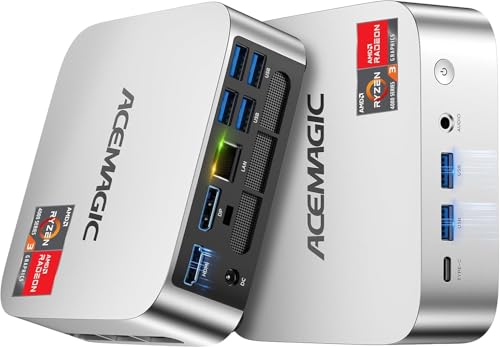
- Ryzen 7330U with 16GB RAM
- 4K triple-display support
- VESA mounting and storage expansion
Best For: Everyday work, study, and multitasking
Best High-Performance Mini PC

- Core Ultra 9 185H with NPU
- 24GB LPDDR5 and Intel Arc graphics
- Quad displays and dual 2.5GbE
Best For: Creative work, coding, and advanced multitasking
Best Expandable Mini PC
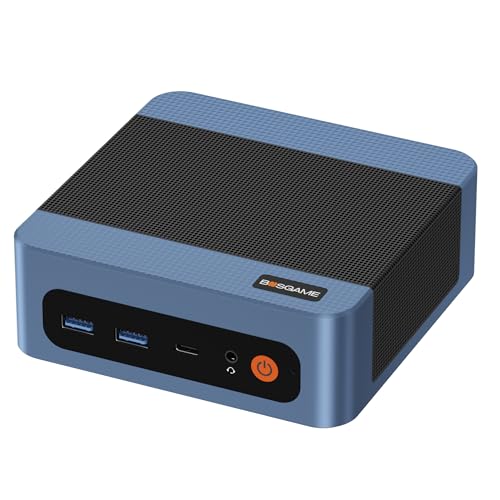
- Triple-display support
- Dual 2.5GbE networking
- Extra M.2 slot for storage
Best For: Office work, home labs, and NAS projects
Best Budget Refurbished Mini PC
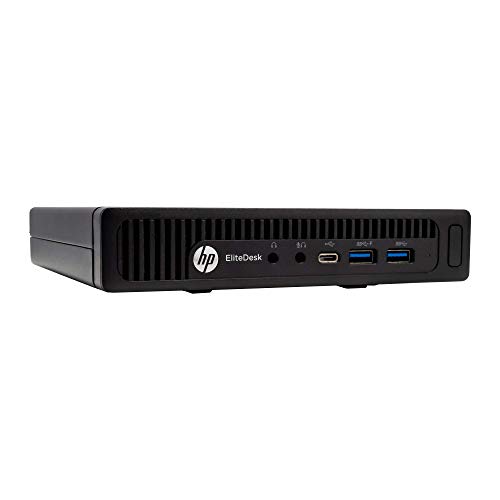
- 16GB RAM and 240GB SSD
- Keyboard and mouse included
- Expandable memory up to 32GB
Best For: Education and basic office computing
Best Expandable Midrange Pick

- Ryzen 3 3200U processor with up to 3.5GHz
- 256GB NVMe SSD and upgradeable RAM
- Dual HDMI and four USB 3.2 ports
Best For: Expandable home-office and dual-screen setups
Best Multi-Display Office Mini PC

- 16GB RAM and 512GB PCIe SSD
- Triple 4K display support
- 2.5GbE networking and upgradeable storage
Best For: Multi-monitor offices, home workstations, and light gaming
Best Everyday Multitasking Mini PC

- 16GB RAM and 512GB SSD
- Triple-display support up to 4K
- Wi-Fi 6 and Bluetooth 5.3
Best For: Study, office work, browsing, and compact multi-screen setups
Best Expandable Portable Mini PC

- Triple 4K display output
- RAM support up to 64GB
- Dual M.2 slots and USB-C PD
Best For: Portable workstations, HTPCs, and storage-focused upgrades
Best Value AMD Mini PC – ACEMAGIC K1 Ryzen 7330U
If you want a responsive mini PC for everyday work, study, streaming, and multitasking, the ACEMAGIC K1 offers a strong balance of performance and compact design. Its Ryzen 3 Pro 7330U processor, 16GB of memory, and Windows 11 Pro make it a practical choice for users who want more capability than entry-level Intel N-series systems.
Best For: Home offices, schoolwork, browsing, media playback, and users who need flexible display and storage expansion.
Pros:
- Ryzen 7330U delivers up to 4.3GHz performance with 4 cores and 8 threads.
- Supports 4K triple-display output through HDMI, DisplayPort, and USB-C.
- Compact chassis includes a VESA mount and built-in power supply design.
- Additional M.2 storage expansion is supported up to 2TB.
Cons:
- The 16GB LPDDR4 memory is non-expandable.
- Wi-Fi 5 and Bluetooth 4.2 are older than the wireless standards on some newer mini PCs.
- The included 256GB SSD may be limiting for large media libraries.
The K1 stands out as a capable general-purpose mini PC with unusually broad connectivity and efficient Ryzen performance. It is especially appealing if you want a clean, quiet desktop setup with room to add storage.
Best High-Performance Mini PC – GEEKOM IT13 MAX Ultra 9
The GEEKOM IT13 MAX is a performance-focused mini PC for demanding workflows rather than basic browsing alone. With an Intel Core Ultra 9 185H, 24GB LPDDR5 memory, Intel Arc graphics, and a PCIe 4.0 SSD, it is designed for multitasking, creative applications, coding, and supported AI features.
Best For: Creative professionals, developers, business users, AI-assisted workflows, and multi-monitor setups.
Pros:
- Core Ultra 9 185H combines high-performance processing with an integrated NPU for supported AI features.
- 24GB LPDDR5 memory and Intel Arc graphics support demanding multitasking and visual workloads.
- Quad-display support and dual 2.5GbE ports suit advanced workstation and networking setups.
- Includes three-year coverage, US-based repair support, and accessible internal components.
Cons:
- The LPDDR5 memory is integrated rather than user-upgradable.
- Its higher-end hardware may be excessive for simple office and browsing tasks.
- Performance-oriented components can make cooling more important during sustained workloads.
This is the strongest choice in the group for users who expect a mini PC to handle serious productivity and creative work. Expansion options, fast networking, and long support coverage add value for business and professional deployments.
Best Expandable Mini PC – BOSGAME E5 Ryzen 5300U
The BOSGAME E5 is a versatile mini PC for office work, home use, and multi-screen productivity. Its Ryzen 3 5300U processor, 16GB of DDR4 memory, and 512GB NVMe SSD provide a practical starting configuration, while the extra storage slot and dual 2.5GbE ports make it particularly flexible.
Best For: Office users, programmers, home labs, NAS projects, and soft-router installations.
Pros:
- Supports three simultaneous displays through HDMI, DisplayPort, and USB-C.
- Memory can be upgraded to 64GB according to the supplied product notes.
- Includes a second internal M.2 slot for additional storage up to 2TB.
- Dual 2.5GbE networking is useful for NAS, home-lab, and soft-router setups.
Cons:
- Ryzen 5300U performance is below newer processors in this roundup.
- Wi-Fi 5 is not the latest wireless standard.
- The listed specifications contain some conflicting memory-limit information, so confirm the configuration before upgrading.
The E5 is a well-rounded mini PC when connectivity and expandability matter as much as basic processing speed. Its triple-display support and dual LAN ports give it uses beyond a typical compact office computer.
Best Budget Refurbished Mini PC – HP EliteDesk 800 G2 i5-6500T
This renewed HP EliteDesk 800 G2 is a budget-minded mini PC for basic education, office, and home computing. Its quad-core Intel i5-6500T, 16GB DDR4 memory, 240GB SSD, and Windows Pro setup provide a familiar business-class configuration, while the included keyboard and mouse help complete the package.
Best For: Education, basic office work, simple home computing, and buyers prioritizing low upfront cost.
Pros:
- Includes 16GB DDR4 memory and a 240GB SSD for everyday tasks.
- Memory can be expanded to 32GB using the two memory slots.
- Includes USB keyboard and mouse, plus VGA and DisplayPort outputs.
- Certified refurbished testing and a minimum 90-day warranty are included.
Cons:
- The older i5-6500T platform is less capable than the newer AMD and Intel systems here.
- The 240GB SSD offers limited space for large files and applications.
- Wireless connectivity details are less comprehensive than on newer mini PCs.
The EliteDesk 800 G2 makes sense when affordability and a business-oriented refurbished chassis are the priorities. It is best suited to light workloads, and buyers should keep its older processor and shorter minimum warranty in mind.
Best Performance Pick – KAMRUI Pinova P2 Ryzen 7330U Mini PC
If you want a mini PC for demanding everyday work, the KAMRUI Pinova P2 stands out with its Ryzen 7330U processor, 16GB of memory, and triple-display support. It is a strong fit for multitasking, coding, office work, and media-focused setups while remaining compact and quiet.
Best For: Multitasking, productivity, coding, and multi-monitor home or business workstations.
Pros:
- Ryzen 7330U offers 4 cores, 8 threads, and speeds up to 4.3GHz.
- 16GB LPDDR4X RAM and expandable M.2 storage support provide useful headroom.
- Supports three simultaneous 4K displays at 60Hz.
- Compact case, VESA mount, and quiet cooling suit space-conscious desks.
Cons:
- The included 256GB SSD may be limiting for large media libraries.
- Integrated graphics are designed for productivity and light creative work rather than demanding gaming.
For buyers prioritizing performance and connectivity in a small computer, the Pinova P2 is the most capable option in this group. Its expansion options also make it easier to grow beyond the included storage.
Best Budget Compact Pick – Bmax B1 Plus J3355 Mini PC
The Bmax B1 Plus is a highly compact mini PC for straightforward home, study, and office tasks. Its Windows 11 setup, dual-display support, and storage expansion options make it practical for browsing, documents, streaming, and basic daily computing.
Best For: Web browsing, document work, study, basic media use, and compact home-office setups.
Pros:
- Small 4.2-by-4.1-by-1.4-inch design weighs only 0.49 pounds.
- Dual HDMI outputs support two 4K displays at 60Hz.
- Dual M.2 slots allow storage expansion up to 2TB.
- Includes Windows 11 Home, Wi-Fi 5, Bluetooth 5.0, and a VESA bracket.
Cons:
- 6GB of LPDDR3 RAM is fixed and less suitable for intensive multitasking.
- The Intel Celeron J3355 is intended for basic workloads, not demanding applications.
This Bmax mini PC makes the most sense when low-profile design and everyday usability matter more than performance. Its expandable storage is a useful advantage for users who need more room later.
Best Expandable Midrange Pick – Beelink SER3 Ryzen 3 Mini PC
The Beelink SER3 is a flexible mini PC for everyday productivity, media streaming, and light creative work. It combines an 8GB DDR4 baseline with a 256GB NVMe SSD, dual-monitor support, and several upgrade paths for users who want a more adaptable setup.
Best For: Home offices, everyday multitasking, dual-screen workflows, and light creative tasks.
Pros:
- Ryzen 3 3200U processor supports speeds up to 3.5GHz.
- 256GB NVMe SSD enables quick boot-ups and application launches.
- RAM can expand to 16GB, with support for additional NVMe and 2.5-inch storage.
- Four USB 3.2 Gen2 ports and dual HDMI outputs provide versatile connectivity.
Cons:
- It includes only 8GB of RAM, so heavier multitasking may benefit from an upgrade.
- Radeon Vega 3 graphics are suited to 4K playback and light tasks rather than demanding games.
The SER3 is a sensible middle ground for buyers who want a capable mini PC today and the option to add memory or storage later. Its port selection is particularly useful for a dual-monitor desk.
Best Multi-Display Office Mini PC – GMKtec Ryzen 5 3500U G10
This mini PC is designed for office productivity, multitasking, light gaming, and compact workstation setups. Its Ryzen 5 3500U processor, 16GB dual-channel RAM, 512GB PCIe SSD, and Radeon Vega 8 graphics provide a practical balance of responsiveness and expandability.
Best For: Home offices, business users, multi-monitor workstations, media playback, and light gaming.
Pros:
- Supports up to three 4K displays at 60Hz through HDMI, DisplayPort, and USB-C.
- Includes 16GB dual-channel DDR4 RAM and a 512GB PCIe SSD.
- Offers 2.5GbE networking plus Wi-Fi 5 and Bluetooth 5.2.
- Provides dual M.2 storage slots and upgradeable RAM up to 32GB.
Cons:
- Integrated Radeon Vega 8 graphics are intended for light gaming rather than demanding modern titles.
- Wi-Fi 5 is an older wireless standard than Wi-Fi 6.
Choose this GMKtec mini PC if fast wired networking, three-screen productivity, and straightforward upgrades matter more than high-end gaming performance. The compact enclosure and broad port selection also suit media-server or home-theater roles.
Best Everyday Multitasking Mini PC – Glorlin Ryzen 5 3501U GT100
This mini PC focuses on dependable everyday computing in a very small footprint. With a Ryzen 5 3501U, 16GB DDR4 memory, and a 512GB SSD, it is suited to office work, browsing, study, and multitasking across multiple applications.
Best For: Students, home-office users, browser-heavy work, and compact multi-screen setups.
Pros:
- 16GB DDR4 RAM and a 512GB SSD support smooth daily multitasking.
- Supports up to three displays, with a maximum listed resolution of 3840×2160.
- Includes Wi-Fi 6, Bluetooth 5.3, Ethernet, HDMI, USB, and audio connectivity.
- RAM can be expanded up to 32GB, and a VESA mount is included.
Cons:
- Integrated graphics are better suited to productivity and media than demanding gaming.
- The supplied processor is specified at up to 3.7GHz, but the listed base speed is 2.1GHz.
The Glorlin GT100 is a sensible mini PC for users who want a small, ready-to-use desktop with modern wireless connectivity. Its triple-display support and 16GB memory make it especially practical for study or office workflows.
Best Expandable Portable Mini PC – GMKtec G10 Ryzen 5 3500U
This mini PC offers a compact foundation for everyday work, entertainment, and flexible storage expansion. Its Ryzen 5 3500U processor and Radeon Vega 8 graphics are paired with 16GB DDR4 RAM, while the included 256GB SSD leaves room for future storage upgrades.
Best For: Home offices, portable presentations, HTPC use, light gaming, and users planning substantial storage expansion.
Pros:
- Supports triple 4K displays through HDMI, DisplayPort, and USB-C.
- Offers dual-channel RAM expansion up to 64GB and dual M.2 SSD slots.
- Includes 2.5GbE LAN, Wi-Fi 5, Bluetooth 5.0, and USB-C power delivery.
- Compact design can work with a 65W PD charger or power bank.
Cons:
- The included 256GB SSD provides less initial storage than many similarly configured systems.
- Integrated Vega 8 graphics are intended for light gaming and general multimedia use.
- Wi-Fi 5 and Bluetooth 5.0 are not the newest wireless standards.
This GMKtec model is a strong fit when expandability and portability are priorities. The smaller starting SSD is a trade-off, but dual M.2 slots, high RAM capacity support, 2.5GbE, and USB-C PD make it unusually flexible for its size.
How We Picked the Best Mini PC Options
We compared these Mini PCs by looking at processor capability, RAM, storage, graphics support, connectivity, upgrade paths, operating system compatibility, and intended use. The list includes newer AMD and Intel systems alongside older business-class and entry-level models, so buyers with different budgets can find a practical fit.
Specifications matter, but they do not tell the whole story. A compact computer with more memory and an NVMe SSD may feel much faster in daily use than a similarly priced model with limited RAM or eMMC storage. We also considered whether each system is better suited to basic productivity, multitasking, media playback, or more demanding workloads.
Quick Comparison
- Best overall performance: Look for a newer processor with at least 16GB of RAM and a fast SSD, such as the GEEKOM IT13 MAX.
- Best everyday value: Ryzen 5 and Ryzen 3 systems offer a useful balance for office work, browsing, streaming, and multitasking.
- Best budget setup: Entry-level Intel Celeron models work for light computing, but their storage and memory limits are more noticeable.
- Best business desktop alternative: Refurbished systems such as the HP EliteDesk can be attractive for basic office tasks and Windows Pro features.
Key Buying Factors for a Mini PC
Processor and Workload
Choose the CPU according to what you do most. A four-core Ryzen system is suitable for everyday productivity, while a newer high-performance chip is better for demanding multitasking, development, heavy spreadsheets, and content creation. Integrated graphics are generally intended for office work, video playback, and light gaming rather than modern AAA games.
Memory and Storage
For a responsive Windows setup, 16GB of RAM is a sensible target. Eight gigabytes can work for basic use, while 6GB or less is best reserved for simple browsing and media tasks. An NVMe or SATA SSD will feel substantially faster than eMMC storage. Check whether RAM and storage are replaceable before buying if you expect to expand later.
Ports, Displays, and Wireless Features
Review the exact port selection, including USB types, HDMI or DisplayPort outputs, wired Ethernet, Wi-Fi, and Bluetooth. If you plan to use two or three monitors, confirm the supported display outputs and resolutions rather than relying only on marketing language.
Who Should Buy Which Mini PC?
Students and home-office users should prioritize 16GB of RAM, a 256GB or larger SSD, reliable wireless connectivity, and enough ports for their accessories. Heavy multitaskers and professionals should choose the newest, fastest processor in the group and consider 32GB of memory or an upgradeable model. Media and living-room users should focus on quiet operation, 4K display support, compact mounting options, and sufficient storage for apps and files. Budget buyers can select an older Ryzen or business-class Mini PC, but should verify condition, warranty coverage, upgradeability, and included accessories before purchasing.