Montessori number boards for preschoolers are a simple way to turn early math into hands-on play. The best options help children trace, count, match, and recognize numbers without feeling like a lesson.
In this roundup, we focused on boards that support real skill-building, durable wooden construction, and age-appropriate engagement for preschoolers and early learners.
Best 10 Montessori Number Boards for Preschoolers Picks for 2026
Hundred-Board Number Practice
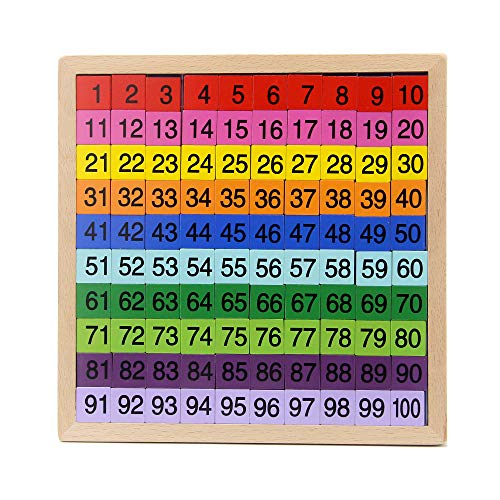
- Counts from 1 to 100 with wooden cards
- High-quality wood, ages 3+
- Portable with included storage bag
Best For: Preschoolers learning early counting and number recognition
Tracing Skills Builder
Montessori Number and Shape Board

- Traces numbers and shapes by hand
- Includes wooden stylus for practice
- Durable hardwood with child-safe lacquer
Best For: Kids building number formation and early handwriting skills
Math Puzzle Play
1-100 Counting and Pattern Board

- Covers 1-100 with colorful wooden pieces
- Reverse side includes basic operations
- Can also be used as a pattern puzzle
Best For: Kids who like counting games and early math puzzles
Writing Readiness Set
Number and Letter Tracing Boards

- Numbers 0-20 plus shapes on one board
- Second board includes uppercase and lowercase letters
- Smooth wood with certified child-safe construction
Best For: Children practicing tracing, handwriting, and early number formation
Counting Sequence Board
Wooden Hundred Board Montessori for Kids

- 1-100 number sequencing practice
- Beechwood board with 100 blocks
- Includes storage bag and control board
Best For: Preschoolers learning number order and basic counting
Fine Motor Math Board
Montessori Number Blocks for Toddlers

- Counting, sorting, and pattern play
- Colorful pegs on a sturdy wooden board
- Supports fine motor and hand-eye coordination
Best For: Ages 3-5 children building early math and motor skills
Color Recognition Hundred Board
Umbresen Wooden Montessori 1-100 Set

- 100 colorful blocks for counting practice
- Adds color recognition and imagination play
- Beech wood board with smooth water-painted finish
Best For: Children who learn counting alongside color recognition and coordination
Count, Trace, and Build
Bimi Boo Peg Board for Toddlers

- 55 pegs and 10 double-sided boards
- Includes wooden pencil for number tracing
- Supports counting, sequencing, and fine motor skills
Best For: Ages 2-6 learning counting and early number writing
Hundreds Board Learning Set
Coogam Wooden Math Hundred Board

- 1-100 wooden board with 100 number tiles
- Includes cards, dice, markers, and bag
- Covers skip-counting, place value, and patterns
Best For: Kids ready to learn numbers to 100 with math games
Portable Counting Practice
Wooden Counting Numbers Peg Board Set

- 10 boards, 55 pegs, and a storage bag
- Animal or fruit themes support engagement
- Covers counting, sorting, patterns, and basic arithmetic
Best For: Portable hands-on counting for ages 3-7
Hundred-Board Number Practice – Wooden 1-100 Counting Board
If you’re comparing Montessori number boards for preschoolers, this wooden 1-100 board is a straightforward choice for number recognition and early counting practice. Its compact size and included storage bag make it easy to use at home, in classrooms, or on the go.
Best For: Preschoolers who are just starting to count to 100 and need a simple hands-on math board.
Pros:
- Teaches counting from 1 to 100 with consecutive wooden number cards.
- Made from high-quality wood and designed for ages 3 and up.
- Portable size works well for outdoor, classroom, and home use.
- Includes a storage bag for easier cleanup and transport.
Cons:
- Focused mainly on counting and number recognition, not writing practice.
- Manual play only, with no extra interactive features.
For families who want a classic Montessori-style counting activity, this board keeps the learning goal clear and simple. It’s a practical pick when the priority is repeated number exposure and basic math readiness.
Tracing Skills Builder – Montessori Number and Shape Board
For parents looking at Montessori number boards for preschoolers, this wooden tracing board is geared toward handwriting readiness rather than counting games. It gives children a tactile way to trace numbers and shapes, which can help with visual memory and hand strength.
Best For: Preschoolers who are ready to practice tracing numbers and shapes with a hands-on wooden tool.
Pros:
- Supports number and shape formation through tactile tracing.
- Includes a wooden stylus for older children working on handwriting skills.
- Double-sided design adds shapes on one side and numbers 0-9 on the other.
- Made from durable hardwood with a child-safe lacquer finish.
Cons:
- Only covers numbers 0-9 rather than a full counting range.
- Better suited to tracing practice than open-ended math play.
This board makes sense if your goal is to build pre-writing skills before moving to pencil work. It offers a more focused Montessori-style learning experience than a typical counting board.
Math Puzzle Play – 1-100 Counting and Pattern Board
This option stands out among Montessori number boards for preschoolers because it combines counting practice with puzzle-style play. The colorful wooden pieces and reverse-side math activities give kids more than one way to use the board.
Best For: Preschoolers who enjoy hands-on counting, puzzle play, and basic math exploration.
Pros:
- Introduces numbers 1-100 with brightly colored wooden pieces.
- Reverse side supports addition, subtraction, multiplication, and division practice.
- Can also be used as a mosaic-style puzzle for making patterns.
- Made with non-toxic water-based paint and a sturdy wooden frame.
Cons:
- More complex than a basic number board, so some children may need guidance.
- Best for indoor use based on the product details.
If you want a Montessori-style board that grows beyond simple counting, this one offers more versatility. It’s a strong pick for families who want early math learning with extra play value.
Writing Readiness Set – Number and Letter Tracing Boards
Among Montessori number boards for preschoolers, this two-board set is best suited to children who are moving into tracing and writing practice. It combines number learning with letter tracing, so it can support a broader early literacy and math routine.
Best For: Preschoolers ages 3-8 who need tracing practice for numbers, letters, and shapes.
Pros:
- Includes a numbers board with 0-20 and a shapes side for extra practice.
- Second board covers uppercase and lowercase letters for broader learning.
- Double-sided grooves and directional arrows support proper stroke order.
- Made from smooth wood and certified to CPC, CPSIA, and ASTM standards.
Cons:
- More of a tracing tool than a traditional counting board.
- Only one board in the set is number-focused, so math-only shoppers may want more.
This is a practical option if you want one Montessori-style set that stretches beyond numbers alone. Its tracing paths and portable size make it useful for preschool practice and travel learning.
Counting Sequence Board – Wooden Hundred Board Montessori for Kids
If you’re comparing Montessori number boards for preschoolers, this wooden hundred board is a straightforward pick for practicing number order from 1 to 100. It uses small beechwood number blocks, a control board, and a storage bag, so it fits neatly into a basic counting and sequencing activity at home or in class.
Best For: Preschoolers and early learners who need a simple 1-100 sequencing board for hands-on counting practice.
Pros:
- Includes 100 wooden number blocks plus a control board and cloth storage bag
- Designed to help children count from 1 to 100 and reinforce number sequence
- Made from lightweight, sturdy beech wood with a child-friendly feel
- Compact board size works well for toddler-sized hands
Cons:
- Small pieces may be easy to misplace and require supervision
- The board is intentionally small, so it may be smaller than some buyers expect
For families wanting a basic counting tool rather than a more feature-heavy learning toy, this board stays focused on sequencing and number recognition. It is best suited to children who are ready for hands-on number practice and can handle small blocks responsibly.
Fine Motor Math Board – Montessori Number Blocks for Toddlers
For shoppers looking at Montessori number boards for preschoolers, this wooden counting peg board adds a more interactive play style. It is built around colorful pegs and a sturdy wooden board, making it a practical choice for counting, sorting, pattern play, and simple math-focused activities.
Best For: Ages 3-5 children who benefit from hands-on counting practice, pattern play, and fine motor skill development.
Pros:
- Supports counting, sorting, and pattern-making in one toy
- Colorful pegs and sturdy wood board make it useful for solo or group play
- Helps develop fine motor skills and hand-eye coordination
- Non-toxic wooden materials are built for regular use
Cons:
- Focused more on basic math and peg placement than on full 1-100 sequencing
- Manual play only, with no additional electronic or guided features
This is a good fit if you want a preschool learning toy that goes beyond simple number ordering and encourages manipulation, sorting, and pattern recognition. It feels especially useful for parents, teachers, and homeschoolers who want an active, tactile learning tool.
Color Recognition Hundred Board – Umbresen Wooden Montessori 1-100 Set
If you want Montessori number boards for preschoolers with a more colorful presentation, this wooden hundred board keeps the focus on counting from 1 to 100 while adding color recognition. The set includes 100 painted wooden blocks, a control board, and a gift box, so it works well as a home or classroom learning activity.
Best For: Preschool and kindergarten children who want a colorful 1-100 counting board for math, color recognition, and hands-on play.
Pros:
- Comes with 100 colorful wooden blocks for counting and sequencing
- Supports color recognition, imagination, and hand-eye coordination
- Made from beech wood with a smooth surface and water-based paint
- Portable size is suitable for classroom, home, or outdoor use
Cons:
- Contains small parts and requires supervision for younger children
- Still centered on a single counting activity rather than a multi-use learning system
This board is a strong choice if you want a simple count-to-100 tool with extra visual appeal. The color variety makes it more engaging for children who learn well through sorting and recognition as well as number order.
Count, Trace, and Build – Bimi Boo Peg Board for Toddlers
If you’re shopping for Montessori number boards for preschoolers, this Bimi Boo set is a practical hands-on option for early counting and number writing. It pairs peg counting with number tracing, so children can work on number recognition, one-to-one correspondence, and fine motor control in one compact wooden set.
Best For: Preschoolers and toddlers ages 2-6 who are starting counting practice and early number writing.
Pros:
- Includes 55 chunky wooden pegs and 10 double-sided boards for counting and patterns.
- Comes with a wooden tracing pencil so kids can practice writing numbers too.
- Designed to support number sequencing and fine motor skills.
- Made from smooth sanded wood with non-toxic, child-safe paint.
Cons:
- Focused on early math basics rather than advanced number work.
- Best suited to hands-on guided play, not independent app-free instruction alone.
Overall, this is a well-rounded Montessori-style choice for families who want counting and tracing in the same toy. It should fit especially well if you want a durable wooden learning set that supports kindergarten readiness without feeling overly complicated.
Hundreds Board Learning Set – Coogam Wooden Math Hundred Board
This Coogam board is a strong pick if you want Montessori number boards for preschoolers that go beyond basic counting. The 1-100 hundred board includes colorful number tiles and multiple activity tools, making it useful for number sequence work, skip-counting, place value, and simple arithmetic practice.
Best For: Preschoolers and kindergarteners ready to explore numbers to 100 with guided math games.
Pros:
- Includes 100 colorful wooden number tiles plus a wooden board.
- Comes with game suggestions, activity cards, dice, markers, and a storage bag.
- Supports number patterns, odd/even, place value, skip-counting, and one-to-one correspondence.
- Built from solid wood with harmless water paint and durable wipe-clean accessories.
Cons:
- Better for children who are ready for a more advanced counting board.
- Small tiles may require more careful setup and cleanup.
This is a versatile, game-based math manipulative for kids moving from simple counting into broader number concepts. If you want a wooden hundred board with lots of activity options, this one offers more range than a basic peg board.
Portable Counting Practice – Wooden Counting Numbers Peg Board Set
For parents looking for Montessori number boards for preschoolers that are easy to move between home, school, and travel, this peg board set is a simple pick. It uses colorful picture prompts and wooden pegs to help children practice counting, sorting, patterning, and basic arithmetic in a hands-on way.
Best For: Toddlers and preschoolers ages 3-7 who need a portable counting and sorting activity.
Pros:
- Includes 10 counting boards, 55 wooden pegs, and a storage bag.
- Uses animal or fruit-themed visuals to make counting more engaging.
- Helps children practice counting, addition, subtraction, sorting, and patterning.
- Made from natural solid beech wood with a smooth finish.
Cons:
- Designed around basic number skills rather than more advanced math.
- Works best when an adult helps guide early learning.
This set makes sense if you want a straightforward wooden counting board that is easy to pack away and reuse anywhere. It is especially appealing for families who like picture-based Montessori materials and a simple, tactile learning routine.
How We Picked These Montessori Number Boards for Preschoolers
We prioritized products that support core early-learning goals: number recognition, counting practice, fine motor development, and basic tracing or peg placement. We also looked for preschool-friendly sizing, sturdy wood construction, clear number layouts, and features that add value, such as storage bags, color coding, or multi-use learning formats.
Quick Comparison: What These Boards Do Best
Most Montessori Number Boards for Preschoolers fall into three helpful groups: consecutive number boards for counting and sequence practice, peg or block boards for tactile matching, and tracing boards for pre-writing skills. If your child is just starting, a simple number board with large numerals is often easiest. For kids ready for more challenge, peg and tracing sets add coordination and repetition.
Key Buying Factors for Montessori Number Boards for Preschoolers
Learning Goal
Choose a board based on the skill you want to support most. Counting and number order matter most for early math, while tracing boards are better for handwriting readiness. Peg boards and block-style boards add fine motor practice and visual matching.
Age Appropriateness
For younger preschoolers, look for larger pieces, fewer distractions, and clear number placement. For ages 4 to 5, boards that combine counting, tracing, and sequencing can keep the toy useful longer.
Durability and Safety
Smooth wood, rounded edges, and secure pieces matter. Since preschoolers often handle learning toys independently, durability and easy cleanup are important. Storage bags or compact layouts can also make the board easier to keep organized.
Visual Clarity
Bold numbers, simple layouts, and consistent spacing help children focus on the learning task. If your child is easily overwhelmed, avoid overly busy designs.
Who Should Buy Which Montessori Number Boards for Preschoolers?
If you want a first math toy for counting practice, choose a classic hundred board or number board with clear sequencing. If your child is working on pencil control, a tracing board makes more sense. If you want the most hands-on engagement, peg boards and number-block sets are a strong fit because they combine movement with learning.
For families shopping for Montessori Number Boards for Preschoolers, the best choice is the one that matches the child’s current stage and attention span. Start simple, then choose more advanced features as confidence grows.