The best multitrack recorders make it easier to capture ideas, build arrangements, and produce complete tracks without relying on a complicated computer setup. The right choice depends on how many inputs and tracks you need, where you record, and whether you prioritize portability, mixing, or studio connectivity.
Our roundup covers compact songwriting tools, portable recorders, mixer-based systems, and more capable tabletop studios so you can find a recorder that fits your workflow and budget.
Best 10 Multitrack Recorders Picks for 2026
Best Compact 4-Track Pick

- Four-track recording with bounce and undo
- 32-bit float capture helps prevent clipping
- Battery-powered with USB-C and USB interface
Best For: Mobile songwriting and layered demos
Best Practice and Portable Recording Pick
Roland BR-80 Portable Digital Recorder
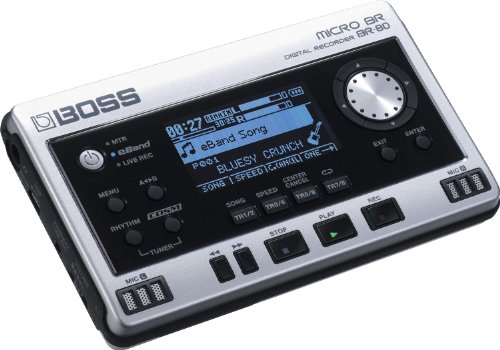
- Three modes cover multitrack, eBand, and live recording
- Built-in stereo condenser microphone
- COSM effects, rhythms, and USB interface
Best For: Practice, play-along tracks, and portable capture
Best Touchscreen 16-Track Pick
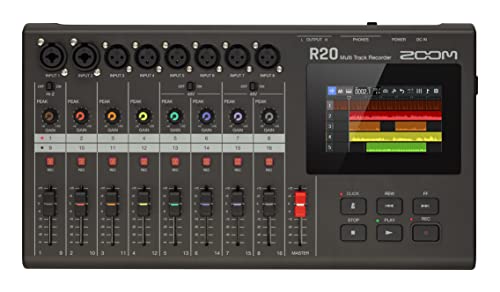
- Up to 16 tracks with eight simultaneous inputs
- Touchscreen recording, editing, and mixing
- 150 rhythms, effects, and onboard synth sounds
Best For: Computer-free demos and full song projects
Best Mixer-Style Studio Pick
Tascam Model 12 Digital Multitrack Studio

- 12-track mixer, recorder, USB interface, and DAW controller
- 12 inputs and 10 USB outputs for DAW connectivity
- Per-channel compressor and three-band EQ
Best For: Home studios and band recording setups
Best Portable Touchscreen Recorder

- Eight-track recording with touchscreen editing
- Built-in drum loops, FM synths, and MIDI
- USB-C interface with battery-powered portability
Best For: Musicians creating and editing song ideas away from a computer
Best Simple Pocketstudio

- Up to six-track recording and playback
- Two built-in omnidirectional condenser mics
- Compact, battery-operated songwriting format
Best For: Songwriters capturing basic ideas quickly and independently
Best Mixer-Recorder Combination

- 12-channel digital mixer with 14-track recording
- 24-bit/96kHz capture and 32-bit-float mixing
- Physical faders for live, hands-on control
Best For: Bands and performers recording and mixing live sessions
Portable Track Builder

- Eight simultaneous playback tracks with 64 V-Tracks
- Built-in microphone, effects, and drum machine
- Battery-powered design with CompactFlash storage
Best For: Mobile songwriting and solo demos
Live Mixing Hub

- Records 12 tracks at 24-bit/96kHz
- Four headphone outputs with three custom mixes
- Simultaneous SD card and USB computer recording
Best For: Bands, podcasters, and live sessions
High-Headroom Field Recorder

- Six tracks plus stereo mix with 32-bit float
- 19.4mm microphones handle up to 140 dB SPL
- Look-ahead limiters and recording up to 192kHz
Best For: Filmmakers and portable field recording
Best Compact 4-Track Pick – Zoom R4 Multi-Track Recorder
The Zoom R4 is a portable choice for musicians who want multitrack recorders without a computer. It captures up to four tracks, lets you bounce them to a dedicated track, and uses 32-bit float recording to help avoid clipping without manual gain adjustments.
Best For: Songwriters, mobile musicians, and solo creators building layered demos.
Pros:
- Records, layers, and bounces up to four tracks with undo.
- Two XLR/TRS combo inputs support microphones, instruments, and keyboards.
- Includes 80-plus rhythm patterns and works as a USB audio interface.
- Runs on four AA batteries or USB-C.
Cons:
- Four-track capacity is more limited than larger tabletop recorders.
- Only two inputs are listed.
The R4 prioritizes portability and quick idea capture. Its built-in microphone, rhythms, effects, and flexible power options make it especially practical for recording away from a studio.
Best Practice and Portable Recording Pick – Roland BR-80 Portable Digital Recorder
The Roland BR-80 combines multitrack recording with practice-focused features in a compact portable unit. Its three modes cover multitrack recording, eBand play-along use, and live recording, while the built-in stereo condenser microphone supports quick capture.
Best For: Musicians who want recording, play-along practice, and backing tracks in one device.
Pros:
- Offers MTR, eBand, and Live Recorder modes.
- Provides 64 V-Tracks and eight simultaneous playback tracks in eBand mode.
- Includes a built-in stereo condenser microphone.
- Features COSM amps, effects, rhythms, and USB audio-interface functionality.
Cons:
- Uses SD/SDHC cards up to 32 GB rather than larger listed storage.
- Requires one AAA battery.
- Its warranty is listed as 90 days.
The BR-80 is less focused on a modern touchscreen workflow than some newer multitrack recorders, but its combination of practice tools, effects, and portable recording modes makes it versatile for guitarists and songwriters.
Best Touchscreen 16-Track Pick – Zoom R20 Tabletop Recorder
The Zoom R20 is designed for musicians who want multitrack recorders with a hands-on, DAW-style workflow but no computer required. Its touchscreen supports recording, editing, and mixing directly on the unit, with up to 16 tracks and eight simultaneous recording tracks.
Best For: Bands, producers, and songwriters creating complete projects directly on a tabletop recorder.
Pros:
- Records up to 16 tracks and up to eight simultaneously.
- Six XLR inputs and two XLR/TRS combo inputs support multi-source sessions.
- Touch controls simplify arranging and editing.
- Includes effects, 150 rhythm patterns, and an 18-sound onboard synth.
Cons:
- At 4.3 pounds, it is less portable than compact battery-powered options.
- Its listed maximum sample rate is 44.1 kHz.
- Its touchscreen-focused workflow may be more equipment than simple idea capture requires.
The R20 is the strongest fit here for computer-free project production. Its input count, touchscreen editing, rhythms, and onboard sounds give it enough range for demos and more developed song arrangements.
Best Mixer-Style Studio Pick – Tascam Model 12 Digital Multitrack Studio
The Tascam Model 12 is a mixer-centered option among multitrack recorders, combining a 12-track digital recording studio with a USB audio interface and DAW controller. Its physical controls, onboard MIDI functionality, and channel processing suit a more permanent studio or rehearsal setup.
Best For: Home studios and bands that want mixer controls alongside multitrack computer recording.
Pros:
- Combines a 12-track recorder, mixer, USB interface, and DAW controller.
- Provides 12 inputs and 10 USB outputs for DAW connectivity.
- Each input module includes a one-knob compressor and three-band EQ.
- Offers tap-tempo click output, MIDI functionality, and dual headphone outputs.
Cons:
- Its corded-electric design is less suited to mobile recording.
- At 13.3 pounds, it is substantially heavier than compact recorders.
- Its 18-by-16-inch footprint requires dedicated space.
The Model 12 is best viewed as a studio hub rather than a grab-and-go recorder. It makes sense when hands-on mixing, multiple connections, headphone monitoring, and DAW integration matter more than battery operation.
Best Portable Touchscreen Recorder – Zoom R12
The Zoom R12 is one of the more flexible multitrack recorders for musicians who want hands-on editing without carrying a computer. It records up to eight tracks, includes two XLR/TRS inputs, and adds drum loops, synths, effects, and a color touchscreen for composing and mixing on the go.
Best For: Musicians who want a portable, battery-powered songwriting and recording setup with built-in rhythm and MIDI tools.
Pros:
- Records up to eight tracks with DAW-style touchscreen editing.
- Includes 150 drum loops, 18 FM synth instruments, and MIDI support.
- Works as a USB-C audio interface and DAW control surface.
- Offers 48V phantom power on both inputs and Hi-Z on input 1.
Cons:
- Has only two physical XLR/TRS inputs.
- Battery runtime is listed at up to five hours using four AA batteries.
The R12 stands out when portability and creative features matter as much as track count. Its touchscreen workflow and built-in accompaniment tools make it especially practical for capturing complete song ideas away from a studio.
Best Simple Pocketstudio – Tascam DP-006
The Tascam DP-006 is a straightforward choice among multitrack recorders for songwriting and basic portable recording. It supports up to six tracks, records at 16-bit/44.1kHz, and includes two built-in omnidirectional condenser microphones for quickly capturing ideas.
Best For: Songwriters who want a compact, battery-operated recorder with built-in microphones and simple track-based recording.
Pros:
- Supports up to six tracks with two-track simultaneous recording.
- Includes two built-in omnidirectional condenser microphones.
- Runs on four included AA batteries.
- Provides a dedicated stereo master track and WAV recording.
Cons:
- Recording resolution is limited to 16-bit/44.1kHz.
- Offers fewer tracks and features than larger multitrack units.
- Its listed headphone jack is 2.5mm.
The DP-006 prioritizes portability and ease of use over advanced production features. It is a sensible pick for sketching songs, recording acoustic ideas, or working without external microphones.
Best Mixer-Recorder Combination – Zoom LiveTrak L12next
The Zoom LiveTrak L12next combines a digital mixer with a multitrack recorder, making it a strong option for live sessions and more involved recording setups. It provides 12 channels, up to 14-track recording at 24-bit/96kHz, and physical controls for shaping a mix without relying on menu-heavy operation.
Best For: Bands, live performers, and project studios that need hands-on mixing alongside high-resolution multitrack recording.
Pros:
- Records up to 14 tracks at 24-bit/96kHz.
- Uses studio-grade preamps with up to +70dB gain and -128dBu EIN.
- Provides 60mm faders and channel encoders for hands-on control.
- Supports a 32-bit-float master mix, scenes, effects, and personal monitoring.
Cons:
- Requires corded electric power rather than batteries.
- Wireless app control requires the separate BTA-1 adapter.
- Its broader mixer feature set may be more than needed for simple songwriting.
The L12next is geared toward users who need a central hub for both recording and live sound control. Its high-resolution multitrack capability and physical faders make it a practical fit for rehearsals, performances, and studio-style sessions.
Portable Track Builder – Boss BR-600
The Boss BR-600 is one of the more self-contained multitrack recorders for songwriters who want to capture ideas without a computer. It combines eight-track playback, a built-in stereo microphone, guitar and vocal effects, a drum machine, and battery power in a compact recording setup.
Best For: Mobile songwriting, guitar-based demos, and solo recording sessions.
Pros:
- Supports eight simultaneous playback tracks and 64 V-Tracks.
- Includes guitar effects, vocal effects, and a pitch corrector.
- Built-in stereo microphone, drum pads, and battery power support portable recording.
- Includes a 128MB CompactFlash card.
Cons:
- Recording media is limited to the included 128MB card unless additional compatible storage is used.
- Requires four 9V batteries for battery-powered operation.
- Its listed digital recording time is 2 hours and 16 minutes.
The BR-600 is a practical choice when portability and built-in tools matter more than a large track count or computer-centered workflow. Its integrated microphone, effects, and rhythm features make it ready for quick demos.
Live Mixing Hub – Zoom LiveTrak L-8
The Zoom LiveTrak L-8 is a versatile option among multitrack recorders for bands, podcasters, and live sessions. It records 12 tracks simultaneously at 24-bit/96kHz to an SD card, while also functioning as a mixer and USB audio interface.
Best For: Bands, podcasts, live performances, and sessions requiring multiple headphone mixes.
Pros:
- Records 12 tracks simultaneously at 24-bit/96kHz directly to an SD card.
- Provides six preamps with up to +54dB of gain, 3-band EQ, and onboard effects.
- Offers four headphone outputs and three independent monitor mixes.
- Can record to an SD card and computer simultaneously via USB.
Cons:
- The unit has eight channels, including six combo and two stereo inputs.
- It requires an SD card for standalone multitrack recording.
- Its listed warranty is one year with replacement coverage.
The L-8 stands out when a project needs hands-on mixing, multiple inputs, and separate performer monitoring. Its compact, battery-powered design also makes it suitable for gigs and portable podcast setups.
High-Headroom Field Recorder – Zoom H6 Studio
The Zoom H6 Studio is a strong fit for filmmakers, musicians, and field recordists who prioritize recording flexibility and protection against overloads. It captures up to six individual tracks plus a stereo mix using 32-bit float recording, with onboard microphones rated to handle up to 140 dB SPL.
Best For: Film production, location recording, live sound capture, and portable music recording.
Pros:
- Records six individual tracks plus a stereo mix in 32-bit float.
- Large 19.4mm microphones handle sound levels up to 140 dB SPL.
- Look-ahead limiters help prevent distortion before overloads occur.
- Supports recording rates from 44.1 to 192kHz.
Cons:
- It records up to six individual tracks, fewer than the LiveTrak L-8’s stated 12-track capability.
- Portable operation requires four AA batteries.
- Its supplied details identify USB 2.0 hardware connectivity but do not specify storage media.
The H6 Studio is the most specialized choice here for unpredictable recording environments. Its 32-bit float workflow, high-SPL microphones, and look-ahead limiters are particularly useful when levels may change quickly during production or field work.
How We Picked the Best Multitrack Recorders
We focused on the features that have the biggest effect on real-world recording: simultaneous input count, available tracks, portability, editing and mixing controls, onboard effects, microphone options, storage, battery operation, and computer connectivity. We also considered whether each unit is best suited to songwriting, rehearsals, live sound, podcasting, field recording, or more complete home-studio production.
A higher track count is not automatically better. A compact recorder may be the smarter choice for quick demos, while a mixer/recorder can be more useful for bands, livestreams, and live multitrack capture.
Quick Comparison
| Best For | What to Prioritize |
|---|---|
| Songwriting and demos | Simple controls, built-in microphones, portability, and battery life |
| Solo overdubbing | Track count, effects, bouncing, and straightforward editing |
| Bands and rehearsals | Multiple XLR inputs, independent level control, and reliable storage |
| Live recording and mixing | Channel count, mixer controls, monitoring, and scene or routing options |
| Computer-based production | USB audio interface support, DAW integration, and flexible file transfer |
Key Buying Factors for Multitrack Recorders
Inputs and Simultaneous Recording
Count how many microphones or instruments you need to record at once, not just the total number of tracks. XLR/TRS combo inputs are useful when you switch between microphones, keyboards, guitars, and other line-level sources. If you record a full band, prioritize enough mic preamps and independent gain controls.
Tracks, Overdubbing, and Editing
More tracks provide room for layered vocals, guitars, drums, effects, and alternate takes. Check how easily the recorder supports overdubbing, track bouncing, trimming, and arrangement changes. Some compact units are optimized for fast ideas, while tabletop systems offer a more traditional production workflow.
Portability and Power
Battery operation and built-in microphones matter for rehearsals, travel, field recording, and locations without convenient power. Larger mixer-style recorders generally offer more hands-on control, but they take up more space and may be better suited to a fixed setup.
Connectivity and Workflow
USB audio interface functionality can let you move between standalone recording and computer production. Also consider headphone monitoring, line outputs, SD or other storage, onboard effects, drum patterns, and whether the unit can function as a mixer for live use.
Who Should Buy Which Multitrack Recorders?
Songwriters and beginners: Choose a compact model with built-in microphones, simple controls, and enough tracks for vocal and instrument overdubs.
Solo producers: Look for more tracks, effects, bouncing, and editing tools so you can build complete arrangements without constantly exporting files.
Bands: Prioritize several XLR inputs, reliable multitrack capture, clear monitoring, and enough channels for the entire rehearsal or performance.
Podcasters and live creators: A mixer/recorder with hands-on faders, multiple mic inputs, headphone outputs, and flexible routing is usually the most practical fit.
Home-studio users: Choose a recorder with USB connectivity and DAW support if you want standalone convenience while retaining a path to detailed computer editing and mixing.