Business interviews demand more than a device that simply starts recording. The right recorder should capture clear voices, remain dependable during long conversations, and make it easy to transfer, review, or transcribe your files afterward.
This roundup compares 10 options across dedicated handheld recorders, compact digital voice recorders, and AI-enabled tools. Whether you record in an office, on location, or over calls, use the guide below to match features, workflow, and budget to the way you interview.
Best 10 Podcast Recorders for Business Interviews Picks for 2026
Versatile Field Pick

- 32-bit float recording helps prevent clipped takes
- Two XLR/TRS inputs plus built-in stereo microphones
- USB-C recording with SD-card backup
Best For: Flexible business interview and field recording setups
AI Meeting Workflow Pick
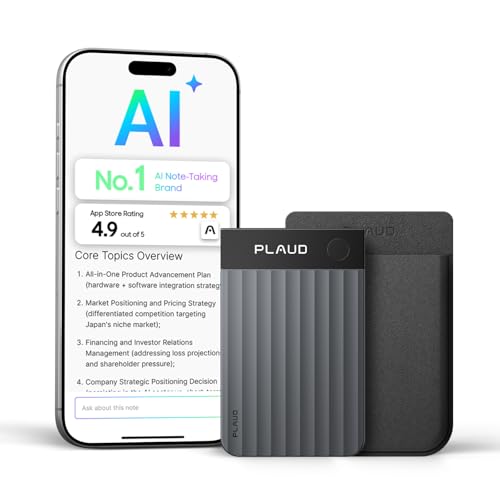
- Transcribes and summarizes recorded conversations
- Directional audio supports clear business speech
- Up to 50 hours of continuous recording
Best For: Interviewers who need organized notes and follow-up support
Two-Mic Setup Pick

- Two locking XLR/TRS microphone inputs
- 32-bit/96kHz recording for detailed sound
- OLED waveform display for level monitoring
Best For: Two-person interviews with separate external microphones
Simple Long-Recording Pick

- 64GB storage for extended recording capacity
- Up to 32 hours of continuous recording
- Voice activation and simple two-button operation
Best For: Basic meetings and interviews with easy file transfer
Best Portable Starter

- 32-bit float recording helps prevent clipping
- Clear X/Y stereo capture for interviews
- USB-C microphone mode and compact design
Best For: Solo interviewers and mobile podcasters
Best Long-Recording Value

- 72GB storage for extensive recording capacity
- Voice activation reduces silent gaps
- Lightweight design with long battery life
Best For: Meetings, lectures, and extended interviews
Best Flexible Interview Kit

- Nine recording modes with triple microphones
- 32-bit float recording up to 96kHz
- Includes case, windscreen, adapter, cable, and card
Best For: Field interviews needing flexible directional capture
High-Capacity Workhorse

- 128GB storage with extensive stated recording capacity
- WAV up to 1536 kbps plus MP3 options
- Voice activation and organized four-folder storage
Best For: Frequent business interviews and meetings requiring ample storage
Simple Stereo Starter

- Stereo recording with noise reduction
- Simple three-button operation
- MP3/WAV support with voice activation
Best For: Light business interviewing and routine meeting notes
Portable Magnetic Option

- Up to 70 hours of battery life
- Magnetic body for flexible placement
- One-touch recording with USB-C connectivity
Best For: Mobile business interviews and long field-recording sessions
Versatile Field Pick – Zoom H4 Essential
For podcast recorders for business interviews that may also handle live audio or video work, the Zoom H4 Essential offers a flexible four-track setup, built-in stereo microphones, and two XLR/TRS inputs. Its 32-bit float recording is designed to help avoid distorted takes, while USB-C supports recording or streaming to a compatible device.
Best For: Business interviewers who want one recorder for built-in miking, external microphones, and larger recording projects.
Pros:
- 32-bit float recording helps provide clip-free audio.
- Built-in stereo microphones plus two XLR/TRS inputs support varied setups.
- Can record to a device over USB-C while saving a backup to an SD card.
- Spoken menu guidance can make navigation easier.
Cons:
- Requires two AA batteries.
- Its broader four-track feature set may be more than needed for simple one-person interviews.
The H4 Essential is a strong all-purpose choice when business interviews may involve multiple sources, remote workflows, or unpredictable volume levels.
AI Meeting Workflow Pick – Plaud Note Pro
For podcast recorders for business interviews where transcription and follow-up matter as much as capture, the Plaud Note Pro combines recording with AI-powered summaries and question answering. Its directional audio, multiple microphones, long battery life, and cross-device apps are geared toward meetings, calls, and organized post-interview workflows.
Best For: Business professionals who want recorded interviews turned into searchable insights, draft emails, and suggested next steps.
Pros:
- AI can transcribe, summarize, extract key points, and answer questions about recordings.
- Directional audio and automatic call/meeting mode switching support business conversations.
- Enhance Mode offers up to 30 hours of recording, while Endurance Mode offers up to 50 hours.
- Supports encrypted data handling and cross-device access through desktop, web, and mobile apps.
Cons:
- AI transcription and related features involve plan limits or paid upgrades.
- No headphone jack is listed.
- Recording conversations requires attention to consent and local privacy laws.
The Note Pro stands out when the goal is not simply to save interview audio, but to turn conversations into usable business documentation quickly.
Two-Mic Setup Pick – Zoom H1 XLR
The Zoom H1 XLR is a practical option among podcast recorders for business interviews when you need two external microphones and straightforward level monitoring. It records at up to 32-bit/96kHz, includes two locking XLR/TRS inputs, and adds 3.5mm input and headphone connections for flexible interview rigs.
Best For: Two-person interviews using separate microphones and creators who want a visible waveform display for monitoring.
Pros:
- Two locking XLR/TRS inputs accommodate microphones and other sources.
- 32-bit/96kHz recording supports detailed audio capture.
- OLED waveform display helps monitor levels at a glance.
- SDXC support up to 1TB suits extended recording sessions.
Cons:
- Requires two AA batteries.
- It is less centered on automatic transcription or summaries than AI-focused recorders.
Choose the H1 XLR when clean, conventional microphone connections and hands-on monitoring are more important than built-in productivity features.
Simple Long-Recording Pick – EVISTR L357 Voice Recorder
For straightforward podcast recorders for business interviews, the EVISTR L357 focuses on simple operation, large storage, and extended battery life. It includes a built-in microphone with adjustable gain, voice activation, WAV or MP3 recording, and USB-C file transfer for moving recordings to a Windows or Mac computer.
Best For: Interviewers who want an easy portable recorder for meetings, lectures, and general voice capture without an external-mic setup.
Pros:
- 64GB storage can hold up to 4,660 hours at 32Kbps.
- Up to 32 hours of continuous recording and 35 hours of playback are listed.
- Voice activation can reduce silent sections and save storage space.
- Supports WAV and MP3 recording, playback controls, and USB-C file transfer.
Cons:
- Uses a built-in microphone rather than XLR inputs for external microphones.
- Voice activation may not suit interviews where every pause matters.
- Its feature set is oriented toward basic voice recording rather than multitrack production.
The EVISTR L357 is a practical budget-style choice for uncomplicated interviews, especially when long battery life and easy file management are priorities.
Best Portable Starter – Zoom H1 Essential Recorder
For shoppers comparing podcast recorders for business interviews, the Zoom H1 Essential is a compact stereo recorder designed to capture clear conversations, meetings, lectures, and other spoken content. Its 32-bit float recording helps reduce clipping concerns, while USB-C microphone mode supports calls, livestreams, and computer-based recording.
Best For: Solo interviewers, mobile podcasters, and professionals who want a lightweight recorder that can also serve as a USB microphone.
Pros:
- 32-bit float recording helps provide clip-free audio.
- X/Y stereo microphones capture natural-sounding conversations.
- USB-C microphone mode works with computers and compatible mobile devices.
- Compact 92-gram design and up to 10 hours of battery life suit mobile use.
Cons:
- Its stereo X/Y design offers less microphone-pattern flexibility than more advanced multi-mic recorders.
- It requires two AAA batteries.
The H1 Essential is a practical choice when portability and straightforward voice recording matter most. It is especially appealing for business interviews conducted on location, though buyers needing broader directional coverage may prefer a more flexible recorder.
Best Long-Recording Value – Xelarvex 72GB Voice Recorder
The Xelarvex voice recorder is a storage-focused option for podcast recorders for business interviews, meetings, lectures, and note-taking. It combines 72GB of storage with voice activation, claimed AI noise reduction, and a lightweight clip-on design for extended everyday use.
Best For: Professionals who prioritize long recording capacity, automatic voice activation, and an unobtrusive recorder for meetings or interviews.
Pros:
- 72GB of storage is rated for up to 4,800 hours of audio at 192Kbps.
- Voice activation can reduce silent gaps and conserve storage.
- Up to 48 hours of continuous recording is listed on a full charge.
- One-ounce clip-on design is easy to carry.
Cons:
- It uses a built-in microphone rather than a more adaptable external microphone setup.
- The supplied notes identify MP3-player compatibility, so users should confirm compatibility with their preferred workflow.
This recorder stands out for capacity and convenience rather than advanced podcast production features. It can be a useful business recorder for capturing extended conversations, but dedicated podcasters may prefer a model with more recording controls and microphone options.
Best Flexible Interview Kit – Zoom H2essential Bundle
For business interviews that may happen in rooms, offices, or on the road, the Zoom H2essential bundle offers unusually flexible capture options. Its triple-microphone array supports nine recording modes, while 32-bit float recording, a windscreen, case, adapter, cable, and 32GB card make the kit ready for varied recording setups.
Best For: Interviewers who need directional or surround recording options, an included accessory kit, and the ability to record directly to a device while saving an SD-card backup.
Pros:
- Triple-microphone array and nine modes support front, rear, side, stereo, mono, and surround capture.
- 32-bit float recording up to 96kHz preserves detail while reducing clipping concerns.
- USB-C supports direct recording to computers and compatible mobile devices while recording a backup to SD card.
- Bundle includes a windscreen, shell case, AC adapter, USB-C cable, and 32GB microSDHC card.
Cons:
- At 15 ounces, it is less lightweight than the H1 Essential.
- Its broader feature set may be more than needed for simple one-person interviews.
The H2essential is the strongest fit here for teams that need adaptable microphone coverage and backup recording. The included accessories also reduce the number of extras required for field interviews, making it a well-rounded option for business podcast production.
High-Capacity Workhorse – EVIDA 128GB Voice Recorder
For podcast recorders for business interviews, the EVIDA 9296 is a practical choice when you need substantial storage, selectable recording quality, and organized file management. It supports WAV recording up to 1536 kbps, MP3 options, voice activation, and up to 54 hours of continuous recording.
Best For: Business users who need extensive storage for meetings, interviews, and other recurring recordings.
Pros:
- 128GB capacity with up to 9296 hours of stated recording storage
- Offers WAV 1536 kbps and MP3 128 or 192 kbps recording options
- Voice activation, password protection, bookmarks, and four-folder file organization
- Includes playback, USB file transfer, and an 18-month warranty
Cons:
- Built-in mono microphone may be less suitable for spacious multi-person setups
- Battery life is listed at up to 54 hours, so extended high-quality recording uses require planning
- No headphone jack is listed in the specifications
The EVIDA stands out for capacity and file-management features rather than a podcast-focused input system. Its selectable WAV mode and voice activation make it useful for straightforward business interviews and meeting documentation.
Simple Stereo Starter – HoTiyan 8GB Digital Recorder
For podcast recorders for business interviews, the HoTiyan 8GB model offers a compact, straightforward setup with stereo recording, voice activation, and MP3/WAV support. Its three-button operation is designed for quickly starting, saving, and playing recordings.
Best For: Interviewers who want a simple, lightweight recorder for shorter projects and routine meetings.
Pros:
- Higher-sensitivity microphone with noise reduction and stereo recording
- Supports MP3 and WAV files with up to 128 hours at the listed 192 kbps setting
- Voice activation can reduce quiet gaps and whisper-level clips
- Includes password protection, timestamps, variable playback speed, and A-B repeat
Cons:
- 8GB storage is considerably lower than the 128GB alternatives in this roundup
- Battery supports up to 20 hours of continuous recording according to the notes
- Limited to 199 recording files
This HoTiyan recorder is appealing when ease of use matters more than maximum capacity. Stereo capture and WAV support give it useful flexibility for one-on-one interviews, while the smaller storage and battery require more frequent file transfers and charging.
Portable Magnetic Option – Nanezan 128GB Voice Recorder
For podcast recorders for business interviews, the Nanezan NZ007 is built around portability and quick operation. It combines 128GB storage, up to 70 hours of battery life, one-touch recording, and a built-in magnet that can attach to compatible metal surfaces.
Best For: Mobile interviewers who need long battery life and flexible placement in offices, vehicles, or other work environments.
Pros:
- 128GB storage with a stated 1600 hours of recording time
- Up to 70 hours of battery life for extended field use
- Magnetic design supports placement on desks and other metal surfaces
- Compact, approximately 1-ounce design with USB-C connectivity and a 3.5mm headphone jack
Cons:
- Built-in microphone operates in mono
- The notes do not specify selectable recording bit rates or detailed audio formats
- Magnetic mounting is useful only with compatible metal surfaces and should be used lawfully
The NZ007 is a strong fit for users who prioritize discreet portability, long runtime, and flexible placement. Its mono microphone and less-detailed format specifications make it better suited to practical voice capture than a fully specified studio recording workflow.
How We Picked the Best Podcast Recorders for Business Interviews
We focused on the features that matter during real business conversations: microphone quality, recording reliability, portability, battery life, storage, file access, and ease of use. We also considered whether each device suits solo interviews, two-person discussions, noisy environments, or meetings that need fast transcription and summaries.
The selection includes established handheld recorders such as Zoom models, AI-focused devices such as the Plaud Note Pro, and affordable voice-activated recorders with large storage capacities. Specifications and advertised features can vary by configuration, so confirm the current listing details before buying.
Quick Comparison
| Recorder type | Best for | Main advantage | Potential trade-off |
|---|---|---|---|
| Handheld audio recorder | High-quality interviews and podcasts | Better microphones and manual control | Requires more setup and file management |
| AI voice recorder | Meetings, calls, and rapid notes | Transcription and summaries | May depend on apps, services, or subscriptions |
| Basic digital recorder | Simple interviews and dictation | Low cost, large storage, easy operation | Usually fewer audio controls and less refined sound |
| Accessory bundle | Mobile recording kits | Includes useful protection and connection accessories | Can cost more than the recorder alone |
Key Buying Factors for Podcast Recorders for Business Interviews
Microphones and Recording Quality
For polished podcast conversations, prioritize stereo microphones, external microphone support, and uncompressed WAV recording. Built-in voice recorders can work well for notes and casual interviews, but they may capture more room noise and offer less control.
Workflow and Transcription
If interviews quickly become articles, reports, or client summaries, AI transcription can save time. Check supported languages, export options, speaker identification, privacy terms, and whether ongoing service fees apply. Traditional recorders are often better when you want local files and maximum control.
Storage, Battery, and File Transfer
Estimate your recording hours before choosing capacity. WAV files consume considerably more space than compressed formats. USB-C transfer, replaceable batteries, rechargeable power, and a clear battery indicator are especially useful for frequent business travel.
Noise, Handling, and Security
For offices and events, look for wind or handling protection, noise-reduction features, and a recorder that is easy to operate without distracting from the conversation. Password protection may be valuable when recordings contain confidential business information, but it should not replace secure storage and careful file sharing.
Who Should Buy Which Podcast Recorders for Business Interviews?
- Choose a Zoom handheld recorder if sound quality, microphone control, and dependable local recording matter most.
- Choose an AI voice recorder if searchable transcripts, summaries, and a fast meeting workflow are more important than hands-on audio control.
- Choose a basic digital voice recorder if you need an affordable, compact device for interviews, lectures, dictation, or backup recording.
- Choose a high-capacity model if you record frequently and want fewer interruptions for file transfers or storage management.
- Choose a bundle if you need a case, windscreen, memory card, or power accessories immediately for field interviews.
Before ordering, confirm microphone inputs, file formats, charging requirements, included memory, app compatibility, and return terms. Those details often determine whether a recorder fits your existing interview workflow.