The best portable projector screens make it easier to enjoy big-screen viewing without committing to a permanent installation. The options in this roundup range from compact 50-inch models to expansive 150-inch screens, with choices for indoor rooms, backyards, camping, and presentations.
We focused on practical differences such as screen size, aspect ratio, setup design, portability, image surface, and front- or rear-projection compatibility so you can choose a screen that fits your space and viewing habits.
Best 10 Portable Projector Screens Picks for 2026
Best Foldable Value
Mdbebbron 120-Inch Foldable Screen

- Large 120-inch 16:9 viewing area
- Lightweight, foldable 1.7-pound design
- Front and rear projection support
Best For: Large indoor or outdoor setups needing flexible mounting
Best Tripod Setup
Excelimage 80-Inch Portable Screen
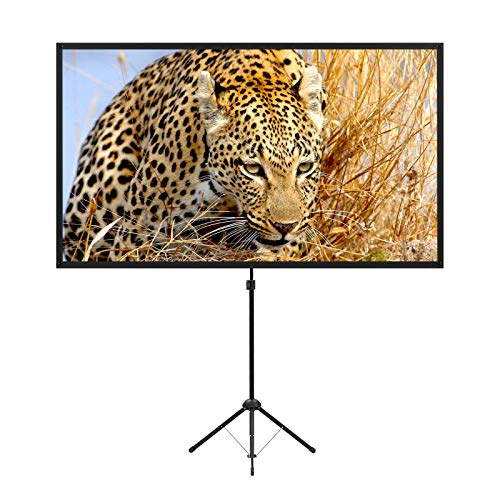
- Freestanding tripod design
- Two-minute setup with carry bag
- Tensioned 80-inch 16:9 screen
Best For: Quick indoor or outdoor movie and presentation setups
Best for Outdoor Stability
ZUVMITG 120-Inch Screen with Stand

- Reinforced base and steel support frame
- Includes stakes, ropes, and sandbags
- Front and rear projection support
Best For: Large outdoor screenings in spaces needing added anchoring
Lightweight Outdoor Pick

- 5.62-pound aluminum design with carrying bag
- Tool-free setup and 160° viewing angle
- Includes outdoor stability accessories
Best For: Backyard movies, camping, and portable family viewing
Quick-Setup Value

- Compact 60-inch 16:9 viewing area
- Sets up in a stated two minutes
- 8.6-pound design with matte finish
Best For: Smaller rooms, classrooms, and backyard parties
High-Gain 4K Option

- 1.2 gain fiberglass surface for 4K projection
- Adjustable 59–89-inch tripod height
- Sets up in less than three minutes
Best For: Large indoor or outdoor movie setups with adjustable height
Best Brightness-Focused Pick
Paris RHÔNE 100-Inch PVC Screen

- Cinema-grade PVC with claimed 1.5 gain
- Height-adjustable tripod from 64 to 85 inches
- Foldable design supports quick one-person setup
Best For: Bright home theater projection and adjustable indoor/outdoor setups
Best Foldable Value – Mdbebbron 120-Inch Foldable Screen
For shoppers comparing portable projector screens, the Mdbebbron 120-inch model emphasizes a large viewing area with simple, flexible installation. Its lightweight, foldable polyester design can travel in a backpack or suitcase and supports both front and rear projection.
Best For: Home theaters, outdoor movie nights, presentations, and buyers who want a large screen without a rigid frame.
Pros:
- Large 120-inch, 16:9 viewing area measuring 104 by 58 inches.
- Lightweight 1.7-pound design folds compactly for storage and transport.
- Supports front and rear projection with a 160-degree viewing angle.
- Can be attached with hooks, ropes, brackets, nails, or double-sided tape.
Cons:
- Does not include a stand, so mounting hardware or a suitable surface is needed.
- At 120 inches, it requires substantial wall or outdoor setup space.
This is a practical pick when portability and screen size matter more than a freestanding setup. The washable, anti-crease polyester fabric also makes ongoing maintenance relatively straightforward.
Best Tripod Setup – Excelimage 80-Inch Portable Screen
This Excelimage model is one of the more straightforward portable projector screens for viewers who want a freestanding setup. The 80-inch 16:9 screen uses a tripod, aluminum tubes, and spring tension to create a stable viewing surface indoors or outdoors.
Best For: Backyard movies, living rooms, classrooms, and presentations where quick setup and a supported screen are priorities.
Pros:
- Tripod and tension-tube structure helps keep the screen surface flat.
- Sets up or disassembles in about two minutes.
- Includes a carrying bag and weighs 8.5 pounds.
- Offers an 80-inch 16:9 display with a 160-degree viewing angle.
Cons:
- Heavier and less compact than a fabric-only screen.
- The 80-inch size provides less viewing area than the 120-inch options.
The included stand makes this a convenient choice for users who do not want to attach a screen to a wall. Its moderate size and carry bag also suit regular transport between rooms or venues.
Best for Outdoor Stability – ZUVMITG 120-Inch Screen with Stand
Among portable projector screens, the ZUVMITG 120-inch model is designed for larger outdoor gatherings where stability is important. It combines a reinforced base and steel frame with stakes, ropes, and sandbags, while its washable fabric supports front and rear projection.
Best For: Backyard movie nights, camping, tailgating, and other large indoor or outdoor screenings that may need added wind resistance.
Pros:
- Large 120-inch 16:9 screen with a 160-degree viewing angle.
- Includes four ground stakes, two ropes, and two sandbags for outdoor stability.
- Front and rear projection support offers flexible placement.
- Washable milk-silk fabric is designed for vibrant 4K HD visuals and reduced edge wrinkling.
Cons:
- At 12.5 pounds, it is heavier than the fabric-only option.
- The large frame and support accessories require more setup and storage space.
- Windproof accessories still need to be installed when conditions require them.
This is the strongest fit for buyers who want a large freestanding screen with dedicated outdoor anchoring equipment. The tradeoff is greater weight and a more involved setup than compact wall-mounted designs.
Best Compact Freestanding Pick – Excelimage 50-Inch Retractable Screen
For buyers seeking smaller portable projector screens, this Excelimage model offers a compact retractable design with an integrated stand. Its 50-inch format, auto-lock mechanism, and folding legs make it suitable for quick presentations, movies, and small viewing spaces.
Best For: Small rooms, meetings, classrooms, and users who prioritize compact storage and rapid setup over a large image.
Pros:
- Folding freestanding design needs no installation.
- Opens in seconds using the legs and locking mechanism.
- Retractable fiberglass screen has a flat, high-gain surface.
- Folded dimensions are approximately 34.25 by 3.46 by 3.15 inches.
Cons:
- The 50-inch screen is substantially smaller than the larger roundup options.
- Its compact format may not suit group movie viewing.
- Product notes contain conflicting aspect-ratio information, so buyers should verify fit before ordering.
This model makes sense when portability and fast deployment are more important than cinematic scale. Its integrated stand avoids wall mounting, while the smaller screen keeps transport and storage manageable.
Lightweight Outdoor Pick – 80-Inch Portable Screen
For shoppers comparing portable projector screens, this 80-inch AODIOU model is designed for easy transport between the backyard, campsite, and living room. Its aluminum construction, included padded bag, and tool-free assembly make it practical for casual movie nights.
Best For: Outdoor movie nights, camping, picnics, and small home gatherings where portability matters.
Pros:
- Lightweight 5.62-pound design with a padded carrying bag.
- Tool-free setup and disassembly for convenient storage.
- 80-inch 16:9 screen with a 160-degree viewing angle.
- Includes rope, hanging hook, and water bag for added outdoor stability.
Cons:
- The listed 70.8-inch dimensions may require more space than expected.
- Its glossy finish may not suit viewers who prefer a matte screen.
This screen stands out when carrying weight and quick setup are priorities. The included outdoor accessories add versatility, while the 80-inch format provides a substantial picture without becoming difficult to transport.
Quick-Setup Value – 60-Inch Tripod Screen
This 60-inch excelimage model is a compact choice among portable projector screens, using a tripod, aluminum tubes, and spring tension to keep the viewing surface stable. It is sized for smaller rooms and easy to transport to backyard events or classrooms.
Best For: Home cinema setups, backyard parties, classrooms, and buyers who want a compact screen with fast assembly.
Pros:
- 60-inch 16:9 format fits many indoor and outdoor applications.
- Stated setup time is within two minutes.
- Lightweight 8.6-pound construction with a carrying bag.
- Tripod and tensioned aluminum tubes support a stable structure.
Cons:
- The 60-inch size provides less image area than the 80-inch alternatives.
- It uses manual operation and requires assembly before use.
Choose this model if compact storage and fast setup are more important than maximum screen size. Its matte finish and 160-degree viewing angle make it a straightforward option for shared viewing in modest spaces.
High-Gain 4K Option – 80-Inch Fiberglass Screen
For buyers seeking portable projector screens with a larger viewing area and added image brightness, this VISULAPEX model combines an 80-inch 16:9 screen with a stated 1.2 gain fiberglass surface. Its tripod adjusts from 59 to 89 inches and the unit packs into a storage tube.
Best For: Outdoor movie nights, travel, camping, and home theaters needing an 80-inch screen with height adjustment.
Pros:
- 80-inch screen with a 1.2 gain fiberglass surface.
- Supports 4K projection and offers a 160-degree viewing angle.
- Sets up and disassembles in less than three minutes.
- Height-adjustable tripod and included carrying bag support flexible use.
Cons:
- At about 10 pounds, it is heavier than the AODIOU option.
- Requires more than 70 inches of room width and 89 inches of height indoors.
- The larger frame may be less convenient for very tight spaces.
This is a strong fit when you want an 80-inch image, height adjustment, and a stated gain advantage in one package. Confirm the available room dimensions before buying, especially for indoor placement.
Best Balanced Outdoor Pick – TOWOND 100-Inch Portable Screen
For shoppers comparing portable projector screens, this 100-inch TOWOND model offers a practical balance of portability, setup flexibility, and outdoor stability. Its polyester screen supports front or rear projection, while the included tripod, sandbag, ropes, and ground stakes help secure it for backyard use.
Best For: Backyard movie nights, camping, and buyers who want a lightweight screen that works indoors or outdoors.
Pros:
- Lightweight 7.5-pound design packs into the included carry bag.
- Wrinkle-resistant, washable polyester screen supports front and rear projection.
- Includes sandbag, ground nails, and windproof ropes for outdoor stability.
- Tool-free assembly and a detachable tripod make relocation straightforward.
Cons:
- Outdoor setup requires extra steps, including filling sandbags and securing ropes and stakes.
- The 100-inch size may be smaller than desired for large groups.
- No warranty is listed in the supplied details.
This is a versatile choice when easy transport matters as much as screen stability. The included anchoring accessories make it more outdoor-ready than a basic tripod screen, while its washable, foldable material simplifies storage and maintenance.
Best Brightness-Focused Pick – Paris RHÔNE 100-Inch PVC Screen
Among portable projector screens, the Paris RHÔNE 100-inch model stands out for its cinema-grade PVC construction and claimed 1.5 gain. The adjustable tripod supports indoor or outdoor placement, and the foldable design with carry bag is intended for quick, one-person setup.
Best For: Home theater users who prioritize a bright, color-accurate image and a height-adjustable stand.
Pros:
- Multi-layer PVC material is designed for bright, clear, color-accurate projection.
- Adjustable tripod height ranges from 64 to 85 inches.
- One-person setup is designed to take about two minutes.
- Includes ground nails, support rods, and a carry bag.
Cons:
- The 5.85 kg weight is heavier than some lightweight portable options.
- The glossy PVC finish may not suit shoppers specifically seeking a matte screen.
- Only three ground nails are listed in the package contents.
This model is a strong fit when image brightness and adjustable positioning take priority. Its PVC screen and 1.5 gain specification are appealing for home viewing, while the tripod and included anchors extend its usefulness to backyard gatherings.
Best Large-Format Pick – TOWOND 150-Inch Outdoor Screen
If you need portable projector screens for a large audience, this TOWOND model provides a 150-inch display with front and rear projection. Its foldable stand, carry bag, ropes, and ground nails support backyard cinema use, though the larger footprint requires more room and preparation.
Best For: Large backyard movie nights, sports viewing, and presentations where a bigger image is the priority.
Pros:
- Large 150-inch screen offers a more immersive viewing area.
- Supports both front and rear projection with a 160-degree viewing angle.
- Tool-free stand assembly is designed to take about five minutes.
- Includes six ground nails, six ropes, brackets, and a storage bag.
Cons:
- At 11.5 pounds, it is heavier than the smaller TOWOND option.
- Indoor use requires a room wider than 140 inches, according to the supplied note.
- No warranty is listed in the supplied details.
This is the right direction for shoppers who value screen size over maximum portability. Before buying, measure the intended room or yard carefully; the 150-inch format creates an impressive image but needs substantial setup space and anchoring.
How We Picked the Best Portable Projector Screens
We compared these Portable Projector Screens based on the features that matter most in real-world use: screen dimensions, 16:9 or 4:3 aspect ratio, frame and stand construction, setup time, carry convenience, image-surface design, and advertised gain. We also considered whether each model supports indoor and outdoor use, front or rear projection, wrinkle resistance, and included accessories such as carry bags, sandbags, or tie-down equipment.
Because screen performance depends on projector brightness, placement, ambient light, and installation conditions, specifications should be treated as a starting point rather than a guarantee of identical results in every environment.
Quick Comparison
| Screen size | Best suited to | What to look for |
|---|---|---|
| 50–60 inches | Small rooms, travel, and presentations | Compact storage and fast setup |
| 80 inches | Flexible indoor or backyard viewing | Balanced portability and viewing area |
| 100–120 inches | Outdoor movies and home theater | Stable stands, tensioning, and wind resistance |
| 150 inches | Large gatherings and wide spaces | Extra setup room and a brighter projector |
Key Buying Factors for Portable Projector Screens
Size and Viewing Distance
A larger screen is not automatically better. Choose a size that fits your room or viewing area while leaving enough distance for comfortable seating. Large outdoor screens also require more space for the frame, stand, ropes, and viewing angle.
Aspect Ratio
Most modern movies and streaming content use 16:9, making widescreen models the most versatile choice for home theater and outdoor entertainment. A 4:3 screen can be useful for older content, business presentations, or devices designed around a squarer image.
Frame, Stand, and Stability
Freestanding screens are convenient, but outdoor models need reliable support. Look for strong frames, secure joints, ground stakes, sandbags, or guy lines when available. Even a well-built screen should be taken down in strong wind or severe weather.
Screen Material and Gain
Wrinkle-resistant or tensioned surfaces generally produce a cleaner image than loosely hung fabric. Higher gain may make the image appear brighter from the viewing center, but it can narrow viewing angles. For groups, a surface with broader viewing performance may be preferable.
Front and Rear Projection
Front projection is the simplest setup, while rear projection can keep the projector and cables behind the screen and reduce shadows. Confirm that the screen material supports the projection method you plan to use.
Who Should Buy Which Portable Projector Screens?
- For travel, presentations, or small rooms: Choose a 50- or 60-inch screen that packs down quickly and is easy to carry.
- For general-purpose use: An 80-inch 16:9 model offers a practical compromise between image size, portability, and setup space.
- For backyard movie nights: Consider a 100- or 120-inch screen with a stable stand, tensioning hardware, and outdoor anchoring accessories.
- For large groups: A 150-inch model can create a more immersive image, but it needs a bright projector, a wide viewing area, and additional setup time.
- For mixed indoor and outdoor projection: Prioritize a durable carry case, quick assembly, wrinkle-resistant material, and compatibility with both front and rear projection.