The right stage monitor helps vocalists hear pitch, timing, and cues without overpowering the rest of the performance. This roundup compares 10 powered and passive options for rehearsals, churches, clubs, studios, and live stages.
We focus on monitor clarity, usable output, feedback management, portability, and compatibility so you can choose a floor wedge that fits your voice, venue, and sound system.
Best 10 Stage Monitors for Vocalists Picks for 2026
Premium Coaxial Control

- 700W powered coaxial monitor
- 90° x 90° coverage with 55° monitor angle
- Built-in mixer and flexible DSP
Best For: Performers needing powerful, adjustable stage monitoring
Feedback-Ready Value

- 300W active two-way monitor
- 12-inch woofer and 1-inch compression driver
- Adjustable feedback filter and limiter
Best For: Live vocal monitoring with basic system protection
Passive Stage Staple

- 12-inch passive two-way floor monitor
- 300W program and 600W peak handling
- 97 dB sensitivity with pole socket
Best For: PA systems already equipped with amplification
Compact Vocal Monitor

- 150W powered personal PA
- Lightweight 5.25-inch full-range design
- XLR mic input and line input
Best For: Solo performers and small-room vocal monitoring
Pair-Powered Monitoring
GH10M 10-Inch Passive Wedge Monitors

- Pair of 10-inch passive wedge monitors
- 300W RMS per cabinet; 8-ohm impedance
- Requires an external amplifier
Best For: Matched-pair passive stage setups
Feedback-Controlled Choice
Behringer F1220D Powered Monitor

- 250W powered monitor with 12-inch woofer
- Adjustable feedback filter and integrated limiter
- XLR, 1/4-inch, RCA, and Speakon connections
Best For: Powered vocal monitoring with feedback control
High-Output Active Monitor
Samson RSXM10A 800W Stage Monitor

- 800W active 2-way coaxial monitor
- 10-inch driver with 1-inch tweeter
- Combo input, XLR Link, and FOH/Monitor selector
Best For: High-output powered stage monitoring
Best with Extra Features
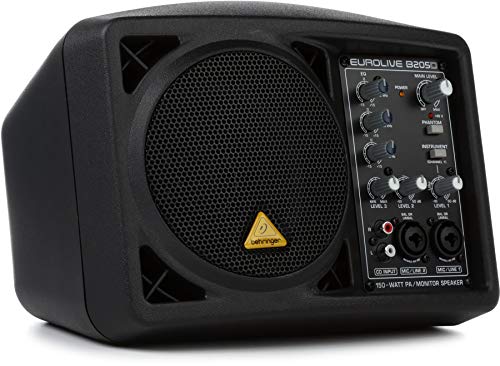
- 150-watt active monitor with Class-D amplification
- Three-channel mixer with three-band EQ
- Two phantom-powered mic preamps and instrument input
Best For: Vocalists and compact rehearsal or home-studio setups
High-Power Floor Monitor
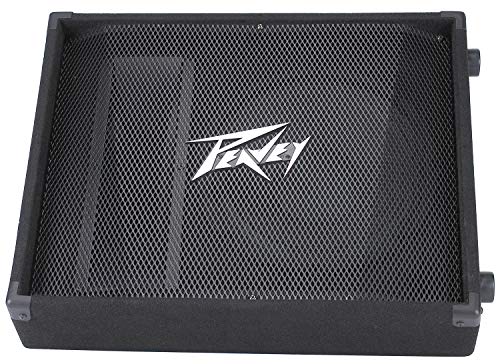
- 500-watt program and 1,000-watt peak handling
- 12-inch woofer with titanium compression driver
- 30- or 45-degree floor angles plus pole mounting
Best For: Live performances requiring durable, high-output vocal monitoring
Powered Stage Wedge
Sound Town METIS-10MPW 10-Inch Monitor

- 300-watt integrated amplifier with 10-inch woofer
- XLR input/output, 1/4-inch, and 1/8-inch inputs
- Onboard three-band EQ and reinforced wedge cabinet
Best For: Small venues, rehearsals, churches, and portable powered monitoring
Premium Coaxial Control – Electro-Voice PXM-12MP
For vocalists who need powerful, clearly defined stage monitors, the Electro-Voice PXM-12MP combines a 12-inch coaxial driver with 700 watts of Class-D amplification. Its broad 90° x 90° coverage and adjustable DSP controls make it a flexible choice for live monitoring.
Best For: Vocalists, bands, DJs, and audio engineers who want powerful monitoring with built-in mixing and DSP control.
Pros:
- 90° x 90° coverage helps deliver consistent sound across the monitoring area.
- Integrated mixer provides two XLR/¼-inch combo inputs plus stereo RCA input.
- DSP includes EQ presets, low-cut filters, a feedback notch filter, and recallable settings.
- 55° monitoring angle supports flexible placement on stage.
Cons:
- At 29.8 pounds, it is less portable than smaller monitor systems.
- Its advanced controls may be more than a simple vocal-monitoring setup requires.
The PXM-12MP is a particularly capable option when vocal clarity, output headroom, and system control matter. It can also be paired with a subwoofer to form a compact three-way main PA.
Feedback-Ready Value – Behringer EUROLIVE F1320D
The Behringer EUROLIVE F1320D is a practical option among stage monitors for vocalists, offering a 12-inch woofer, 1-inch compression driver, and 300 watts of power. Its integrated feedback filter and limiter are useful for controlling common live-sound problems.
Best For: Vocalists and performers seeking an active floor monitor for live or playback applications.
Pros:
- 300-watt two-way active design provides dedicated low and high-frequency drivers.
- Adjustable feedback filter helps manage feedback during performances.
- Integrated limiter and sound processor support system protection and control.
- Class-D amplification keeps the powered cabinet relatively lightweight for its output.
Cons:
- Its 33.1-pound weight is substantial for frequent transport.
- The supplied notes do not identify a built-in mixer or multiple input configuration.
With straightforward active operation and useful feedback management, the F1320D suits performers who want a dedicated powered wedge without stepping up to a more feature-heavy DSP monitor.
Passive Stage Staple – Yamaha BR12M
The Yamaha BR12M is a passive 12-inch floor monitor for vocalists who already have an amplifier or powered mixer. Its 300-watt program rating, 600-watt peak handling, and 97 dB sensitivity make it a solid choice for traditional sound-reinforcement systems.
Best For: Bands, venues, and sound crews using separate amplifiers or mixers for live performance monitoring.
Pros:
- 12-inch woofer and 1-inch compression driver cover vocal and program material.
- 90° x 40° horn is designed for focused high-frequency coverage.
- Built-in pole socket allows stand mounting when needed.
- Handles 300 watts program and 600 watts peak power.
Cons:
- It is passive, so an external amplifier or powered mixer is required.
- The cabinet weighs 15.6 kg, which may be less convenient for frequent setup and teardown.
- There are no built-in mixer or DSP features.
The BR12M makes sense when you want a conventional wedge that integrates with an existing PA. Its high sensitivity and rugged stage-oriented features favor installed, touring, and band setups with separate amplification.
Compact Vocal Monitor – Mackie SRM150
The Mackie SRM150 is a compact powered monitor for vocalists working in small rooms, classrooms, meetings, or busking setups. Its 5.25-inch full-range driver and 150-watt Class-D amplifier prioritize portability and clear close-range vocals rather than full-band volume or deep bass.
Best For: Solo vocalists, presenters, and performers who need a lightweight personal PA for one microphone plus music.
Pros:
- Compact 7.6-pound design can be carried in one hand.
- XLR input supports microphones, while a line input handles players and other sources.
- Pole mounting or tabletop placement supports flexible positioning.
- Built-in limiter helps protect the driver at higher volume.
Cons:
- The 5.25-inch driver and 100 Hz–17.5 kHz response are not intended for bass-heavy music.
- Its 150-watt output is better suited to small rooms than full-band stages.
- It is not designed as a complete full-band PA.
Choose the SRM150 when convenience and vocal intelligibility matter more than maximum output. It is an especially practical personal monitor for solo performers and small-scale speaking or music applications.
Pair-Powered Monitoring – GH10M 10-Inch Passive Wedge Monitors
For vocalists comparing stage monitors for vocalists, the Grindhouse GH10M-Pair offers two wired passive wedges with 10-inch drivers and 300 watts RMS per cabinet. They are designed for PA, DJ, live sound, studio, and karaoke setups, but they require a separate amplifier.
Best For: Performers and small live-sound setups that need a matched pair of passive floor monitors.
Pros:
- Includes two 10-inch wedge monitors.
- Each cabinet is rated for 300 watts RMS and 600 watts peak.
- Wedge design suits floor and stage placement.
- 8-ohm impedance supports standard passive PA configurations.
Cons:
- Passive design requires an external amplifier.
- Wired only, with no wireless communication technology.
- At 42 pounds per listed package, portability may be a consideration.
The included pair makes this a practical choice when you need coverage on more than one part of a stage. Confirm amplifier compatibility and available space before buying.
Feedback-Controlled Choice – Behringer F1220D Powered Monitor
The Behringer F1220D is a powered option for stage monitors for vocalists, combining a 12-inch woofer with a 3-inch tweeter in a 250-watt monitor system. Its adjustable feedback filter and integrated limiter are useful features for live performance control and speaker protection.
Best For: Vocalists and performers who want an all-in-one powered monitor with feedback management.
Pros:
- Built-in Class-D amplification eliminates the need for a separate power amp.
- Adjustable feedback filter helps manage unwanted feedback.
- Integrated limiter adds speaker protection.
- Offers XLR, 1/4-inch, RCA, and Speakon connectivity.
Cons:
- It is a single monitor rather than a pair.
- The 23.6-pound cabinet is larger than some compact monitor options.
- It is not water resistant.
With its powered design and feedback filter, the F1220D is straightforward to integrate into a live rig. Its 12-inch format may suit users who prefer a larger monitor cabinet and broader low-frequency capability.
High-Output Active Monitor – Samson RSXM10A 800W Stage Monitor
The Samson RSXM10A is an active 10-inch coaxial monitor built for live performances, stage monitoring, DJ booths, and sound engineering. For vocalists shopping for stage monitors for vocalists, its 800-watt output, combo input, and FOH/Monitor selector provide a flexible powered setup.
Best For: Vocal performers who want a high-output active monitor with compact coaxial construction.
Pros:
- Delivers up to 800 watts of output power.
- Combines a 10-inch low-frequency driver with a 1-inch tweeter.
- XLR-1/4-inch combo input and XLR Link output support signal routing.
- FOH/Monitor selector helps optimize its operating role.
Cons:
- It is sold as one monitor.
- Its 30-pound weight may be less convenient for frequent transport.
- It is not waterproof or water resistant.
The RSXM10A stands out when output and signal-routing flexibility matter more than having a matched pair. Its all-wood cabinet and coaxial design also make it a focused option for stage and DJ monitoring.
Best with Extra Features – Behringer Eurolive B205D
The Behringer Eurolive B205D is a compact active option for singers who need stage monitors for vocalists in rehearsals, home studios, presentations, or small performance setups. Its built-in mixer, microphone preamps, and 150-watt Class-D amplifier reduce the need for additional equipment.
Best For: Vocalists, keyboard players, home recording, and compact monitoring setups.
Pros:
- Compact 7.05-pound design with a full-range neodymium driver.
- Built-in three-channel mixer with three-band EQ.
- Two microphone preamps include phantom power, plus an instrument-ready input.
- Active 150-watt amplification requires no separate power amplifier.
Cons:
- Its compact format is less suited to high-output stage coverage than larger 12-inch monitors.
- It is a single speaker rather than a stereo pair.
The B205D stands out when portability and built-in connectivity matter more than maximum stage volume. It is a practical all-in-one monitor for vocalists and small-format audio work.
High-Power Floor Monitor – Peavey PV 12M 12-Inch Monitor
The Peavey PV 12M is a rugged passive floor monitor designed for singers who need stage monitors for vocalists with substantial power handling. Its 12-inch woofer, titanium-diaphragm compression driver, and angled wedge cabinet suit live performances and studio monitoring.
Best For: Live vocalists, bands, and performers needing a durable, high-output floor monitor.
Pros:
- Handles 500 watts of program power and 1,000 watts peak power.
- 12-inch Sheffield Pro 1200+ woofer supports strong vocal presence.
- Titanium-diaphragm compression driver and Sound Guard IV tweeter protection.
- Can be angled at 30 or 45 degrees and also pole mounted.
Cons:
- At 41 pounds, it is considerably less portable than compact powered monitors.
- It is a passive monitor and requires a suitable external amplifier.
- The carpet-covered cabinet may require more care than a molded enclosure.
The PV 12M is a strong choice when durability and headroom take priority. Its flexible positioning and two-way design make it well suited to demanding stage-monitoring duties.
Powered Stage Wedge – Sound Town METIS-10MPW 10-Inch Monitor
The Sound Town METIS-10MPW combines a 10-inch woofer, titanium compression driver, and integrated 300-watt amplifier in a low-profile wedge. For singers comparing stage monitors for vocalists, its onboard EQ and flexible inputs make it convenient for rehearsals, churches, bars, and small venues.
Best For: Vocalists and performers needing a powered wedge with flexible connections for small-venue use.
Pros:
- Integrated 300-watt amplifier simplifies setup.
- Includes XLR input and output for daisy chaining, plus 1/4-inch and 1/8-inch inputs.
- Three-band EQ provides quick bass, mid, and treble adjustments.
- Recessed handle, carpet covering, metal grille, and reinforced corners support transport.
Cons:
- Its 10-inch woofer is smaller than the Peavey PV 12M’s 12-inch driver.
- The cabinet is not waterproof or water resistant.
- The one-year warranty is shorter than some competing coverage options.
The METIS-10MPW is a practical powered wedge for performers who want straightforward connections and fast tonal adjustments without adding an external amplifier. Its compact, road-ready cabinet fits smaller stages well.
How We Picked the Best Stage Monitors for Vocalists
We evaluated these monitors by the factors that matter most during live vocal performance: vocal intelligibility, maximum usable volume, feedback resistance, speaker coverage, connectivity, setup complexity, and portability. We also separated powered models from passive wedges because they require different equipment and offer different levels of convenience.
Powered monitors are generally the simplest choice for singers who want an all-in-one setup. Passive models can be a better fit for venues or bands that already own a compatible power amplifier and want to build a coordinated system.
Quick Comparison
| Best For | What to Look For | Recommended Type |
|---|---|---|
| Small acoustic gigs | Compact size, simple controls, clear mids | Powered compact monitor |
| Full-band stages | Higher output, 10- or 12-inch woofer, feedback control | Powered wedge |
| Churches and venues | Reliable vocal clarity and flexible placement | Powered or passive 12-inch monitor |
| Budget systems | Appropriate wattage and amplifier compatibility | Passive wedge |
Key Buying Factors for Stage Monitors for Vocalists
Vocal Clarity and Frequency Balance
Vocalists need strong, intelligible midrange more than excessive bass. A monitor should make your voice easy to distinguish from drums, guitars, and keyboards without sounding harsh. Coaxial designs and well-tuned two-way cabinets can provide consistent coverage when you move around the stage.
Power and Headroom
Choose enough output to stay clear at performance volume. Small powered monitors can work well for solo acts and low-volume stages, while full bands often benefit from a larger 10- or 12-inch cabinet with more headroom. Higher wattage alone does not guarantee better sound, so consider driver efficiency and the venue as well.
Feedback Control
Feedback is affected by microphone technique, monitor angle, room acoustics, and volume. Built-in feedback filters or equalization controls can help, but placement remains essential. Aim the wedge toward your ears and keep its microphone pickup pattern away from the speaker whenever possible.
Powered Versus Passive Design
Powered monitors include an amplifier, reducing the amount of external equipment and simplifying setup. Passive wedges are often lighter or more affordable, but they require an appropriately matched amplifier and speaker cables. Confirm impedance, power handling, and connector compatibility before buying a passive model.
Portability and Connections
Compact cabinets are easier to carry and suit small stages, rehearsals, and presentations. Larger wedges generally offer more output but take up more space. Check whether the monitor provides the input and output connections your mixer, microphone, or existing PA requires.
Who Should Buy Which Stage Monitors for Vocalists?
Choose a Compact Powered Monitor
Solo singers, acoustic duos, presenters, and small worship teams should prioritize a compact active model with straightforward controls and clear vocal reproduction.
Choose a Larger Powered Wedge
Rock bands, loud drummers, and performers on medium-sized stages will usually benefit from a 10- or 12-inch powered monitor with generous headroom and feedback-management features.
Choose a Passive Pair
Buy passive wedges when you already have a suitable amplifier or installed PA infrastructure. They can be a practical way to monitor multiple performers, provided the amplifier is correctly matched.
Before ordering, confirm the monitor’s dimensions, weight, power requirements, connectors, and return policy. The best Stage Monitors for Vocalists are not necessarily the loudest; they are the ones that deliver clear, reliable vocals at the volume and distance your performance requires.