Direct-die cooling exposes the processor die to the cooler, so the thermal interface material must spread evenly, fill microscopic gaps, and remain stable under demanding temperature cycles. The right compound can improve contact and reduce hotspots, but application quality matters as much as headline conductivity.
This roundup compares ten thermal pastes suited to different budgets and use cases, from enthusiast-grade compounds to larger-value syringes. Use the guide below to narrow your choice based on performance, longevity, ease of application, and the risks of working with an exposed die.
Best 10 Thermal Pastes for Direct Die Cooling Picks for 2026
Best High-Performance Pick

- High heat conductivity for demanding systems
- Includes syringe and spatula
- Designed for overclocking and long-lasting use
Best For: Enthusiasts and overclockers
Best Easy-Application Value

- 12.9W/mK conductivity rating
- Smooth texture for easier spreading
- 2.5g tube with spatula included
Best For: PC builds, repasting, and maintenance
Best for Long-Term Stability

- Designed to resist pump-out and dry-out
- Non-conductive and non-capacitive formula
- Large 8g size for repeated applications
Best For: Stable CPU, GPU, laptop, and console cooling
Best for Large Contact Areas
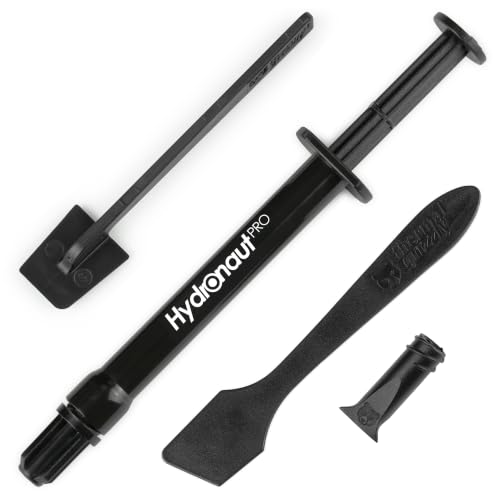
- Designed for large heat spreaders
- Well suited to water cooling
- Silicone-free and non-conductive formula
Best For: Large CPU/GPU surfaces and water-cooling systems
Proven Non-Conductive Pick

- Carbon microparticle formula
- Non-electrically conductive and metal-free
- Includes spatula for easy spreading
Best For: Beginner-friendly CPU and GPU cooling
Large-Format Value Option

- Generous 20 g package
- Thermal conductivity over 3.17 W/m-k
- Includes spatula and is non-electrically conductive
Best For: Multiple applications and general-purpose use
Performance-Focused Choice

- Made for demanding configurations and overclocking
- Includes syringe, spatula, and 12 cleaning wipes
- Designed for long-lasting performance
Best For: Enthusiasts and overclockers
Safe Carbon-Particle Pick

- Metal-free and non-conductive
- Easy consistency for beginners
- Claimed five-year durability
Best For: Single CPU or GPU applications where safe handling is a priority
High-Output Non-Conductive Choice
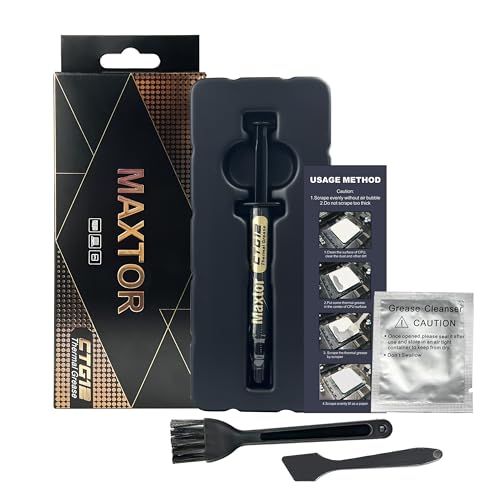
- Stated 18 W/m·K conductivity
- Non-conductive and non-corrosive
- High-density, pump-out-resistant formula
Best For: Hot CPUs, GPUs, laptops, and console maintenance
Bulk Maintenance Value

- Generous 100g quantity
- Non-conductive carbon-based formula
- Operates from -30°C to 280°C
Best For: Frequent repasting and broad CPU, GPU, or heatsink maintenance
Best High-Performance Pick – Kryonaut
Thermal Grizzly Kryonaut is a strong choice among thermal pastes for direct die cooling when you want high heat conductivity for demanding CPU, GPU, or overclocking setups. The 1-gram syringe includes a spatula for controlled application.
Best For: Enthusiasts, overclockers, and demanding CPU or GPU installations.
Pros:
- Designed for demanding applications and overclocking.
- Includes a syringe and spatula for precise distribution.
- Does not dry out even at 80°C, according to the supplied product notes.
- Universal CPU socket compatibility and support for various coolers and heatsinks.
Cons:
- The 1-gram quantity is relatively small for repeated applications.
- Its premium positioning may be more than casual users need.
Kryonaut stands out when maximum stated performance and precise application matter more than having a large quantity. It is a focused option for high-demand direct-die work.
Best Easy-Application Value – TR AT7
TR AT7 is a practical option among thermal pastes for direct die cooling, offering 12.9W/mK conductivity in a smooth, non-conductive formula. Its 2.5-gram tube and included spatula suit new installations, repasting, and routine maintenance.
Best For: CPU and GPU repasting, PC maintenance, and users who want a smoother paste to spread.
Pros:
- Rated at 12.9W/mK thermal conductivity.
- Smooth texture helps with thin-layer application.
- Non-conductive formula is easier to handle near components.
- Includes 2.5 grams of paste and a spatula.
Cons:
- The supplied notes provide less long-term performance information than some competing options.
- Its included quantity may be modest for frequent multi-system use.
AT7 balances application convenience, safety, and a clearly specified conductivity rating. It is a sensible choice when direct-die installation is part of broader PC maintenance.
Best for Long-Term Stability – ARCTIC MX-7
ARCTIC MX-7 is built for buyers prioritizing stable performance from thermal pastes for direct die cooling. Its dense, highly viscous formula is designed to resist pump-out, dry-out, and bleeding through repeated thermal cycles.
Best For: CPUs, GPUs, laptops, consoles, and installations where long-term stability is important.
Pros:
- High filler content is designed for strong heat transfer.
- High cohesion helps resist pump-out, dry-out, and bleeding.
- Electrically non-conductive and non-capacitive.
- The 8-gram size provides more material for repeated applications.
Cons:
- It is not intended to be spread manually.
- The dense, highly viscous consistency may require careful cooler-pressure application.
MX-7 is especially appealing when you want a durable bond line without manually spreading the paste. Its application method is less flexible, but the larger quantity and stability-focused design are useful for repeat work.
Best for Large Contact Areas – Hydronaut Pro
Thermal Grizzly Hydronaut Pro is tailored to large cooling surfaces, making it a strong candidate among thermal pastes for direct die cooling with water-cooling hardware or larger CPU and GPU contact areas. Its silicone-free formula supports flexible application.
Best For: Water cooling, large heat spreaders, powerful air coolers, and demanding GPU or CPU systems.
Pros:
- Designed for large heat spreaders and water-cooling applications.
- Suitable for medium to large contact surfaces.
- Silicone-free carrier structure supports flexible application.
- Electrically non-conductive and designed not to cure during extended use.
Cons:
- Its 2-gram quantity may be less convenient for many repeated applications.
- The product is more specialized than necessary for small, standard cooler contact areas.
Hydronaut Pro makes the most sense when the cooling surface is large or the system uses water cooling. Its formulation and intended applications align well with demanding, high-load installations.
Proven Non-Conductive Pick – ARCTIC MX-4
For direct die cooling, ARCTIC MX-4 offers a practical balance of thermal performance and application safety. Its carbon microparticle formula is non-electrically conductive and comes with a spatula to help spread the medium-viscosity paste evenly.
Best For: Builders who want a well-established, beginner-friendly paste for CPU or GPU cooling.
Pros:
- Carbon microparticles support efficient heat transfer.
- Metal-free, non-electrically conductive formula reduces short-circuit risk.
- Spatula and easy consistency simplify application.
- Authenticity Check helps verify the product.
Cons:
- The package contains 4 g, which may be less convenient for frequent repasting than a larger tube.
- The supplied notes do not specify a thermal conductivity rating.
MX-4 is a sensible choice when safe handling and straightforward application matter as much as dependable everyday performance in a direct-die setup.
Large-Format Value Option – G107 20g Silver Thermal Paste
Among thermal pastes for direct die cooling, the G107 stands out for its generous 20 g quantity and broad component compatibility. It is designed to transfer heat from a CPU to a heatsink and is also listed for GPUs, chipsets, LEDs, ovens, and other components.
Best For: Users who need a large supply of general-purpose thermal grease for multiple applications.
Pros:
- 20 g package provides substantially more paste for repeated applications.
- Listed thermal conductivity is greater than 3.17 W/m-k.
- Non-electrically conductive, non-toxic, and non-corrosive according to the supplied notes.
- Includes a thermal paste spatula.
Cons:
- The supplied notes provide less detail about long-term performance or durability.
- Its broad, general-purpose positioning may offer less application-specific guidance for direct-die users.
Choose G107 when quantity and versatility are priorities, especially if you expect to repaste several components or systems rather than make a single application.
Performance-Focused Choice – Thermal Grizzly Kryonaut
Thermal Grizzly Kryonaut is aimed at demanding applications where high thermal performance is a priority. Its specially designed syringe and included spatula support precise application, while the package adds six wet and six dry cleaning wipes for surface preparation before direct die cooling.
Best For: Overclockers and enthusiasts seeking a high-performance paste with dedicated cleaning accessories.
Pros:
- Designed for demanding configurations and overclocking.
- High thermal conductivity supports efficient heat transfer.
- Specialized structure is intended to resist drying out even at 80°C.
- Includes wet and dry wipes for degreasing and cleanup.
Cons:
- The 1 g quantity is smaller than the other listed options.
- Its performance-focused positioning may be more than needed for basic applications.
Kryonaut is the strongest fit when direct-die work involves demanding temperatures, careful surface preparation, and performance-oriented tuning rather than maximum paste quantity.
Safe Carbon-Particle Pick – BSFF 1.8g Thermal Paste
For thermal pastes for direct die cooling, the BSFF 1.8g compound is a practical option when you want a non-conductive formula that is easy to apply. Its carbon-microparticle construction is designed to transfer heat from CPUs and GPUs without the short-circuit concerns associated with electrically conductive compounds.
Best For: Beginners and CPU or GPU users who prioritize safe, straightforward application in a compact kit.
Pros:
- Metal-free and non-conductive for added application safety.
- Carbon-based formula is designed for efficient CPU and GPU heat dissipation.
- Easy-to-use consistency and a claimed service life of at least five years.
Cons:
- The 1.8g quantity is relatively limited for multiple applications.
- The supplied notes do not provide a specific thermal-conductivity rating.
BSFF is a sensible direct-die cooling candidate when electrical safety and ease of use matter more than buying a bulk-sized syringe. Its small quantity suits a single build or maintenance job.
High-Output Non-Conductive Choice – Maxtor CTG12 18 W/m·K
Among thermal pastes for direct die cooling, Maxtor CTG12 stands out for its stated 18 W/m·K conductivity and high-density consistency. It is aimed at demanding processors, GPUs, laptops, and consoles while avoiding the electrical-conductivity and corrosion concerns associated with metal-based compounds.
Best For: High-performance CPUs, overclocked GPUs, PS5 or Xbox maintenance, and systems exposed to repeated temperature cycling.
Pros:
- Stated 18 W/m·K thermal conductivity for demanding cooling workloads.
- Non-conductive and non-corrosive, making it suitable for direct GPU-die application.
- High-viscosity, pump-out-resistant formula with a spatula included for precise spreading.
- Designed for stability through extreme temperature cycles and up to five years of use.
Cons:
- Its high viscosity may require more careful spreading than thinner pastes.
- The supplied product details mention a cleaning wipe only conditionally, so included accessories may vary.
CTG12 is the strongest performance-focused option in this group based on its stated rating. Its combination of high conductivity, non-conductive chemistry, and pump-out resistance makes it especially compelling for hot chips and consoles.
Bulk Maintenance Value – HY500 100g Carbon-Based Paste
For buyers comparing thermal pastes for direct die cooling on a budget, HY500 offers a generous 100g quantity and a carbon-based, non-conductive formula. Its stated 1.93 W/m·K conductivity and broad operating range make it suited to routine CPU, GPU, and heatsink maintenance rather than maximum-performance overclocking.
Best For: Frequent repasting, repair work, and users who need a large supply for compatible CPU, GPU, or heatsink applications.
Pros:
- Large 100g package provides substantial quantity for repeated applications.
- Non-electrically conductive and safe to use with various heatsinks.
- Designed to remain usable from -30°C to 280°C.
- Beginner-friendly consistency and stated 1.93 W/m·K conductivity.
Cons:
- Its stated conductivity is much lower than the 18 W/m·K rating claimed by the Maxtor compound.
- The large package may be excessive for a single direct-die installation.
- The supplied notes do not specify included application tools.
HY500 makes the most sense when quantity and everyday practicality outweigh peak thermal specifications. It is a cost-conscious choice for repeated servicing, provided its more modest conductivity fits the workload.
How We Picked the Best Thermal Pastes for Direct Die Cooling
We focused on compounds that are practical for exposed-die CPU and GPU setups, where coverage, consistency, and long-term stability are especially important. The selection spans established enthusiast pastes, silicone-free options, general-purpose compounds, and larger syringes for repeated builds. We considered published thermal specifications where available, application accessories, package size, non-conductivity, expected durability, and overall value.
Thermal conductivity numbers are not directly comparable across brands because testing methods vary. For direct-die cooling, a paste that spreads predictably and maintains contact can outperform a product with a higher advertised rating but poor handling characteristics.
Quick Comparison
- Best for demanding enthusiast builds: Thermal Grizzly Kryonaut.
- Best high-value performance option: TR AT7.
- Best for long-term everyday use: ARCTIC MX-7 or MX-4.
- Best silicone-free choice: Thermal Grizzly Hydronaut Pro.
- Best for frequent applications: G107, HY500, or another larger syringe.
- Best convenience bundle: Kryonaut with cleaning wipes.
Key Buying Factors for Thermal Pastes for Direct Die Cooling
Consistency and Spreadability
An exposed die has little room for uneven coverage. Choose a paste that can be applied in a thin, continuous layer without pulling away or clumping. A supplied spatula or cleaning wipes can make precise preparation easier.
Electrical Safety
Prefer a non-conductive compound unless you have a specific reason to use a conductive formula and can control application precisely. Keep paste away from exposed contacts, SMD components, and socket areas.
Durability and Pump-Out Resistance
Direct-die systems can experience repeated thermal expansion and contraction. A durable paste is less likely to migrate or develop dry spots over time, reducing the need for frequent maintenance.
Package Size and Freshness
Small syringes suit one-off upgrades and may reduce storage concerns, while 8g to 100g packages are more economical for multiple systems. Check the seal, expiration guidance, and storage recommendations before use.
Who Should Buy Which Thermal Pastes for Direct Die Cooling?
Choose Kryonaut or Hydronaut Pro if maximum enthusiast performance and dependable application are more important than price. TR AT7 is a strong middle ground for buyers who want a performance-oriented compound without moving to the most expensive option.
For a reliable daily PC, ARCTIC MX-7 and MX-4 are sensible choices because they are widely used, non-conductive, and easy to handle. Buyers performing several repastes or servicing multiple gaming systems should consider a larger G107 or HY500 syringe, provided the product’s consistency and storage condition are acceptable.
If this is your first direct-die installation, prioritize predictable spreading, cleaning supplies, and electrical safety over the highest advertised conductivity figure. Use an appropriate mounting frame or retention solution, apply only enough paste to cover the die, and verify cooler contact before final assembly.