Finding the right trail camera can make the difference between a missed glimpse and a usable wildlife image. The best models balance trigger speed, night performance, battery life, and image clarity.
Below, we’ve grouped strong options for different needs so you can choose a camera that fits your terrain, subjects, and workflow.
Best 10 Trail Cameras for Wildlife Photography Picks for 2026
Budget 4K No-Glow Scout Cam
WOSPORTS G600 56MP Trail Camera

- 56MP photos and 4K video
- 0.2s trigger with 120° detection
- 32 no-glow IR LEDs for stealth night capture
Best For: Affordable wildlife scouting with strong image detail
Cellular Remote Monitoring Pick
TACTACAM Reveal X 3.0 Cellular Trail Camera

- Auto-connect LTE on AT&T and Verizon
- Built-in GPS with no SD card needed
- Sub-half-second trigger with 3-shot burst
Best For: Remote wildlife monitoring with instant photo delivery
Solar App-Control Option
MAXDONE 64MP Solar Trail Camera
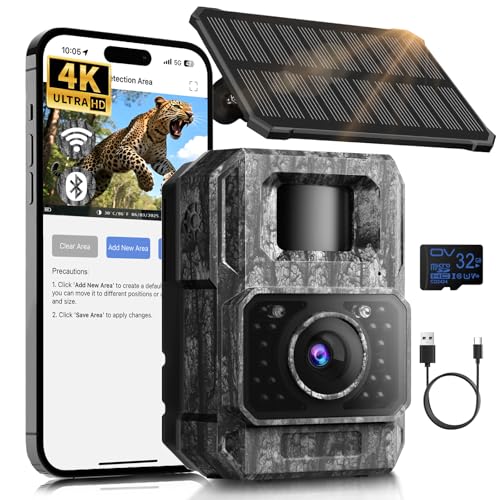
- 64MP photos and 4K video
- 6000mAh battery with solar charging
- 0.1s trigger with customizable detection zones
Best For: Solar-assisted scouting with local phone download
Fast-Trigger No-WiFi Classic

- 48MP photos and 1296P HD video
- 0.1s trigger with 3 PIR sensors
- 100ft no-glow night vision
Best For: Simple, fast wildlife capture without Wi-Fi or cellular
Solar Smart Pick
MAXDONE 4K 64MP Solar WiFi Trail Camera
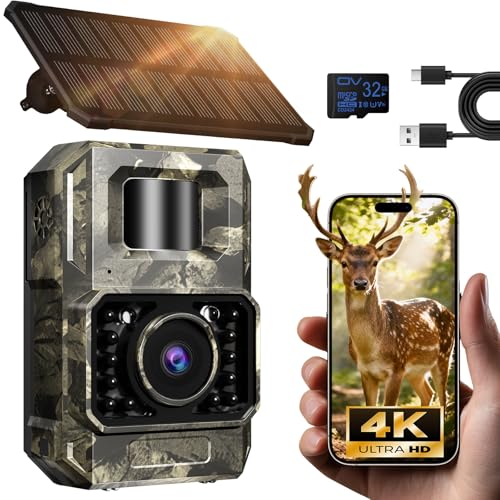
- 64MP photos and 4K video with 100° wide view
- WiFi and Bluetooth let you manage files in the app
- Solar panel and rechargeable battery support longer runtime
Best For: Wildlife photographers who want wireless access and solar power
Low-Light Pick
GardePro A3S 64MP No-Glow Trail Camera
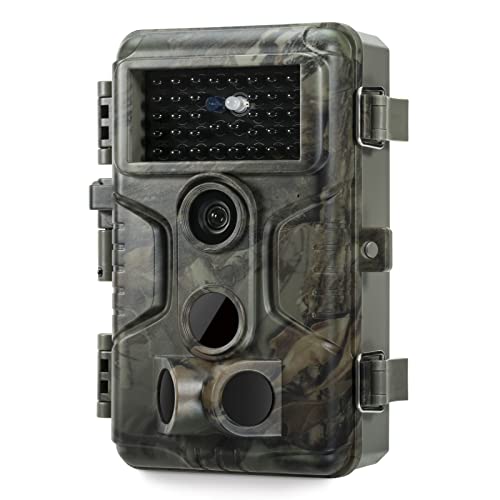
- Sony Starvis sensor for better low-light performance
- 64MP photos, 1296P video with sound, and 0.1s trigger
- No-glow infrared reaches up to 100 ft for stealthy night use
Best For: Wildlife photographers focused on low-light capture and stealth
Compact Budget Pick
WOSPORTS Mini 24MP 1080P Trail Camera

- Small, lightweight body is easy to hide and mount
- 24MP photos and 1080P video cover basic wildlife capture
- Uses 4 AA batteries with low standby power use
Best For: Buyers wanting a compact, simple wildlife monitoring camera
Ultra-Fast Non-WiFi Pick
GardePro E5S 64MP Trail Camera
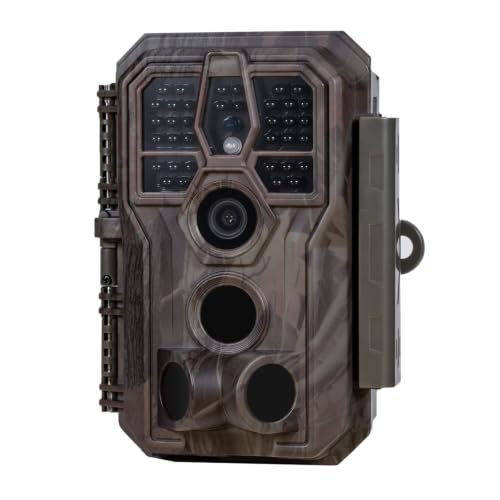
- 64MP photos and 1296P HD video
- 0.1s trigger with 3 PIR sensors
- 100ft no-glow night vision
Best For: simple, battery-efficient wildlife monitoring
App-Ready Budget Bundle
DEATTI T4 WiFi Bluetooth Trail Camera

- 4K video and 48MP photos
- Includes 8 batteries and 32GB SD card
- 0.1s trigger with 120° detection
Best For: nearby app-based downloads and an out-of-box bundle
Low-Glow Detail Runner
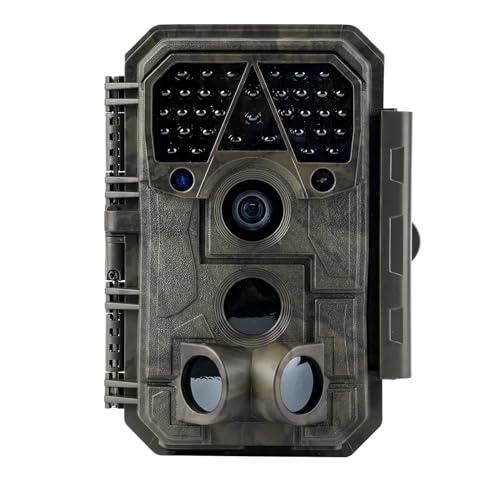
- 64MP photos and 1296p HD video
- 0.1s trigger with side sensors
- 100ft no-glow 940nm night vision
Best For: discreet nighttime wildlife capture with strong image detail
Budget 4K No-Glow Scout Cam – WOSPORTS G600 56MP Trail Camera
If you’re comparing trail cameras for wildlife photography, the WOSPORTS G600 is a straightforward non-cellular option that focuses on image quality, speed, and simple in-field use. It offers 56MP stills, 4K video, a 0.2-second trigger, and no-glow night vision, which makes it a practical pick for scouting deer or capturing general wildlife activity without spooking animals.
Best For: Budget-minded wildlife users who want high-resolution photos, fast response, and invisible infrared night capture.
Pros:
- Up to 56MP photos and 4K video for detailed daytime captures
- 0.2-second trigger speed with 120° wide detection and 1-3 burst shooting
- 32 no-glow 940 IR LEDs help record animals more discreetly at night
- Includes a 2-inch LCD, 16GB memory card, and simple on-camera preview
Cons:
- Non-cellular and non-Wi-Fi, so footage must be checked on the device or card
- AA batteries are not included
- Solar panel and rechargeable lithium battery are sold separately
Overall, this is a solid entry-level option for users who want an easy-to-use wildlife camera with strong resolution and dependable no-glow night performance. It leans more toward local scouting than remote monitoring, but the feature set is competitive for the price tier.
Cellular Remote Monitoring Pick – TACTACAM Reveal X 3.0 Cellular Trail Camera
For trail cameras for wildlife photography where remote access matters, the TACTACAM Reveal X 3.0 adds cellular connectivity so you can receive images without pulling an SD card. Its auto-connect multi-carrier LTE system, built-in GPS, and sub-half-second trigger make it a strong fit for users who want fast alerts and easy deployment in the field.
Best For: Hunters and land managers who want cellular photo delivery, quick setup, and long unattended runtime.
Pros:
- Auto-connect LTE works with AT&T and Verizon, reducing dead-zone problems
- Built-in GPS and no SD card requirement simplify tracking and file access
- Up to 6+ month battery life supports longer deployments
- Sub-half-second trigger with 3-shot burst improves capture odds on moving game
Cons:
- Video is limited to 1080p, not 4K
- Cellular features depend on the app and service setup
- More advanced than basic trail cams, so it’s less of a simple grab-and-go option
This is the most connected choice in the group and is built for people who need wildlife photos delivered remotely. If your priority is convenience and coverage rather than local card retrieval, it stands out immediately.
Solar App-Control Option – MAXDONE 64MP Solar Trail Camera
The MAXDONE Solar Trail Camera is aimed at users who want trail cameras for wildlife photography with easy phone access and reduced battery swapping. It combines 64MP stills, 4K video, a 6000mAh rechargeable battery, and split solar panel design, while the camera itself creates a short-range Wi-Fi hotspot for setup and file downloads.
Best For: Wildlife users who want solar-assisted power and quick local transfer to a phone.
Pros:
- 64MP photos and 4K video with improved low-light performance
- Split solar panel design helps improve charging placement and efficiency
- 6000mAh rechargeable battery supports solar, Type-C, and battery power
- 0.1-second trigger and customizable detection zones help catch fast movement
Cons:
- Does not connect to household Wi-Fi or support remote viewing
- Phone connection is short-range and works best within 10 feet
- Short-range hotspot setup is more limited than true wireless remote cameras
This model makes sense if you want high-resolution wildlife captures and better power endurance without paying for cellular service. It is especially practical for backyard, farm, or woods use where you can get close enough for app-based file transfer.
Fast-Trigger No-WiFi Classic – GardePro E5 48MP Trail Camera
The GardePro E5 is a non-cellular, non-Wi-Fi option built for straightforward trail cameras for wildlife photography. It emphasizes speed and clarity with 48MP photos, 1296P HD video, a 0.1-second trigger, and 100-foot no-glow night vision, making it a dependable choice for users who want to record wildlife activity without extra connectivity features.
Best For: Buyers who want fast motion capture, low-power operation, and simple SD-card retrieval.
Pros:
- 48MP photos and 1296P HD video deliver strong image detail
- 0.1-second trigger and 3 PIR sensors improve motion detection coverage
- 100-foot no-glow night vision helps keep animals from being disturbed
- IP66 weatherproofing and easy mounting suit outdoor use
Cons:
- No Wi-Fi or cellular features for remote viewing
- SD card, batteries, and solar panel are not included
- Video resolution is lower than 4K models
In practical terms, this is a clean, low-maintenance wildlife camera for people who prefer a simple setup and reliable capture speed. It does not try to be a connected smart device, which can be an advantage if you want less complexity and lower power use.
Solar Smart Pick – MAXDONE 4K 64MP Solar WiFi Trail Camera
If you want trail cameras for wildlife photography with easy phone access and strong all-around specs, this MAXDONE model is built for convenient field use. Its WiFi and Bluetooth setup lets you preview, download, and share files through the TrailCam GO app without pulling the SD card, while the solar-powered design helps keep it running longer on remote setups.
Best For: Wildlife shooters who want wireless file access, solar power, and high-resolution captures in one camera.
Pros:
- Captures 64MP photos and 4K video with a 100° wide-angle lens.
- Low-glow 850nm night vision reaches up to 65 ft for discreet nighttime capture.
- Built-in rechargeable battery plus detachable solar panel for extended field use.
- WiFi and Bluetooth support app-based preview, downloads, and sharing without removing the card.
Cons:
- WiFi connection range is limited to about 55 ft in open areas.
- Some buyers will prefer a simpler non-connected camera for basic field use.
This is a practical pick if you value convenience as much as image quality. The combination of solar charging, wireless transfer, and strong still/video specs makes it especially useful for long wildlife observation sessions.
Low-Light Pick – GardePro A3S 64MP No-Glow Trail Camera
For trail cameras for wildlife photography where low-light performance matters most, the GardePro A3S focuses on stealth and image quality rather than wireless extras. The Sony Starvis sensor, no-glow infrared, and fast 0.1s trigger make it a strong choice for capturing animals cleanly in dim conditions.
Best For: Photographers who want dependable night capture, fast triggering, and simple SD-card workflow.
Pros:
- Sony Starvis sensor is designed for stronger low-light image performance.
- Captures 64MP photos and 1296P HD video with sound.
- 0.1s trigger speed and 120° PIR detection help catch fast movement.
- 940nm no-glow night vision reaches up to 100 ft without alerting animals.
Cons:
- Non-cellular and non-WiFi design means you must retrieve the SD card to review files.
- Runs on 8 AA batteries, so long-term use depends on battery management.
This camera is a sensible option when your priority is clean wildlife capture with minimal disturbance. It trades convenience features for a stealthier, more focused approach that suits field monitoring and photography.
Compact Budget Pick – WOSPORTS Mini 24MP 1080P Trail Camera
If you need a compact option for trail cameras for wildlife photography, the WOSPORTS Mini Trail Camera keeps things simple and portable. Its small size, lightweight build, and low power draw make it easy to hide and leave in place for longer periods, especially when you want a basic camera for outdoor monitoring.
Best For: Users who want a small, easy-to-mount trail camera for straightforward wildlife monitoring.
Pros:
- Compact mini design is easy to carry, hide, and set up.
- Records 24MP photos and 1080P video for basic wildlife capture.
- Runs on just 4 AA batteries with very low standby power use.
- Default settings are already tuned for many wildlife applications, making setup simple.
Cons:
- Lower resolution and feature set than premium wildlife photography models.
- IP56 water resistance is less robust than some higher-rated trail cameras.
This model makes sense if you want a straightforward camera that is easy to deploy and leave in the field. It offers the essentials for wildlife monitoring without adding complexity or extra cost-focused features.
Ultra-Fast Non-WiFi Pick – GardePro E5S 64MP Trail Camera
If you want trail cameras for wildlife photography without dealing with apps or cellular plans, the GardePro E5S is a straightforward field option. It focuses on high-resolution capture, fast motion response, and low-power operation, making it practical for remote setups where you just want to pull the SD card and review what happened.
Best For: Wildlife photographers who want a simple, battery-efficient camera with very fast trigger speed and strong daylight-to-night coverage.
Pros:
- 64MP photos and 1296P HD video for detailed captures
- 0.1s trigger speed with 3 PIR sensors for fast-moving wildlife
- 100ft no-glow night vision helps avoid disturbing animals
- Non-cellular, non-WiFi design keeps power use low
Cons:
- No app or wireless viewing, so you must retrieve the SD card
- Requires 8 AA batteries, which are not included
- Solar panel support is sold separately
The E5S is a solid pick if you value dependable trail coverage over connected features. Its mix of quick triggering, no-glow infrared, and weather-resistant construction makes it a good fit for disciplined wildlife monitoring and image collection.
App-Ready Budget Bundle – DEATTI T4 WiFi Bluetooth Trail Camera
The DEATTI T4 is a practical choice for trail cameras for wildlife photography if you want quick setup and easy file transfer in the field. It does not connect to home Wi-Fi or offer true remote viewing, but its built-in hotspot and app support let you download photos and video when you’re standing close to the camera.
Best For: Users who want an app-connected trail camera bundle with included accessories and simple on-site downloads.
Pros:
- 4K video and 48MP photos for sharp captures
- Built-in Wi-Fi hotspot and TrailCam Go app support for nearby transfers
- Includes 8 batteries and a 32GB SD card
- 0.1s trigger time and 120° detection angle for fast action
Cons:
- Does not support home Wi-Fi or true remote viewing
- Phone must be within about 5-8 meters of the camera hotspot
- Night vision range is listed at 30m, shorter than some rivals
If you want a feature-rich starter bundle, the T4 is easy to work with and ready to deploy out of the box. Just be sure you’re comfortable with its short-range hotspot setup before buying.
Low-Glow Detail Runner – Meidase P70 64MP Trail Camera
The Meidase P70 is built for trail cameras for wildlife photography when you want crisp detail, fast reaction, and invisible nighttime illumination. With a non-cellular, non-WiFi setup, it stays simple in the field while still offering high-resolution stills, HD video, and a user-friendly local display for reviewing footage on site.
Best For: Wildlife shooters who want strong image detail, quick triggering, and a no-glow camera for discreet nighttime use.
Pros:
- 64MP photos and 1296p HD video with an f/1.6 aperture lens
- 0.1s trigger speed with side sensors for fast motion detection
- 100ft no-glow 940nm night vision for discreet nighttime capture
- 2.4-inch color display for quick on-camera review
Cons:
- No WiFi or cellular connectivity
- Requires 8 AA batteries and an SD card, both sold separately
- Solar panel is optional and sold separately
Overall, the P70 looks like a strong all-around field camera for photographers who care about detail and stealth. Its combination of fast triggering, invisible IR, and easy playback makes it especially appealing for consistent wildlife monitoring.
How We Picked the Best Trail Cameras for Wildlife Photography
For Trail Cameras for Wildlife Photography, we focused on the features that matter most in the field: fast trigger response, reliable motion detection, sharp still image quality, usable low-light performance, and practical power choices. We also considered whether each camera is better suited to remote scouting, fixed-location wildlife monitoring, or image gathering for photography.
Quick Comparison: What Matters Most
Fast non-cellular cameras are usually the best value if you can check cards in person and want simple operation. Cellular models are better if you need remote updates and fewer site visits. Solar and Wi-Fi/Bluetooth options can reduce maintenance, but they work best when placement, signal, and charging conditions are favorable.
Key Buying Factors for Trail Cameras for Wildlife Photography
Trigger Speed and Recovery Time
A quick trigger helps capture animals before they leave the frame. Recovery time matters too, especially on trails or feeding areas where multiple frames may be needed in rapid succession.
Image Quality and Low-Light Performance
Look beyond headline megapixels. Clean low-light images, effective no-glow night vision, and strong color accuracy in daylight usually matter more than inflated specs. Video resolution can help document behavior, but still image clarity is often the priority for photographers.
Detection Range and Field of View
Choose a wider detection angle for open clearings and a narrower, more focused setup for trail funnels. Matching the camera’s field of view to the animal path improves your chances of framing subjects cleanly.
Power, Storage, and Maintenance
Battery life, SD card needs, and charging method all affect how often you must revisit the site. Solar models can be convenient, while non-cellular cameras are often simpler and more predictable in cold or remote conditions.
Who Should Buy Which Trail Cameras for Wildlife Photography?
If you want the lowest-hassle setup for regular scouting, a cellular camera is the most convenient choice. If you prioritize value and full control over card retrieval, a non-cellular model is usually the smarter buy. For long-term monitoring or hard-to-reach locations, solar-powered cameras can cut down on maintenance. Wildlife photographers who need discreet operation should pay special attention to no-glow night vision and fast trigger times, since those features often determine whether you get a usable shot.
In short, the best choice depends on how often you visit the site, how far it is from power or signal, and whether your goal is efficient monitoring or image capture first.