The best audio compressors under $200 can add control, consistency, and punch without requiring a premium studio budget. This roundup covers rack processors, channel-style units, stereo limiters, and compact compressor pedals for different setups.
Use the buying guide below to compare essential features, choose the right compressor format, and narrow the options based on your recording, live-sound, streaming, or instrument needs.
Best 10 Audio Compressors Under 200 Picks for 2026
Versatile Rackmount Control

- Dual-channel VCA compression with auto attack/release
- Noise gate, LED monitoring, and sidechain insert
- XLR/TRS connectivity for studio or live routing
Best For: Vocal, streaming, studio, and live-sound setups
Pro-Level Dynamics Toolkit
Behringer Composer Pro-XL MDX2600

- Two-channel compressor, limiter, and gate
- Designed for production, mixing, and mastering
- Portable rack-style unit with two-year warranty
Best For: Home-studio production and general dynamics processing
Compact Stereo Level Control
Rolls SL33B Stereo Program Limiter

- Stereo program limiter design
- Compact 5 x 5 x 5-inch form factor
- Lightweight one-pound construction
Best For: Simple stereo program-level limiting
Pedalboard Tone Shaping
Walrus Audio Deep Six Compressor V3
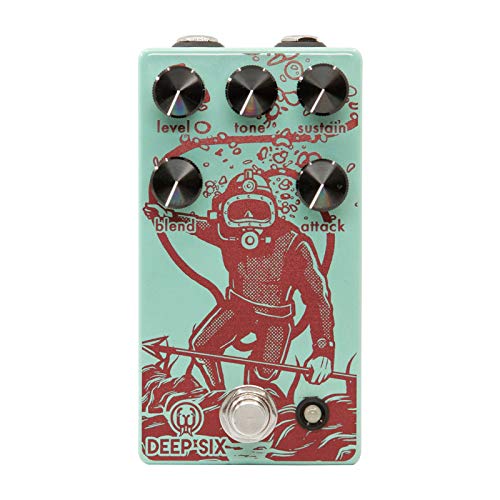
- Analog true-bypass compressor stompbox
- Bass-cut tone knob for low-end shaping
- Top-mounted jacks and soft-switch bypass
Best For: Guitarists building a compact pedalboard setup
Flexible Rack Compression
ART SCL2 Dual/Stereo Compressor/Limiter Expander/Gate

- Dual-channel or linked-stereo operation
- Compressor, limiter, expander, and gate functions
- Balanced TRS and XLR inputs with LED meters
Best For: Rack setups needing versatile stereo dynamics control
Classic FET Character

- FET-style design modeled after the 1176LN
- Discrete signal path with Class-A output
- Selectable 4:1 to 20:1 ratios
Best For: Professional audio setups seeking vintage-style compression
Compact Acoustic Compression
Fishman AFX AcoustiComp Mini Compressor Pedal

- Compact pedalboard-friendly design
- Compression amount and level controls
- True or buffered bypass options
Best For: Acoustic players needing portable pedal compression
Rackmount Dynamics Control

- Compressor, expander/gate, and sidechain insert
- Separate LED displays for key threshold and reduction settings
- 1U analog rackmount design for studio or live use
Best For: Rack-based studio, touring, and portable audio systems
Guitar and Bass Pedal
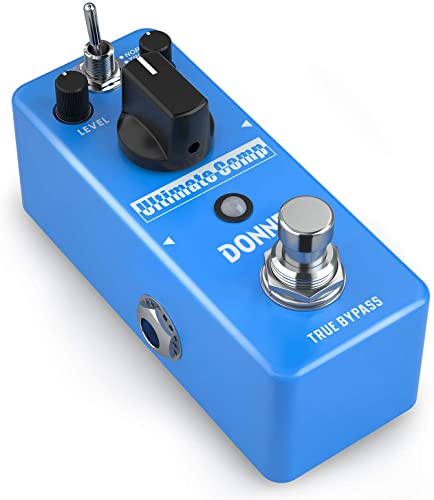
- Pure analog compression with COMP, TONE, and LEVEL controls
- Normal and Treble modes for flexible voicing
- True bypass design in a compact pedal format
Best For: Electric guitar and bass pedalboards
Dual-Channel Vocal Compressor
Professional Rackmount Compressor

- Dual-channel VCA compression with limiting and noise gate
- XLR/TRS I/O plus sidechain insert for system integration
- LED metering and adjustable attack and release controls
Best For: Vocals, streaming, studio, live, and broadcast applications
Versatile Rackmount Control – Dual-Channel Audio Compressor
For shoppers comparing audio compressors under 200, this dual-channel rackmount processor offers practical control for studio recording, live sound, and streaming. Its VCA circuitry, noise gate, LED monitoring, and sidechain insert support flexible dynamics shaping across multiple sources.
Best For: Vocalists, streamers, home studios, and live setups needing two-channel processing.
Pros:
- Dual-channel design with Overeasy compression and auto attack/release settings.
- XLR and 1/4-inch TRS connectivity for flexible integration.
- Built-in noise gate, LED monitoring, and sidechain insert.
- Includes a two-year manufacturer warranty.
Cons:
- Rackmount format may be less convenient for compact pedalboard-style setups.
- The supplied notes do not specify included rack hardware or detailed frequency controls.
This is a feature-rich option when you want one rack unit to handle vocals, instruments, and routing tasks. The combination of visual monitoring and sidechain capability makes it especially adaptable for more involved signal chains.
Pro-Level Dynamics Toolkit – Behringer Composer Pro-XL MDX2600
Among audio compressors under 200, the Behringer Composer Pro-XL MDX2600 is a straightforward two-channel rack processor built for audio production, mixing, and mastering. Its listed compressor, limiter, and gate functions cover several common dynamics-control needs.
Best For: Home studios and producers seeking multi-function two-channel processing.
Pros:
- Combines compressor, limiter, and gate functions in one unit.
- Two-channel design supports processing multiple sources.
- Suitable for audio production, mixing, and mastering.
- Includes a two-year manufacturer warranty.
Cons:
- The supplied product details provide limited information about controls and connectivity.
- Its rack-style format may not suit users seeking a small desktop or pedal unit.
The MDX2600 makes sense for buyers who value several core dynamics tools in a single two-channel processor. Consider the available inputs, outputs, and control layout before purchase if your setup has specific routing requirements.
Compact Stereo Level Control – Rolls SL33B Stereo Program Limiter
For buyers browsing audio compressors under 200, the Rolls Stereo Program Limiter SL33B is a compact stereo-focused option. The supplied information identifies it as a limiter rather than a full compressor, making it most relevant for straightforward program-level control.
Best For: Users needing a simple stereo program limiter in a small enclosure.
Pros:
- Designed for stereo program limiting.
- Compact product dimensions of 5 x 5 x 5 inches.
- Lightweight one-pound unit.
Cons:
- The supplied notes do not list detailed controls, connections, or power specifications.
- It may offer less flexibility than a multi-function compressor/limiter.
The SL33B is worth considering when your priority is basic stereo program limiting rather than extensive compression features. Verify the connection and control details to ensure it matches your signal chain.
Pedalboard Tone Shaping – Walrus Audio Deep Six Compressor V3
Guitarists comparing audio compressors under 200 may prefer the Walrus Audio Deep Six Compressor V3 for its pedal-format design. It combines studio-grade compression with true bypass, a bass-cut tone control, and relay-based soft switching for a practical guitar-signal workflow.
Best For: Guitarists wanting analog compression and low-end shaping in a pedalboard format.
Pros:
- True bypass analog compressor in a stompbox enclosure.
- Tone knob with bass cut helps shape the guitar signal.
- Top-mounted 1/4-inch input and output jacks.
- Soft-switch relay bypassing and limited lifetime warranty.
Cons:
- Its 9-volt, 100-milliamp design is aimed at pedalboard use rather than rack systems.
- It provides one pedal-format compressor rather than dual-channel processing.
The Deep Six V3 is the most guitar-specific choice in this group. Its compact stompbox format and bass-cut tone control make it a strong fit for players who want compression integrated directly into a pedalboard.
Flexible Rack Compression – ART SCL2 Dual/Stereo Compressor/Limiter Expander/Gate
For audio compressors under 200, the ART SCL2 is a versatile rack-style option for setups that need compression plus additional dynamics control. It supports dual-channel or linked-stereo operation, with balanced 1/4-inch TRS and XLR inputs and selectable automatic or manual attack and release.
Best For: Home studios, rack setups, and users needing dual-channel or stereo dynamics processing.
Pros:
- Supports dual-channel or linked-stereo operation.
- Combines compressor, limiter, expander, and gate functions.
- Offers balanced 1/4-inch TRS and XLR connections.
- Includes precise LED level meters and selectable auto/manual timing.
Cons:
- Its 19-inch rack format requires suitable space or mounting equipment.
- The feature set may be more extensive than needed for simple compression.
The SCL2 stands out when flexibility matters more than a minimal pedal-style footprint. Its stereo linking, balanced connectivity, and multiple dynamics functions make it a practical choice for broader rack-based applications.
Classic FET Character – Klark Teknik 76-KT Compressor
Among audio compressors under 200, the Klark Teknik 76-KT focuses on classic FET-style compression in a rackmount design. Its discrete signal path, Class-A line-level output amplifier, and MIDAS input and output transformers support a vintage-oriented approach to dynamics processing.
Best For: Professional audio applications and users seeking FET-style compression with selectable ratios.
Pros:
- Classic FET-style design modeled after an iconic 1176LN.
- Provides 4:1, 8:1, 12:1, and 20:1 compression ratios.
- Includes adjustable attack and release times.
- Uses a completely discrete signal path and Class-A output amplifier.
Cons:
- The rackmount format is less convenient for compact pedalboard or desktop setups.
- Its vintage-style feature set may be less suited to buyers wanting simple, modern controls.
The 76-KT is a strong fit for buyers prioritizing FET-style operation and transformer-based construction. Its ratio selection and adjustable timing provide useful control for professional audio workflows.
Compact Acoustic Compression – Fishman AFX AcoustiComp Mini Compressor Pedal
For musicians comparing audio compressors under 200, the Fishman AFX AcoustiComp Mini offers a compact pedal format with straightforward compression amount and level controls. It uses true bypass with a buffered bypass option and requires a separately sold 9V external power source.
Best For: Acoustic instrument players who want a compact compressor pedal with flexible bypass routing.
Pros:
- Compact design fits into space-constrained pedalboards.
- Provides dedicated compression amount and level controls.
- Offers true bypass and a buffered bypass option.
- Includes innovative dual-path routing.
Cons:
- A 9V external power supply is required and sold separately.
- It provides a more focused pedal format rather than rack-style multi-function processing.
The AFX AcoustiComp Mini is the most portable option in this group. Its compact footprint and dual bypass choices make it convenient for acoustic-focused pedal setups, provided you already have compatible 9V power available.
Rackmount Dynamics Control – dbx 266xs Compressor/Gate
The dbx 266xs is a practical choice when shopping for audio compressors under 200 and you need rackmount control for studio, touring, or portable setups. Its compressor, expander/gate, sidechain insert, and dedicated LED displays support quick, accurate adjustments for vocals, instruments, and full mixes.
Best For: Studio, live, and portable rack setups that need both compression and gating.
Pros:
- Compression can smooth uneven levels, add guitar sustain, fatten drums, or tighten mixes.
- Program-adaptive expander/gates and updated gate timing support smooth release characteristics.
- Separate LED displays show gain reduction, compression threshold, and gate threshold.
- Uses a single 1U rack space and provides a sidechain insert.
Cons:
- Its 1U rackmount format is less convenient than a compact pedal for simple guitar setups.
- The unit weighs 6.6 pounds and requires corded electric power.
The 266xs stands out for buyers who want a flexible analog compressor/gate rather than compression alone. Its metering and rack format make it especially useful when repeatable setup and broader signal control matter.
Guitar and Bass Pedal – Donner Ultimate Comp
The Donner Ultimate Comp is a compact option for shoppers comparing audio compressors under 200 for electric guitar or bass. This pure analog pedal combines compression, tone, and level controls with Normal and Treble modes, while true bypass is designed to preserve the unaffected signal when disengaged.
Best For: Guitarists and bassists who want a small, warm-sounding compressor pedal for gigs or practice.
Pros:
- Dedicated COMP, TONE, and LEVEL knobs provide straightforward sound shaping.
- Normal and Treble modes accommodate different playing and tonal needs.
- Pure analog circuitry is designed for a warm, smooth, classical response.
- True bypass helps keep the signal transparent when the effect is off.
Cons:
- It is designed as an instrument pedal, not a multi-channel studio compressor.
- A power adapter is not included.
With its small footprint, simple controls, and two operating modes, the Ultimate Comp is an accessible choice for players who want basic dynamic control directly on a pedalboard. Its feature set is focused on guitar and bass rather than routing or mix-bus applications.
Dual-Channel Vocal Compressor – Professional Rackmount Compressor
This professional dual-channel rackmount model is worth considering among audio compressors under 200 when you need flexible control for vocals, instruments, streaming, or live sound. It combines VCA compression, limiting, a noise gate, sidechain insert, adjustable attack and release, and XLR/TRS connectivity.
Best For: Studio, live, broadcast, podcasting, and streaming setups requiring two-channel dynamics control.
Pros:
- Dual-channel design supports vocals, guitars, drums, and other sound sources.
- Overeasy compression is intended to provide a more natural transition into gain reduction.
- Built-in noise gate and LED metering help with setup and background-noise management.
- XLR/TRS connections and a sidechain input support integration with mixers, interfaces, and PA systems.
Cons:
- The 19-inch rackmount chassis is less suitable for compact pedalboard or desktop-only setups.
- The supplied notes do not specify detailed compression ratios or threshold ranges.
This unit offers a broad feature set for users who need more than basic compression, especially vocal-focused applications. Its dual-channel layout, connectivity, metering, and gating make it a versatile option for larger audio systems.
How We Picked the Best Audio Compressors Under 200
We selected products across the main compressor categories available at this price: dual-channel rack units, FET-style processors, stereo program limiters, guitar and bass pedals, and compact acoustic-instrument models. We prioritized practical controls, useful connectivity, flexible signal routing, and suitability for real studio, rehearsal, live, and streaming applications.
We also considered whether each model serves a distinct buyer. A vocal compressor with a gate and sidechain insert solves a different problem from a pedal designed for sustain and dynamics. The goal is not to identify one universal winner, but to make format and feature differences clear.
Quick Comparison
| Type | Best suited to | Features to look for |
|---|---|---|
| Dual-channel rack compressor | Home studios, live racks, and stereo sources | Independent channels, linking, metering, gate, and sidechain |
| FET-style compressor | Vocals, bass, drums, and character-focused tracking | Fast attack and release, ratio control, and transformer-balanced output |
| Stereo limiter | Program material and compact live systems | Stereo operation, simple threshold control, and dependable level protection |
| Compressor pedal | Electric guitar and bass pedalboards | True bypass, blend or sustain control, low noise, and rugged switching |
| Acoustic-instrument pedal | Acoustic guitar and stage performance | Instrument-friendly voicing, compact power requirements, and transparent compression |
Key Buying Factors for Audio Compressors Under 200
Choose the Right Format
Rack units are generally the most versatile choice for microphones, mixers, interfaces, and stereo sources. Pedals are better for instrument-level signals and pedalboard use. Confirm the required input and output connections before buying, especially if your setup uses XLR, TRS, balanced line-level, or instrument-level connections.
Match the Controls to Your Workflow
Basic threshold, ratio, attack, release, and output controls are enough for general dynamics management. A gate can reduce unwanted noise, while a sidechain insert can let you filter or externally control the detector. Stereo linking matters when processing a stereo bus because it helps preserve the image.
Consider Compression Character
Some compressors aim for transparent level control, while FET-style designs can add aggression and color. Pedals may emphasize sustain, pick response, or a blended dry signal. Decide whether you want corrective compression, audible tone shaping, or both.
Check Headroom and Metering
Useful LED meters make gain reduction easier to set consistently. For studio and live use, adequate headroom, low noise, and sensible input/output gain ranges are more important than a long feature list. A compressor should fit the signal level of the equipment around it without unnecessary gain staging problems.
Who Should Buy Which Audio Compressors Under 200?
Choose a dual-channel rack compressor if you need flexible processing for vocals, instruments, two independent sources, or stereo operation. These models are practical for home studios, small live rigs, and streaming setups with external microphones or mixers.
Choose a FET-style unit if you want faster, more characterful compression for vocals, bass, drums, or tracking. It is a strong choice when the compressor is part of the sound rather than merely a safety device.
Choose a stereo limiter for straightforward protection and level control on program material or compact sound systems. Choose an acoustic compressor pedal when portability and instrument-specific control matter most.
Choose a guitar or bass compressor pedal if your priority is sustain, consistency, and pedalboard integration. Finally, prioritize sidechain inserts, gates, and detailed metering when working with noisy live sources, vocal microphones, or complex rack-based signal chains.