Low-frequency buildup can make a room sound boomy, uneven, or difficult to mix. The best bass traps help absorb excess energy in corners and improve clarity across listening positions.
This roundup compares 10 bass trap options in different sizes, shapes, materials, and pack configurations so you can match treatment to your room, budget, and installation plans.
Best 10 Bass Traps Picks for 2026
Compact Corner Control
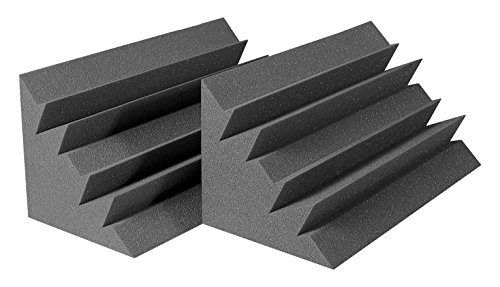
- Reduces room modes and low-end rumble
- Supports wall, ceiling, and corner placement
- Two-pack with precision surface profiling
Best For: Targeted treatment in home studios and listening rooms
High-Performance Framed Trap
Corner Bass Trap, NRC 1.40 Black
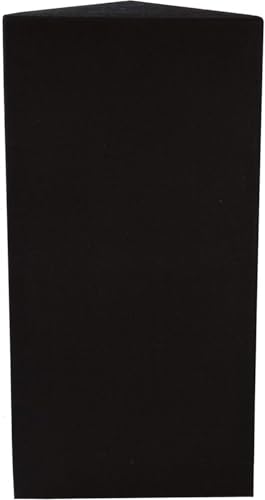
- NRC 1.40 absorption rating
- Solid wood frame with jute fabric
- Includes mounting hardware and template
Best For: Durable, substantial corner treatment in studios
Stackable Foam Coverage

- Deep open-cell foam targets corner buildup
- Stackable for scalable vertical coverage
- Includes 30 adhesive mounting tabs
Best For: Modular studio treatment with stackable corner coverage
Furniture-Style Gray Treatment
Corner Bass Trap, NRC 1.40 Gray

- NRC 1.40 low-frequency treatment
- Solid wood frame and textured gray fabric
- Handcrafted in the USA
Best For: Durable, decor-friendly treatment in studios and living spaces
Best Value Foam Bass Traps

- 30 kg/m³ foam targets low-frequency reflections
- Removable adhesive tape included
- Suitable for studios and home theaters
Best For: Budget-conscious room treatment with easy corner installation
Best Foam Coverage

- Eight 8 x 8 x 12-inch corner traps
- CA117 fire-retardant polyurethane foam
- Flexible floor-to-ceiling placement
Best For: Treating multiple corners in studios and media rooms
Best Finished Design

- Solid wood frame with fabric covering
- Fiberglass interior targets low frequencies
- Designed for smaller to medium rooms
Best For: Home studios and listening spaces needing a finished framed look
Easy Corner Coverage
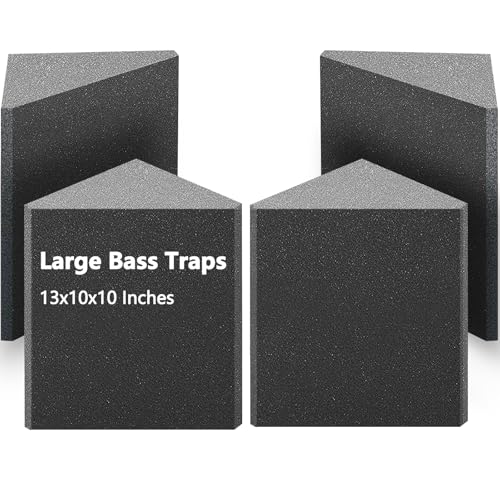
- Four-piece acoustic foam corner set
- Designed to reduce low-frequency buildup and echo
- Lightweight and easy to move
Best For: Basic, movable corner treatment in studios and home theaters
Dense Foam Value
TroyStudio 12-Piece Bass Traps

- 12 high-density polyurethane foam panels
- Designed for low-frequency and echo control
- Can be cut and mounted in corners
Best For: Multi-corner treatment in recording studios and podcast rooms
Freestanding Flexibility
TroyStudio Stackable Bass Traps

- Two stackable, freestanding absorbers
- No tools, brackets, or adhesive required
- Felt-and-foam design absorbs sound from all angles
Best For: Renters and studios needing movable, stylish corner treatment
Compact Corner Control – Auralax LENRD Bass Traps
These bass traps are a compact option for reducing room modes and smoothing low-frequency response. The charcoal, precision-profiled units can be used in wall, ceiling, and corner applications where low-end rumble needs taming.
Best For: Home studios and listening rooms needing flexible, targeted low-frequency treatment.
Pros:
- Designed to reduce room modes and smooth low-frequency response.
- Helps tame low-end rumble.
- Suitable for wall, ceiling, and corner applications.
- Sold as a two-pack with a precision surface profile.
Cons:
- The 12-by-12-by-24-inch format may provide less physical coverage than larger corner traps.
- The supplied notes do not specify mounting hardware.
Choose this pair when installation flexibility and a smaller footprint matter. Its two-piece format also makes it easier to begin with targeted treatment and expand later.
High-Performance Framed Trap – Corner Bass Trap, NRC 1.40 Black
ATS Acoustics Corner Bass Trap, Low Frequency Range, NRC 1.40, 24" x 48" x 13" (Black)
Check Price On AmazonThis low-frequency bass trap is built for corner placement and combines an NRC of 1.40 with a solid wood internal frame. Its design absorbs low frequencies while reflecting high-frequency sound, helping control unwanted reverb and echo without broadly deadening the room.
Best For: Studios and rooms where substantial, durable corner treatment is a priority.
Pros:
- NRC 1.40 provides strong stated sound absorption.
- Designed to absorb low frequencies while reflecting high frequencies.
- Solid wood internal frame helps protect edges and corners.
- Includes mounting hardware and a template for installation.
Cons:
- At 41 pounds, it is considerably heavier than foam-based options.
- Its 24-by-48-by-13-inch size requires substantial corner space.
- The black jute finish may not suit every room aesthetic.
This is a substantial choice for buyers who want a framed, furniture-conscious solution rather than lightweight foam. The included installation hardware and template add practical convenience.
Stackable Foam Coverage – Delta Bass Traps
These bass traps use deep open-cell polyurethane foam to target low-frequency buildup in vertical wall corners. Their flat top and bottom surfaces let you stack units into partial-height or floor-to-ceiling columns, while the included adhesive tabs simplify installation.
Best For: Modular studio treatment plans that need scalable vertical corner coverage.
Pros:
- Deep 16.5-by-15.8-by-12-inch foam body adds substantial corner depth.
- Stackable design supports partial-height or floor-to-ceiling treatment.
- Two-pack enables targeted treatment or combination with additional packs.
- Includes 30 double-sided adhesive mounting tabs.
Cons:
- Designed specifically for vertical wall corners, limiting placement flexibility.
- Polyurethane foam may offer a less furniture-like appearance than framed fabric traps.
- The supplied notes do not specify a color beyond the product designation.
Pick the Delta pair if you want to build treatment gradually and maintain a consistent vertical stack. It is especially practical for users planning a modular combination of corner traps and reflection panels.
Furniture-Style Gray Treatment – Corner Bass Trap, NRC 1.40 Gray
ATS Acoustics Corner Bass Trap, Low Frequency Range, NRC 1.40, 24" x 48" x 13" (Gray)
Check Price On AmazonThis gray corner bass trap offers low-frequency treatment with an NRC of 1.40 in a furniture-quality, fabric-covered design. Its solid wood internal frame is built to protect the edges and corners, making it a substantial option for studios, auditoriums, and living spaces.
Best For: Rooms that need robust corner treatment with a neutral gray finish.
Pros:
- NRC 1.40 provides a clearly stated absorption rating.
- Solid wood internal frame protects edges and corners.
- Textured fabric complements studios, auditoriums, and living spaces.
- Handcrafted in the USA with furniture-quality workmanship.
Cons:
- At 41 pounds, installation may require more planning than lightweight traps.
- The 24-by-48-by-13-inch size occupies substantial corner space.
- The supplied notes do not mention included mounting hardware.
The gray finish makes this a sensible pick when acoustic treatment must blend into a shared or furnished room. Its framed construction favors buyers who prioritize durability and a finished appearance.
Best Value Foam Bass Traps – High-Density 4-Pack
These bass traps are a practical choice for reducing low-frequency reflections, reverb, and bass echoes in a home studio, theater, or recording space. The four corner wedges use high-density, fireproof foam and include removable double-sided adhesive tape for installation.
Best For: Home studios, podcast rooms, rehearsal spaces, and home theaters needing corner-mounted foam treatment.
Pros:
- Updated 30 kg/m³ density is designed to help reduce unwanted low-frequency sound and reflections.
- Includes 30 pieces of washable, removable double-sided adhesive tape.
- Fireproof, non-toxic foam is suitable for studios, vocal booths, theaters, and recording spaces.
Cons:
- The four-pack provides less coverage than larger multi-pack options.
- Installation requires six pieces of tape per wedge.
- Specific total room coverage is not provided.
Choose this set if easy, wall-friendly installation matters and you want a compact way to target room corners. Its stated dimensions are 16.5 x 6.3 x 12 inches per trap, so check your available corner space before ordering.
Best Foam Coverage – SODOCT 8-Pack Corner Traps
With eight corner pieces, these SODOCT bass traps offer a straightforward way to treat more room corners than a smaller starter pack. The high-density polyurethane foam is designed to capture low-frequency standing waves and is supplied in a compressed package for shipping.
Best For: Recording studios, home theaters, podcast rooms, instrument rooms, and other spaces that need broader corner coverage.
Pros:
- Includes eight black corner traps measuring 8 x 8 x 12 inches each.
- High-density polyurethane foam meets the CA117 fire-retardant standard.
- Can be mounted floor-to-ceiling in corners or arranged in ceiling corners.
Cons:
- Double-sided tape or spray adhesive is not included.
- Foam needs 24–48 hours to expand in a ventilated area after unpacking.
- Polyurethane foam construction may offer a less finished look than framed acoustic panels.
This is a strong option when quantity and flexible placement are priorities. Plan for separate mounting supplies and allow the foam time to expand before installation.
Best Finished Design – Wooden 2-Pack Bass Traps
These wooden bass traps take a more furniture-friendly approach to acoustic treatment, combining a solid wood frame, fabric covering, and fiberglass interior. Their 24 x 12-inch format is intended to help address low-frequency issues, reverb, and flutter echoes in smaller to medium-sized rooms.
Best For: Home studios, listening rooms, theaters, offices, and living spaces where a framed fabric finish is preferred.
Pros:
- Solid wood frame and fabric surface provide a finished appearance.
- Fiberglass construction is described as flame retardant, odorless, non-toxic, and recyclable.
- Designed to reduce low-frequency waves, reverb, and flutter echoes.
Cons:
- Only two panels are included, so larger rooms may require additional treatment.
- The supplied product dimensions are listed as 1 x 1 x 1 inches, making installation planning difficult.
- The product is substantially heavier than the foam options at 20.5 pounds.
Consider this set if visual presentation and a framed construction matter as much as acoustic treatment. Verify the dimensions and mounting requirements before purchase, particularly because the supplied specifications are inconsistent with the stated 24 x 12-inch panel size.
Easy Corner Coverage – Large Delta Bass Traps
If you want a straightforward way to treat room corners, these bass traps use lightweight acoustic foam designed to absorb low-frequency sound and reduce unwanted echo and reverberation. The four-pack is easy to move and position in a home studio, theater, or everyday room.
Best For: Buyers seeking lightweight, movable corner treatment for basic bass buildup and echo control.
Pros:
- Designed for corner placement, where low-frequency buildup commonly occurs.
- Acoustic foam helps reduce echoes and reverberation.
- Lightweight 2-pound, four-piece set is easy to reposition.
- Suitable for studios, home theaters, and general rooms.
Cons:
- Foam construction may provide less substantial treatment than denser alternatives.
- Installation and mounting hardware are not specified in the supplied details.
This is a practical entry-level choice when simple placement and portability matter more than a large treatment system. Its 10 x 10 x 13-inch corner form makes it convenient for targeted room treatment.
Dense Foam Value – TroyStudio 12-Piece Bass Traps
For broader corner coverage, this TroyStudio set supplies 12 dense polyurethane foam bass traps measuring 4 x 4 x 12 inches each. The thicker, high-density construction is intended to help attenuate low-pitched sounds while reducing muffled bass, echo, and overlapping sounds.
Best For: Home studios, recording rooms, podcast spaces, and other setups needing multiple lightweight corner panels.
Pros:
- Includes 12 pieces for flexible coverage across multiple corners.
- Thick, high-density polyurethane foam is designed for enhanced bass absorption.
- Flame retardant, odorless, and non-toxic according to the supplied notes.
- Panels can be cut and mounted between walls, floors, and ceilings.
Cons:
- Adhesive, tape, screws, and pins are sold separately.
- The foam is not waterproof.
- Individual panels are relatively small, so installation may require multiple pieces per corner.
This is the most adaptable foam option of the group, especially if you want to treat several corners or customize pieces for a particular room. Plan for a separate mounting solution before installation.
Freestanding Flexibility – TroyStudio Stackable Bass Traps
These freestanding bass traps offer a renter-friendly alternative to adhesive-mounted foam. Each of the two stackable units combines a dense felt shell with an open-cell foam core, providing 360-degree sound absorption and flexible placement in corners of studios, theaters, and listening rooms.
Best For: Renters and creators who want movable, tool-free corner treatment with a more furniture-like appearance.
Pros:
- Freestanding design requires no brackets, adhesive, or tools.
- Stackable units can extend corner coverage toward the floor or ceiling.
- Hybrid felt-and-foam construction is designed to absorb bass and diffuse higher frequencies.
- Charcoal geometric design can also function as a plant stand or display pedestal.
Cons:
- The set includes only two units.
- Each unit weighs about 2 pounds, so placement should account for stability.
- Vacuum-compressed foam needs shaping and up to 48 hours to fully restore.
This is the standout choice for flexible, non-permanent treatment. Its larger cylindrical form and stackable design provide a visually polished way to manage corner resonance without modifying the walls.
How We Picked These Bass Traps
We focused on products designed specifically for corner placement, where low-frequency energy commonly collects. The selection includes thick foam wedges, larger absorbers, dense corner blocks, freestanding designs, and wooden traps. We compared listed dimensions, pack sizes, construction, mounting or placement flexibility, and stated acoustic specifications such as NRC ratings.
Because room acoustics vary widely, we did not treat a higher product count or larger dimensions as an automatic guarantee of better performance. Coverage, thickness, positioning, and the room’s existing surfaces all affect results.
Quick Comparison
| Best For | What to Look For |
|---|---|
| Small studio or office | Compact foam corners that fit behind furniture or equipment |
| Dedicated recording room | Thicker, larger traps with broad corner coverage |
| Home theater | Low-frequency absorption that blends with the room and can cover multiple corners |
| Renter-friendly setup | Freestanding or lightweight options requiring minimal permanent mounting |
| Large or highly reflective room | Multiple packs placed symmetrically in vertical corners |
Key Buying Factors for Bass Traps
Size and Thickness
Thicker and deeper products generally provide more material for absorbing low-frequency energy, especially when installed across a corner. Measure the available corner depth and ceiling height before choosing large models.
Material and Density
Acoustic foam is lightweight and easy to handle, while denser foam, fabric-wrapped panels, and wooden designs may offer different performance, appearance, and durability characteristics. Check the product specifications rather than relying on appearance alone.
Coverage and Quantity
A pair may be enough for a small room, but larger spaces often benefit from treating all vertical corners. Calculate how many corners you can cover and compare the total treated area—not just the number of pieces.
Installation
Confirm whether the traps are designed for adhesive mounting, corner stacking, or freestanding placement. Use an appropriate acoustic-safe mounting method, and avoid blocking vents, doors, outlets, or equipment access.
Performance Claims
An NRC rating can help compare absorption across tested frequencies, but it does not fully describe deep-bass performance or real-world results. Look for dimensions, frequency information, and test details where available.
Who Should Buy Which Bass Traps?
Choose compact foam corner traps if you need an affordable starting point for a bedroom studio, office, or gaming room. They are easy to distribute but may provide less deep-bass control than larger absorbers.
Choose larger or thicker corner traps for dedicated studios, mixing rooms, and home theaters where low-frequency accuracy matters most. Their added size can improve coverage, but installation and room planning become more important.
Choose freestanding or stackable designs if you rent, rearrange your room frequently, or do not want permanent mounting. These are also useful for testing placement before committing to a fixed installation.
Choose multi-pack options when you want consistent treatment across several corners. Balanced placement usually produces a more predictable result than concentrating every trap in one area.