Extension tubes offer an affordable way to turn compatible DSLR lenses into closer-focusing macro tools. By moving the lens farther from the sensor, they increase magnification without adding glass to the optical path.
Our 2026 roundup covers automatic and electronic tube sets for Canon, Nikon, and Sony systems, including single-tube and multi-length options. Use the guide below to match mount compatibility, camera communication, and working distance to your shooting style.
Best 10 Camera Extension Tubes for Dslr Cameras Picks for 2026
Best All-Around Set
Kenko DG 3-Piece Extension Tubes

- 12mm, 20mm, and 36mm lengths
- Optics-free extension design
- Supports AF and TTL exposure with most compatible lenses
Best For: Flexible DSLR close-up work with multiple extension lengths
Best Compact Sony Option

- Compact, lightweight design
- Three combinations from two tube lengths
- Supports autofocus for listed Sony cameras
Best For: Portable close-up photography with Sony NEX and Alpha cameras
Best Manual EF Set
Fotodiox Canon Macro Extension Tubes

- Fits Canon EF and EF-S cameras
- All-metal construction
- Supports multiple macro combinations
Best For: Manual-focus extreme macro photography with Canon EOS bodies
Best Sony E/FE Flexibility

- Works with Sony E-mount APS-C and full-frame bodies
- 10mm, 16mm, or combined configurations
- Supports autofocus and listed shooting modes
Best For: Flexible Sony E/FE close-up photography
Canon Close-Up Starter
Movo/Kooka AF 25mm Extension Tube

- 25mm extension for closer focusing
- Autofocus and metering passthrough
- Fits Canon EF and EF-S systems
Best For: Canon EOS users wanting a simple single-tube macro setup
Nikon Macro Flexibility
Extnp Auto Focus Extension Tube Set

- 12mm, 20mm, and 36mm tubes
- Use tubes individually or in combinations
- Designed for Nikon AF and AF-S DX/FX SLRs
Best For: Nikon SLR users seeking adjustable macro extension
Canon Modular Macro Kit
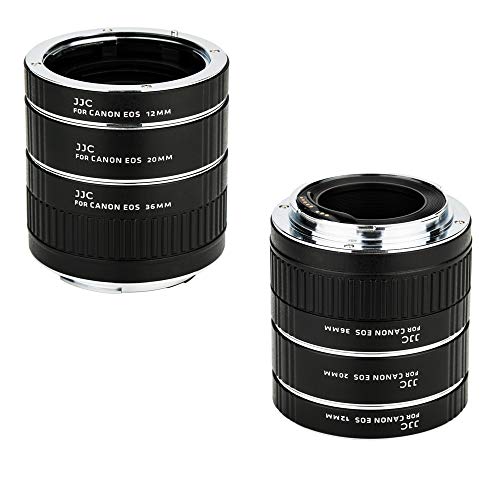
- 12mm, 20mm, and 36mm lengths
- Supports autofocus and auto exposure
- Brass mounts with ABS plastic tubes
Best For: Canon EOS users wanting flexible extension lengths
Best Nikon Macro Kit
Meike N-AF1-A Extension Tube Set

- 12mm, 20mm, and 36mm tubes
- Seven usable combinations
- Supports Nikon AF-compatible lenses
Best For: Nikon DSLR macro photographers seeking flexible extension lengths
Best Canon Electronic Option

- Works with Canon EF and EF-S lenses
- Includes 12mm, 20mm, and 36mm tubes
- Retains autofocus and auto exposure
Best For: Canon DSLR users wanting flexible electronic macro extension
Best Durable Canon Set
Viltrox Metal Mount AF Extension Rings

- Metal mounts with ABS body
- Seven combinations from three rings
- Supports AF and TTL/AE metering
Best For: Canon DSLR users seeking flexible, durable macro extension
Best All-Around Set – Kenko DG 3-Piece Extension Tubes
Kenko Auto Extension Tube Set DG 12mm, 20mm, and 36mm Tubes for Canon EOS AF Mount
Check Price On AmazonFor photographers comparing camera extension tubes for DSLR cameras, the Kenko DG set offers three lengths—12mm, 20mm, and 36mm—for flexible close-focusing experiments. The tubes have no optics and are designed to preserve autofocus and TTL auto exposure with most compatible lenses.
Best For: DSLR users who want multiple extension lengths and electronic lens communication.
Pros:
- Includes 12mm, 20mm, and 36mm tubes.
- No optical elements to alter the lens design.
- Designed to maintain autofocus and TTL auto exposure with most compatible lenses.
Cons:
- Compatibility claims span multiple systems, so mount matching should be verified before purchase.
- Extension tubes reduce the lens’s normal focusing distance and are not standalone lenses.
This is the most versatile option of the group when you want several magnification choices in one set, particularly if maintaining electronic camera-lens functions is important.
Best Compact Sony Option – Meike 10mm and 16mm AF Tubes
The Meike MK-S-AF3B is a compact choice among camera extension tubes for DSLR cameras and compatible Sony NEX and Alpha bodies. Its 10mm and 16mm tubes can be combined in three configurations for different magnification levels, while the design supports autofocus.
Best For: Sony NEX and Alpha users photographing small objects, insects, and flowers while traveling light.
Pros:
- Small and easy to carry.
- Includes 10mm and 16mm tubes with three combinations.
- Supports autofocus and uses a metal bayonet with an engineering-plastic body.
Cons:
- Compatibility is limited to the Sony camera models and mount listed by the manufacturer.
- The product information contains inconsistent references to Nikon compatibility, so Sony mount verification is especially important.
Its compact format and multiple combinations make it a practical travel-oriented set, provided your camera and lens use the supported Sony mount.
Best Manual EF Set – Fotodiox Canon Macro Extension Tubes
For Canon EOS owners seeking camera extension tubes for DSLR cameras, this Fotodiox macro set is built for EF and EF-S mounts and extreme macro photography. Its all-metal construction provides a straightforward manual-focus setup without adding optical elements that alter image quality.
Best For: Canon EF and EF-S users comfortable with manual focus and manual exposure control.
Pros:
- Compatible with Canon EOS EF and EF-S cameras.
- All-metal construction.
- Multiple combinations are available for different macro effects.
Cons:
- Uses manual focus.
- Exposure control is manual.
- Does not provide the electronic autofocus emphasis of the Kenko or Meike sets.
This set suits deliberate macro work where durability and control matter more than automatic focusing or exposure assistance.
Best Sony E/FE Flexibility – Meike S-AF3A Macro Tubes
The Meike S-AF3A gives Sony E and FE shooters two extension lengths—10mm and 16mm—for close-ups of flowers, insects, and other small subjects. The tubes work individually or together, support autofocus, and are compatible with listed APS-C and full-frame E-mount cameras.
Best For: Sony E-mount photographers who want flexible tube combinations for compact macro subjects.
Pros:
- Compatible with Sony E-mount APS-C and full-frame cameras.
- 10mm, 16mm, and 10+16mm configurations provide three magnification options.
- Supports autofocus and all shooting modes according to the supplied specifications.
Cons:
- Manual mode and exposure compensation are recommended for controlling exposure.
- Uses a plastic body, although the bayonet is metal.
- Does not include image stabilization.
Compared with the smaller Meike option, this set is explicitly positioned for both APS-C and full-frame Sony E/FE cameras, making it a flexible choice for current Sony mirrorless systems.
Canon Close-Up Starter – Movo/Kooka AF 25mm Extension Tube
For Canon owners looking for camera extension tubes for DSLR cameras, this 25mm Movo/Kooka tube offers a straightforward way to shorten a lens’s focusing distance for macro-style photography. Its electronic passthrough supports autofocus and automatic metering with compatible Canon EOS equipment.
Best For: Canon EOS DSLR users who want a single 25mm tube for closer-focusing shots without buying a dedicated macro lens.
Pros:
- 25mm extension enables closer focusing and macro capability.
- Maintains autofocus and automatic exposure passthrough.
- Compatible with Canon EF and EF-S lenses and Canon EOS cameras.
- Includes a one-year warranty.
Cons:
- Uses an economy plastic mount.
- A single 25mm length offers less framing flexibility than a multi-tube set.
- Autofocus performance can vary with the lens and close focusing distance.
This is a practical, budget-conscious choice when you specifically want 25mm of extension and electronic functionality for a Canon setup. Confirm your camera and lens use compatible Canon EF or EF-S mounts before buying.
Nikon Macro Flexibility – Extnp Auto Focus Extension Tube Set
This Extnp set gives Nikon photographers three camera extension tubes for DSLR cameras—12mm, 20mm, and 36mm—for adjusting working distance and magnification. The tubes can be used individually or combined with compatible Nikon AF and AF-S DX or FX SLR equipment.
Best For: Nikon AF and AF-S DX/FX SLR users who want multiple extension lengths for experimenting with macro photography.
Pros:
- Includes 12mm, 20mm, and 36mm tubes.
- Tubes can be used alone or in combinations.
- Supports autofocus with an appropriate 1–3cm focusing distance.
- Compatible with a broad range of listed Nikon SLR cameras.
Cons:
- Autofocusing can be difficult when all three tubes are combined.
- The supplied guidance recommends manual focus or a longer lens focal length to reduce blur.
- Close focusing distances require careful positioning.
The main appeal is flexibility: you can start with a shorter tube and increase extension as needed. For the most consistent results, be prepared to use manual focus when stacking all three tubes.
Canon Modular Macro Kit – JJC EF/EF-S Auto Focus Tubes
The JJC EF/EF-S set is a versatile option for camera extension tubes for DSLR cameras, providing 12mm, 20mm, and 36mm lengths for Canon EOS bodies and EF or EF-S lenses. Use the tubes individually or combine them to alter magnification and minimum focusing distance.
Best For: Canon EOS photographers who want interchangeable extension lengths and electronic autofocus and exposure compatibility.
Pros:
- Includes 12mm, 20mm, and 36mm extension tubes.
- Supports full autofocus and automatic exposure compatibility.
- Brass camera and lens mounts are paired with ABS plastic tubes.
- Fits Canon EOS DSLR cameras and EF/EF-S lenses.
Cons:
- The manufacturer recommends manual focus or a tripod with a focusing rail for best results.
- Not water resistant.
- Stacking tubes can make close-up focusing more demanding.
This kit is a strong fit when you want more control than a single fixed extension tube provides. Its three lengths make it easier to tailor the setup, while the electronic compatibility preserves automatic functions on supported Canon equipment.
Best Nikon Macro Kit – Meike N-AF1-A Extension Tube Set
For Nikon DSLR owners comparing camera extension tubes for DSLR cameras, the Meike N-AF1-A provides three lengths—12mm, 20mm, and 36mm—for flexible close-up photography. The tubes support Nikon AF, AF-S, D, G, and VR lenses and can be used individually or combined.
Best For: Nikon DSLR photographers who want multiple macro magnification options while retaining electronic autofocus and exposure functions in suitable combinations.
Pros:
- Compatible with numerous Nikon DSLR bodies and Nikkor lens series.
- Three extension lengths offer seven combinations and magnification options.
- Supports autofocus when used individually or in smaller combinations.
- Metal bayonets and electronic communication support practical macro shooting.
Cons:
- Autofocus can become difficult when all three tubes are stacked.
- Manual focus or a longer focal length is recommended with the full combination.
- It does not provide water resistance.
This is a versatile Nikon-focused choice for experimenting with close focusing without buying a dedicated macro lens. Its strongest advantage is the range of configurations, though users should expect more careful focusing at maximum extension.
Best Canon Electronic Option – VILTROX DG-C AF Macro Tubes
The VILTROX DG-C is a practical option for Canon users shopping for camera extension tubes for DSLR cameras. Its 12mm, 20mm, and 36mm tubes work with Canon EF and EF-S lenses, while electronic contacts preserve autofocus and automatic exposure functions.
Best For: Canon DSLR photographers who want adjustable close-up magnification and continued electronic communication between the camera and lens.
Pros:
- Designed for Canon EF and EF-S lenses and a broad range of Canon DSLRs.
- Three lengths can be used individually or in combination.
- Maintains autofocus and automatic exposure functionality.
- Precision-engineered metal mounts and electronic contacts support reliable connections.
Cons:
- No image stabilization is built into the extension tube set.
- It is not water resistant.
- Compatibility is limited to Canon EF and EF-S mounting systems.
For Canon DSLR owners, this set balances flexibility and convenience by retaining key camera-lens electronics. It is especially appealing when you want to vary magnification without committing to one fixed extension length.
Best Durable Canon Set – Viltrox Metal Mount AF Extension Rings
For Canon photographers evaluating camera extension tubes for DSLR cameras, this Viltrox set combines 12mm, 20mm, and 36mm rings with metal mounts and autofocus support. The tubes are compatible with Canon EF and EF-S lenses and can be used in seven individual or stacked combinations.
Best For: Canon DSLR and film SLR users who prioritize flexible macro magnification, TTL/AE metering support, and a metal-mount construction.
Pros:
- Compatible with Canon EF and EF-S lenses and many Canon camera bodies.
- Three tubes provide seven extension combinations.
- Supports autofocus and TTL/AE metering.
- Metal mount and ABS body offer a practical, lightweight construction.
Cons:
- Autofocus may be difficult when all three rings are stacked.
- Manual focus is suggested for the maximum 66mm combination.
- No image stabilization or water resistance is provided.
This set is a strong fit for Canon users who want a reusable macro accessory with several magnification levels. Its metal mount adds confidence for regular lens changes, while full stacking may require a slower, manual-focus approach.
How We Picked the Best Camera Extension Tubes for Dslr Cameras
We focused on extension tubes that match common Canon EF/EF-S, Nikon F, and Sony E/FE systems represented in this roundup. Selection criteria included mount compatibility, available extension lengths, electronic contacts for autofocus and metering, construction, and suitability for close-up photography. Sets with multiple tubes earned consideration for flexibility, while single-tube options may suit photographers who want a simpler, lighter setup.
Always verify the exact camera and lens mount before ordering. Extension tubes are mount-specific, and a physically compatible connection does not guarantee autofocus, aperture control, or metering.
Quick Comparison
- Most flexible: Multi-tube sets with 12mm, 20mm, and 36mm sections provide several magnification combinations.
- Best for convenience: Auto-focus or electronic tubes preserve communication between a compatible camera and lens.
- Best for a simple setup: A single 25mm tube is straightforward when you already know the extension you need.
- Best for system matching: Choose a Canon, Nikon, or Sony-specific set rather than relying on adapters.
Key Buying Factors for Camera Extension Tubes for Dslr Cameras
Mount and Camera Compatibility
Check both sides of the connection: the camera mount and the lens mount. Canon EF and EF-S, Nikon F/AF/AF-S, and Sony E/FE versions are not interchangeable. Also confirm compatibility with full-frame or APS-C equipment, particularly when using EF-S or DX lenses.
Electronic Contacts
Automatic tubes with electrical contacts can retain autofocus, lens-driven aperture control, and exposure communication. Performance varies by camera, lens, and tube quality, so manual focusing may still be preferable for precise macro work. Basic mechanical tubes are less expensive but generally require manual aperture and exposure handling.
Extension Length and Magnification
More extension usually produces greater magnification, but it also reduces the minimum focusing distance and working distance. A multi-length kit lets you experiment; stacking tubes can increase extension but may make the setup less stable and harder to focus.
Build Quality and Handling
Look for secure bayonet locks, accurately machined mounts, durable tube bodies, and clean electronic contacts. A loose fit can cause communication errors or place stress on the camera and lens. A tripod collar, focusing rail, or stable support can be useful at high magnification.
Who Should Buy Which Camera Extension Tubes for Dslr Cameras?
Choose a multi-length Canon set if you use an EF or EF-S DSLR system and want varied magnification for flowers, products, or small subjects. Choose a Nikon-compatible electronic set if your DSLR relies on F-mount lenses and retaining camera-lens communication matters. Choose a Sony E/FE set if you use a compatible Sony mirrorless body despite the roundup’s DSLR-focused purpose. Choose a single tube if you want an inexpensive, predictable close-up solution and do not need multiple magnification levels.
For the best results, use a lens in the normal-to-short-telephoto range, manual focus or focus peaking when available, and a tripod or fast shutter speed. Extension tubes are ideal for experimentation and occasional macro work, but dedicated macro lenses remain the better choice for maximum working distance, edge performance, and everyday convenience.