Choosing the right external finder can make manual focusing and composition faster, clearer, and more deliberate—especially when your camera lacks a built-in viewfinder or you prefer a classic shooting experience.
We selected 10 compact optical and electronic models with different focal-length framelines, mounting styles, and viewing angles so you can match the finder to your camera and shooting habits.
Best 10 Camera Viewfinders for Manual Focusing Picks for 2026
Bright Frameline Pick

- Bright 28/35/50mm framelines
- Glass optics and aluminum body
- Adjustable cold-shoe mounting
Best For: Lightweight multi-focal-length optical framing
Electronic Information Pick
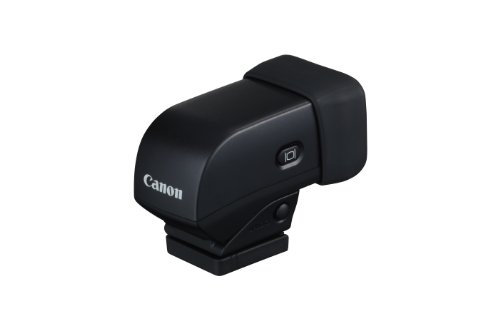
- 2.36MP XGA LCD display
- Shows shooting information
- 90° upward tilt and diopter adjustment
Best For: Canon shooters wanting an adjustable electronic finder
Simple Optical Framing Pick

- 28/35/50mm optical framelines
- No battery or metering function
- Attaches to hot or cold shoe
Best For: Basic battery-free composition on film cameras
Waist-Level Experience Pick

- Mirrored waist-level optical view
- 28mm view with 35/50mm frames
- Hood and adjustable cold-shoe mount
Best For: Deliberate street and travel composition
Compact 35mm Framing Tool

- Precise 35mm framelines
- Multi-coated four-element optics
- 25g universal cold-shoe design
Best For: Compact rangefinder-style 35mm composition
Wide Compatibility Pick
SmallRig 35mm External Viewfinder

- 35mm-equivalent 3:2 framelines
- Up to 93% light transmission
- Broad multi-brand compatibility
Best For: Compatible-camera users wanting bright external framing
Low-Angle Framing Choice
ULANZI VF01 Waist-Level Viewfinder

- Waist-level low-angle composition
- Switchable 35mm/50mm framelines
- Magnetic hood blocks stray light
Best For: Candid and creative low-angle photography
Compact 35mm Framing Aid
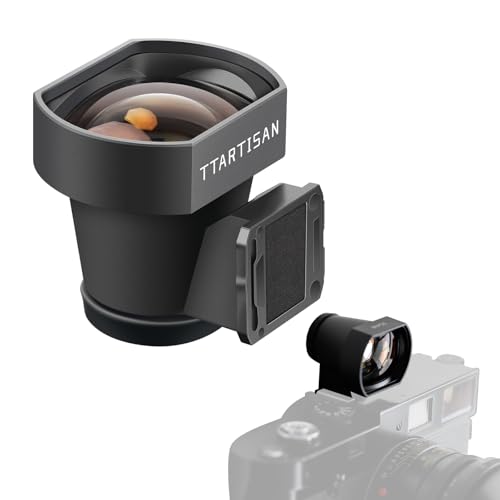
- Bright frame lines for 35mm-equivalent lenses
- Standard hot-shoe mounting
- Lightweight 1.76-ounce metal design
Best For: Manual-focus photographers who prefer optical 35mm framing
Bright 28mm Composition Finder

- 28mm view with 4:3 frame lines
- Up to 98% light transmittance
- Aluminum body with universal cold shoe
Best For: 28mm street, landscape, portrait, and daily shooting
Multi-Focal-Length Optical Finder

- Framelines for 28mm, 35mm, and 50mm
- Universal cold-shoe attachment
- Standalone optical design with no metering
Best For: Film and digital shooters using several common focal lengths
Bright Frameline Pick – LightMate OV-X2
The LightMate OV-X2 is a compact optical choice for photographers seeking camera viewfinders for manual focusing and fast composition. Its bright 28mm, 35mm, and 50mm full-frame framing lines, glass optics, and adjustable cold-shoe positions make it a versatile accessory for compatible rangefinder and mirrorless cameras.
Best For: Photographers who want bright multi-focal-length framing lines in a lightweight, vintage-style optical viewfinder.
Pros:
- Built-in 28mm, 35mm, and 50mm framing lines are thick and bright.
- Six high-transmittance optical glass lenses provide a clear view without resin yellowing.
- Aluminum construction weighs only 21g and includes adjustable cold-shoe positions.
- VfPort compatibility allows use with the LightMate Area 2S light meter.
Cons:
- It uses an approximately 0.5x optical view rather than an electronic display.
- Compatibility may vary with special mounts, including the noted Canon R50V.
The OV-X2 stands out for combining bright framelines, durable metal construction, and very low weight. It is particularly appealing when you want a classic external finder with several focal-length references and optional LightMate metering compatibility.
Electronic Information Pick – Canon EVF-DC1
The Canon EVF-DC1 takes a different approach to camera viewfinders for manual focusing by providing an electronic XGA display rather than fixed optical frame lines. Its 2.36MP LCD shows shooting information, offers dioptric adjustment, and tilts upward for a more flexible viewing position.
Best For: Canon users who prefer an electronic accessory viewfinder with visible shooting information and adjustable viewing comfort.
Pros:
- 2.36MP XGA LCD displays shooting information.
- High-eyepoint design and -3.0 to +1.0 dioptric adjustment support viewing comfort.
- Tilts upward through 90 degrees for flexible shooting angles.
- Mounts on the camera’s accessory shoe and allows brightness adjustment through the camera monitor.
Cons:
- It is an electronic viewfinder, so it may not suit photographers seeking a purely optical experience.
- The supplied details specify a required 9V battery.
The EVF-DC1 is best suited to a compatible Canon setup where on-screen shooting information matters as much as framing. Its adjustable diopter and upward tilt add practical flexibility, while the electronic display distinguishes it from simple optical finders.
Simple Optical Framing Pick – Mini 17° Viewfinder
This 17° Mini Viewfinder is a straightforward option among camera viewfinders for manual focusing, using optical framing lines rather than electronics or metering. It displays 28mm, 35mm, and 50mm lines simultaneously and attaches directly to a camera’s hot or cold shoe.
Best For: Film and photography users who want a simple, battery-free accessory for checking composition across three focal lengths.
Pros:
- Bright 28mm, 35mm, and 50mm framelines support quick composition.
- Purely optical operation requires no battery or camera communication.
- Cold-shoe mounting makes attachment straightforward.
- All frame lines appear simultaneously for broad composition reference.
Cons:
- It has no metering function and does not display metering results.
- Framelines may be difficult to see in low light or high-contrast scenes.
- Individual framelines cannot be isolated.
The Mini Viewfinder keeps the experience simple and tactile, but its limitations are important to understand. It is a composition aid rather than a metering or camera-linked focusing device, making it most useful for photographers comfortable judging exposure separately.
Waist-Level Experience Pick – CHI Sight 28mm
The CHI Sight 28mm is a distinctive choice among camera viewfinders for manual focusing, offering a horizontally mirrored waist-level view instead of a conventional eye-level display. Its 28mm viewing angle includes 35mm and 50mm internal frame lines, while the hood and Fresnel lens are designed to keep the image easy to view outdoors.
Best For: Street, travel, and film photographers who want a battery-free waist-level composing experience with multiple framing references.
Pros:
- Horizontally mirrored image creates an authentic waist-level shooting experience.
- 28mm view includes 35mm and 50mm frame-line configurations.
- Detachable hood helps reduce flare and improve visibility in direct sunlight.
- Adjustable cold-shoe mount and machined aluminum construction support broad use.
Cons:
- The mirrored image may require an adjustment period for photographers used to conventional finders.
- It is a purely optical display with no battery, screen delay, or electronic metering.
- The viewing experience is specialized rather than a standard eye-level finder.
The CHI Sight is the most experience-focused option in this group. Its mirrored waist-level presentation, optical clarity, hood, and multi-focal-length frame lines make it attractive for deliberate composition, especially outdoors and during street or travel photography.
Compact 35mm Framing Tool – TTArtisan 35mm Viewfinder
For photographers comparing camera viewfinders for manual focusing, the TTArtisan 35mm Viewfinder offers a straightforward external optical framing aid. Its 35mm framelines, multi-coated four-element optics, and universal cold-shoe mount are aimed at clear, classic rangefinder-style composition.
Best For: Street, documentary, and everyday photographers using a 35mm perspective who want a compact external finder.
Pros:
- Precise 35mm framelines provide a perspective close to human vision.
- Four-element, multi-coated optics support high light transmission and a clear view.
- Lightweight 25g aluminum body includes a soft rubber eyecup.
- Universal cold-shoe design fits most cameras with a standard shoe.
Cons:
- It provides fixed 35mm framing rather than switchable framelines.
- It is an external framing viewfinder, not a through-the-lens focusing system.
The TTArtisan is a focused choice for photographers who value a simple 35mm composition reference, low weight, and retro styling. Choose it when compactness matters more than adjustable framing options.
Wide Compatibility Pick – SmallRig 35mm External Viewfinder
Among camera viewfinders for manual focusing, the SmallRig 6172 stands out for its broad camera compatibility and defined 3:2 framing. Its five-group optical system, 93% light transmission, and protective cold-shoe pad make it a practical option for photographers seeking an external optical composition aid.
Best For: Owners of compatible Fujifilm, Nikon, Canon, Sony, Ricoh, or Leica cameras who want a 35mm-equivalent optical framing tool.
Pros:
- Built-in 3:2 frame lines help define the composition area.
- Five groups of optical glass offer up to 93% light transmission.
- Broad listed compatibility covers numerous popular camera bodies.
- Silicone base padding helps protect the camera’s hot-shoe contacts.
Cons:
- The fixed diopter is nominally -0.52D, so adjustment is not available.
- Optimal clarity requires a centered eye position close to the eyepiece.
- For APS-C cameras, a 23mm lens is recommended for a matching framing experience.
The SmallRig 6172 is a strong fit when compatibility and clearly marked 3:2 framing are priorities. Its fixed optical design is less flexible for users who need diopter adjustment, but its bright view and wide camera support add practical value.
Low-Angle Framing Choice – ULANZI VF01 Waist-Level Viewfinder
For camera viewfinders for manual focusing that also support unusual shooting angles, the ULANZI VF01 uses a waist-level design for low-angle composition. Its 28mm full-frame view, switchable 35mm and 50mm framelines, and magnetic flip hood make it a versatile retro-style accessory.
Best For: Street and candid photographers who want waist-level, low-angle framing with more than one composition reference.
Pros:
- Waist-level design makes low-angle framing easier without relying on the screen.
- Switchable bright 35mm and 50mm framelines provide composition flexibility.
- Three-element, three-group high-transmission optics aim to reduce distortion and artifacts.
- Magnetic flip-open hood helps block stray light.
Cons:
- Its 28mm full-frame view is wider than the switchable 35mm and 50mm frame references.
- The waist-level format may be less familiar than a conventional eye-level finder.
- Compatibility depends on having a suitable universal cold shoe.
The VF01 is the most flexible option here for low-angle and candid work, especially when switching between 35mm and 50mm framing is useful. Its waist-level format and light-blocking hood emphasize discreet, creative composition rather than conventional eye-level viewing.
Compact 35mm Framing Aid – TTARTISAN External Viewfinder
For photographers comparing camera viewfinders for manual focusing, the TTARTISAN 35mm Viewfinder offers a straightforward way to frame shots without relying on the camera’s LCD. Its bright 35mm-equivalent frame lines are designed for accurate composition with manual-focus lenses.
Best For: Mirrorless and rangefinder users who shoot with 35mm-equivalent lenses and want a lightweight external framing aid.
Pros:
- Bright, clear 35mm frame lines support precise composition.
- Standard hot-shoe mounting works with most mirrorless and rangefinder cameras.
- Lightweight metal construction weighs just 1.76 ounces.
- Helps reduce reliance on the camera’s LCD screen.
Cons:
- Designed primarily for 35mm-equivalent lenses rather than multiple focal lengths.
- It is an optical framing accessory, not a camera focusing or metering system.
This is a compact, durable choice when your priority is clear 35mm framing for manual-focus photography. Its simple cold-shoe-style installation and low weight make it practical for regular carry.
Bright 28mm Composition Finder – External Mini Viewfinder
Among camera viewfinders for manual focusing, this 28mm external finder is focused on composition rather than camera control. Its 4:3 frame lines and five-lens optical glass help provide a bright viewing window for framing digital or film shots.
Best For: Street, landscape, portrait, and everyday photographers using 28mm lenses who want a dedicated external composition window.
Pros:
- Dedicated 28mm framing with standard 4:3 frame lines.
- Five-lens optical glass offers up to 98% light transmittance.
- Aviation aluminum body provides a compact, solid build.
- Universal cold-shoe mounting includes a silicone pad to help reduce scratches.
Cons:
- Framing only; it does not focus, meter, control exposure, or capture images.
- Its dedicated 28mm framing may be less suitable for other focal lengths.
The main appeal is a bright, purpose-built 28mm viewing experience in a small metal body. Choose it when composition is the goal and you do not need the accessory to communicate with the camera.
Multi-Focal-Length Optical Finder – TsoLay 17° Viewfinder
For photographers seeking camera viewfinders for manual focusing, the TsoLay 17° Optical Viewfinder provides optical framelines for three common focal lengths. It is intended for precise composition and vintage film-era shooting, while operating independently of the camera’s focusing and metering systems.
Best For: Film and digital photographers who use 28mm, 35mm, or 50mm lenses and want one external finder for multiple framing options.
Pros:
- Includes framelines for 28mm, 35mm, and 50mm lenses.
- 17° optical view supports precise external framing.
- Attaches directly through a universal cold-shoe mount.
- Works as a standalone accessory without communicating with the camera.
Cons:
- Provides no metering function or camera communication.
- All framelines appear simultaneously, with no option to isolate one.
- Framelines may be difficult to see in low light or high-contrast scenes.
The broader focal-length coverage makes this a flexible choice for photographers who alternate between 28mm, 35mm, and 50mm lenses. However, its standalone design and potentially less visible framelines in challenging light should factor into your decision.
How We Picked the Best Camera Viewfinders for Manual Focusing
We compared these 10 viewfinders by focusing usefulness, framing accuracy, optical clarity, compatibility, and everyday handling. Particular attention went to clearly marked framelines, support for common focal lengths such as 28mm, 35mm, and 50mm, and secure cold-shoe or accessory-mount attachment.
We also considered design differences that affect real-world shooting: eye-level versus waist-level viewing, adjustable or switchable framelines, viewing angle, lens construction, hoods, and whether the finder is optical or electronic. Because camera accessories vary widely in fit, verify your camera’s shoe dimensions and required focal-length coverage before ordering.
Quick Comparison
| Finder type | Best for | Important advantage |
|---|---|---|
| Optical, multi-frameline | Rangefinder-style composition | Bright, battery-free viewing |
| Optical, single focal length | Dedicated lens setups | Simple and quick framing |
| Waist-level optical | Low-angle or discreet shooting | Flexible viewing position |
| Electronic | Compatible Canon systems | Display-based composition and camera integration |
Key Buying Factors for Camera Viewfinders for Manual Focusing
Frameline Coverage
Choose a finder whose marked frames match the lens or lenses you use most. A 28/35/50mm finder is versatile, while a dedicated 35mm model may offer a cleaner, less complicated view.
Optical Clarity and Brightness
Bright, high-contrast optics make framelines easier to see in changing light. Multi-element glass can improve clarity, but overall viewing comfort and glare control matter just as much.
Mount and Alignment
Most compact external finders use a cold shoe, but not every shoe has identical clearance or alignment. Look for a secure mount and check whether the accessory can sit level on your camera. Finder accuracy depends on proper alignment, particularly for close subjects.
Viewing Angle and Form Factor
A conventional eye-level finder suits fast composition. A 17-degree or waist-level design can be useful for discreet, low-angle, tabletop, or street photography. Consider whether a folding hood or magnetic cover protects the optics in a camera bag.
Electronic Compatibility
An electronic viewfinder can provide a more direct camera display, but it may require a specific camera connection and battery power. Confirm compatibility rather than assuming a standard accessory shoe is sufficient.
Who Should Buy Which Camera Viewfinders for Manual Focusing?
- For versatile rangefinder-style shooting: Choose a bright optical model with 28mm, 35mm, and 50mm framelines.
- For a dedicated 35mm lens: A compact TTArtisan or SmallRig-style 35mm finder keeps framing straightforward.
- For low-angle and discreet compositions: Select a waist-level finder with a clear hood and switchable framelines.
- For a vintage-inspired setup: Look for a metal-bodied external optical finder with classic framelines and a cold-shoe mount.
- For supported Canon cameras: The Canon electronic finder is the practical choice when camera integration matters more than a battery-free optical view.
Before buying, match the finder to your lens focal length, confirm the mounting interface, and check the camera’s crop factor if you need framing to correspond closely with the marked lines.