The best camera viewfinders make composition easier when bright sunlight, awkward shooting angles, or a camera’s screen gets in the way. This roundup covers electronic, optical, LCD-magnifying, and waist-level options for different systems and shooting styles.
Before choosing, confirm your camera or lens compatibility, preferred focal-length framing, mounting method, and whether you need magnification or a true external finder.
Best 10 Camera Viewfinders Picks for 2026
Best Electronic Upgrade

- Large electronic display for comfortable viewing
- 90-degree upward tilt
- Audio monitoring and portable SSD recording support
Best For: SIGMA fp series photography and video users
Best Compact Optical Option

- Precise 35mm framelines
- Multi-coated four-element optical design
- Lightweight cold-shoe construction
Best For: Portable rangefinder-style 35mm composition
Best for Bright-Screen Viewing

- 3x focusable LCD magnification
- Blocks light for clearer outdoor viewing
- Fits many 3.0- and 3.2-inch 16:9 screens
Best For: Bright outdoor LCD-screen composition
Best Dedicated High-Resolution EVF

- Approximately 2.359-million-pixel display
- 100% image-field coverage
- Fast frame rate with minimal trigger delay
Best For: Nikon 1 V3 precision framing and focusing
Best Retro-Style Pick
SmallRig 28mm External Optical Viewfinder

- Bright optical glass with up to 98% light transmission
- Built-in 3:2 frame lines for composition
- Cold-shoe mount with protective silicone pad
Best For: Retro-style 28mm framing across compatible cameras
Best for Bright-Screen Video
ST-1 Collapsible LCD Viewfinder
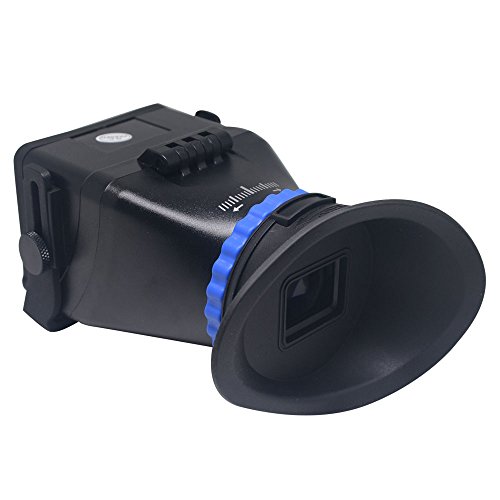
- 3x magnification for compatible 3.2-inch LCDs
- Useful for outdoor shooting in bright sunlight
- Adjustable diopter and reversible eyecup
Best For: DSLR and mirrorless video shooting with compatible LCD screens
Best Waist-Level Option
CHI Sight 28mm Optical Viewfinder

- Mirrored waist-level image for classic composition
- 35mm and 50mm frame lines within a 28mm view
- Battery-free design with detachable lens hood
Best For: Street and travel photography with a tactile waist-level view
Classic Rangefinder Accessory
Voigtlander 75mm Silver Viewfinder

- Dedicated 75mm viewing specification
- For full-frame 35mm rangefinder cameras
- Compact 2-ounce design
Best For: Photographers using a 75mm lens on a full-frame 35mm rangefinder
Low-Angle Framing Pick
ULANZI VF01 28mm Waist-Level Viewfinder
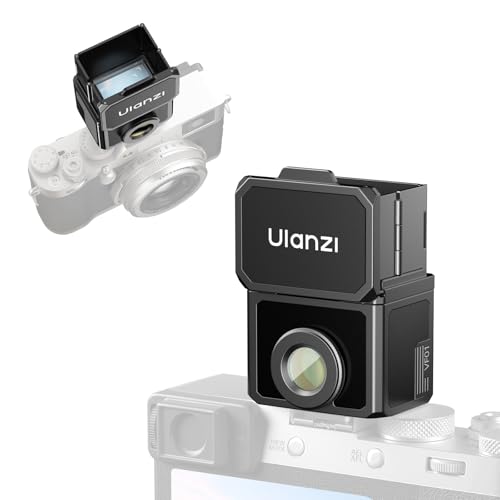
- 28mm view with switchable 35mm/50mm framelines
- Three-element optical lens design
- Cold shoe mount with magnetic lens hood
Best For: Low-angle, candid, and street photography
Battery-Free Hot Shoe Choice
Retropia Optical Waist-Level Viewfinder

- Battery-free optical viewing
- 28mm, 35mm, and 50mm frame lines
- Tool-free standard hot shoe mounting
Best For: Low-angle shooting with compatible mirrorless and DSLR cameras
Best Electronic Upgrade – Sigma EVF-11
The Sigma EVF-11 is a dedicated electronic viewfinder for the SIGMA fp series. Its large display, upward-tilting design, and video-oriented features make it a practical choice when you want a clearer viewing experience and more control while recording.
Best For: SIGMA fp series users who need a comfortable electronic viewfinder for photography and video capture.
Pros:
- Large viewfinder designed for clarity and comfort
- 90-degree upward-tilting mechanism supports flexible shooting angles
- Supports audio monitoring and external recording to a portable SSD
Cons:
- Compatible with the SIGMA fp series rather than a broad range of cameras
- Electronic design may be more specialized than a simple optical accessory
The EVF-11 stands out among camera viewfinders for SIGMA fp users who also shoot video. Its tilting mechanism and monitoring features add practical flexibility, while compatibility remains limited to the specified camera series.
Best Compact Optical Option – TTArtisan 35mm Viewfinder
The TTArtisan 35mm Viewfinder is a compact external optical accessory for cameras with a standard cold shoe. Its 35mm framelines, multi-coated four-element design, and lightweight aluminum body provide a straightforward way to compose without relying on the camera’s built-in display.
Best For: Photographers seeking a lightweight, rangefinder-inspired optical viewfinder with 35mm framing.
Pros:
- Clear 35mm framelines designed for an accurate perspective
- Four-element optical design with premium multi-coating improves light transmission
- Compact 25g design with a soft rubber eyecup
- Universal cold-shoe mounting fits most cameras with a standard cold shoe
Cons:
- Provides 35mm framing rather than interchangeable framelines
- Requires a camera with a compatible cold shoe
Among camera viewfinders, this TTArtisan model is a simple, portable choice for photographers who prefer optical composition. The fixed 35mm framing makes it most useful when that focal-length perspective matches your shooting style.
Best for Bright-Screen Viewing – Kamerar CVF-2 LCD Viewfinder
The Kamerar CVF-2 is an LCD viewfinder and 3x magnifier for 3.0- and 3.2-inch camera screens with a 16:9 aspect ratio. By blocking stray light and enlarging the display, it helps make camera-screen viewing more practical in bright sunlight.
Best For: Photographers and filmmakers who compose on a compatible LCD screen outdoors or in other bright conditions.
Pros:
- Compatible with most 3.0- and 3.2-inch 16:9 LCD screens
- 3x focusable magnification provides a 300% enlarged view
- Light-blocking eyecup supports clearer, higher-contrast viewing
- Left- or right-eye use and eyeglass compatibility improve comfort
Cons:
- Designed for specific screen sizes and a 16:9 aspect ratio
- Rubber-band mounting may be less integrated than a dedicated camera accessory
The CVF-2 is one of the more practical camera viewfinders for improving visibility on an existing LCD. Its magnification and light-blocking design are useful outdoors, but check your camera’s screen dimensions and aspect ratio before buying.
Best Dedicated High-Resolution EVF – Nikon DF-N1000
The Nikon DF-N1000 is a dedicated electronic viewfinder for the Nikon 1 V3 system camera. With approximately 2.359 million pixels, 100% image-field coverage, and a fast frame rate, it is designed for precise composition and focusing, including in bright sunlight.
Best For: Nikon 1 V3 users who want a high-resolution electronic viewfinder with accurate coverage.
Pros:
- Approximately 2.359 million pixels provide high-contrast, high-resolution viewing
- Displays important information and supports enlarged views for precise manual focusing
- Approximately 100% image-field coverage helps with accurate framing
- Fast frame rate and minimal trigger delay suit fast-moving subjects
Cons:
- Designed specifically for the Nikon 1 V3 system camera
- Less suitable for users seeking a universal viewfinder accessory
The DF-N1000 is a strong match for Nikon 1 V3 owners prioritizing detailed electronic composition. Its resolution, coverage, and responsiveness make it particularly useful for manual focusing and fast-moving scenes, provided your camera is compatible.
Best Retro-Style Pick – SmallRig 28mm External Optical Viewfinder
For photographers seeking camera viewfinders with a classic optical shooting experience, the SmallRig 5873 adds a bright, non-electronic framing aid through the camera’s cold shoe. Its 28mm full-frame-equivalent view and built-in frame lines make it useful for composing without relying entirely on the rear screen.
Best For: Fujifilm, Nikon, Canon, Sony, Ricoh, and Leica users who want an external optical viewfinder for 28mm-style framing and retro-inspired shooting.
Pros:
- Five groups of optical glass with up to 98% light transmission.
- Built-in 3:2 frame lines help define the composition.
- Cold-shoe mounting includes a silicone pad to help protect the camera.
- Broad compatibility across several popular camera systems.
Cons:
- The fixed -0.52D diopter is not adjustable.
- The 28mm view may require an 18mm lens on APS-C cameras for matching framing.
- Optimal clarity depends on keeping the eye close to and centered on the eyepiece.
The SmallRig is a focused choice for users who value optical clarity and a deliberate, film-era shooting style. Check the compatibility list and fixed-diopter design before buying.
Best for Bright-Screen Video – ST-1 Collapsible LCD Viewfinder
The ST-1 is a practical option among camera viewfinders for DSLR and mirrorless users who need a larger, clearer view of a 3.2-inch LCD screen. Its 3x magnification, eyecup, and collapsible design are aimed especially at video shooting outdoors or in bright sunlight.
Best For: Canon and Nikon DSLR or mirrorless cameras with compatible 3.2-inch LCD screens, particularly handheld or shoulder-mounted video work.
Pros:
- Magnifies the LCD image three times for easier viewing.
- Helps reduce glare and improve screen visibility in bright outdoor conditions.
- Adjustable diopter and reversible eyecup support different users.
- Includes a quick-release baseplate and nylon safety strap.
Cons:
- Compatibility is limited to cameras with a 3.2-inch LCD screen.
- At 11.3 ounces, it is heavier than the compact optical options in this roundup.
- Its main benefit is screen magnification rather than an independent optical framing view.
Choose the ST-1 when your priority is seeing and monitoring an existing LCD more clearly during video work. Confirm the camera’s screen size and mounting requirements before purchasing.
Best Waist-Level Option – CHI Sight 28mm Optical Viewfinder
The CHI Sight offers a distinctive waist-level approach to camera viewfinders, displaying a horizontally mirrored image for a traditional shooting experience. Its 28mm viewing angle, internal 35mm and 50mm frame lines, and battery-free optical design support discreet, deliberate composition.
Best For: Street, travel, and everyday photographers who want a waist-level viewing experience with multiple focal-length framing references.
Pros:
- Mirrored waist-level image creates an authentic classic shooting experience.
- Includes 35mm and 50mm frame lines within the 28mm viewing angle.
- Detachable hood helps reduce flare in direct sunlight.
- Battery-free optical design avoids screen delay and electronic interference.
Cons:
- The horizontally mirrored image may require an adjustment period.
- It does not provide an electronic display or camera exposure information.
- Compatibility depends on positioning the included adjustable cold-shoe mount correctly.
The CHI Sight is a specialized accessory for photographers who prefer a slower, more tactile framing method. Its multiple frame references and glare-reducing hood add flexibility, while the mirrored view is the key feature to consider.
Classic Rangefinder Accessory – Voigtlander 75mm Silver Viewfinder
If you need a dedicated accessory for a full-frame 35mm rangefinder, this Voigtlander 75mm viewfinder is a straightforward option. Its fixed 75mm specification makes it suited to photographers who want a matching field of view rather than a switchable camera viewfinder.
Best For: Full-frame 35mm rangefinder users shooting with a 75mm lens.
Pros:
- Designed for full-frame 35mm rangefinder cameras.
- Dedicated 75mm viewing specification.
- Compact 2-ounce design.
Cons:
- Limited to a 75mm view.
- Intended for full-frame 35mm rangefinder cameras rather than broadly listed as universal.
This is a focused choice for rangefinder photographers who already know they need a 75mm view. Its compact size adds convenience, but the fixed focal-length design makes compatibility and intended use important to confirm before buying.
Low-Angle Framing Pick – ULANZI VF01 28mm Waist-Level Viewfinder
The ULANZI VF01 is a practical camera viewfinder for low-angle and candid shooting. It provides a 28mm full-frame view with switchable 35mm and 50mm framelines, while its optical construction offers a screen-free way to preview compositions.
Best For: Street and candid photographers who want low-angle framing with flexible framelines.
Pros:
- Supports a 28mm full-frame view with 35mm and 50mm framelines.
- Three-element, three-group optical design is intended to reduce distortion and artifacts.
- Universal cold shoe mount fits most popular cameras.
- Magnetic flip-open hood helps block stray light.
Cons:
- Its cold shoe mounting may not suit cameras without a compatible accessory shoe.
- The waist-level design is specialized for low-angle viewing rather than conventional eye-level use.
With multiple frameline options and a built-in hood, the VF01 offers useful compositional flexibility in a compact package. It is most compelling when low-angle shooting and a retro viewing experience matter more than a conventional rear-screen workflow.
Battery-Free Hot Shoe Choice – Retropia Optical Waist-Level Viewfinder
The Retropia Optical Waist Level Viewfinder is a camera viewfinder for photographers who want a top-down, vintage-style shooting experience without relying on a screen or battery. It mounts directly to a standard hot shoe and includes 28mm, 35mm, and 50mm frame lines.
Best For: Mirrorless and DSLR users seeking glare-free, battery-free low-angle composition.
Pros:
- Compatible with standard hot shoe mounts on many major camera brands.
- Purely optical operation requires no batteries or charging.
- Built-in 28mm, 35mm, and 50mm frame lines.
- Tool-free mounting slides into the hot shoe and removes without marks or damage.
Cons:
- Requires a camera with a standard hot shoe mount.
- Its waist-level format is aimed at top-down shooting rather than standard eye-level viewing.
The Retropia is a sensible fit for photographers who value simplicity and a classic shooting posture. Its battery-free optical design and broad listed brand compatibility make it convenient, while the hot shoe requirement remains the key fit consideration.
How We Picked These Camera Viewfinders
We selected models across the main viewfinder categories: dedicated electronic finders, external optical finders, waist-level finders, and LCD viewfinder magnifiers. Our comparison focuses on practical factors including compatibility, viewing clarity, framing accuracy, magnification, mounting hardware, portability, and suitability for bright or low-angle shooting.
Because an external finder can be highly camera- or lens-specific, compatibility takes priority over price or appearance. Always check the mounting interface, supported screen size, electronic connection, and listed focal lengths before ordering.
Quick Comparison
| Type | Best For | What to Check |
|---|---|---|
| Electronic viewfinder | Live exposure and focus preview | Camera model and electronic connector |
| Optical external finder | Fast, glare-free framing | Focal length and cold-shoe fit |
| LCD magnifier | Sharper screen viewing and video work | LCD dimensions and mounting frame |
| Waist-level finder | Low-angle, discreet, or street photography | Framelines, orientation, and folding design |
Key Buying Factors for Camera Viewfinders
Compatibility and Mounting
Dedicated electronic models typically work only with specified cameras. Optical models commonly use a cold shoe, but the shoe’s fit and position still matter. LCD finders need a screen or mounting frame of the correct size, while universal products may require careful alignment.
Framing and Focal Length
An optical finder should match the lens or field of view you use most. Fixed 28mm, 35mm, 50mm, or 75mm finders are not interchangeable in practice. Switchable framelines offer more flexibility, but verify how clearly they are marked and whether parallax affects close subjects.
Viewing Conditions
For bright outdoor work, a hooded LCD magnifier or optical finder can be easier to use than an uncovered rear screen. Electronic viewfinders provide exposure and focus information, but they consume battery power. Waist-level designs can help with low-angle compositions and more discreet shooting.
Build and Portability
Look for secure attachment, readable optics, smooth folding or collapsing parts, and a size that suits your camera bag. A lightweight finder is convenient, but a rigid metal construction may better withstand frequent handling.
Who Should Buy Which Camera Viewfinders?
- Choose an electronic viewfinder if you want live exposure, focus, and shooting information directly in the finder and own a confirmed compatible camera.
- Choose an optical cold-shoe finder for quick, battery-free framing with a fixed focal length, especially for street, travel, or bright outdoor photography.
- Choose an LCD magnifier if your main problem is screen glare, imprecise manual focus, or difficulty monitoring video on a rear LCD.
- Choose a waist-level finder for low-angle compositions, discreet operation, and a more deliberate shooting experience.
For the safest purchase, start with your camera body and most-used lens, then select the finder type that solves your actual viewing problem rather than simply choosing the most feature-rich model.