The best drawing tablets make digital sketching, illustration, photo editing, and note-taking feel more natural. The right choice depends on whether you want a built-in screen, a compact pad for a computer, or a standalone tablet you can use anywhere.
This roundup compares 10 drawing tablets across screen size, pressure sensitivity, shortcut controls, connectivity, portability, and overall value so you can choose a model that matches your setup and budget.
Best 10 Drawing Tablets Picks for 2026
Best Color Accuracy

- 13.3-inch laminated display with Canvas Glass 2.0
- 16,384 pressure levels and PenTech 4.0 stylus
- 99% sRGB coverage with factory calibration report
Best For: Artists who want color-focused drawing and dial controls
Best Compact Starter Display

- 11.6-inch Full HD display with 100% sRGB coverage
- Battery-free stylus with eraser and replacement nibs
- Six shortcut keys and programmable touch bar
Best For: Students, teachers, and beginner digital artists
Best Controls for Long Sessions
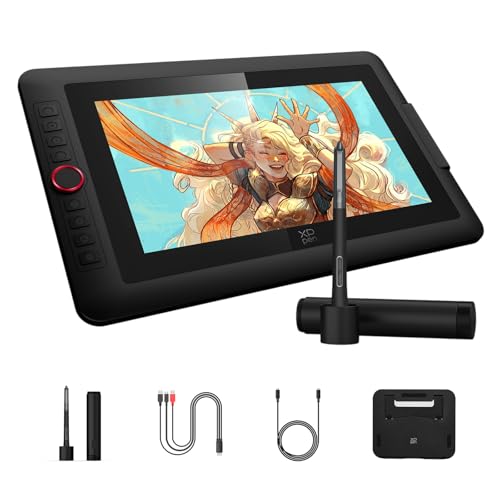
- 16,384-level stylus with X3 Pro smart-chip technology
- Red dial plus eight customizable shortcut keys
- 13.3-inch laminated Full HD display with AG Film
Best For: Artists who rely on shortcuts and adjustable controls
Best Simple Pen Tablet
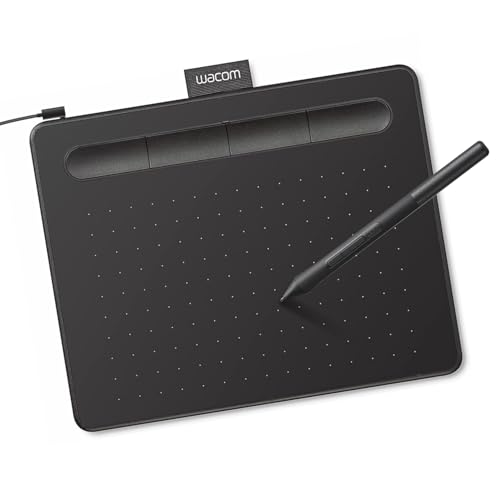
- Battery-free EMR pen with a paper-like feel
- Compact screenless design with four ExpressKeys
- Works with Mac, Windows, Android, and Chromebook
Best For: Beginners and creators who prefer a portable screenless tablet
Best Beginner Drawing Tablet

- 16,384 pressure levels with 60-degree tilt support
- Large 10 x 6.25-inch workspace and eight shortcut keys
- Works with computers, Android 10+, and major creative software
Best For: Beginners wanting a spacious, adaptable pen tablet
Best Wireless Drawing Tablet

- Bluetooth or USB-A connectivity for flexible use
- Battery-free Wacom pen with 4,096 pressure levels
- Includes access to creative software and online training
Best For: Students and creators who want wireless convenience
Best Shortcut-Rich Drawing Tablet
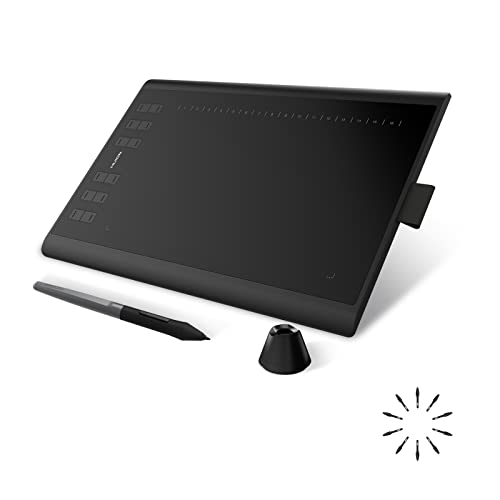
- 10 x 6.25-inch workspace with slim 10mm design
- 12 press keys plus 16 programmable soft keys
- 8,192 pressure levels and 60-degree tilt support
Best For: Artists who want extensive shortcut customization
Best Budget Pick
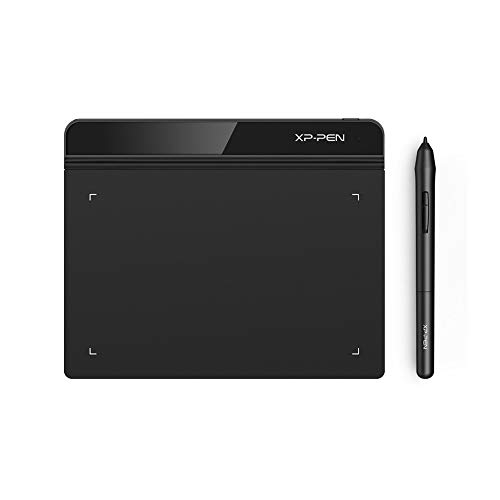
- Battery-free 8,192-level pressure pen
- Compact 6-by-4-inch drawing area
- Works with Windows, Mac, and Chromebook
Best For: Beginners, students, and remote workers
Best Standalone Option

- Works without a computer
- Laminated 11-inch 2K display
- Includes apps, tutorials, and accessories
Best For: Beginners and students wanting an all-in-one setup
Best for Custom Shortcuts

- Six programmable shortcut keys
- Battery-free 8,192-level pressure pen
- Supports Windows, Mac, Linux, and Android
Best For: Artists and editors needing a customizable workflow
Best Color Accuracy – HUION Kamvas 13 (Gen 3)
The HUION Kamvas 13 (Gen 3) is a strong choice among drawing tablets with screens for artists who want a compact, color-focused workspace. Its fully laminated 13.3-inch display, Canvas Glass 2.0, 16,384 pressure levels, and dual-dial controls support detailed digital art. Note that it must be connected to a compatible computer, laptop, or supported Android device to work.
Best For: Artists, illustrators, and designers who prioritize color consistency and customizable controls.
Pros:
- 13.3-inch full-laminated display with Canvas Glass 2.0 for reduced glare and improved accuracy.
- Strong color specifications, including 99% sRGB coverage and factory calibration reporting.
- PenTech 4.0 stylus with 16,384 pressure levels, plus five shortcut keys and dual-dial controls.
- Includes the ST300 adjustable stand and supports Windows, Mac, Android, and Linux systems.
Cons:
- Not a standalone tablet; it requires a computer, laptop, or compatible Android device.
- The full-featured USB-C cable is sold separately, according to the supplied details.
With its accurate display and flexible controls, the Kamvas 13 (Gen 3) is a well-equipped pen display for creators who want a focused drawing setup without moving to a larger screen.
Best Compact Starter Display – XP-PEN Artist12
The XP-PEN Artist12 is a compact drawing tablet with an 11.6-inch Full HD screen, customizable shortcut keys, and a battery-free stylus. It is designed for digital drawing, animation, photo editing, online education, and remote work, but it must be connected to a computer to function.
Best For: Students, teachers, and beginners who want an affordable-size pen display for drawing or screen-based instruction.
Pros:
- 11.6-inch 1920×1080 IPS display with vivid color and 100% sRGB coverage as specified.
- Battery-free pen includes an eraser end and comes with replacement nibs in the pen holder.
- Six customizable shortcut keys and a programmable touch bar support efficient workflows.
- Works with Windows, Mac, and Linux, along with popular creative and video-conferencing software.
Cons:
- Requires a computer and available HDMI and USB-A ports, or suitable adapters.
- Its 8,192 pressure levels are lower than those offered by newer 16,384-level models.
The Artist12 offers a practical entry point for users who prefer drawing directly on a screen. Its compact footprint and education-friendly features make it especially useful for students and teachers.
Best Controls for Long Sessions – XPPen Artist 13.3 Pro V2
The XPPen Artist 13.3 Pro V2 combines a 13.3-inch full-laminated Full HD display with a red dial, eight customizable keys, and a 16,384-pressure-level stylus. Among drawing tablets with screens, it stands out for fast access to brush size, zoom, and navigation controls. It is not standalone and requires a compatible computer or laptop.
Best For: Digital artists and designers who want extensive shortcuts and a comfortable control layout for extended creative sessions.
Pros:
- Red dial and eight customizable keys provide quick access to common commands.
- 16,384 pressure levels and the X3 Pro smart-chip stylus are designed for precise, smooth lines.
- Full-laminated AG Film display reduces glare and parallax while providing a wide viewing angle.
- Supports Windows, macOS, Chrome OS, Android, and Linux, plus a broad range of creative software.
Cons:
- Must be connected to a computer or laptop; it is not a standalone drawing tablet.
- Some display adjustment options, including brightness and color temperature controls, are specified for Windows only.
The Artist 13.3 Pro V2 is a compelling option when workflow speed matters. Its dial-and-key arrangement, included stand, and high-resolution pressure response make it suitable for artists who use shortcuts heavily.
Best Simple Pen Tablet – Wacom Intuos Small
The Wacom Intuos Small is a compact, screenless drawing tablet for users who are comfortable viewing their work on a connected computer. Its battery-free EMR pen is designed to feel like writing on paper, while four ExpressKeys provide quick shortcuts. It also includes access to creative software and Wacom online training after registration.
Best For: Students, teachers, creators, and photo editors who want a portable, straightforward tablet without an integrated display.
Pros:
- Battery-free EMR pen offers a natural pen-on-paper feel.
- Compact six-by-3.7-inch active area and lightweight design suit smaller workspaces.
- Four ExpressKeys provide convenient shortcut access.
- Works with Mac, Windows, Android, and Chromebook, with software and training included after registration.
Cons:
- No built-in screen, so artwork appears on the connected computer or compatible device.
- Its 4,096 pressure levels are more modest than those of the featured pen displays.
- Uses USB-A connectivity, which may require an adapter with newer computers.
The Intuos Small is a dependable choice for buyers who prefer a traditional screenless workflow. Its compact size, established pen technology, and included software access make it a practical starting point for digital creativity.
Best Beginner Drawing Tablet – XPPen Deco 01 V3
The XPPen Deco 01 V3 is a practical choice for beginners looking for drawing tablets with a generous 10 x 6.25-inch workspace, straightforward connectivity, and a battery-free stylus. Its customizable controls and broad device compatibility make it suitable for learning digital art without an overly complicated setup.
Best For: Beginners who want a spacious, portable tablet for drawing, note-taking, and creative software.
Pros:
- 16,384 pressure levels and up to 60 degrees of tilt support for detailed line and shading control
- Eight customizable shortcut keys with a symmetrical design for right- or left-handed use
- USB-C connectivity, Android support, and compatibility with Windows, macOS, ChromeOS, and Linux
- Includes replacement nibs, glove, protective film, stand, and adapters
Cons:
- It is a pen tablet without an integrated display, so you draw while viewing a separate screen
- Android compatibility requires Android 10.0 or later and may require the XPPen Tools app for accurate mapping
With its large active area, high pressure sensitivity, and beginner-friendly controls, the Deco 01 V3 offers a well-rounded starting point for digital artists who want room to develop their technique.
Best Wireless Drawing Tablet – Wacom Intuos Medium
The Wacom Intuos Medium combines Wacom’s battery-free EMR pen technology with Bluetooth connectivity, making it one of the more flexible drawing tablets for home, classroom, or mobile creative work. It also includes access to creative software and online training after registration.
Best For: Students, teachers, and creators who value wireless use, dependable pen control, and bundled learning resources.
Pros:
- Battery-free pressure-sensitive pen designed to provide a pen-on-paper feel
- Bluetooth and USB-A connectivity allow wired or wireless use
- Four ExpressKeys provide convenient shortcuts across drawing, editing, and document software
- Works with Mac, Windows, and Chromebook systems and includes software access and training
Cons:
- Its 4,096 pressure levels are lower than those offered by some newer competing tablets
- Wireless operation requires Bluetooth support and charging the tablet itself
- The active area is smaller than the 10 x 6.25-inch workspace on some similarly sized models
The Intuos Medium is a polished option for users who want the convenience of Bluetooth and Wacom’s established pen technology, particularly when bundled software and training are part of the buying decision.
Best Shortcut-Rich Drawing Tablet – HUION Inspiroy H1060P
The HUION Inspiroy H1060P is designed for artists who want a large working area and extensive shortcut customization. Among drawing tablets, it stands out for combining a 10 x 6.25-inch surface with 12 programmable press keys and 16 programmable soft keys, while its battery-free pen supports tilt input.
Best For: Artists, illustrators, and hobbyists who rely on many customizable shortcuts and a spacious workspace.
Pros:
- Large 10 x 6.25-inch working area in a slim 10mm design
- Battery-free stylus with 8,192 pressure levels and up to 60 degrees of tilt support
- 12 programmable press keys plus 16 programmable soft keys for workflow control
- Supports Windows, macOS, Android, and Ubuntu Linux, with symmetrical left-handed use
Cons:
- USB connectivity is wired rather than wireless
- iPhone and iPad are not currently supported
- Ubuntu use requires the Xorg display server and does not support Wayland
The H1060P is a strong fit when shortcut access matters as much as drawing space. Its extensive controls and tilt-enabled pen offer useful flexibility, though mobile and Linux users should check the stated compatibility limitations first.
Best Budget Pick – XP-Pen StarG640
If you want an affordable entry point into drawing tablets, the XP-Pen StarG640 combines a compact 6-by-4-inch active area with a battery-free stylus. It connects by USB and works with Windows, Mac, and compatible Chromebook devices for drawing, note-taking, teaching, remote work, and photo editing.
Best For: Students, teachers, beginners, and anyone replacing a mouse for digital drawing or online work.
Pros:
- Battery-free pen requires no charging and offers 8,192 pressure levels.
- Works with Windows, macOS, and Chrome OS 88 or later.
- Very slim, lightweight design at approximately 170 g and 2 mm thick.
- Supports drawing, signatures, Office apps, online teaching, and OSU!
Cons:
- Requires a connected computer or Chromebook; it is not a standalone tablet.
- Offers no customizable shortcut keys in the supplied specifications.
The StarG640 is a straightforward, portable choice for buyers who prioritize compatibility, a charge-free pen, and low-profile hardware over a built-in display or larger work area.
Best Standalone Option – PicassoTab X11
Among these drawing tablets, the PicassoTab X11 is the most self-contained option because it does not need a computer. Its laminated 11-inch 2K display, bundled creative apps, and included accessories create an all-in-one setup for drawing, animation, tutorials, and schoolwork.
Best For: Beginners, students, and artists who want a portable drawing tablet with its own screen, apps, and storage.
Pros:
- Standalone design works without a separate computer.
- Laminated 11-inch 2560-by-1440 display is designed to reduce parallax and glare.
- Includes five creative apps, lifetime upgrades for Concepts and Artixo, and beginner tutorials.
- Provides 6GB RAM, 128GB storage, expandable storage up to 1TB, and a 4,096-level pressure stylus.
Cons:
- Its custom graphics-tablet operating system may offer less software flexibility than a standard desktop OS.
- At 11 inches, it is less compact than the non-display tablets in this roundup.
The X11 makes the most sense when convenience and independence matter more than desktop-app compatibility. The included lessons and accessories also make it especially approachable for new digital artists.
Best for Custom Shortcuts – HUION Inspiroy H640P
The HUION Inspiroy H640P is a practical pick among drawing tablets for users who want physical workflow controls alongside a pressure-sensitive pen. Its six programmable keys can handle frequent commands, while the compact 6-by-4-inch tablet supports drawing, editing, note-taking, signatures, and remote work.
Best For: Digital artists, photo editors, students, and professionals who value customizable shortcuts and broad computer compatibility.
Pros:
- Six customizable press keys can be assigned to commands such as undo, zoom, brush switching, and save.
- Battery-free PW100 pen provides 8,192 pressure levels, 5080 LPI resolution, and 233 PPS report rate.
- Supports Windows, Mac, Linux, and Android 6.0 or later.
- Thin, lightweight design is portable and supports left-handed use through driver settings.
Cons:
- Does not support iPhone or iPad.
- Requires a compatible connected device and has no built-in display.
The H640P stands out for shortcut customization and software-profile support. It is a strong fit for users who want more workflow control than a basic pen tablet while keeping the device portable.
How We Picked These Drawing Tablets
We selected models covering the main tablet categories: pen displays that connect to a computer, screenless graphics tablets for Windows or macOS, and standalone tablets that do not require a separate computer. We considered active area, pen pressure levels, shortcut controls, connection options, portability, included accessories, software support, and the needs of beginners through experienced creators.
Specifications can vary by retailer and region, so check current compatibility details and included accessories before ordering. A higher pressure rating alone does not guarantee a better drawing experience; pen feel, driver stability, surface texture, and workflow fit matter just as much.
Quick Comparison
| Tablet type | Best for | Main advantage | Potential limitation |
|---|---|---|---|
| Screen display | Illustrators and visual artists | Draw directly on the image | Needs a compatible computer and desk space |
| Screenless tablet | Students, designers, and editors | Lower cost and simple setup | Requires hand-eye coordination |
| Standalone tablet | Portable sketching | Works without a separate computer | Usually offers less desktop software flexibility |
Key Buying Factors for Drawing Tablets
Screen or No Screen
Pen displays such as the HUION Kamvas 13 and XPPen Artist models are usually the most intuitive for drawing because the pen appears directly beneath your hand. Screenless models such as the Wacom Intuos, XPPen Deco, and HUION Inspiroy tablets are generally more affordable, lighter, and easier to position beside a monitor.
Size and Workspace
A 6-by-4-inch tablet is compact and portable, while a 10-by-6-inch surface gives the arm more room for long strokes. Smaller models work well for casual use, photo editing, and limited desk space. Larger active areas are preferable for detailed illustration, especially on a high-resolution monitor.
Pen and Shortcut Controls
Battery-free pens reduce maintenance and typically feel lighter. Pressure sensitivity helps control line weight and opacity, but compatibility with your preferred creative apps is essential. Dial controls and programmable keys can speed up zooming, brush sizing, undo, and other repetitive commands.
Compatibility and Connectivity
Confirm support for your operating system and applications before buying. Pen displays usually need both video and USB connections, while screenless tablets may connect through USB or Bluetooth. A standalone tablet is the most portable option, but it may not run every desktop art program.
Who Should Buy Which Drawing Tablets?
- For beginner digital artists: Choose a compact HUION Inspiroy, XPPen StarG640, or Wacom Intuos Small for an affordable introduction.
- For students and general creators: The Wacom Intuos Medium or XPPen Deco 01 V3 offers more working space without the cost of a display.
- For illustrators who want direct drawing: Consider the HUION Kamvas 13 or an XPPen Artist display with shortcut keys and a built-in screen.
- For high-detail workflows: A larger active area, strong driver support, and the 16K pressure options on selected XPPen models can suit demanding illustration work.
- For travel and computer-free sketching: The 11-inch standalone PicassoTab is the most convenient option when portability matters more than desktop-app flexibility.