A power amplifier with balanced inputs can reduce noise, simplify longer cable runs, and give a home audio, desktop, or theater system a cleaner signal path. The right choice depends on speaker demands, source connections, available space, and whether you need stereo or mono amplification.
We selected 10 models spanning compact Class-D designs, monoblock configurations, Bluetooth-enabled amps, and higher-output rack equipment. Use the guide below to compare their practical differences before choosing a match for your system.
Best 10 Power Amplifier with Balanced Inputs Picks for 2026
Compact Hi-Fi Choice

- 240W mono output at 4 ohms
- XLR/TRS balanced and RCA inputs
- Compact Class D design with cooling
Best For: Modular home audio and AVR-based theater systems
Live Sound Workhorse
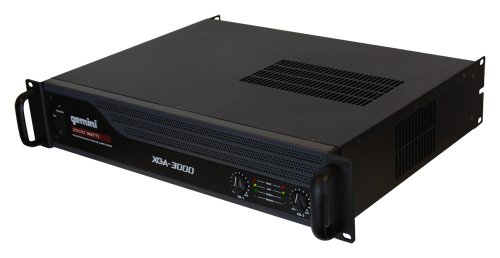
- 3000W two-channel rated output
- Balanced XLR and 1/4-inch inputs
- Bridge mode, protection, and rack mounting
Best For: DJs, PA systems, and live sound events
Premium Stereo Power

- 250W per channel into 4 ohms
- XLR-balanced, RCA, and mono inputs
- GaN Class D design with aluminum chassis
Best For: Balanced home hi-fi and theater systems
Feature-Packed Rack Amp

- 2000W maximum bridgeable output
- XLR and TRS balanced inputs
- Bluetooth, USB, Speakon, and binding posts
Best For: Flexible PA and event audio setups
Compact Balanced Power

- Balanced TRS and RCA inputs
- 140W × 2 at 4Ω
- Compact aluminum Class-D design
Best For: Desktop Hi-Fi and studio monitoring
Flexible Speaker Control

- Balanced XLR/TRS and RCA inputs
- Two speaker-set switching
- Up to 300W × 2 output
Best For: Home theater and multi-speaker Hi-Fi systems
2.1 System Specialist

- XLR/RCA input selection
- Adjustable 60–200Hz HPF
- Subwoofer output and 12V trigger
Best For: Balanced stereo and 2.1 speaker systems
Best Monoblock Power

- 240W at 4 ohms in a monoblock design
- XLR/TRS balanced and RCA inputs
- PFFB technology with swappable op-amps
Best For: Audiophiles expanding stereo or multichannel systems
Best Feature-Packed Stereo

- TRS balanced input with Bluetooth 5.2
- High-pass filter and subwoofer pre-out
- Remote, tone controls, and digital VU display
Best For: Flexible bookshelf-speaker and 2.1 systems
Best Flexible Stereo/Mono Design
Fosi Audio ZA3 Balanced Amplifier

- Stereo and mono modes in one compact amplifier
- XLR/1/4-inch TRS balanced combo input
- Up to 235W mono output with 12V trigger
Best For: Expandable desktop, stereo, and home theater systems
Compact Hi-Fi Choice – Fosi Audio V3 Mono
If you need a power amplifier with balanced inputs for a modular home audio or theater system, the Fosi Audio V3 Mono is a compact single-channel option. It supports XLR and 1/4-inch TRS balanced connections alongside RCA, and its 240-watt output at 4 ohms is designed to drive one passive speaker.
Best For: Hi-fi listeners and home theater users building a multi-channel system or adding power to an AVR.
Pros:
- XLR/TRS balanced and RCA inputs provide flexible system integration.
- Up to 240W at 4 ohms from a compact Class D monoblock design.
- PFFB technology, TPA3255 circuitry, and low stated THD support detailed playback.
- Auto signal sensing and a full-body cooling design suit extended operation.
Cons:
- It is a single-channel amplifier, so stereo operation requires two units.
- The 48V/5A power supply is required for the rated output.
- Speaker cable connections should be made with the device powered off.
The V3 Mono stands out when space, balanced connectivity, and scalable system design matter more than having multiple channels in one chassis. Its op-amp compatibility also gives experienced users room to experiment with sound character.
Live Sound Workhorse – Gemini XGA-3000
For DJs, venues, and PA operators seeking a power amplifier with balanced inputs, the Gemini XGA-3000 combines balanced XLR and 1/4-inch inputs with 3000 watts of stated output. Its rack-mountable 2U chassis, bridge mode, and speaker protection features are aimed at demanding live sound setups.
Best For: Mobile DJs, PA systems, live events, and venue installations that need high output and flexible speaker connections.
Pros:
- Balanced XLR and 1/4-inch inputs plus unbalanced RCA support varied sources.
- Bridgeable two-channel design offers stereo or mono operation.
- Speakon outputs and binding posts accommodate common speaker connections.
- Protection circuits, variable-speed cooling, and status LEDs support extended use.
Cons:
- The 2U rack chassis is less suited to compact desktop systems.
- At 17.6 pounds or more, it is not the lightest portable amplifier option.
- The supplied specifications list a one-year warranty.
The XGA-3000 is a practical choice when system versatility and live-event headroom take priority. Its balanced inputs, bridge mode, cooling, and protection features make it better aligned with PA work than casual home listening.
Premium Stereo Power – SMSL PA400 GaN Amplifier
The SMSL PA400 is a strong candidate if you want a power amplifier with balanced inputs for a high-fidelity stereo system. Its XLR-balanced, RCA, and XLR-mono connections pair with GaN Class D amplification rated at 250 watts per channel into 4 ohms, while two units can be used in mono mode for higher output.
Best For: Home hi-fi and theater systems using XLR-equipped DACs or preamplifiers, especially with demanding speakers.
Pros:
- Fully balanced stereo-input mode is suitable for compatible preamps.
- 250W per channel at 4 ohms in stereo and 500W in mono are stated.
- RCA, XLR, and XLR-mono inputs offer broad source compatibility.
- CNC-milled aluminum construction provides a rigid chassis and heat-sinking surface.
Cons:
- Mono operation requires two PA400 units.
- The supplied notes list a one-year warranty.
- Its feature set is primarily focused on wired hi-fi connectivity rather than wireless streaming.
The PA400 is most compelling for listeners who already use balanced source equipment and want substantial stereo power in a premium-looking chassis. Its mono expansion path adds flexibility for more demanding speaker loads.
Feature-Packed Rack Amp – Pyle PTA1000BT
The Pyle PTA1000BT suits buyers looking for a power amplifier with balanced inputs plus convenient source options. It offers XLR and 1/4-inch TRS inputs, bridgeable two-channel operation, Bluetooth, and a USB-A MP3 player in a rack-mountable chassis designed for 4- to 8-ohm speakers.
Best For: Small PA systems, event setups, and users who want wired balanced connections with Bluetooth and USB playback.
Pros:
- XLR and 1/4-inch TRS inputs support balanced source connections.
- Bridge mode provides up to 2000 watts of stated maximum output.
- Bluetooth and USB-A MP3 playback add convenient source flexibility.
- Speakon outputs, binding posts, LED meters, and cooling fans support installed or mobile rigs.
Cons:
- The 2000-watt figure is specified as maximum or bridged output, not stereo output per channel.
- The large rack-mountable chassis may be excessive for simple home setups.
- The supplied notes list a one-year warranty.
The PTA1000BT is a versatile utility amplifier rather than a minimalist hi-fi component. Its combination of balanced inputs, wireless playback, bridge mode, and multiple speaker outputs makes it useful when convenience and connection options are central requirements.
Compact Balanced Power – TOPPING Mini300
The TOPPING Mini300 is a practical power amplifier with balanced inputs for desktop systems, studio monitors, or compact Hi-Fi setups. Its fully balanced Class-D design supports balanced TRS and unbalanced RCA sources while delivering up to 140W per channel at 4Ω.
Best For: Desktop Hi-Fi listeners, studio monitoring, and buyers who want a compact amplifier with balanced and RCA connectivity.
Pros:
- Fully balanced architecture with balanced TRS and unbalanced RCA inputs
- Up to 140W × 2 at 4Ω and very low stated distortion at 8Ω/5W
- 124dB SNR/DNR, 12V trigger synchronization, and protective circuitry
- Compact aluminum chassis with cooling vents
Cons:
- Uses a separate 12V DC power supply
- Provides two channels rather than multichannel speaker switching
Choose the Mini300 when clean balanced connectivity and a small footprint matter most. Its trigger control and dual input options make it especially easy to add to a modern desktop or monitoring chain.
Flexible Speaker Control – DoukAudio G7
The DoukAudio G7 combines balanced inputs with speaker-selection flexibility, making it a useful power amplifier with balanced inputs for larger home audio systems. It accepts balanced XLR/TRS combo connections and RCA sources, while supporting two speaker sets and up to 300W × 2 output.
Best For: Home theater and Hi-Fi users who need A/B speaker switching, dual-zone-style flexibility, and remote control.
Pros:
- Balanced XLR/TRS combo and dual RCA inputs
- Supports two or four channel output configurations and two speaker sets
- Dual TPA3255 design with stated output up to 300W × 2
- Tone controls, bypass mode, VU meters, remote, and 12V trigger
Cons:
- Larger and heavier than compact two-channel alternatives
- Its extensive controls may be unnecessary for a simple power-amp setup
The G7 is the most versatile choice here for systems that need speaker switching and hands-on control. Its bypass mode also lets users move between tone-equipped operation and a more direct signal path.
2.1 System Specialist – AIYIMA A20 Balanced Amplifier
The AIYIMA A20 is a power amplifier with balanced inputs designed for flexible stereo and 2.1 systems. Its XLR/RCA input selection, adjustable 60–200Hz high-pass filter, and subwoofer output help integrate main speakers and a subwoofer while preserving a clean signal path.
Best For: Audiophiles building a balanced stereo or 2.1 system with subwoofer integration and external-preamp compatibility.
Pros:
- Fully balanced stereo design with XLR input and RCA compatibility
- Adjustable 60–200Hz high-pass filter and subwoofer output
- Bypass mode, gain switch, swappable op-amps, and 12V trigger
- Stated 116dB SNR and 0.002% THD+N
Cons:
- Requires a separate 48V/5A power adapter
- Feature set may be more than needed for basic two-channel use
The A20 stands out when system matching is a priority. Its filtering and subwoofer connections provide more setup control than a straightforward stereo amplifier, while bypass and trigger functions support integration with a preamp-based system.
Best Monoblock Power – Fosi Audio V3 Mono
The Fosi Audio V3 Mono is a strong choice if you need a power amplifier with balanced inputs for driving individual passive speakers. Its XLR/1/4-inch TRS balanced and RCA inputs, 240-watt output at 4 ohms, and monoblock design make it suitable for stereo upgrades or larger multichannel systems.
Best For: Audiophiles building stereo, multichannel, or home theater systems around separate monoblock amplifiers.
Pros:
- Supports XLR/TRS balanced and RCA single-ended inputs.
- Can deliver up to 240W at 4 ohms for demanding passive speakers.
- PFFB technology and quality internal components support low distortion.
- Replaceable DIP8 op-amps allow sound customization.
Cons:
- It is a mono amplifier, so a stereo setup requires two units.
- Its specialized design may be more than needed for a simple, compact system.
Choose the V3 Mono when clean balanced connectivity and scalable power matter more than having multiple channels in one chassis. The automatic signal-sensing mode and substantial cooling also suit extended listening sessions.
Best Feature-Packed Stereo – Ampapa Douk Audio D1
The Ampapa Douk Audio D1 combines a power amplifier with balanced inputs and everyday system controls. It provides a TRS balanced input, Bluetooth 5.2, a high-pass filter, subwoofer pre-out, tone controls, and a digital VU display in a compact two-channel chassis.
Best For: Home theater and bookshelf-speaker systems that need flexible connectivity, subwoofer integration, and convenient controls.
Pros:
- Offers a TRS balanced input alongside Bluetooth 5.2.
- Adjustable 30–200Hz high-pass filter helps integrate stereo speakers with a subwoofer.
- Subwoofer pre-out can feed active subwoofers, amplifiers, or active speakers.
- Includes remote control, 12V trigger, tone controls, and selectable VU display styles.
Cons:
- The feature-rich interface may be unnecessary for minimalist systems.
- The supplied power adapter is rated at 48V/5A, rather than the higher-power supply used by some amplifiers.
The D1 is the practical pick for listeners who want balanced connectivity without giving up convenience features. Its filter and pre-out make it especially useful when building a compact 2.1 system.
Best Flexible Stereo/Mono Design – Fosi Audio ZA3 Balanced Amplifier
The Fosi Audio ZA3 is a versatile power amplifier with balanced inputs for desktop, home theater, and passive-speaker systems. Its combo XLR/1/4-inch TRS input supports balanced sources, while switchable stereo and mono modes let one amplifier serve different system configurations.
Best For: Listeners who want a compact amplifier that can run stereo speakers now and scale to mono operation later.
Pros:
- Switches between stereo output up to 180W and mono output up to 235W.
- Combo balanced input accepts XLR and 1/4-inch TRS plugs.
- 12V trigger input simplifies integration with compatible equipment.
- Swappable op-amps support customization of the listening experience.
Cons:
- Mono operation requires appropriate system configuration and may limit casual plug-and-play use.
- It does not offer the broader convenience feature set of an amplifier with Bluetooth or a remote.
The ZA3 stands out for upgrade flexibility: use it as a stereo amplifier, then add a second unit or switch modes as your system grows. Its larger chassis and side ventilation are designed for stable high-power operation.
How We Picked the Best Power Amplifier with Balanced Inputs
We focused on models that accept balanced connections such as XLR or TRS, while also considering RCA compatibility for mixed systems. The selection covers several use cases: desktop listening, bookshelf speakers, home theater, subwoofer amplification, multi-channel setups, and higher-power installations.
We also compared stated output, channel configuration, amplifier topology, input and output options, size, and useful features such as Bluetooth, high-pass filtering, bridge mode, speaker selection, and subwoofer pre-outs. Because published wattage can vary by impedance, distortion level, and power supply, treat ratings as a starting point rather than a guarantee of identical real-world performance.
Quick Comparison
| Best For | Look For | Typical Options |
|---|---|---|
| Desktop or compact stereo | Small chassis, efficient Class-D design, XLR and RCA inputs | TOPPING, SMSL, AIYIMA, Fosi Audio |
| Monoblock speaker systems | One amp per channel, high current, matching gain and power supplies | Fosi Audio V3 Mono models |
| Home theater or subwoofer use | Bridge mode, high-pass filtering, flexible channel configuration | Fosi Audio, DoukAudio, Bluetooth amp models |
| Higher-output or rack installations | Rack mounting, multiple inputs, cooling, protection circuits | Gemini and Pyle |
Key Buying Factors for a Power Amplifier with Balanced Inputs
Balanced Input Compatibility
Check whether your source uses XLR, TRS, or another balanced output. An XLR input does not automatically mean every connection is fully balanced internally, so review the manufacturer’s specifications when noise rejection and signal integrity are priorities. RCA inputs are useful when you want to connect older or consumer-grade sources.
Power, Impedance, and Speaker Matching
Compare the amplifier’s rating at your speakers’ impedance, commonly 4 or 8 ohms. Choose an amp with enough headroom for clean peaks, but avoid selecting by the largest wattage number alone. Speaker sensitivity, room size, listening distance, and ventilation all affect the result. Confirm that the amplifier supports your speakers’ minimum impedance before buying.
Channels and Operating Modes
A stereo amplifier is the simplest choice for two speakers. Monoblocks can provide dedicated power to each channel, while bridgeable or multi-channel models may better suit theater, distributed audio, or subwoofer systems. Verify whether bridge mode changes the minimum supported impedance.
Features and System Integration
Bluetooth is convenient, but it may not provide the same source quality or control as a wired balanced connection. High-pass filters can protect small speakers, and subwoofer outputs can simplify bass integration. Also check connector types, gain controls, trigger support, protection circuitry, fan noise, and chassis dimensions.
Who Should Buy Which Power Amplifier with Balanced Inputs?
Choose a compact stereo model if you need clean amplification for a desk or small listening room. Select a monoblock pair when you want dedicated left and right amplification and have a compatible preamp or DAC. For a home theater or subwoofer project, prioritize filtering, bridge capability, and flexible channel options. Pick a rack-mount design when installation, output reserves, and multiple source connections matter more than size. Finally, choose the model with the most useful connections—not simply the highest advertised power rating—for the rest of your system.