The best voice recorder for an interview should capture clear speech, run reliably, and make it easy to review or share what you recorded. The right choice depends on whether you prioritize simple playback, long battery life, discreet portability, or automatic transcription.
We compare 10 voice recorders suited to interviews, meetings, lectures, and calls, including affordable digital dictaphones and newer AI-powered note-taking devices.
Best 10 Voice Recorders for Interviews Picks for 2026
Best Value for Long Interviews
EVISTR L357 64GB Voice Recorder

- 64GB storage for extensive recording libraries
- Adjustable gain and PCM noise reduction
- Voice activation and USB-C file transfer
Best For: Long interviews, lectures, and meetings requiring flexible manual controls
Best AI Interview Recorder
Plaud Note Pro AI Voice Recorder
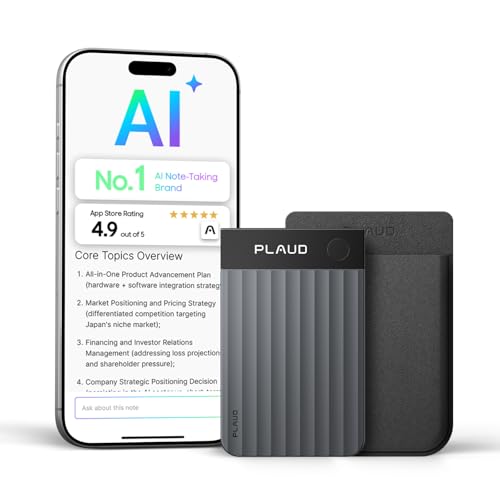
- AI transcription, summaries, and question answering
- Directional audio with multiple microphones
- Up to 50 hours of continuous recording
Best For: Professional interviews where searchable notes and follow-up actions matter
Best Simple Recorder
Sony ICD-PX370 Digital Voice Recorder

- Straightforward MP3 recording
- Up to 57 hours of battery life
- Built-in USB for computer transfers
Best For: Occasional interviews and users who prefer a traditional recorder
Best Pocket AI Note Taker

- One-tap recording for calls and conversations
- AI summaries, action items, and conversation maps
- MagSafe design with up to four-day battery life
Best For: Phone-focused users who want organized interview notes and follow-up tasks
Best High-Capacity Pick
Tonfarb 136GB Digital Voice Recorder

- Up to 9,775 hours of MP3 recording storage
- Up to 68 hours of continuous recording
- PCM audio, noise reduction, and one-click recording
Best For: Frequent interviewers and extended recording sessions
Best Simple Budget Option

- Stereo microphone with noise reduction
- Voice activation helps reduce silent sections
- MP3/WAV recording with playback tools
Best For: Students and casual interview recording
Best for Transcription
iFLYTEK Offline AI Voice Recorder

- Offline transcription in five languages
- Six-mic AI noise cancellation
- Up to 175 hours of battery life
Best For: Multilingual interviews and fast audio-to-text workflows
Simple Interview Companion
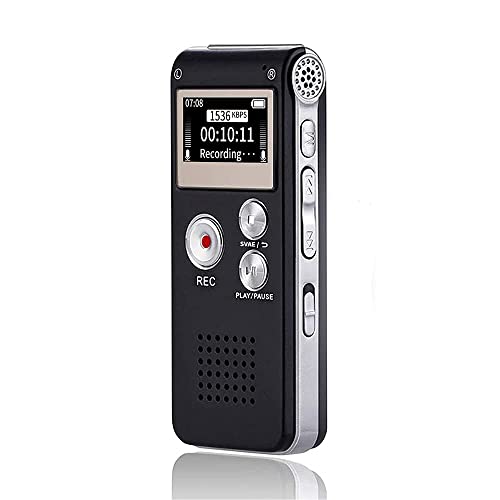
- One-button recording and playback
- Noise reduction with voice activation
- Up to 30 hours of recording
Best For: Straightforward interviews, lectures, and meetings
Long-Running Interview Recorder

- 128GB storage with up to 9,296 hours
- Up to 54 hours of continuous recording
- Password, bookmarks, and folder management
Best For: Long interviews, research, and professional recording schedules
Best Value for Long Interviews – EVISTR L357 64GB Voice Recorder
For shoppers comparing voice recorders for interviews, the EVISTR L357 offers generous storage, adjustable recording gain, and voice activation in a compact metal body. Its WAV and MP3 support also makes it flexible for recording, playback, and file transfer.
Best For: Interviewers, students, teachers, and professionals who want high storage capacity and configurable recording controls.
Pros:
- 64GB capacity can store up to 4,660 hours at 32Kbps.
- PCM noise reduction and seven recording-gain levels help capture voices clearly.
- Voice activation, scheduled recording, A-B repeat, and variable-speed playback add flexibility.
- USB-C transfer works with Windows and Mac computers.
Cons:
- Voice-activated recording may omit quiet pauses, depending on sensitivity settings.
- The feature-rich menu may take some time to learn.
- Playback uses a 3.5mm headphone jack rather than wireless audio.
The L357 is a practical choice when recording capacity and manual control matter more than built-in transcription. Its long continuous-recording runtime and organized timestamped filenames are especially useful for extended interview sessions.
Best AI Interview Recorder – Plaud Note Pro AI Voice Recorder
The Plaud Note Pro stands out among voice recorders for interviews by combining directional audio capture with transcription, summaries, and searchable AI assistance. It can also accept typed notes, images, and highlighted moments to add context to a recording.
Best For: Business, legal, medical, and other professional users who want interview audio converted into organized notes and follow-up tasks.
Pros:
- Four MEMS microphones and a VPU microphone support detailed voice capture.
- AI tools can answer questions, extract key points, draft emails, and suggest next steps from recordings.
- Enhance Mode supports up to 30 hours of recording, while Endurance Mode supports up to 50 hours.
- Includes 300 transcription minutes per month on the Starter Plan.
Cons:
- Advanced transcription features require choosing an optional paid plan after included usage.
- It has no headphone jack.
- Cloud and AI workflows require compatible app, desktop, or web access.
This is a strong fit for interviewers who need more than an audio file. Its privacy and security certifications, multimodal notes, and AI-driven review tools make it particularly suited to sensitive professional conversations, provided participants consent to recording.
Best Simple Recorder – Sony ICD-PX370 Digital Voice Recorder
Sony ICD-PX370 Mono Digital Voice Recorder with Built-In USB Voice Recorder,black
Check Price On AmazonIf you prefer straightforward voice recorders for interviews, the Sony ICD-PX370 focuses on quick MP3 recording and simple computer transfer. Its built-in USB connection and included AA batteries make it a practical traditional dictaphone for basic interview work.
Best For: Buyers who want a familiar, easy-to-use recorder for occasional interviews, notes, and voice memos.
Pros:
- Records MP3 audio quickly and easily.
- Offers up to 57 hours of battery life.
- Built-in USB connection simplifies file transfer to a computer.
- Compact design weighs 136g.
Cons:
- Its 4GB storage is much smaller than the capacity of the other recorders here.
- It does not offer built-in transcription or AI summaries.
- Uses two AA batteries rather than a rechargeable battery.
The ICD-PX370 is best when reliability and simplicity are the priorities. It lacks modern transcription features, but its direct USB connection and long battery life keep the workflow uncomplicated for recording and moving MP3 files.
Best Pocket AI Note Taker – Pocket AI Voice Recorder
The Pocket AI Voice Recorder is designed for people who want voice recorders for interviews that turn conversations into usable notes. One-tap recording, automatic summaries, action items, conversation maps, and an Ask Pocket feature reduce the need to review every minute of audio manually.
Best For: Mobile users who want quick interview capture, AI-organized notes, and convenient phone-based workflows.
Pros:
- One-tap recording supports meetings, calls, and in-person conversations.
- AI can create summaries, action items, and structured conversation maps.
- Ask Pocket can answer questions and generate next steps from recordings.
- MagSafe compatibility and a claimed four-day battery support mobile use.
Cons:
- Additional premium features may require an optional subscription.
- Its listed smartphone compatibility makes it less suitable as a fully standalone recorder.
- AI features depend on the Pocket app and supported device workflow.
Pocket is a convenient choice for interviewers who value speed and organization over traditional recorder controls. It is especially appealing for phone-centric users who want to leave a conversation with a summary and action list rather than only a raw recording.
Best High-Capacity Pick – Tonfarb 136GB Digital Voice Recorder
For shoppers comparing voice recorders for interviews, the Tonfarb stands out for its large storage capacity, long battery life, and one-click controls. Its dual microphones, PCM recording, and automatic noise reduction are designed to help capture clearer speech in busy settings.
Best For: Frequent interviewers, journalists, students, and anyone needing extended recording time.
Pros:
- Includes 8GB of built-in storage plus a 128GB TF card, with up to 9,775 hours in MP3 format.
- Offers up to 68 hours of continuous recording on one charge.
- Provides PCM recording, dual microphones, automatic noise reduction, and voice activation.
- One-click recording, USB-C transfers, A-B repeat, and password protection simplify regular use.
Cons:
- The supplied storage capacity depends partly on the included TF card.
- Its 1.44-inch screen is compact for navigating many files.
With its combination of capacity, endurance, and straightforward controls, the Tonfarb is a practical choice for back-to-back interviews and extended field recording.
Best Simple Budget Option – HoTiyan 8GB Voice Recorder
If you want voice recorders for interviews with uncomplicated controls, this HoTiyan model focuses on quick recording, playback, and file transfer. Its stereo microphone, noise reduction, and voice-activated mode provide useful basics for meetings, lectures, and interviews.
Best For: Students, casual interviewers, and buyers who prefer a compact recorder with physical controls.
Pros:
- Higher-sensitivity stereo microphone and noise-reduction function support high-definition recording.
- Voice activation can reduce silent sections and conserve storage space.
- Records in MP3 or WAV format and transfers files through the supplied Micro USB cable.
- Includes A-B repeat, variable playback speed, timestamps, password protection, and MP3 playback.
Cons:
- The built-in 8GB storage is much smaller than the Tonfarb’s listed capacity.
- Battery life is rated for up to 20 hours of continuous recording.
- It uses a Micro USB connection rather than USB-C.
This is a sensible entry-level option when ease of operation and essential interview features matter more than maximum battery life or storage.
Best for Transcription – iFLYTEK Offline AI Voice Recorder
Among voice recorders for interviews, the iFLYTEK is the most feature-rich choice for turning conversations into usable text. It supports offline voice-to-text in five languages, multiple recording modes, AI noise cancellation, and export to PDF, Word, or TXT.
Best For: Journalists, business professionals, multilingual users, and interviewers who want offline transcription.
Pros:
- Transcribes speech offline in English, Chinese, Japanese, Korean, and Russian.
- Six microphones and AI noise cancellation are designed to reduce crowds and echoes.
- Offers intelligent, conference, interview, and speech recording modes.
- Provides up to 175 hours of battery life and smart bookmarks for reviewing key moments.
Cons:
- Background noise or accents may affect transcription accuracy.
- The recorder has no headphone jack.
- Its 8GB storage is more limited than the Tonfarb’s stated capacity.
The iFLYTEK costs convenience in simplicity, but its offline transcription and export tools can significantly reduce the work involved in processing recorded interviews.
Simple Interview Companion – Compact 16GB Voice Recorder
For shoppers comparing voice recorders for interviews, this compact Sunlan model focuses on straightforward operation and clear voice capture. A dedicated record button, noise-reduction technology, voice activation, and 16GB of storage make it practical for short interviews, lectures, and meetings.
Best For: Interviewers who want a small, simple recorder with one-button controls and built-in playback.
Pros:
- One-button recording with simple stop and playback controls.
- Noise-reduction technology and a sensitive built-in microphone help capture speech clearly.
- Voice-activated recording can reduce silent sections and conserve power.
- 16GB storage and up to 30 hours of continuous recording.
Cons:
- Mono recording may be less suitable for stereo or highly detailed audio work.
- The listed battery playback time is up to 7 hours, shorter than its recording duration.
- Files are recorded in WAV format, which can use more storage than compressed audio.
This is a sensible pick when ease of use and portability matter most. Its compact design and voice activation suit everyday interviews, while the included 3.5mm headphone support and A-B repeat help with reviewing important excerpts.
High-Capacity Interview Recorder – ZIPCIDE 64GB Digital Recorder
This ZIPCIDE model is one of the more storage-focused voice recorders for interviews, pairing a 64GB TF card with AI and DSP noise reduction. It also includes voice activation, timestamped files, headphones, and a USB-drive function for organizing and transferring recordings.
Best For: Users who need substantial file storage and convenient on-device listening for recurring interviews, meetings, or lectures.
Pros:
- 64GB included storage can hold up to 776 hours of recordings at 192kbps, according to the supplied specifications.
- AI and DSP noise reduction with a dynamic noise-cancelling microphone is designed to improve voice clarity.
- Voice activation starts recording when surrounding sound changes.
- Includes wired headphones, timestamped files, and one-click recording and saving.
Cons:
- Continuous recording is listed at up to 15 hours, less than some higher-capacity models.
- Voice activation must be enabled through a computer because it is off by default.
- The listed dimensions and battery specifications are inconsistent across the supplied details.
Choose this recorder if storage capacity and bundled accessories are priorities. Its file timestamps and headphone playback are useful for reviewing multiple interviews, though setting up voice activation requires an extra computer-based step.
Long-Running Interview Recorder – EVIDA 128GB Voice Recorder
For demanding interview schedules, the EVIDA VR01 combines 128GB of storage with up to 54 hours of continuous recording. It supports adjustable voice activation, multiple recording quality settings, password protection, bookmarks, and four-folder file management for keeping conversations organized.
Best For: Professionals and researchers who need long recording sessions, extensive onboard storage, and stronger file-management features.
Pros:
- 128GB capacity is listed as storing up to 9,296 hours of recordings.
- Supports 1536kbps WAV plus 128kbps and 192kbps MP3 recording options.
- Up to 54 hours of continuous recording on a full battery.
- Includes adjustable voice activation, password protection, bookmarks, and A-B repeat.
Cons:
- No headphone jack is listed in the supplied specifications.
- Its feature set may require more setup than a basic one-button recorder.
- The product details identify the microphone as mono, which may limit sound-field capture.
This is the strongest fit of the three for extended interview work and large recording libraries. Its long battery life and organizational tools add practical value, while selectable formats let you balance audio quality against storage use.
How We Picked the Best Voice Recorders for Interviews
We focused on the features that matter during real interviews: recording reliability, microphone performance, storage, battery practicality, playback controls, file transfer, and overall ease of use. We also considered whether AI transcription or summarization adds meaningful value for your workflow.
Because interview conditions vary, this list includes both straightforward recorders and connected devices. Traditional models are often simpler and more predictable, while AI models can reduce the time spent turning recordings into notes. Product specifications and included features can vary by seller, so confirm storage, subscription requirements, supported languages, and connectivity before buying.
Quick Comparison
- Best for simple recording: Choose a conventional digital recorder with physical controls, playback, and USB transfer.
- Best for transcription: Consider an AI recorder that can convert speech to text and create summaries.
- Best for long sessions: Look for generous storage, voice activation, and strong battery capacity.
- Best for portability: A compact recorder is easier to carry and position discreetly on a table or in a pocket.
- Best for sensitive interviews: Prioritize local or offline recording, password protection, and clear data-handling policies.
Key Buying Factors for Voice Recorders for Interviews
Audio Quality and Microphone Pickup
Speech clarity matters more than headline storage capacity. Look for noise reduction, adjustable recording quality, and a microphone suited to the expected distance. For group interviews, a recorder with stronger room pickup or support for an external microphone may be preferable.
Battery Life and Storage
Choose enough battery capacity for the longest session you expect, with a margin for setup and delays. Higher storage is useful for uncompressed or high-quality files, while voice activation can conserve space by limiting silent sections.
Transcription and Connectivity
AI transcription can save time, but check whether it requires an app, internet access, an account, or a paid subscription. USB transfer is generally convenient for moving files to a computer, whereas wireless models may be faster for mobile workflows.
Controls, Privacy, and Usability
Physical record and pause buttons are valuable when you need dependable operation without navigating menus. For confidential conversations, review encryption, password protection, cloud storage, and whether processing happens offline.
Who Should Buy Which Voice Recorders for Interviews?
Students and occasional users should favor an affordable, easy-to-operate model with playback and USB charging. Journalists, researchers, and frequent interviewers may benefit from better microphones, longer battery life, and fast file management. Professionals who produce meeting notes should consider AI transcription and summarization, provided the privacy and subscription terms fit their work. Users recording lengthy sessions should prioritize high capacity, voice activation, and reliable battery performance over extra software features.
Before recording, always follow applicable consent and privacy laws, and tell participants when recording is required by local rules.