Manual focus can be precise, but it is difficult to repeat smoothly when you are operating a mirrorless camera, especially on a gimbal or during a moving shot. A dedicated follow focus system adds leverage, control, and—on compatible models—remote motorized focusing.
These 10 options cover compact rod-mounted units, wireless kits, camera-specific controls, and gimbal-focused systems. The right choice depends on your lens gearing, support rig, shooting style, and whether you need repeatable focus pulls or simple hands-on adjustment.
Best 10 Camera Follow Focus Systems for Mirrorless Cameras Picks for 2026
Best Compact Pick
NEEWER PG001 Mini Follow Focus

- 320g portable manual design
- Adjustable A/B hard stops
- Includes 15mm rod and clamp
Best For: Mobile mirrorless and DSLR video rigs
Best Studio Camera Match

- High-precision focus control
- Made for Blackmagic Studio Cameras
- Two ports with USB Type-B
Best For: Blackmagic Studio Camera users
Best Wireless Option
SmallRig Wireless Follow Focus Kit Lite

- 4.3 kgf.cm peak motor torque
- About 21-hour handwheel battery life
- One-click calibration with memory
Best For: Wireless control of cinema and zoom lenses
Best Mechanical Precision

- Less than 0.5mm stated backlash
- Adjustable two-level damping
- Includes three lens gears
Best For: Durable manual focus pulls with flexible gearing
Precision Control
SmallRig F60 Modular Follow Focus

- Zero-backlash drive for accurate focus tracking
- 0.6–1.8kgf stepless damping adjustment
- Adjustable A/B marks with included 15mm hardware
Best For: Mirrorless video rigs needing adjustable damping and A/B focus stops
Gimbal Integration
Zhiyun TransMount CMF-06 Servo Controller
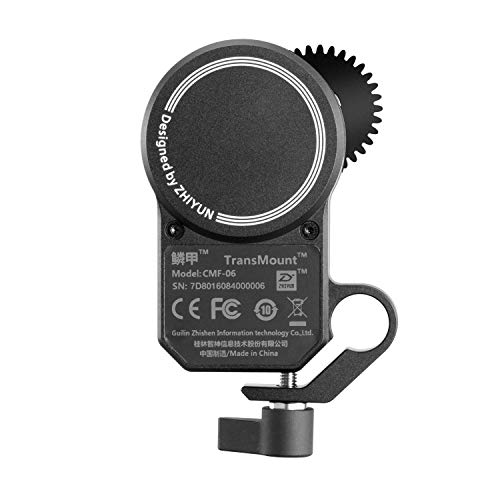
- Focus and zoom switching via one control lever
- Stated 100ms ultra-low latency
- Designed for compatible Zhiyun gimbals
Best For: Zhiyun gimbal operators seeking compact focus or zoom control
Compact Versatility

- Adjustable play helps reduce focus backlash
- 0.3–1.0kgf dynamic damping adjustment
- 15mm mounting with adjustable installation angle
Best For: Compact mirrorless rigs using silicone-drive lens control
Best Value Rod-Rig Pick
Fotga DP3000 M3 Quick-Release Follow Focus

- Quick-release 15mm rod-rig design
- Reversible gear wheel and magnetic marking ring
- Flexible belt supports 46–110mm lenses
Best For: Manual mirrorless-camera rigs using 15mm rods
Best for FeiyuTech Gimbals
FeiyuTech Brushless Follow Focus Motor Kit

- Made for compatible SCORP-series gimbals
- 108g brushless motor module
- Supports focus and focal-length adjustments
Best For: SCORP gimbal owners adding motorized lens control
Best Wireless Handle Control
SmallRig Handle with Follow Focus
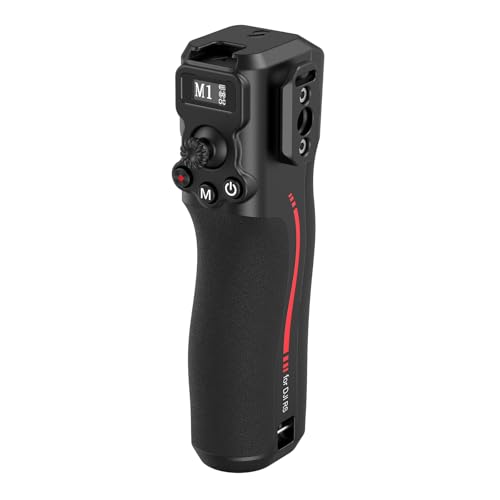
- Designed for DJI RS-series gimbals
- Wireless focus and gimbal controls up to 100m
- Ergonomic grip with mounting points
Best For: DJI RS users needing remote focus and handheld control
Best Compact Pick – NEEWER PG001 Mini Follow Focus
For creators seeking camera follow focus systems for mirrorless cameras, the NEEWER PG001 is a compact manual option with a supplied 15mm rod, clamp, and adaptable lens gear ring. Its modest 320g weight also makes it practical for mobile video setups.
Best For: Mirrorless and DSLR shooters who want a portable, manually operated follow focus with preset focus limits.
Pros:
- Adjustable A/B hard stops support repeatable focus pulls.
- Lens gear ring accommodates lenses up to 114mm in diameter.
- Tilting arm and included 15mm hardware suit varied cage and rig setups.
- Soft silicone knob and adjustable damping promote comfortable operation.
Cons:
- Manual operation lacks wireless control.
- Compatibility depends on proper 15mm rod support and lens gearing.
The PG001 emphasizes portability and straightforward control rather than advanced automation. It is a sensible entry-level choice for mirrorless video work when A/B stops and a compact rig matter most.
Best Studio Camera Match – Blackmagic Focus Demand
The Blackmagic Focus Demand is a specialized choice among camera follow focus systems for mirrorless cameras, designed to provide high-precision focus control with Blackmagic Studio Camera series equipment. Its focused compatibility makes it most relevant to owners of that camera ecosystem.
Best For: Blackmagic Studio Camera users who prioritize dedicated, high-precision focus control.
Pros:
- Designed for high-precision focus control.
- Specifically compatible with the Blackmagic Studio Camera series.
- Includes two ports and a USB Type-B connector.
Cons:
- Its stated compatibility is limited to Blackmagic Studio Camera series equipment.
- This is a specialized control unit rather than a broadly adaptable lens follow focus.
Unlike universal rod-mounted systems, this Focus Demand is best evaluated as a dedicated Blackmagic accessory. Confirm camera compatibility before choosing it for a mirrorless-focused setup.
Best Wireless Option – SmallRig Wireless Follow Focus Kit Lite
The SmallRig Wireless Follow Focus Kit (Lite) adds wireless handwheel control to the camera follow focus systems for mirrorless cameras category. Its receiver motor delivers up to 4.3 kgf.cm of peak torque, while one-click calibration and stored settings simplify repeated shooting.
Best For: Mirrorless video crews and solo operators who need wireless control for cinema or high-damping zoom lenses.
Pros:
- Wireless handwheel control is designed for precise, low-latency focusing.
- 4.3 kgf.cm peak torque helps drive high-damping zoom lenses.
- Handwheel battery offers about 21 hours of stated runtime.
- One-click A/B calibration and memory storage reduce setup repetition.
Cons:
- Wireless operation adds a motor, handwheel, and power-management requirements.
- The receiver motor requires suitable 5V–18V power and the provided or compatible cable.
This kit is the most feature-rich option here for remote focus operation, particularly when lens damping demands stronger motor output. Its calibration memory is useful for productions that revisit the same lenses.
Best Mechanical Precision – FOTGA DP500III Follow Focus
The FOTGA DP500III is a sturdy mechanical option among camera follow focus systems for mirrorless cameras. Its CNC-machined metal construction, adjustable damping, A/B stops, and multiple included gears make it suited to controlled manual focus pulls across different lenses.
Best For: Shooters who want a durable, adjustable mechanical follow focus with flexible gear and handwheel options.
Pros:
- Designed for virtually zero backlash, specified at less than 0.5mm.
- Two-level damping adjustment supports different focusing preferences.
- Includes M0.8 38T, 43T, and 65T gears for lens compatibility options.
- 15mm quick-release rod slider and A/B hard stops support repeatable pulls.
Cons:
- At 500g, it is heavier than the compact NEEWER option.
- It is a manual system without wireless control.
- Additional gear sizes are sold separately.
With its metal build, reversible drive gear, and adjustable damping, the DP500III favors hands-on precision and rig flexibility. It is a strong fit when low backlash and multiple gear choices outweigh minimum weight.
Precision Control – SmallRig F60 Modular Follow Focus
For filmmakers comparing camera follow focus systems for mirrorless cameras, the SmallRig F60 emphasizes precise, low-backlash control with adjustable damping and customizable A/B stops. Its included 15mm rod, clamp, and snap-on gear ring make it a practical starting point for DSLR and mirrorless video rigs.
Best For: Shooters who want finely adjustable focus resistance, A/B marks, and broad lens-control flexibility.
Pros:
- Zero-backlash drive mechanism supports accurate focus tracking.
- Stepless damping adjustment ranges from 0.6kgf to 1.8kgf.
- Adjustable A/B marks and three-step reversible rotation support varied focusing workflows.
- Includes a 15mm rod, single-rod clamp, snap-on gear ring, wrench, and carrying bag.
Cons:
- A/B stops must be completely locked to avoid friction noise.
- The twist lock must remain locked during use to prevent slipping.
- The silicone gear is intended for DSLR and mirrorless lenses and should be removed for cinema lenses.
The F60 is a feature-rich choice when damping range and focus-mark flexibility matter. Setup details require attention, but its included accessories and adjustable design suit more controlled manual-focus shooting.
Gimbal Integration – Zhiyun TransMount CMF-06 Servo Controller
Among camera follow focus systems for mirrorless cameras, the Zhiyun TransMount CMF-06 is designed for compatible Zhiyun gimbals rather than standalone rod-based operation. Its compact motor switches between focus and zoom control and responds through the stabilizer wheel with stated 100-millisecond latency.
Best For: Zhiyun gimbal users who need compact, wheel-operated focus or zoom control.
Pros:
- Compact, lightweight motor supports flexible installation.
- One lever switches between focus and zoom control.
- Upgraded motor structure provides stated ultra-low 100-millisecond latency.
- Thicker gears and a larger contact area improve installation stability.
Cons:
- Compatibility is centered on listed Zhiyun Weebill and Crane stabilizers.
- It is a specialized servo controller, not a general-purpose manual rod follow focus.
The CMF-06 makes the most sense inside a compatible Zhiyun stabilization setup. Confirm your exact gimbal model before buying, especially if you need independent manual focus control away from the stabilizer.
Compact Versatility – SmallRig F50 Follow Focus
The SmallRig F50 is a compact option among camera follow focus systems for mirrorless cameras, combining adjustable rotational play with a silicone drive for compatible mirrorless lenses. Its 15mm rod mounting, freely adjustable installation angle, and A/B-stop controls support handheld, tripod, and other shooting setups.
Best For: Mirrorless shooters seeking compact focus control with adjustable damping and quick A/B-stop operation.
Pros:
- Adjustable rotational play helps minimize focus backlash.
- Dynamic damping adjustment ranges from 0.3kgf to 1.0kgf.
- Two-step A/B-stop control supports quick switching between marked and full-range pulls.
- Includes a 15mm rod and single-hole rod clamp with adjustable mounting angle.
Cons:
- The silicone gear must fit tightly to prevent slipping, especially on high-damping zoom lenses.
- The silicone gear is for DSLR and mirrorless lenses; cinema lenses require the gear to be removed.
- Its damping range is narrower than the F60’s stated range.
The F50 offers a practical balance of compact size, damping adjustment, and modular mounting. It is particularly appealing for mirrorless setups, provided the silicone gear is correctly fitted to the lens ring.
Best Value Rod-Rig Pick – Fotga DP3000 M3 Quick-Release Follow Focus
The Fotga DP3000 M3 is a practical option for mirrorless-camera rigs that use 15mm rods. Its quick-release design, reversible gear wheel, magnetic marking ring, and included flexible gear belt make it adaptable for both prime and zoom lenses.
Best For: Filmmakers building a 15mm rod rig who want a flexible, manually operated follow focus for mirrorless or DSLR cameras.
Pros:
- Quick-release attachment makes the unit easy to install and remove.
- Dampened gearbox is designed to reduce backlash.
- Gear wheel can be installed on either side for left- or right-handed operation.
- Included flexible gear belt fits lenses from 46 to 110mm in diameter.
Cons:
- Requires a compatible 15mm rod rig.
- Manual operation does not provide the remote or automated control of a motorized system.
Choose this model if you want a conventional follow focus with broad lens compatibility and useful rigging flexibility. It is especially appealing when low backlash and quick repositioning matter more than wireless control.
Best for FeiyuTech Gimbals – FeiyuTech Brushless Follow Focus Motor Kit
The FeiyuTech Brushless Follow Focus Motor Kit is a specialized choice among camera follow focus systems for mirrorless cameras, pairing with FeiyuTech SCORP-series gimbals. Its brushless motor supports manual focus or focal-length adjustments while adding control through the gimbal’s multifunctional dial.
Best For: Mirrorless-camera users who already own a compatible FeiyuTech SCORP 3, SCORP 2, SCORP-C2, SCORP Pro, or SCORP C gimbal.
Pros:
- Designed specifically for compatible FeiyuTech SCORP-series gimbals.
- Lightweight metal construction weighs 108g.
- Brushless motor supports focus and focal-length control.
- Offers automatic or manual calibration and adjustable motor direction.
Cons:
- Compatibility is limited to the listed FeiyuTech SCORP gimbals.
- Supports lenses with a maximum diameter of 10cm.
- Not a standalone 15mm rod-mounted follow focus system.
This kit makes the most sense as an expansion for an existing SCORP setup. Confirm both your gimbal model and lens diameter before buying, since its value depends heavily on that ecosystem compatibility.
Best Wireless Handle Control – SmallRig Handle with Follow Focus
The SmallRig Handle with Follow Focus is built for DJI RS-series gimbals and compatible mirrorless-camera setups. It combines a focus dial with wireless shooting and gimbal controls, while its ergonomic grip and mounting points help expand a handheld rig.
Best For: DJI RS 2, RS 3 Pro, RS 4, RS 4 Pro, or RS 5 users who want wireless focus and gimbal control from an additional handgrip.
Pros:
- Compatible with the listed DJI RS-series gimbals.
- Provides focus-dial, shutter, recording, joystick, and mode controls.
- Wireless range is up to 100 meters with less than 50ms signal delay.
- Offers up to 10 hours of battery life and multiple mounting points.
Cons:
- Designed for DJI RS gimbal systems rather than universal standalone use.
- Wireless receiver motor is required for compatible motor control.
- Handle payload is limited to 2.0kg, while the receiver supports up to 4.0kg.
This is a strong choice for operators who want to control focus and gimbal functions without reaching toward the camera. Check the required receiver and your total rig weight before committing to this more specialized handle-based system.
How We Picked These Camera Follow Focus Systems for Mirrorless Cameras
We focused on systems that can serve common mirrorless-camera setups, including DSLR-style cages, 15mm rod rigs, handheld configurations, and supported gimbals. We considered mounting compatibility, manual versus electronic operation, A/B stop functionality, adjustment control, motor or controller support, and the practical demands of video production.
Compatibility matters more than a long feature list. A follow focus must work with your lens diameter, gear ring or built-in lens gearing, camera cage, rods, and stabilization system. Where a product is designed for a specific gimbal or camera ecosystem, verify that your exact model is supported before buying.
Quick Comparison
| Type | Best For | Main Advantage | Watch For |
|---|---|---|---|
| Manual rod-mounted | Budget and controlled focus pulls | Simple, reliable operation | Needs physical access to the camera |
| Wireless or motorized | Solo operators and gimbal work | Remote focus control | Power, pairing, and compatibility requirements |
| Gimbal-specific | Supported stabilizer systems | Clean integrated setup | Limited cross-platform flexibility |
Key Buying Factors
Lens and Rig Compatibility
Check whether the system uses a standard 15mm rod clamp, a dedicated handle, or a gimbal-specific mount. Measure the lens barrel and confirm that the included gear ring fits or that replacement rings are available. Cine lenses with built-in focus gears are usually the easiest to pair.
Manual or Motorized Control
Manual follow focus units are lightweight, affordable, and dependable for an operator standing beside the camera. Wireless motorized systems are more useful when the camera is on a gimbal, mounted on a vehicle, or operated by one person from a distance. They also introduce batteries, calibration, and electronic compatibility considerations.
A/B Stops and Control Precision
A/B stops help repeat focus pulls between two marked points, which is valuable for scripted shots. Look for smooth gear engagement, minimal backlash, a comfortable handwheel, and enough rotational resistance to make precise adjustments without causing camera movement.
Weight and Balance
Every added motor, controller, rod, and bracket affects a gimbal’s payload and balance. For stabilized setups, choose the lightest system that provides the required control, then rebalance the camera after installation.
Who Should Buy Which Camera Follow Focus Systems for Mirrorless Cameras?
Choose a compact manual model if you are building a lightweight mirrorless rig, shooting from a tripod, or want the lowest-cost route to smoother focus pulls. A more substantial rod-mounted unit makes sense for a dedicated cage setup with larger lenses and frequent A/B marks.
Choose a wireless kit if you regularly operate solo, use a gimbal, or need to pull focus while the camera is moving. A gimbal-specific controller is the most convenient option when you already own a compatible stabilizer, but it is less versatile if you change platforms. For the broadest long-term flexibility, prioritize standard 15mm mounting and replaceable lens gear rings.