A microphone isolation shield can help reduce nearby reflections and room coloration before they reach your microphone. That makes it a useful upgrade for vocalists, podcasters, streamers, and home-studio creators working in untreated spaces.
This roundup compares 10 microphone isolation shields for voice recording, including foldable reflection filters, foam-lined booths, and models with pop filters, stands, and flexible mounting options.
Best 10 Microphone Isolation Shields for Voice Recording Picks for 2026
Best Overall
Foldable Triple-Insulation Mic Shield

- Large 23.2-inch-wide shield
- Desktop stand included
- 3/8-inch and 5/8-inch mounting support
Best For: Home studios, podcasts, singing, and larger recording sources
Best for Flexible Placement
XTUGA Five-Panel Recording Shield

- Three- or five-panel configurations
- Adjustable arch and foldable top
- Desktop and stand mounting options
Best For: Adaptable home or studio recording setups
Best Complete Setup
Mic Shield with Pop Filter and Stand

- Includes adjustable tripod stand
- Pop filter and thread adapter included
- 42- to 71.5-inch height range
Best For: Seated or standing vocal recording
Best Compact Option
Five-Sided Microphone Isolation Ball

- Five-sided acoustic filter
- Only 120 grams
- Fits 50–75 mm microphone jackets
Best For: Portable recording and small-space setups
Best Five-Panel Design
Moukey Five-Sided Acoustic Shield
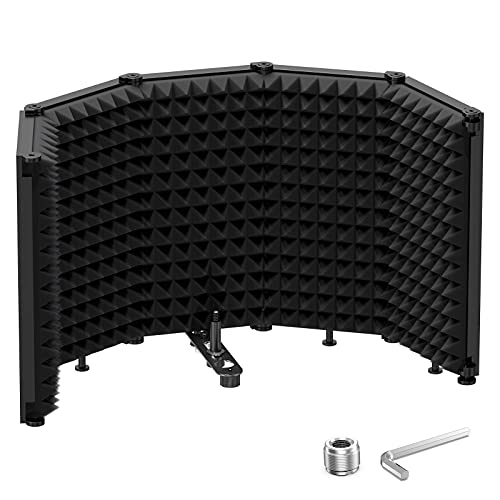
- Five panels offer adjustable recording coverage
- High-density foam helps reduce reflected audio waves
- Compatible with common 3/8 and 5/8 mounting hardware
Best For: Podcasts, vocals, broadcasting, and studio-style setups
Best With Stand
Aokeo AO-504 Shield and Adjustable Stand

- Includes an adjustable stand and two thread adapters
- Absorbent interior supports clearer vocal recording
- Stand height adjusts up to 182 cm
Best For: Users building a stand-mounted recording setup
Best Portable Booth
TroyStudio Foldable Vocal Booth

- Enclosed design with 2-inch dense acoustic foam
- Large interior for varied recording equipment
- Folds for travel and supports desk or stand use
Best For: Mobile voiceover, podcast, and home-studio recording
Best Complete Kit
Aokeo Isolation Shield with Stand

- Includes stand, pop filter, adapters, and storage desk
- Adjustable height for flexible microphone positioning
- Foam interior and vented metal back plate
Best For: Beginner vocal recording and bundled desktop setups
Best Compact Shield
Foldable Three-Panel Acoustic Shield
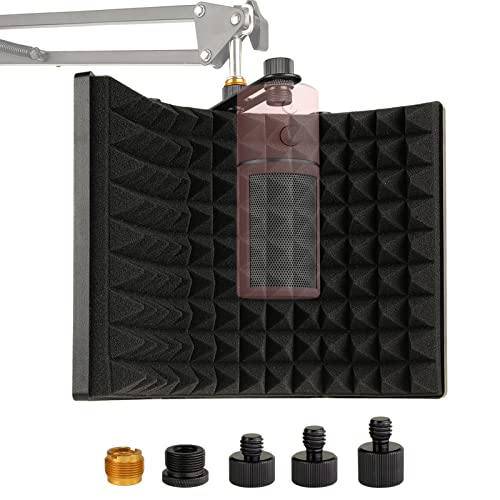
- Adjustable three-panel design for directional coverage
- Lightweight and portable for small recording spaces
- Includes adapters for common 3/8-inch and 5/8-inch threads
Best For: Desktop recording and compatible mic-arm setups
Best Overall – Foldable Triple-Insulation Mic Shield
For anyone comparing microphone isolation shields for voice recording, this Aokeo model offers a sizable foldable design with layered sound insulation and a desktop stand. Its 23.2-by-11-inch surface can also accommodate recording louder or larger sources such as guitars and violins.
Best For: Home studios, podcasting, singing, and users who want a large shield with flexible microphone mounting.
Pros:
- Triple-insulation construction combines sound-absorbing foam with a ventilated metal back panel.
- Includes a desktop stand and supports both 3/8-inch and 5/8-inch microphone threads.
- Solid metal-alloy construction remains portable at a listed 1.3 kg.
- Includes stated warranty and replacement support.
Cons:
- The relatively large footprint may require substantial desk space.
- The supplied information does not specify a pop filter or full-height floor stand.
This is a practical all-around pick when you want broad coverage, desktop usability, and compatibility with a wide range of microphone clips and shock mounts.
Best for Flexible Placement – XTUGA Five-Panel Recording Shield
This XTUGA shield is a flexible option among microphone isolation shields for voice recording, with foldable panels that can be arranged as a three- or five-panel design. Its adjustable arch lets you tailor the shield’s angle to the recording environment.
Best For: Users who want configurable coverage for desktop, countertop, or microphone-stand recording.
Pros:
- Can be configured with three panels or expanded to five panels.
- Triangular high-density foam and multiple layers are designed to reduce reflected and interfering sound.
- Foldable top and adjustable angles provide adaptable coverage.
- Can be disassembled and installed on a desktop or compatible stand.
Cons:
- The supplied details do not include a desktop stand or microphone adapter.
- At 3.97 pounds, it is heavier than the listed lightweight alternatives.
Choose this model if setup flexibility matters more than minimal weight. The multi-panel configuration is useful when you need to adjust coverage around different microphones or recording positions.
Best Complete Setup – Mic Shield with Pop Filter and Stand
For a more complete recording station, this Dmsky model combines a foldable isolation shield, pop filter, heavy-duty tripod, and adjustable stand. It is a strong consideration when shopping for microphone isolation shields for voice recording and you need support for both seated and standing use.
Best For: Creators who want an adjustable floor or desktop setup with a pop filter included.
Pros:
- Triple-insulation design uses reflective, filter, and absorbing layers.
- Five folding panels adjust through 180 degrees for directional coverage.
- Height adjusts from 42 to 71.5 inches, supporting seated or standing recording.
- Includes a pop filter, 3/8-to-5/8-inch adapter, tripod, and storage tray.
Cons:
- The full stand-and-tripod setup takes more space than a compact desktop shield.
- The supplied information notes that the received stand tube may differ from the pictured version.
This is the most equipment-focused option in the group. Its included accessories and broad height range make it convenient for vocalists, podcasters, and recording setups that change between desk and standing positions.
Best Compact Option – Five-Sided Microphone Isolation Ball
This compact microphone isolation ball takes a different approach to microphone isolation shields for voice recording by surrounding the microphone with a five-sided acoustic filter. Its lightweight 120-gram design is intended to reduce plosives, wind interference, saliva spray, noise, and reflections.
Best For: Portable voice recording, live performance, and users with limited desk or stand space.
Pros:
- Five-sided seal design helps reduce sound entering from multiple directions.
- Double-layered filters at the opening help address plosives and divergent sound.
- Lightweight and portable at a listed 120 grams.
- Fits many XLR and USB microphones with removable jackets measuring 50–75 mm in diameter.
Cons:
- Compatibility depends on the microphone’s removable-jacket diameter.
- Its compact design provides less broad room-side coverage than large foldable shields.
- The supplied information does not mention a desktop stand or floor stand included in the package.
If portability and close microphone coverage are your priorities, this is an efficient alternative to a large reflection shield. Confirm your microphone’s dimensions before buying.
Best Overall Value – Aokeo Foldable Desktop or Stand-Mount Shield
For shoppers comparing microphone isolation shields for voice recording, this Aokeo model offers a practical mix of sound-reflecting reduction, portability, and mounting flexibility. Its absorbent inner layer, vented metal back, and folding panels make it suitable for compact recording setups.
Best For: Voice recording, singing, gaming, and users who want either tabletop or microphone-stand placement.
Pros:
- Absorbing cotton insulation helps reduce sound reflection during recording.
- Folding panels allow angle adjustment and easier transport.
- Durable steel construction with high-quality screws.
- Can be used on a flat surface, countertop, tabletop, or microphone stand.
Cons:
- Microphone, headphones, and stand are not included.
- At 1.5 kg, it is less lightweight than some compact shields.
This is a versatile choice for creators who need a shield that can move between desktop and stand-mounted recording. The foldable design is especially useful for mobile or space-conscious setups.
Best Five-Panel Design – Moukey Five-Sided Acoustic Shield
This Moukey shield is a strong option among microphone isolation shields for voice recording when you want broad, adjustable coverage. Its five-panel structure combines reflective, filtering, and absorbing layers while supporting both desktop and stand-mounted use.
Best For: Podcasts, vocals, broadcasting, live streaming, and studio-style recording setups.
Pros:
- High-density acoustic foam helps reduce audio-wave bounce and interference.
- Five foldable panels provide flexible arch and angle adjustment.
- ABS construction and non-slip support points help improve stability.
- Includes 3/8-to-5/8 conversion nuts for broad stand and shock-mount compatibility.
Cons:
- Its larger 29.9-by-12.8-inch size may require more storage space.
- Microphone and stand are not listed as included components.
The five-sided layout makes this a useful pick for users who want more surrounding coverage and adjustable positioning. It is particularly well suited to stationary podcasting or broadcasting stations.
Best With Stand – Aokeo AO-504 Shield and Adjustable Stand
If you need microphone isolation shields for voice recording with a dedicated support system, this Aokeo AO-504 package is a convenient all-in-one starting point. It includes the shield, adapters, and an adjustable stand, while its absorbent interior is designed to help maintain vocal clarity.
Best For: Studio recording, singing, and users who need adjustable-height support without purchasing a stand separately.
Pros:
- Package includes an adjustable stand, two metal thread adapters, and an instruction manual.
- Absorbent cotton material helps reduce interference from audio waves and the external environment.
- Steel construction is designed for durability and scratch resistance.
- Stand height adjusts up to 182 cm.
Cons:
- The microphone is not included.
- The included stand makes this package less compact than a shield-only option.
This package stands out for buyers building a recording setup from scratch. The included adjustable stand simplifies installation and positioning, while the metal adapters support many microphone configurations.
Best Portable Booth – TroyStudio Foldable Vocal Booth
For creators comparing microphone isolation shields for voice recording, the TroyStudio Portable Vocal Booth is a larger enclosed option designed to reduce room reflections around the microphone. Its thick foam interior, foldable structure, and stand-or-desk setup make it practical for home studios, apartments, and mobile recording.
Best For: Voiceover artists, podcasters, musicians, and audiobook creators who want a portable enclosed recording space.
Pros:
- 2-inch dense egg-crate foam covers the inside surfaces to reduce echoes and reflections.
- Large 8 x 10 x 12-inch interior accommodates various microphones and recording equipment.
- Folds for transport and sets up in about one minute.
- Works on a desk or compatible microphone stand and includes cable and stand openings.
Cons:
- At about 2 pounds, it is less compact than a small three-panel shield.
- Stand mounting is limited to stands with a diameter under 0.86 inches.
- Incorrect installation may cause stability issues.
This is a strong choice when reflection control and interior space matter more than the smallest possible footprint. Its reinforced backing and dense foam support repeated use, while the foldable design keeps it suitable for travel.
Best Complete Kit – Aokeo Isolation Shield with Stand
This Aokeo kit is a convenient option among microphone isolation shields for voice recording because it combines the shield with a pop filter, adjustable stand, adapters, and a storage desk. The foam-lined shield and vented metal back plate are intended to help control reflections while the pop filter addresses plosive and sibilant sounds.
Best For: Beginners and vocalists who want an all-in-one shield, stand, and pop-filter setup.
Pros:
- Includes an isolation shield, pop filter, adjustable stand, adapters, and storage desk.
- Height can be adjusted, with the stand and shield reaching up to 175 cm.
- Absorbent cotton interior helps reduce interference from sound reflections and the surrounding environment.
- Steel construction is described as rugged and scratch-resistant.
Cons:
- The microphone is not included.
- The assembled stand-and-shield arrangement may require more space than a desktop-only shield.
- Its listed frequency response is 15 kHz, which may not suit every recording setup.
Choose this model if you value included accessories and adjustable positioning over a minimal desktop footprint. The pop filter and storage surface add useful functionality for vocal recording, streaming, or gaming setups.
Best Compact Shield – Foldable Three-Panel Acoustic Shield
For shoppers seeking compact microphone isolation shields for voice recording, this foldable three-panel model offers adjustable panel angles and a lightweight design. Its high-density foam interior is intended to reduce reflected sound, and included thread adapters support a range of compatible mic arms and stands.
Best For: Desktop recording, livestreaming, and users who need a lightweight shield for compatible condenser microphones.
Pros:
- Three-panel design allows angle adjustment around the microphone.
- Compact, lightweight construction is convenient to carry and store.
- Can be fixed to a tabletop or mounted to a compatible microphone stand.
- Includes multiple 3/8-inch and 5/8-inch thread adapters.
Cons:
- It is not suitable for the Blue Yeti microphone.
- The shield is only 7.48 inches tall and 10.8 inches wide, limiting coverage compared with an enclosed booth.
- It does not include a microphone, stand, or pop filter.
This is a practical space-saving pick for users who already have a compatible stand or arm. Its adjustable panels provide positioning flexibility, but buyers should verify microphone compatibility and expect less enclosure than a full vocal booth.
How We Picked the Best Microphone Isolation Shields for Voice Recording
We focused on the features that most affect real-world recording: the amount and density of acoustic treatment, shield shape, portability, mounting compatibility, included accessories, and suitability for common condenser microphones. We also considered whether each design is practical for a desk, microphone stand, or compact home studio.
These products are designed primarily to reduce reflected sound and help control the recording area. They are not substitutes for room treatment or full soundproofing, so expectations should match the product’s size and construction.
Quick Comparison
| Feature | What to look for | Best suited to |
|---|---|---|
| Foldable panels | Compact storage and adjustable coverage | Home studios and mobile recording |
| Five-sided shields | More enclosed acoustic coverage | Vocals and voice-over work |
| Portable vocal booths | Broad coverage around the microphone | Untreated rooms and desk setups |
| Pop filter and stand bundles | More recording accessories in one package | New creators building a basic setup |
Key Buying Factors
Shield Size and Coverage
Larger shields can cover more of the microphone’s rear and side areas, but they also take up more desk or stand space. A compact three-panel design is easier to position, while a deeper booth-style enclosure may provide more consistent coverage for close vocal recording.
Acoustic Material and Construction
Look for dense, securely attached acoustic foam and rigid panels that do not flex excessively. Foam can absorb some reflections, but it will not block loud external noise. A stable shell and clean interior surface are more useful than decorative thickness alone.
Mounting Compatibility
Check the included adapters and thread sizes before buying. Many shields support common 3/8-inch and 5/8-inch microphone hardware, but the shield’s weight may require a sturdy stand, boom arm, or desk mount. Confirm that your microphone and shock mount fit through the opening.
Portability and Setup
Foldable models are convenient for storage, travel, and shared rooms. Consider the folded dimensions, panel hinges, and whether the shield can stand securely without tipping. A model with an included tripod or stand may be easier for beginners but can offer less flexibility than a separate boom arm.
Pop-Filter Integration
A built-in or included pop filter can help reduce plosive bursts from sounds such as “P” and “B.” It should sit between your mouth and the microphone without blocking the capsule or forcing an awkward speaking position.
Who Should Buy Which Microphone Isolation Shields for Voice Recording?
For Beginners
Choose a bundle with a pop filter, tripod, and mounting hardware if you want a straightforward starting setup with fewer parts to purchase separately.
For Mobile Creators
A lightweight foldable shield is the better choice for recording in multiple rooms, traveling, or storing equipment after each session.
For Vocalists and Voice-Over Artists
Prioritize a larger, deeper shield with dense absorption and stable mounting. Greater coverage can help produce more consistent results when the room has hard, reflective surfaces.
For Fixed Home Studios
A broader portable booth or multi-panel shield makes sense when you have dedicated recording space and want maximum practical coverage around the microphone without installing permanent treatment.